At a glance. Review pullet uniformity, feed and water access, lighting and daily records when preparing a laying flock for peak production and its continuation.
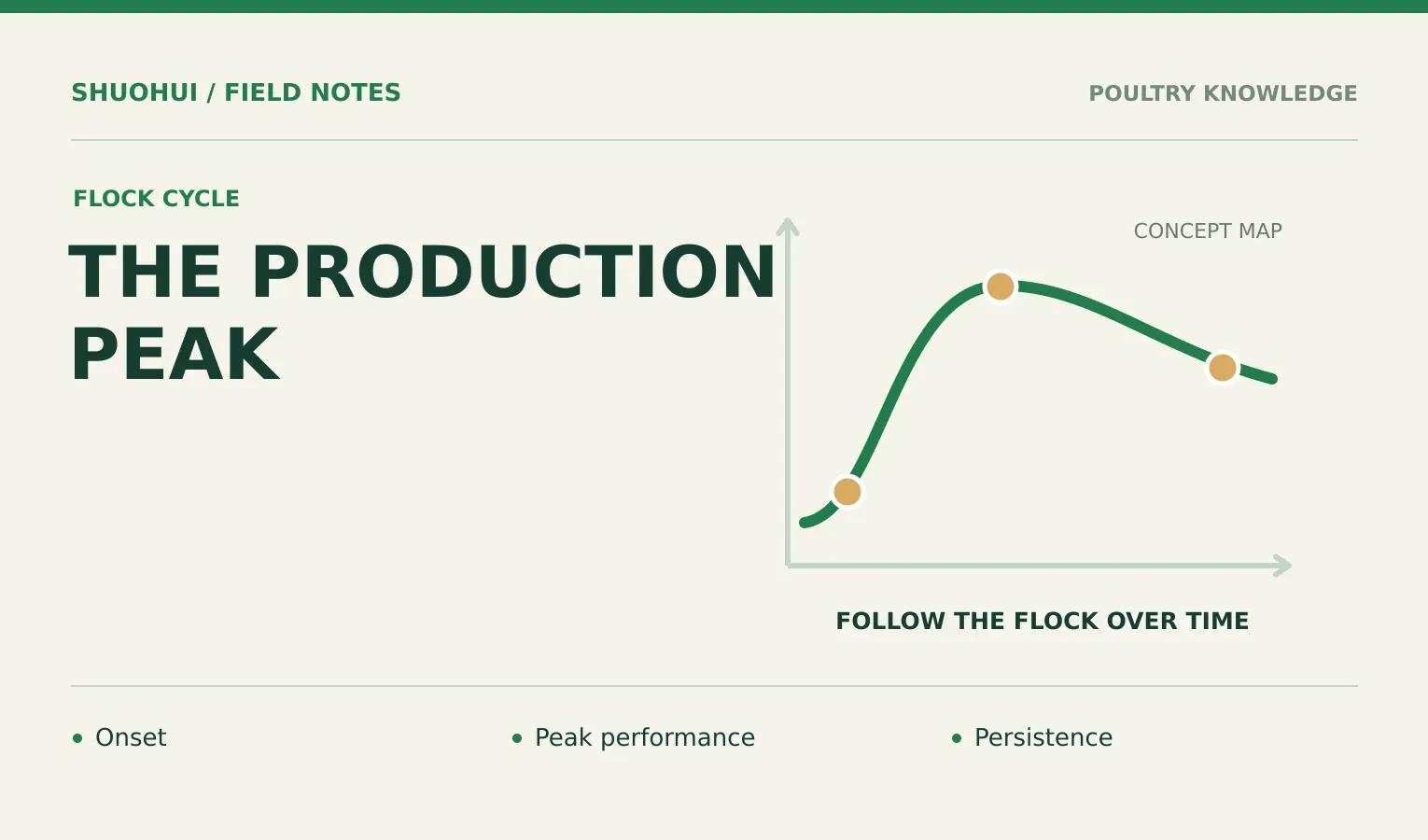
The single most valuable stretch of a layer's life is the peak. A flock that reaches 90-96% production and holds it for weeks banks the eggs that make the whole cycle profitable. Yet peak is also the easiest thing to lose, because it is decided by feeding and management decisions made a week or two *before and after* the rate actually moves. This article breaks down the discipline behind a strong, durable peak — the old stockman's rule of "lift before the peak, hold after the peak," and the numbers that turn it into a repeatable program.
Why Peak Is the Prize
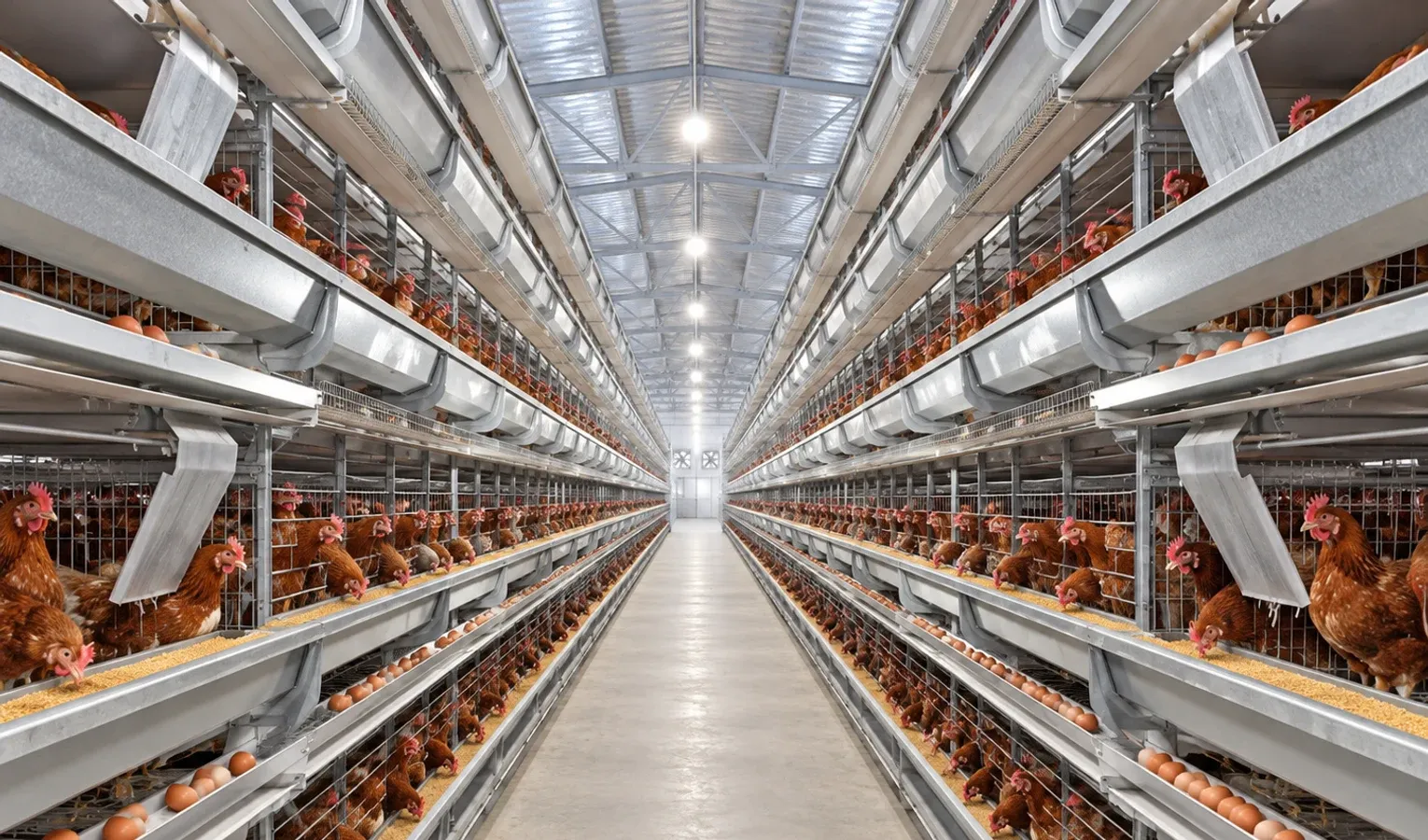
At peak, nearly every hen in the house lays almost every day. Feed efficiency is at its best, egg output is at its highest, and the fixed costs of housing and labor are spread over the most eggs. A flock that peaks at 96% and one that stalls at 88% may cost the same to run, but the difference in eggs and income over the plateau weeks is enormous. Everything in pullet rearing and early-lay management is really aimed at this window.
The Two-Part Rule: Lift Before, Hold After
The core principle is asymmetric timing. You raise the nutritional concentration of the diet 1-2 weeks before production is expected to climb, and you delay reducing it until well after the flock has clearly passed peak. In practice that means the hen is never nutritionally behind her own output on the way up, and never starved of nutrients that would shorten the plateau on the way down.
- Lift early — enrich the diet 1-2 weeks ahead of the expected rise in lay
- Hold late — do not trim nutrition until the flock has been past peak 4-6 weeks and dropped 4-6%
Lifting Nutrition Before the Climb
As the flock approaches onset, appetite has not yet caught up with the demands of lay. Feeding a richer diet — higher amino acid density, adequate energy, and rising calcium — ahead of the climb ensures the hen has the raw materials for a fast ramp to peak. Waiting until production is already rising means the flock is always a step behind, and a capped peak is the result. A peak you fail to reach cannot be recovered later in the cycle.
When to Start Reducing Feed
The mirror-image error is cutting feed too soon after peak. The safe rule is to hold peak-level nutrition until the flock has been past peak for 4-6 weeks and production has fallen 4-6%. Only then do you begin easing the diet toward a lower-cost late-lay formula. Trim too early and you accelerate the decline, sacrificing persistency to save a little feed — a poor trade. Late-lay feed reductions should always be gradual and tied to production, not the calendar.
Body Weight Gain Through Onset
Peak depends on continued body-weight gain right through the start of lay. A brown-egg hen, for example, still needs to gain roughly 410-430 g between 18 and 32 weeks while she comes into and holds peak production. That gain builds the reserves and frame she draws on during the plateau. Flocks that plateau in body weight too early, or lose weight around onset, almost always give up peak persistency. Weigh a sample of birds weekly through this window and compare against the breed target.
Feeding for Egg Mass, Not Just Egg Numbers
Around peak the hen is producing maximum egg mass — the combination of egg number and egg size. Protein and amino acid supply drive both. As a working benchmark, within the usual 12-17% dietary protein range, each additional 1% of dietary protein raises egg weight by about 1.2 g. That relationship lets you tune egg size deliberately, but it must be balanced against cost and shell quality, so adjust with your nutritionist rather than chasing egg weight blindly.
Energy: The Silent Peak-Killer
Energy shortfalls are the quietest way to lose a peak. When the diet is short on energy, the hen burns dietary protein for fuel instead of using it to build egg, which is both wasteful and expensive. The flock may look like it has a protein problem when the real fault is energy. Keeping energy adequate through onset and peak protects both the peak height and feed efficiency.
Lighting's Role in Peak
Nutrition sets the ceiling for peak; light triggers the climb. The photostimulation program must step day length up on schedule as the flock approaches maturity, and it must never step backward during lay. A single accidental cut in day length or a fixture failure around onset can blunt the rise to peak. Coordinate the lighting increases with the nutritional lift so the two work together.
Uniformity Decides Peak Height
A peak is really the sum of many individual hens switching on. If the flock is uniform in body weight, most birds mature together and the flock hits a high, sharp peak. If the flock is uneven, birds come into lay over a spread of weeks and the peak is lower and flatter. This is why rearing uniformity — a body-weight uniformity above 85% at the end of rear — is the strongest single predictor of peak. You cannot fix uniformity after onset; it is built in the pullet house.
Water: The First Limiting Nutrient at Peak
Nothing collapses a peak faster than restricted water. At peak the hen is drinking heavily to support maximum egg output, and even a short interruption — a blocked line, low pressure, warm water — cuts intake and lay within a day. Keep water clean, cool, and freely available, check flow rates and nipple function regularly, and treat water as the first limiting nutrient it truly is.
Guarding Against Peak-Time Stressors
The plateau weeks are when the flock is least tolerant of disruption. Common peak-breakers to control tightly include:
- Heat stress — intake and lay fall above 28-30°C, so cool the house before summer peaks
- Vaccination or handling stress — schedule interventions away from the climb where possible
- Feed outages — never let feeders run empty during the plateau
- Sudden feed changes — transition diets gradually to avoid intake dips
Reading Peak on Your Records
Plot weekly percent lay against the breed standard and watch three things: how high the peak reaches, how many weeks it holds above 90%, and how gently it declines afterward. A flock that peaks high but falls fast has a persistency problem rooted in nutrition or health; a flock that never reaches target peak has a rearing or early-lay nutrition problem. The records tell you which lever to pull next cycle.
The Pre-Lay Bridge Diet
A dedicated pre-lay diet bridges the gap between the low-calcium pullet ration and the full layer feed, and it is one of the most underused tools for protecting the peak. Introduced in the roughly two weeks before first egg, it lifts calcium toward laying levels so the hen can begin building the medullary bone reserves she draws on every night to form shells. It also nudges appetite upward ahead of the demand curve, so intake is ready when lay accelerates. Jumping straight from a pullet feed to full lay leaves the hen skeletally short just as production explodes, which caps the peak and weakens early shells. Because the pre-lay window overlaps the "lift before the peak" principle, this bridge diet is where pre-peak nutrition and skeletal preparation come together. Introduce it on schedule, watch body weight through the transition, and confirm timing with your breed guide, since coming on too early or too late both cost eggs.
Monitoring the Climb Daily
During the ascent to peak, daily records are your early-warning system. Track percent lay, feed intake, water consumption, and body weight against the breed standard, and investigate any day the climb stalls or reverses. Because the window to reach peak is only a few weeks wide, a problem caught on day one costs far less than one noticed a week later. Managers who watch the climb closely can correct feed, water, light, or temperature before the peak is permanently capped — the difference between a 96% flock and an 88% one is often just a few timely interventions.
Let Us Help You Build a Peak Program
Reaching and holding a 90%+ peak is a system — pullet uniformity, pre-peak nutrition, lighting, water, and climate all pulling together. Tell us your breed, flock size, and housing type, and our team will help you match feeding and equipment to a strong, durable peak. Send us your production targets and we will help you plan the climb.
Visual checklist
Related reading
Pullet Rearing: Monitoring Growth and Uniformity
Layer Phase Feeding: Matching Nutrition to Production
Further reading
Use the management guide for the actual breed, age and housing system when selecting flock targets. Review changes with the farm team and the relevant nutrition, health or equipment specialist.