Plastic Slatted Floor System
Specifications
- UseCage-free layers, breeders, brooding, ducks
- TypePlastic slatted flooring panels
- LayoutFull-slat or slat-and-litter combinations
- PanelsRemovable, interlocking, washable
- SurfaceSmooth, rounded profile, footpad-friendly
- CleaningLift-out panels for full wash-down
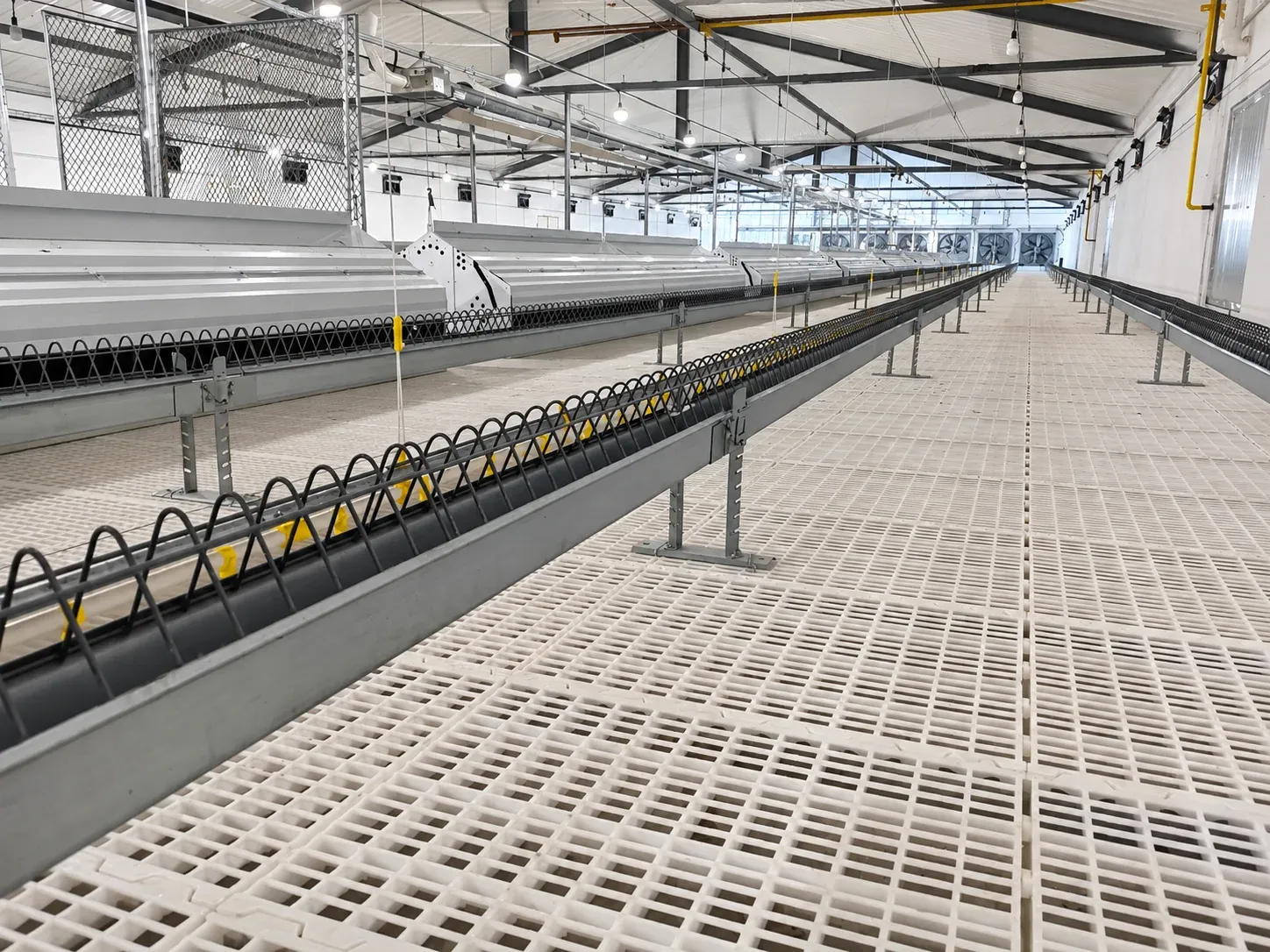
- FunctionManure drops through slats, birds stay dry above
- MaterialFood-grade high-strength polypropylene (PP)
- Slat gapSized to pass droppings while supporting feet
- Load ratingRated for birds plus service worker weight
- Service lifeLong-life, corrosion-free
- CertificationISO 9001, SONCAP, PVOC
Keeping birds off their own manure is the entire job of a slatted floor, and it does what litter alone cannot. By raising the flock on a perforated plastic deck, droppings fall through into a pit or onto a belt below while the birds stay on a dry, clean surface — cutting ammonia, footpad disease and the labour of constant litter management. It is the foundation layer of most cage-free, breeder and brooding houses.
What a slatted floor does that litter can't
On a full-litter floor, manure accumulates where the birds live, moisture builds, and ammonia rises the moment litter passes about 30% moisture. A slatted floor separates bird from dropping: manure passes through the gaps and out of the living space, so the surface stays drier and ammonia stays lower for longer. That means fewer footpad and hock lesions, cleaner eggs in a breeder or nest setting, and far less of the daily raking and top-up that litter demands. The birds get a stable, non-slip platform that does not turn to a wet cake.
Polypropylene panels: strength, grip and cleaning
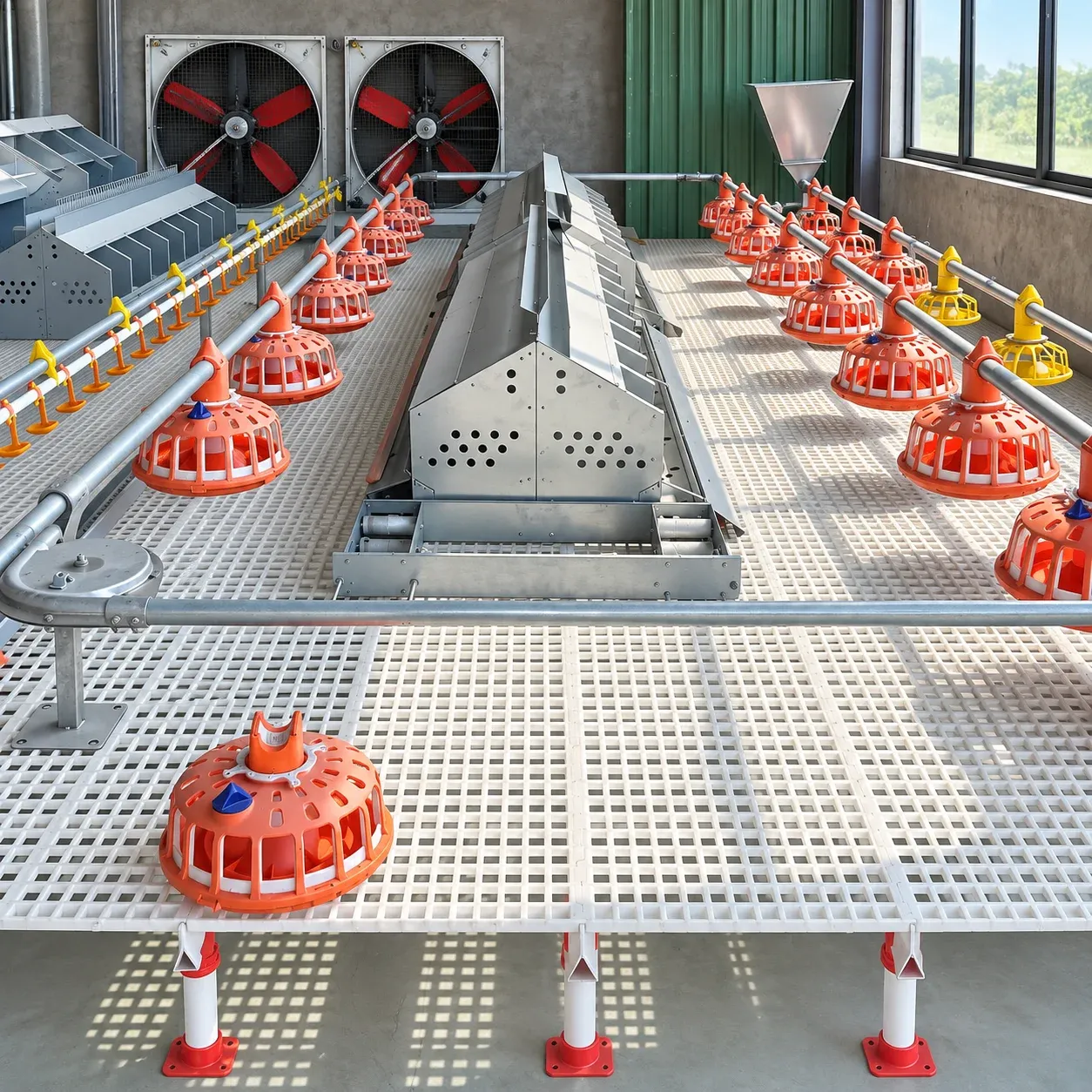
The panels are moulded from food-grade high-strength polypropylene, chosen because it resists the ammonia, moisture and disinfectants that would corrode metal and rot wood. The surface is textured for grip but rounded so it does not abrade feet, and the whole system is designed to be lifted out and washed between flocks — critical for terminal disinfection and all-in-all-out biosecurity. Unlike concrete or timber slats, plastic panels do not splinter, harbour biofilm in cracks, or need replacing every few seasons.
Slatted Floor Planning
Read the selection checklist
Slat-and-litter vs full-slat layouts
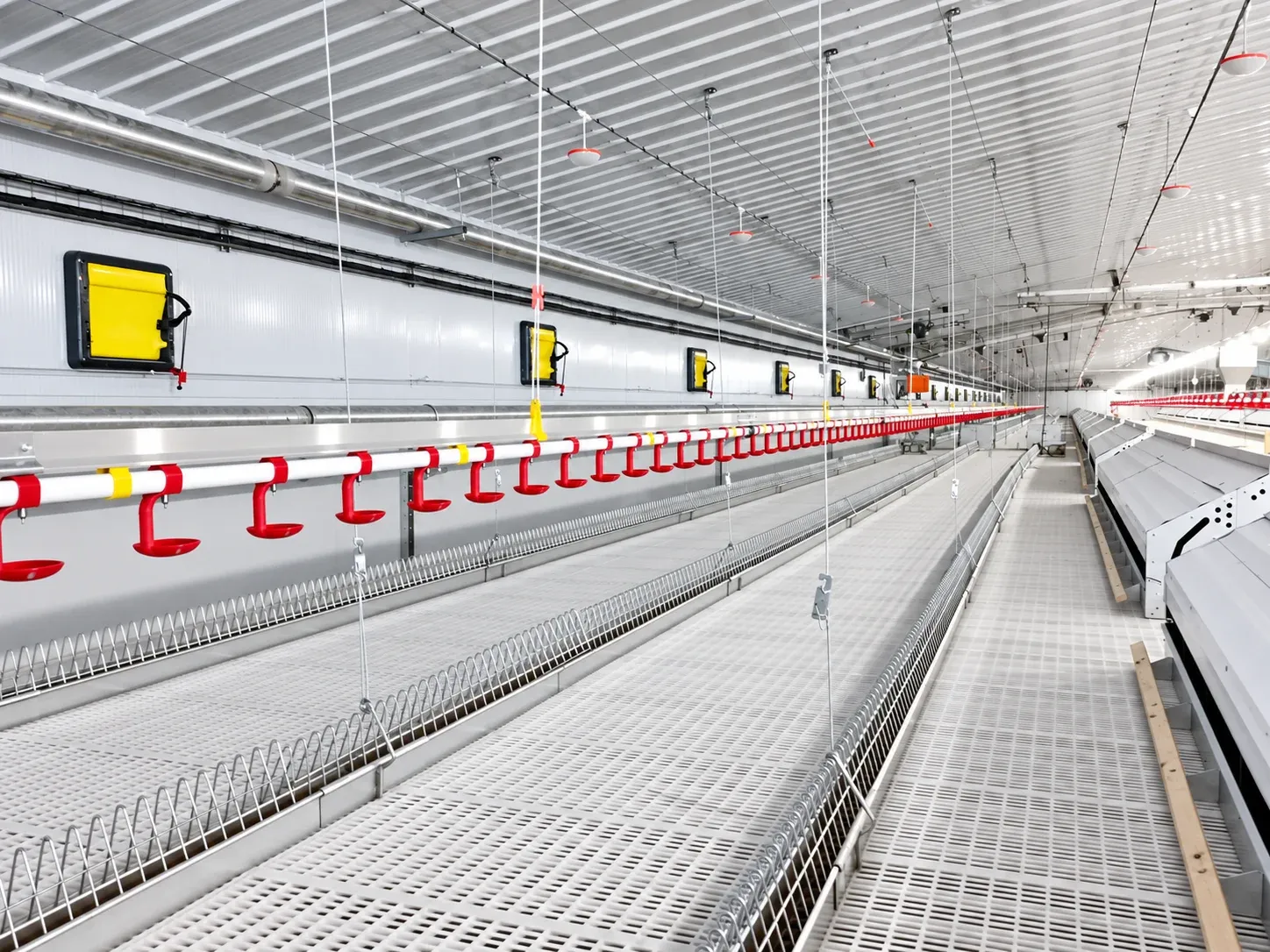
There are two ways to deploy the panels, and the choice shapes the whole house. A full-slat layout runs slats across the entire floor — maximum cleanliness and lowest labour, used where you want every bird off litter. A slat-and-litter layout, common for breeders and cage-free layers, puts slats over the feeding, drinking and nesting zone (typically the raised centre or sides) with a litter scratch area in between, so hens still get to dust-bathe and forage while eggs and droppings concentrate on the slats. Decide the ratio based on welfare requirements and how much litter behaviour your market expects.
Footpad health and the slat gap that matters
The single spec that governs bird health on a slatted floor is the gap between slats. Too wide and legs or toes catch and droppings pool on the surface; too narrow and manure fails to pass through, defeating the purpose. A correct gap passes droppings cleanly while fully supporting the foot, and the slat top is smoothed so there is no sharp edge under a standing bird. When comparing panels, look at the actual slat profile and gap, not just the panel size — that detail decides footpad condition over a long flock.
Load rating: birds, workers and equipment
A slat floor carries more than birds. It must hold the full stocking density plus a worker walking the house for inspection, and in some layouts the weight of nest units or feed lines mounted on top. Quality panels are rated and supported on a frame or dwarf walls at the correct span so they do not flex or crack under that combined load. Confirm the load rating and the recommended support spacing for your bird type — a breeder house with heavy birds and staff traffic needs more than a light layer setup.
Where slat floors fit: breeders, brooding, cage-free
The same panels serve several houses. In floor-breeder systems they form the raised slat zone around the nests, keeping hatching eggs clean. In brooding, they lift chicks off cold or wet floors. In cage-free layer and aviary houses they underpin the litter-and-slat welfare layout. They are also widely used for ducks and breeders where wet manure would otherwise ruin litter fast. If any part of your operation fights wet floors, high ammonia or dirty eggs, slats are usually the fix.
Panel specs and layout planning
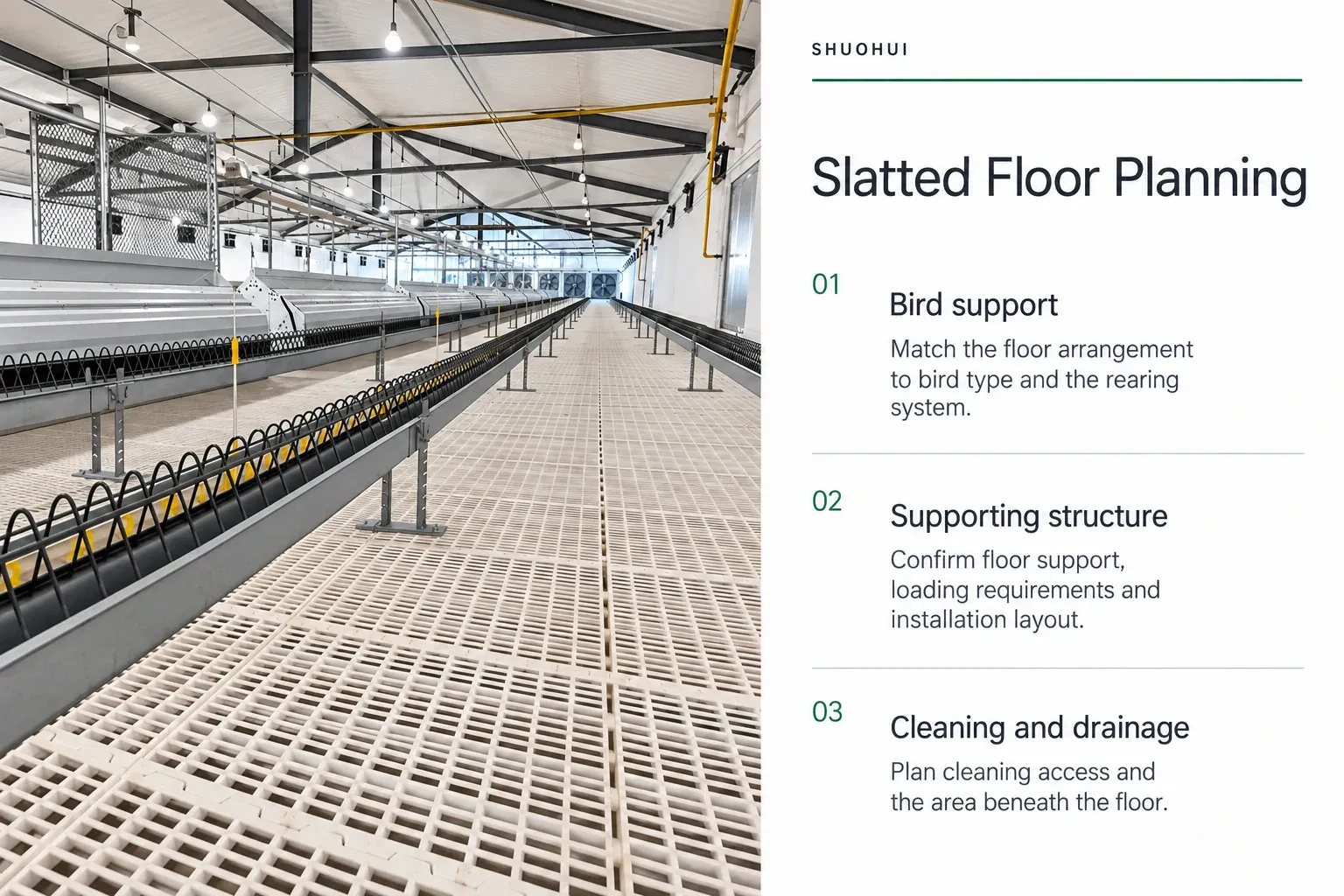
To specify a slat floor, define three things: the slat gap for your bird type, the load and support spacing for your traffic and equipment, and the full-slat vs slat-and-litter ratio your welfare standard needs. Insist on genuine food-grade PP panels that lift out for cleaning, and hold the supplier to ISO 9001, SONCAP and PVOC certification for export markets.
Tell us your bird type, house dimensions and whether you want full-slat or slat-and-litter, and we will lay out a panel plan with the right gap, support frame and coverage for your building.
Equipment views & details
ORDER & DELIVERY
Shipping process
- 01
Requirements
Share your bird type, planned capacity, destination and project needs.
- 02
Configuration and order
Confirm the equipment list, drawings, quotation and agreed order terms.
- 03
Production and inspection
Prepare and inspect the equipment against the confirmed configuration.
- 04
Packing and loading
Check the packing list and coordinate protective packing and loading arrangements.
- 05
Transport and dispatch
Arrange shipment and the required documents according to the agreed delivery terms.
- 06
Arrival and handover
Check the delivered packages and equipment, and coordinate the next installation steps.