A note saying “belt repaired” is not much help when the same fault returns next week. A note that identifies the house, row, tier, symptom and action gives the farm and service team something to investigate.
That is the starting point for cage maintenance: notice a change, record where it happened and deal with it using the instructions for the installed equipment. Cleaning and adjustment schedules vary by machine and conditions. A generic article should not replace the manufacturer's lubrication, tensioning or isolation procedure.
During routine rounds, look for changes you can describe
Observe equipment from the designated safe positions. Keep hands, tools and clothing clear of moving parts. Do not remove a guard or reach into a drive to investigate a noise while it is running. Service work needs the prescribed shutdown and isolation procedure and the appropriate trained person.
- Drinking lines: leaks, damaged components, wet areas and differences in access or delivery that need investigation.
- Feed equipment: visible spillage, interruptions in distribution, damaged troughs and recurring faults at a particular location.
- Egg handling: unusual accumulation, damaged belts or transfers, and changes in breakage that can be linked to a section of the route.
- Manure handling: visible mistracking, abnormal accumulation, damaged scrapers and problems at the cross conveyor or discharge.
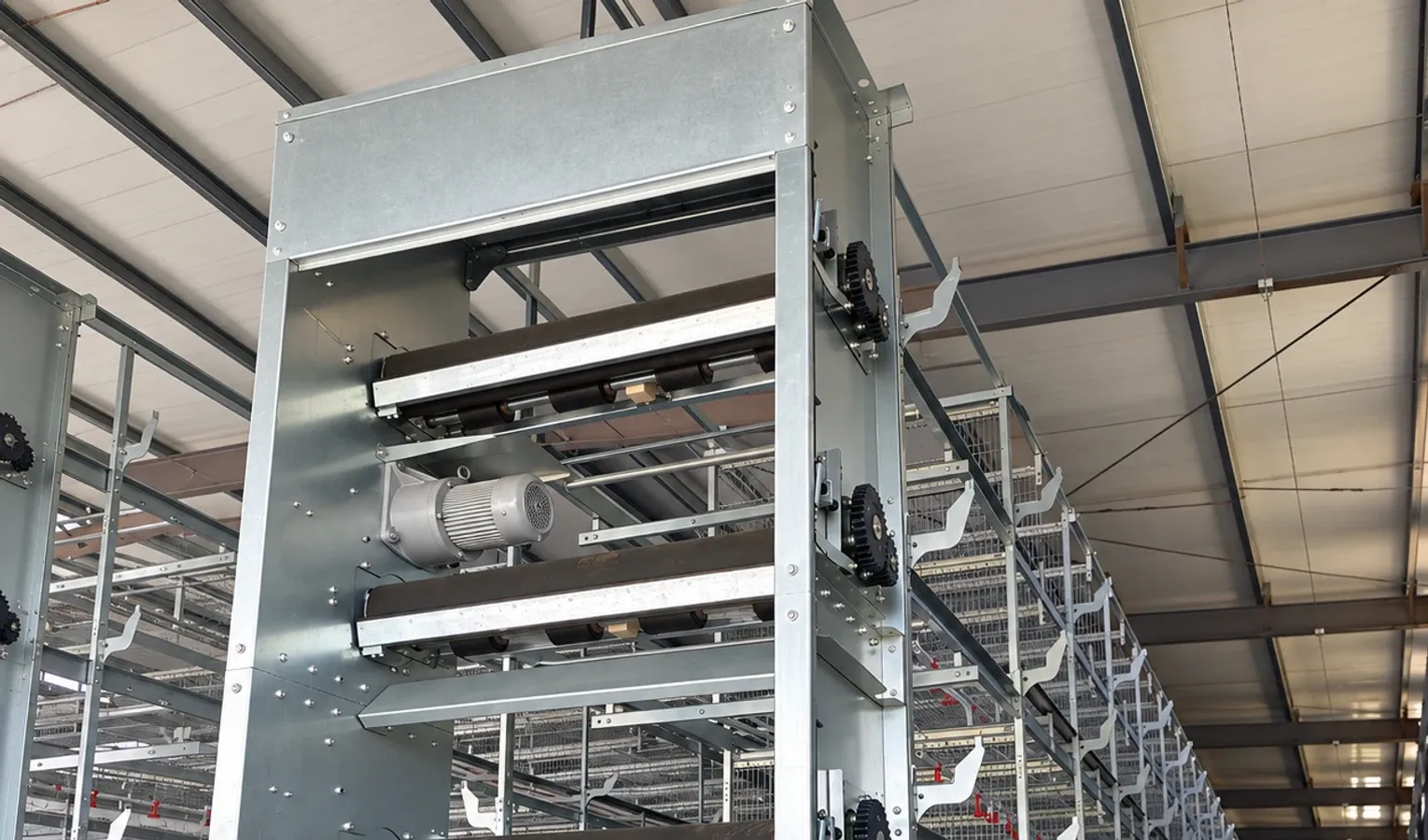
- Drives and structure: new vibration, unusual noise, loose or damaged guards, distorted parts and visible corrosion.
These observations tell you where to investigate; they do not identify a single cause on their own. Repeatedly tightening or replacing a component without finding the reason for its failure can leave the underlying problem untouched.
Keep a fault record that the service team can use
Use one line for each incident: date, house/row/tier, equipment model, symptom, operating condition, photograph or video reference, action, replacement-part reference and retest result. Add who performed the work and whether further action is due.
For example, an illustrative log entry could read: “House 1, row 2, manure transfer: material accumulated at the discharge during the morning run. Unit stopped and isolated under the site procedure. Installer contacted with photos; cause and corrective action pending.” It reports what was observed without guessing that the motor or belt must be at fault.
Keep model plates and parts-list revisions available. Two similar-looking drives may not use the same replacement component.
Deal with persistent moisture before repainting the symptom
If corrosion repeatedly appears below a leaking connection, record the leak as well as the damaged surface. Ask the supplier how to assess the affected component and which cleaning or repair method is compatible with its finish. Do not apply an improvised chemical treatment or coating to a food-contact, bird-contact or moving part.
Colour alone can be misleading. The American Galvanizers Association's field-inspection notes distinguish several surface appearances on galvanized steel. Use that as background for an assessment, not as proof that every brown or white mark is harmless. Thin wire, load-bearing damage and worn moving parts need attention appropriate to their actual condition.
Use the empty-house period for work that needs access
Review the fault log before the flock leaves. Identify confirmed replacement parts, access equipment and specialist work so that the downtime is not spent discovering what to order. Follow the installed-system instructions for cleaning, drying, inspection and service.
After work is complete, restore guards and carry out the specified checks before returning the system to operation. Record unresolved items and who must approve their closure. A new component is not a completed repair until its installation and operation have been checked.
How long should a cage system last?
There is no reliable answer based on “galvanized” alone. Materials, coating, wear, damage, environment and maintenance all matter, and different parts of the same system may need replacement at different times. Ask for component-specific warranty terms and maintenance requirements instead of assuming a whole system will operate untouched for a fixed number of years.
For the material side of the question, read why chicken cages rust. For problems beyond the row itself, check the manure-removal route. When asking for service guidance, send the model, location, symptom and relevant records rather than a photograph with no context.