


When a manure belt needs replacing, the quickest question is “What thickness should I buy?” The more useful first step is to identify the belt already fitted and the machine it runs on. A thicker belt is not automatically a compatible replacement.
Width, material, joint method and the drive arrangement all belong in the order. If one is wrong, a roll that looks suitable on delivery may still be unusable when the house is ready for maintenance.
What the 1.2 mm figure in a quotation does—and does not—tell you
One layer-equipment specification in our quotation records lists a 1.2 mm virgin polypropylene manure belt. That identifies a material and nominal thickness for that configuration. It does not provide the finished belt width, loop length, joint detail or installation settings for a different house.
The same specification describes the drive assembly separately: a 3 mm zinc-aluminium-magnesium panel, rubber-coated drive roller, scraper and two 1.5 kW motors. These belong to one quoted assembly. They are not minimum requirements for every poultry manure belt and should not be used to size an unrelated drive.
That distinction matters when comparing offers. “1.2 mm belt” can describe the material without describing the system that has to move and clean it.
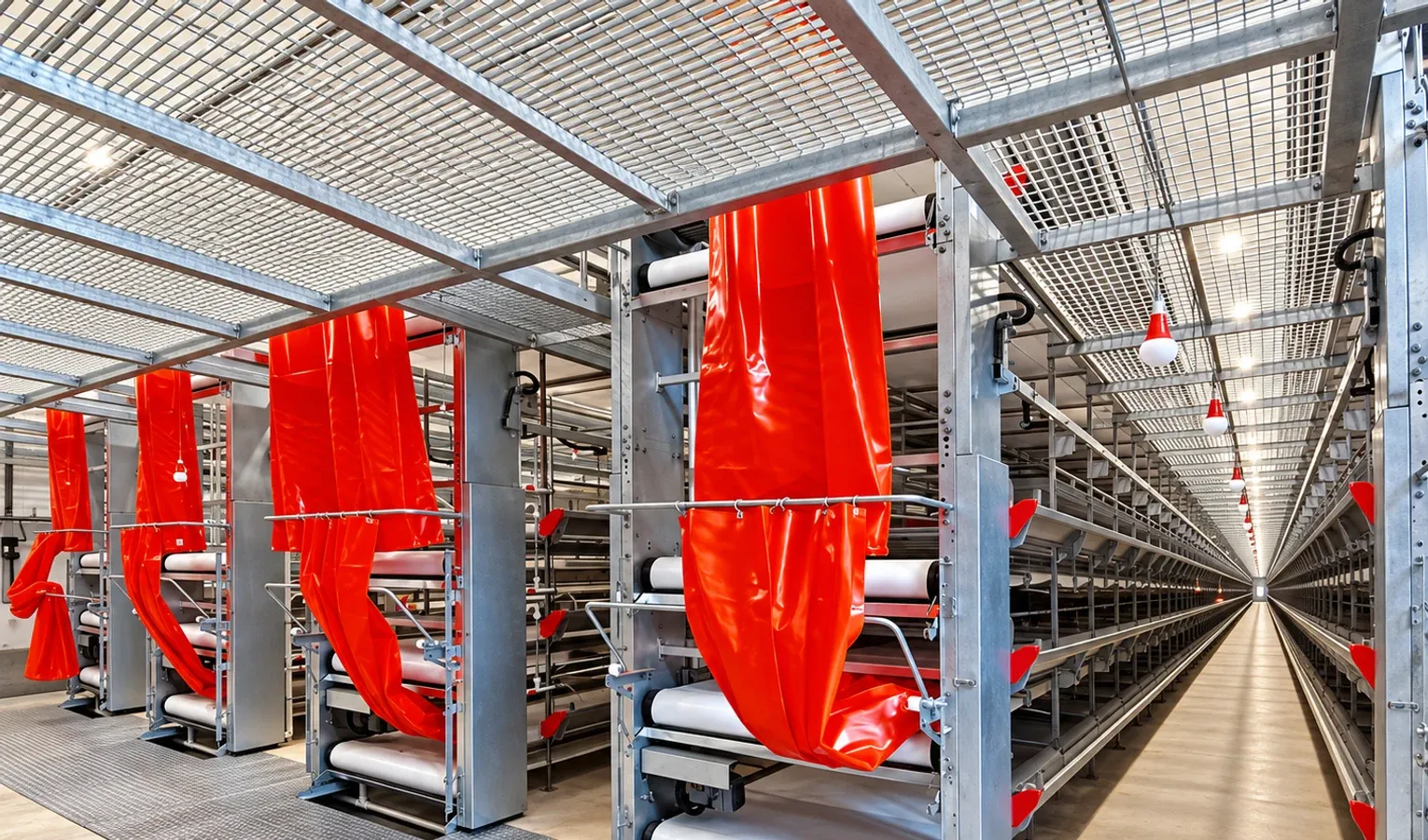
Find the installed-system information before requesting a replacement
Start with the equipment model, row identification, installation drawing and parts reference. Photograph the nameplate and the belt route from a safe position. Ask the original supplier which drawing or part number controls the replacement order.
- Confirm finished width and the measurement basis for length. A roll length and an endless operating loop are different ordering descriptions.
- State whether material is supplied as a roll, a prepared length or a finished belt.
- Agree who makes the joint, the required process and how its suitability is checked.
- Confirm compatibility with the drive roller, scraper, guides and adjustment range.
- Identify delivery packaging and storage instructions so the replacement is ready when the house is available.
Keep the manufacturer's dimensions and instructions attached to the request. A supplier should not have to identify the entire installation from a cropped photograph of a white belt.
A tracking problem may start somewhere else
If the existing belt repeatedly runs to one side, record when and where it happens. Describe the load, operating stage and any visible accumulation or damage. Ask the service team to investigate the cause before assuming a new belt will cure it.
Checking or adjusting a drive requires the prescribed shutdown and isolation procedure. Observe from the intended safe positions while equipment is operating. Do not reach under a running belt or remove a guard to see what it is touching.
The cage maintenance guide provides a useful fault-record format. A location, symptom and retest result are more valuable than a note saying only “belt changed.”
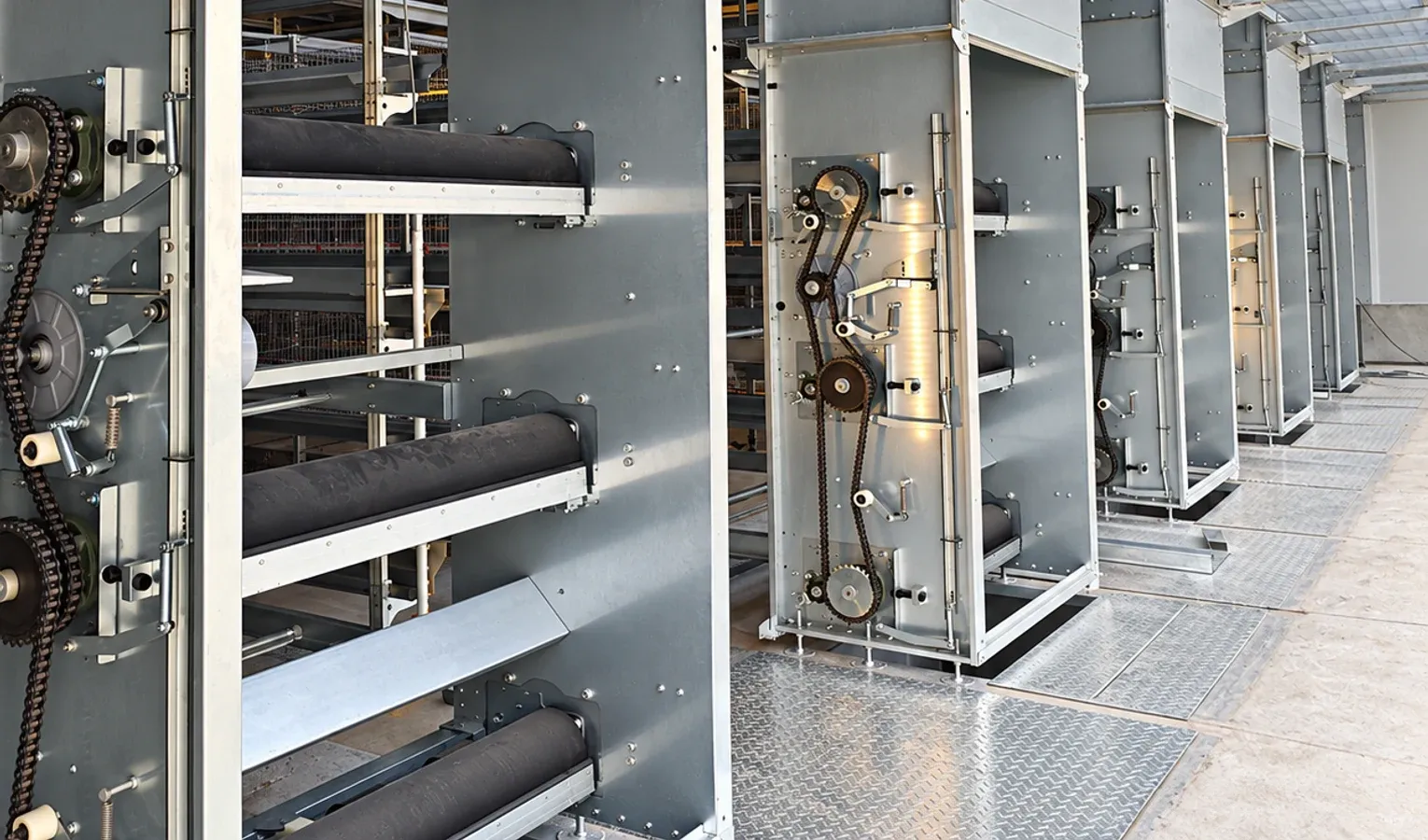
Follow manure beyond the end of the row
The row belt hands material to another part of the system. Check the cross conveyor, transfer point and outside discharge as well. An obstruction downstream can leave a row system with nowhere to send its load.
Include those interfaces when arranging maintenance. Establish who services the transfer equipment and whether access or lifting arrangements are needed. The manure-removal layout guide explains why the equipment boundary at the house wall deserves attention.
What to include in the enquiry
Send the installed model and part reference, confirmed dimensions, material specification, required supply form and photographs showing the route and drive. State whether this is a replacement for an existing system or a new installation. Include the date when the house can be made available for the work.
For a new belt manure-removal system, ask for the belt and drive details together. For a replacement, have the supplier confirm compatibility in writing before ordering material merely because its advertised thickness matches.
Related reading
Chicken Cage Maintenance: What to Check and Record
Poultry Equipment Installation Costs Buyers Often Miss
Automated Manure Removal & Organic Fertilizer Processing Standards
Timely manure extraction is essential for biosecurity and maintaining in-shed ammonia levels strictly below 10 ppm (NH3 < 10 ppm). In automated multi-tier cage houses, each tier is equipped with a continuous 1.0mm to 1.2mm virgin polypropylene (PP) manure conveyor belt supported by galvanized cross braces.
Belts operate on an automated 2 to 3-day cycle, discharging droppings onto a cross scraper or inclined cross belt conveyor to an external collection trailer or high-temperature fermentation composting reactor.
Aerobic vertical fermentation composting tanks process poultry manure at 60°C to 70°C, killing pathogenic bacteria, weed seeds, and fly larvae within 7 to 10 days, converting raw waste into high-value organic fertilizer.
Related Technical Guides & Systems
Automatic Manure Removal System (Belt Type)
Poultry Manure Drying Equipment
Commercial Poultry Manure Composting: High-Temperature Fermentation Tanks
Poultry Manure Belts: Sizing, Thickness (1.2mm PP) Buying Guide