Automatic Manure Removal System (Belt Type)
Specifications
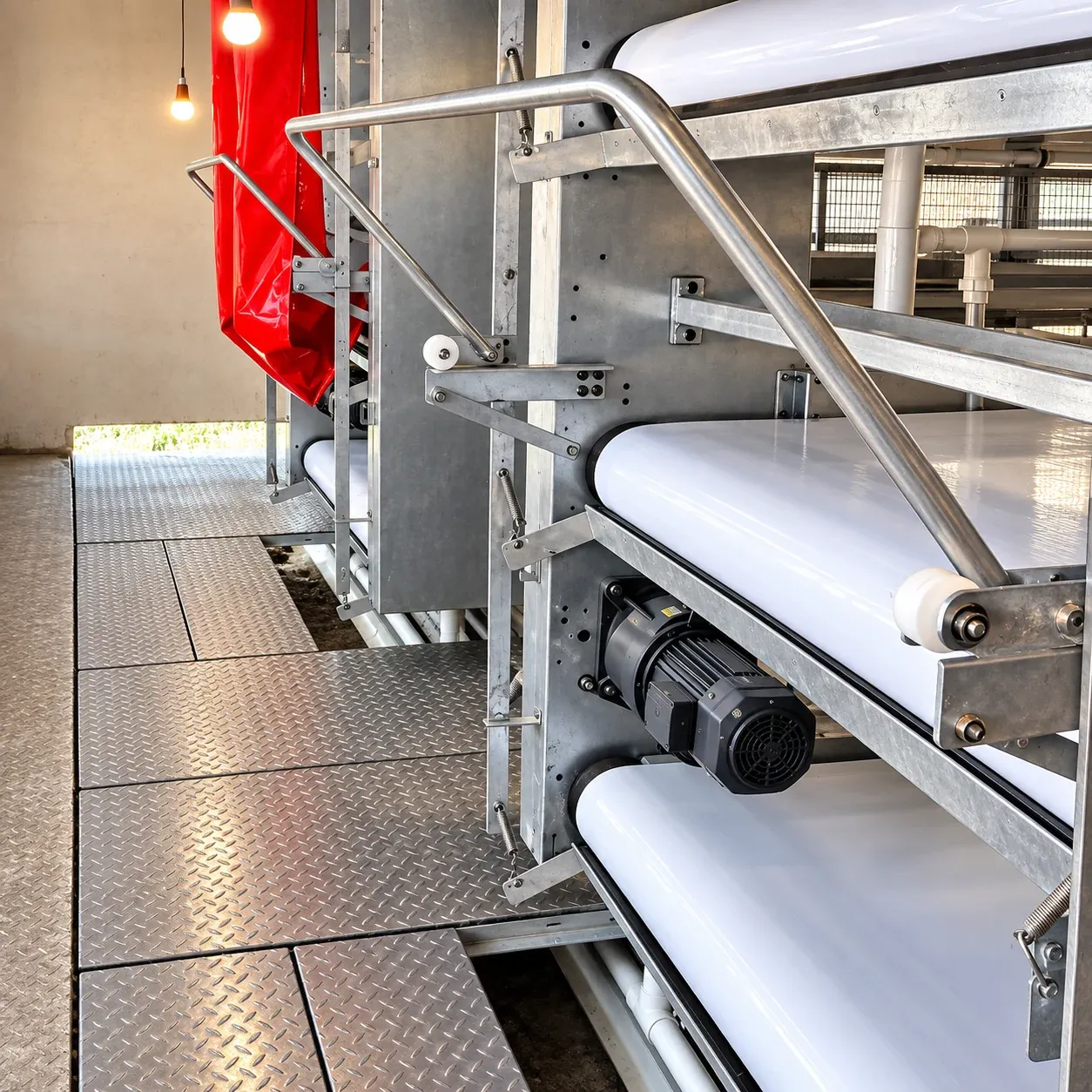
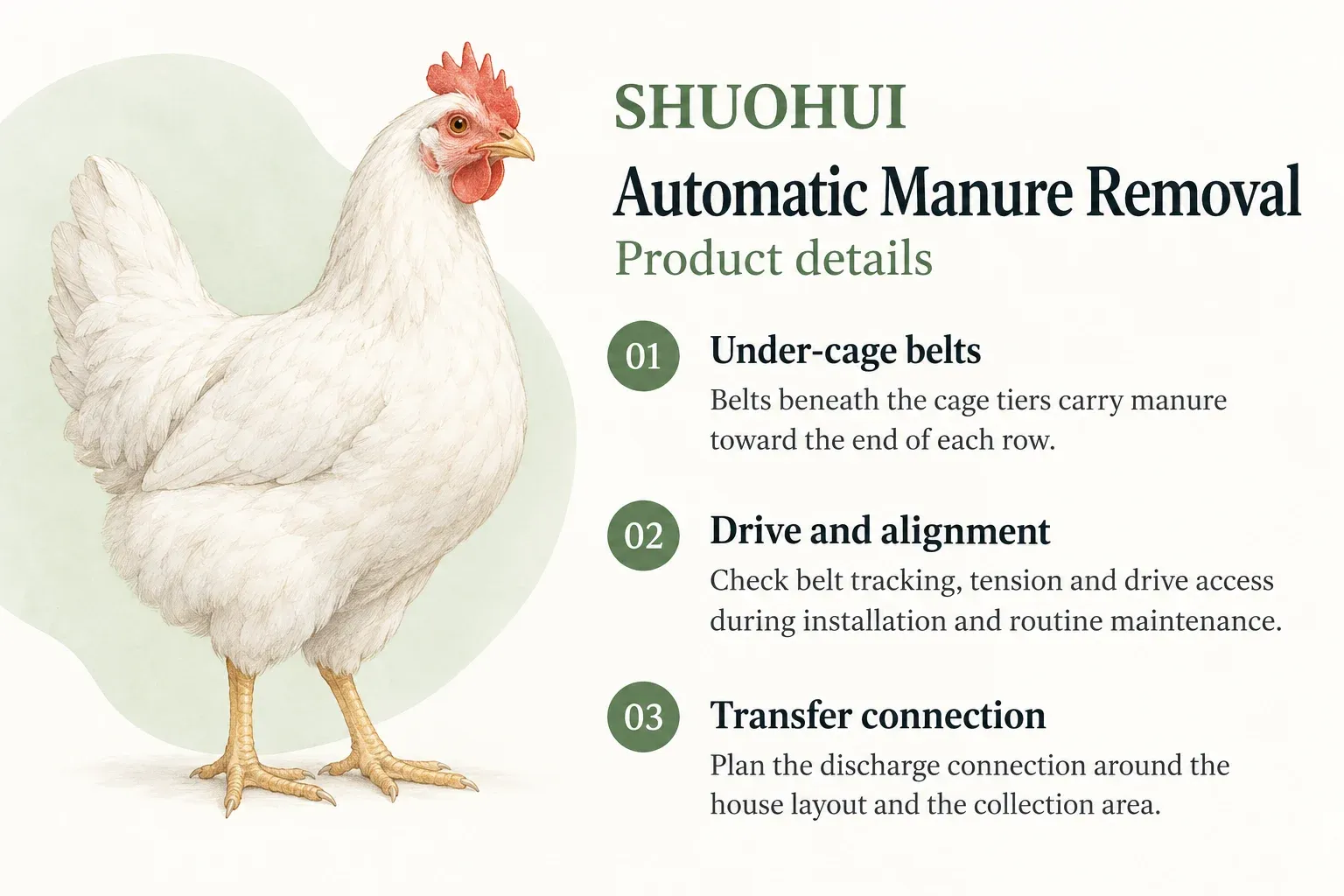
- TypeBelt manure removal, one belt per cage tier
- DriveMotorized head unit per row, timer or controller run
- DryingOptional cross-flow air tubes over the belts
- DownstreamFeeds drying, composting or dewatering
- AlternativeScraper (A-frame) systems for stepped cages
- Belt materialFood-grade PP (or PU) manure belt
- CertificationISO 9001, SONCAP, PVOC
- Ammonia effectHolds in-house ammonia under about 25 ppm (under 20 is better)
- Cross conveyorTransverse belt carries manure out of the house
- Manure moisture~60% fresh, dried on-belt toward ~30%
- Cleaning cadenceDaily, or every 2 to 4 days after belt drying
- Share of cage budgetAround 28% of a fully-equipped layer system
Ask a first-time layer-house buyer what the second most expensive system in the building is and almost nobody says manure removal, yet on a fully-equipped H-type house it runs close to a quarter of the equipment cost. That is because clean removal is what keeps ammonia down, hens laying, and the barn liveable. This page covers how belt removal works and how to spec it.
Belt vs Scraper: Two Ways to Move Manure
There are two mechanisms and they suit different cages. A belt system runs a PP belt directly under each tier, so droppings fall onto the belt and ride out of the house; it is the standard for stacked H-type cages where every tier needs its own collection. A scraper drags manure along a channel under stepped A-type cages. Belts keep tiers independent and dry the manure as it travels; scrapers are simpler but wetter and better suited to lower stepped houses. For multi-tier layer cages, belt-per-tier is the norm.
The Cleaning Cadence That Controls Ammonia
The reason to automate is air quality, and the lever is frequency. Running the belts daily, or every 2 to 4 days with belt drying in between, keeps manure from accumulating and holds in-house ammonia under about 25 ppm (and ideally under 20). That threshold matters: sustained ammonia above roughly 25 ppm suppresses growth, worsens feed conversion and, in layers, drops production. The controller lets you set the run schedule, so cadence is a setting you tune to your stocking density and season, not a fixed limit.
Manure Removal Details
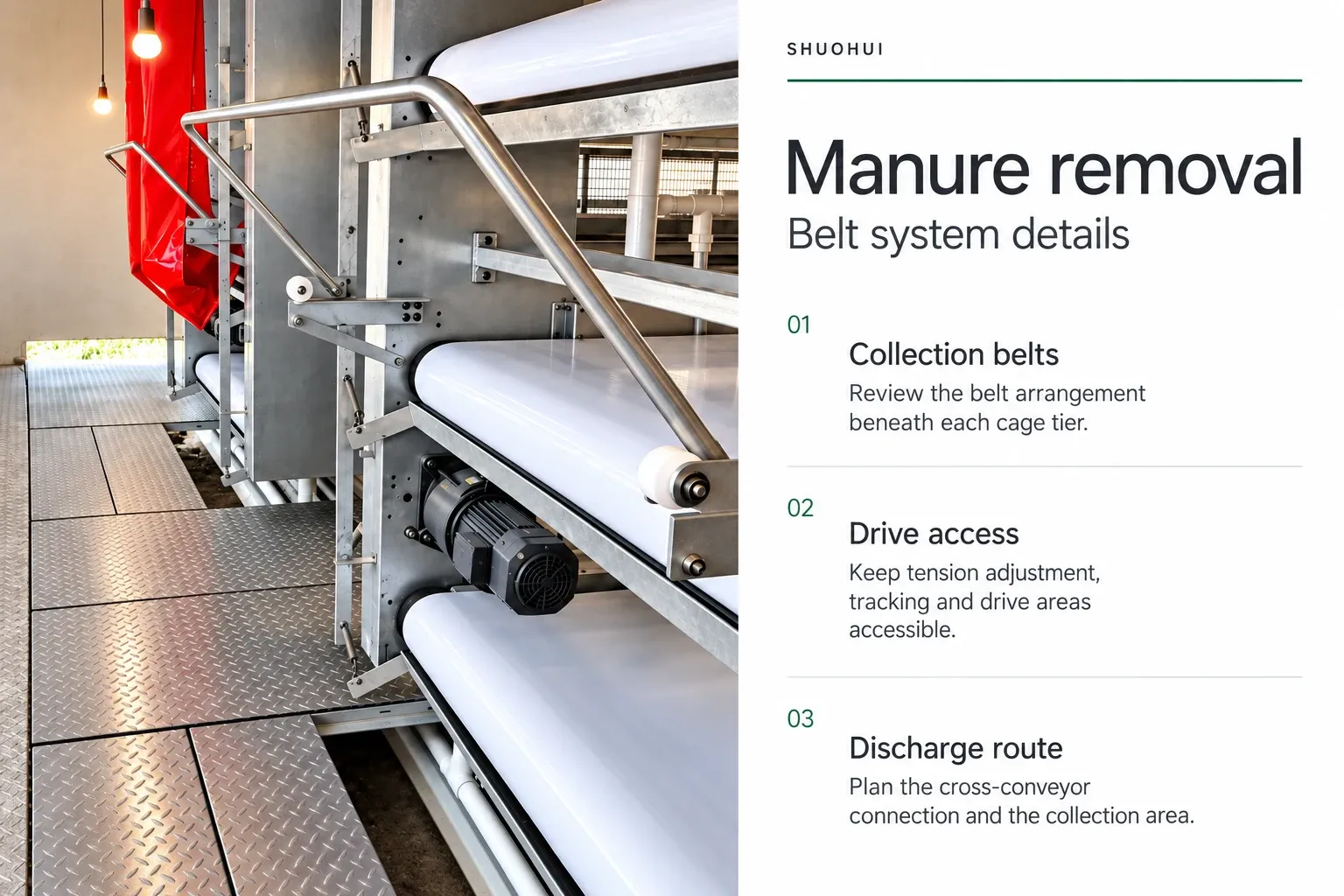
Read the selection checklist
Drying the Manure on the Belt
A belt does more than transport; it dries. Fresh manure is around 60% moisture, and moving it slowly under cross-flow air tubes pulls that down toward 30% before it leaves the house. Drier manure means less ammonia released, a lighter load to handle, and a far more sellable end product. If you plan to compost or bag the manure, specify the drying-tube option up front, because retrofitting airflow over installed belts is awkward.
The Cross Conveyor and Discharge End
Each row's belts deliver to a transverse cross conveyor at the house end, which gathers every row and carries the manure outside to a trailer, storage bay or dewatering unit. This is a distinct piece of equipment with its own motor, and it must be sized to the total manure flow of all the rows it serves. A common under-spec is a cross conveyor that cannot keep up when every row runs at once, which backs manure up inside the house.
Why This System Is a Quarter of the Cage Budget
Buyers are routinely surprised that manure removal can reach around 28% of a fully-equipped layer system's cost, nearly rivalling the cages themselves. That is belts on every tier, a drive head per row, the cross conveyor and its motor, and belt guards adding up across a long house. It is worth knowing before you compare quotes: a suspiciously cheap system has usually thinned the manure line, and you pay for it later in ammonia and labour.
Matching Belts to Your Tier Count
The system scales with the house, so belt width, the number of drive heads and cross-conveyor capacity all follow your tier count and row length. Give the supplier tiers, rows and bird numbers so each belt and motor is sized correctly; under-sizing shows up as belts that stall or manure that spills at the edges. Motor and drive quality here directly set how reliable your daily cleaning is.
What Happens to the Manure After the House
Belt-dried manure at roughly 30% moisture is a good feedstock for value rather than a disposal problem. It can go straight to composting, where a C:N ratio of about 20 to 35:1 and a pile temperature held over 55 C produces a stable organic fertiliser, or into a dewatering machine for further drying and bagging. Planning the downstream step when you buy the belts lets you size the discharge end to feed it cleanly.
Send us your house layout, tier count and whether you will compost or dewater, and we will size the belts, drying tubes, cross conveyor and drives to keep your ammonia in check.
Equipment views & details
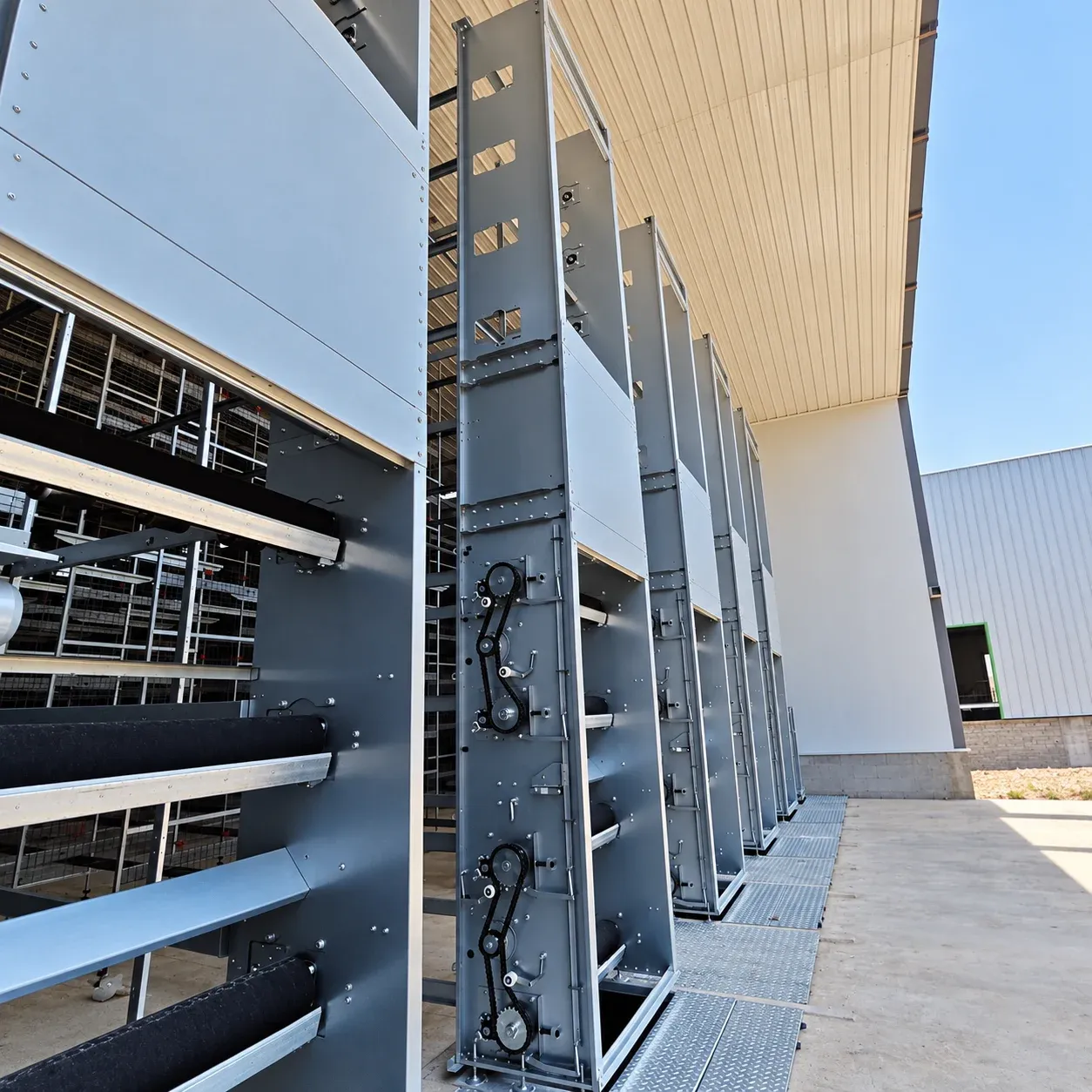
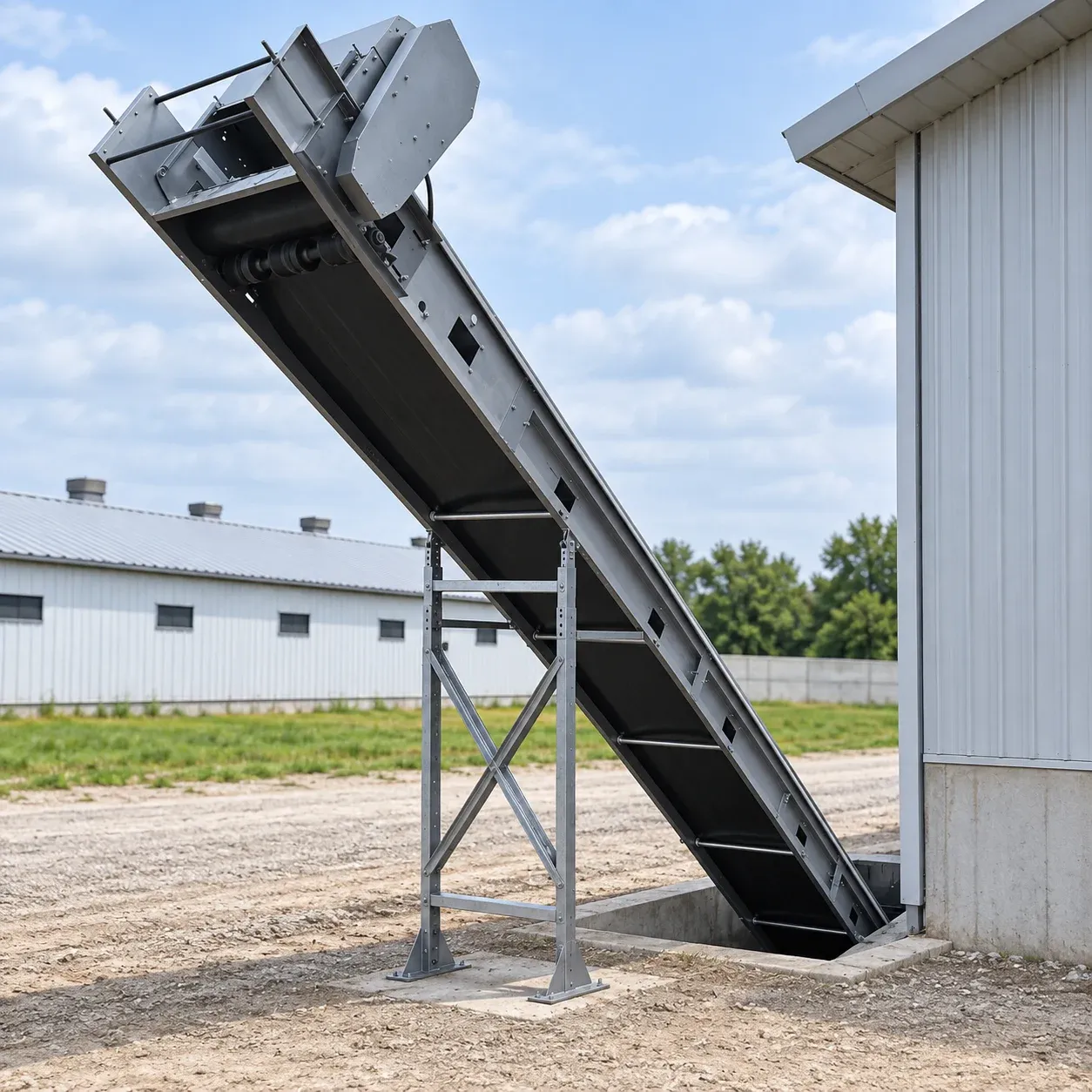
ORDER & DELIVERY
Shipping process
- 01
Requirements
Share your bird type, planned capacity, destination and project needs.
- 02
Configuration and order
Confirm the equipment list, drawings, quotation and agreed order terms.
- 03
Production and inspection
Prepare and inspect the equipment against the confirmed configuration.
- 04
Packing and loading
Check the packing list and coordinate protective packing and loading arrangements.
- 05
Transport and dispatch
Arrange shipment and the required documents according to the agreed delivery terms.
- 06
Arrival and handover
Check the delivered packages and equipment, and coordinate the next installation steps.