At a glance. Review cooling-pad area, fan performance, water distribution and humidity when planning evaporative cooling for a poultry house.
When outside air hits 35°C, no amount of fan power alone will keep birds comfortable — moving hot air over a hot bird just delivers hot air faster. The only affordable way to actually lower the temperature of the air entering the house is evaporative cooling: pulling incoming air through a wet pad so that evaporating water absorbs heat and drops the air temperature before it ever reaches the flock. Done right, an evaporative cooling pad system turns a brutal afternoon into a survivable one. Done wrong, it wastes water, rots pads, and cools nothing. This guide covers the numbers that separate the two.
How Evaporative Cooling Actually Works
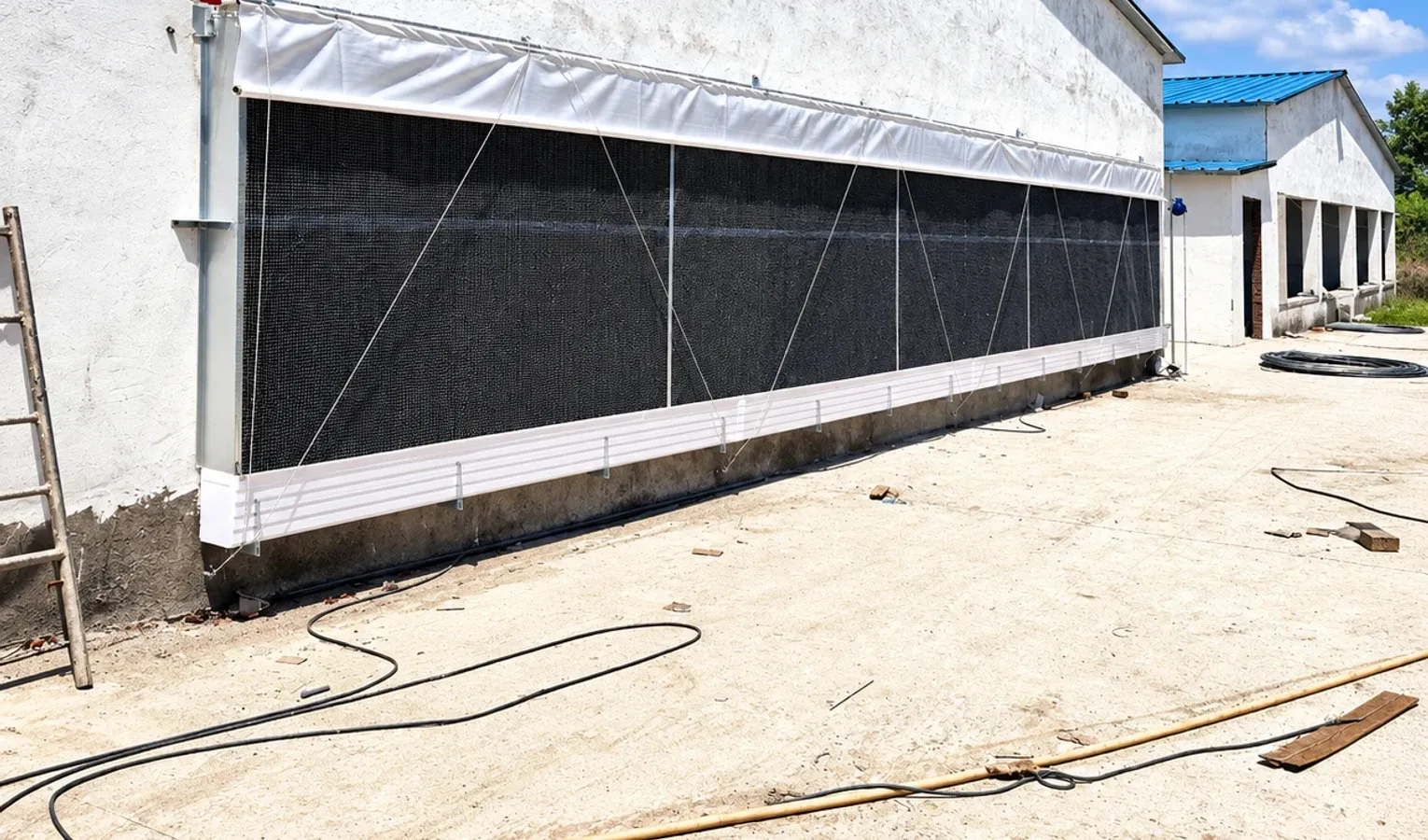
Evaporating water is a powerful heat sink. When liquid water turns to vapour it pulls a large amount of heat out of the surrounding air, and that heat comes straight off the temperature of the air stream.
- Hot, dry air enters the pad and passes over a large wetted surface.
- Some water evaporates into the air; the air gives up heat to do it.
- The air leaves the pad cooler but more humid than it entered.
This is why evaporative cooling is a summer, dry-climate hero and a humid-climate compromise — the drier the incoming air, the more water it can absorb and the bigger the temperature drop.
The Temperature Drop You Can Expect
A well-designed pad system delivers a real, measurable drop in incoming air temperature:
- Expect roughly 5.5 to 6.5°C of air-temperature reduction across the pad on a hot day.
- Combined with the wind-chill effect of tunnel airflow, birds can feel around 8°C cooler than the outside thermometer reads.
That combination — cooler air plus moving air — is what keeps a tunnel house productive when outside temperatures would otherwise crash feed intake and egg production.
Face Velocity: The Most Important Design Number
Face velocity is the speed at which air passes through the pad, and it must match the pad thickness. Too fast and air blows through before it can cool or, worse, carries water droplets into the house; too slow and you are not moving enough air.
- For a 15 cm (6-inch) thick pad, target a face velocity of about 1.8 m/s.
- For a 10 cm (4-inch) thick pad, target about 1.5 m/s.
The thicker pad tolerates faster air because the air spends more time in contact with the wet surface. Design your pad area around these velocities and everything else falls into place.
Sizing the Pad Area
The core sizing equation is simple: pad area equals total airflow divided by face velocity.
- Total tunnel airflow is set by the house size and the target air speed at bird level.
- Divide that airflow by the face velocity for your pad thickness to get the required pad face area.
As a worked reference point, a house of about 16,500 birds typically needs on the order of 39 m² of pad face area to cool its full tunnel airflow at the correct face velocity. Undersize the pad and you either starve the fans or push air through too fast to cool; oversize it and you spend money on pad you do not use.
Cooling Efficiency: 70 to 90 Percent
Pad efficiency describes how close the cooled air gets to the theoretical maximum drop (the wet-bulb temperature). Quality cellulose pads, properly wetted, deliver:
- Between 70 and 90 percent cooling efficiency in good condition.
- Higher efficiency from thicker pads, even water distribution, and clean, un-clogged material.
Efficiency falls off fast when pads are dry-streaked, scaled with minerals, or clogged with dust, which is why water distribution and maintenance matter as much as the initial sizing.
Watch the Humidity of Incoming Air
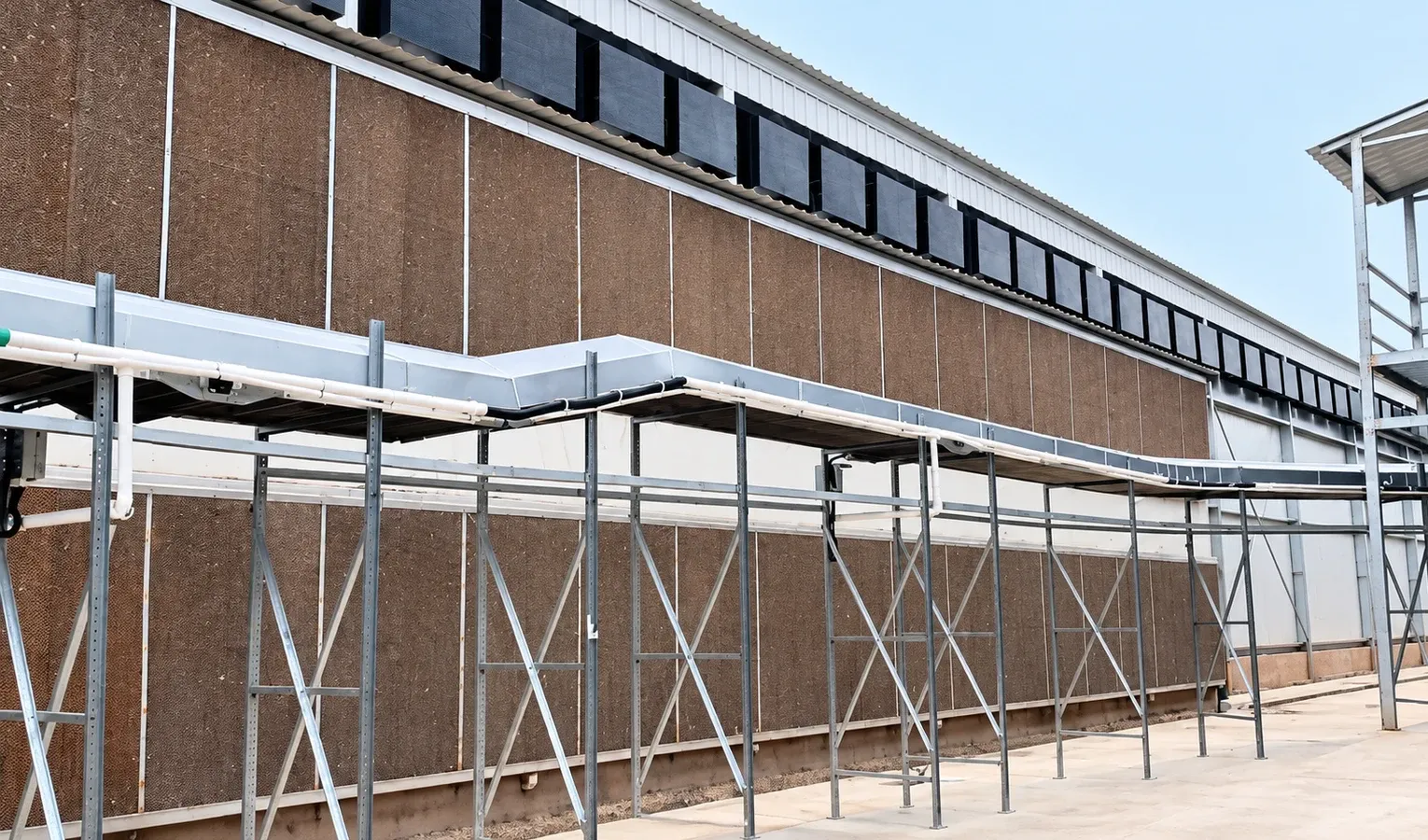
The catch with evaporative cooling is that it adds moisture. As air passes the pad, its relative humidity climbs sharply.
- Air leaving the pad typically sits at about 75 to 85 percent relative humidity.
- In already-humid climates, that high humidity limits how much you can cool and can stress birds by reducing their ability to lose heat by panting.
The practical rule: use pads aggressively in dry heat, and more cautiously in humid heat, watching bird behaviour and house humidity rather than running pads flat-out by reflex.
Negative Pressure Across the Pad
Pads work under tunnel ventilation, where exhaust fans pull air through the whole house and the pad is the main inlet. That pulling creates negative pressure across the pad.
- A typical design negative pressure across the pad is about 20 to 25 Pa.
- Correct pressure ensures air is drawn evenly through the entire pad face, not just the easiest path.
If the pad is too small or partly clogged, pressure spikes, fans lose airflow, and cooling collapses just when you need it most.
Do Not Cool Chicks: The 0–3 Week Rule
Young birds need warmth, not cooling. Running pads on a brooding house chills chicks and soaks litter.
- Keep pads off during roughly the first three weeks of a flock's life.
- Brooding birds are managed with heat and minimum ventilation, not evaporative cooling.
- Bring pads online only once birds are old enough to need cooling and can tolerate the added humidity.
Cooling a brooding house is one of the most common and most damaging pad-system mistakes.
Water Distribution and Quality
A pad only cools where it is wet. Uneven wetting leaves dry streaks that let hot air bypass the cooling entirely.
- Keep the full pad face uniformly wet with an adequate recirculation flow.
- Bleed off a fraction of the water continuously to stop minerals concentrating and scaling the pad.
- Treat hard water, because scale clogs pads and kills efficiency.
Good water management is the difference between a pad that lasts many seasons and one that fails in one.
Maintenance That Keeps Pads Cooling
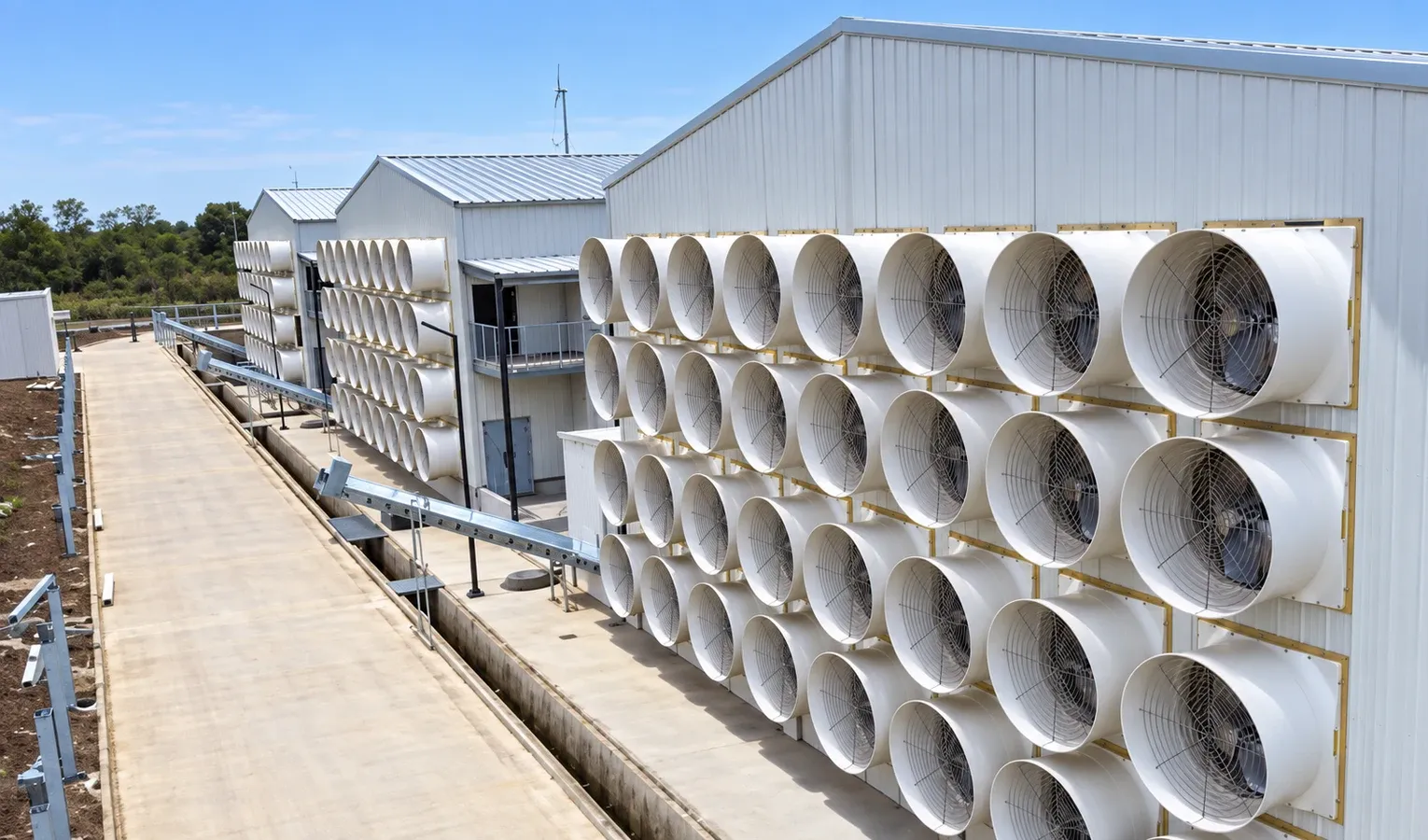
Pads degrade if neglected, and a degraded pad silently loses cooling capacity:
- Clean dust and algae off the pad face regularly.
- Inspect distribution pipes so every section wets evenly.
- Dry the pads out periodically to control algae, and replace sections that have collapsed or scaled.
- Check that gutters and sumps are clean so recirculated water stays clean.
A maintenance routine protects the 70–90 percent efficiency you paid for.
Common Pad-System Failures
Most pad problems trace back to a handful of errors:
- Undersized pad area, so face velocity is too high and air is not cooled.
- Dry streaking from poor water distribution, letting hot air bypass the pad.
- Scaled or clogged pads that choke airflow and spike static pressure.
- Running pads in humid conditions where they add heat stress instead of relieving it.
- Cooling chicks in the first weeks and soaking the brooding litter.
Each of these turns an expensive cooling system into an expensive humidifier.
A Sizing and Operating Summary
To put the whole system in one place:
- Set target tunnel airflow from house size and bird-level air speed.
- Pick pad thickness and its face velocity: 1.8 m/s for 15 cm, 1.5 m/s for 10 cm.
- Divide airflow by face velocity to get pad area (about 39 m² for a 16,500-bird house).
- Design for 20–25 Pa across the pad and 70–90 percent efficiency.
- Expect 5.5–6.5°C of air cooling, and up to ~8°C felt with wind chill.
- Keep pads off for the first three weeks, and manage water and humidity carefully.
Bringing It Together
An evaporative cooling pad system is one of the highest-return investments a hot-climate poultry house can make, but only when the numbers are right: correct face velocity for the pad thickness, enough pad area for the airflow, clean even wetting, and sensible use in humid conditions. Get those right and you buy back 5.5–6.5°C of air temperature and keep birds eating and producing through the worst of summer.
If you are designing a tunnel house and want the pads, fans, and controls sized as one matched system for your climate and flock, our engineering team can run the calculations for you. Contact us and we will help you build cooling that holds up when the heat arrives.
Visual checklist
Related reading
Poultry Exhaust Fan Sizing: Capacity and Duty Point
Poultry Air Speed and Effective Temperature
Further reading
UGA poultry ventilation resources
Check operating targets against bird age, local climate, measured house conditions and the equipment specifications. A general design example does not replace a house-specific ventilation assessment.