Evaporative Cooling Pad System
Specifications
- TypeCellulose evaporative cooling pad system
- FrameAluminium or galvanized, with sump and gutter
- Inlet air RHLeaves the pad at about 75 to 85%
- CertificationISO 9001, SONCAP, PVOC
- Face velocity1.5 m/s (10 cm pad) to 1.8 m/s (15 cm pad)
- Pad area ruleTotal airflow / face velocity (~39 m2 for 16,500 birds)
- Pad thickness10 cm or 15 cm cellulose
- Water circuitRecirculating pump, distribution header, bleed-off
- Negative pressureAbout 20 to 25 Pa across the pad
- Cooling efficiency70 to 90% in good condition
- Air-temperature dropAbout 5 to 6.5 C across the pad
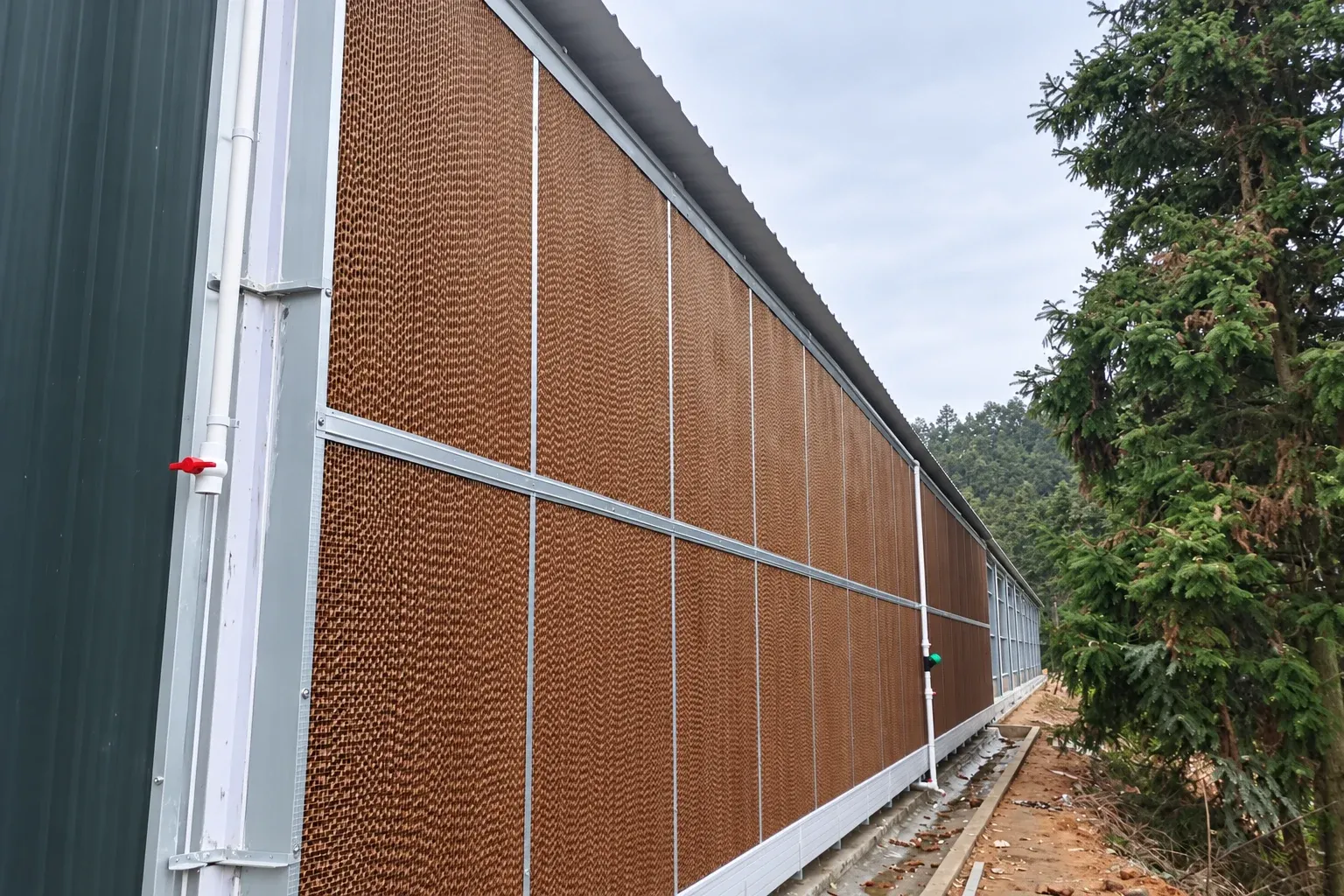
When outside air passes 35°C, moving more air over the birds only delivers hot air faster — the thermometer is the problem, and only evaporative cooling actually lowers it. An evaporative cooling pad system pulls incoming tunnel air through a wetted cellulose pad; the water evaporating off that huge wet surface absorbs heat and drops the air temperature before it ever reaches the flock. As a piece of equipment it is deceptively simple — pad, frame, water circuit — but each part has to be specified correctly or you end up with an expensive humidifier that cools nothing.
The Cooling You Can Measure
A properly wetted, correctly sized pad delivers a real, repeatable temperature drop of about 5 to 6.5°C across the pad face on a hot, dry afternoon. Add the wind-chill effect of tunnel airflow moving over the birds and the flock can feel close to 8°C cooler than the outside reading. That combination — cooler air plus moving air — is what holds feed intake and production together through a summer that would otherwise crash both.
Pad Thickness and Face Velocity
The pad's job is to keep air in contact with wet surface long enough to cool it, and that sets a speed limit. Match face velocity to pad thickness: about 1.8 m/s through a 15 cm (6-inch) pad, and about 1.5 m/s through a 10 cm (4-inch) pad. Push air faster than that and it blows through before cooling — or worse, carries water droplets into the house. The thicker pad tolerates faster air because the air spends longer against the wetted flutes, which is why most tunnel houses in serious heat choose 15 cm.
Cooling Pad System Details
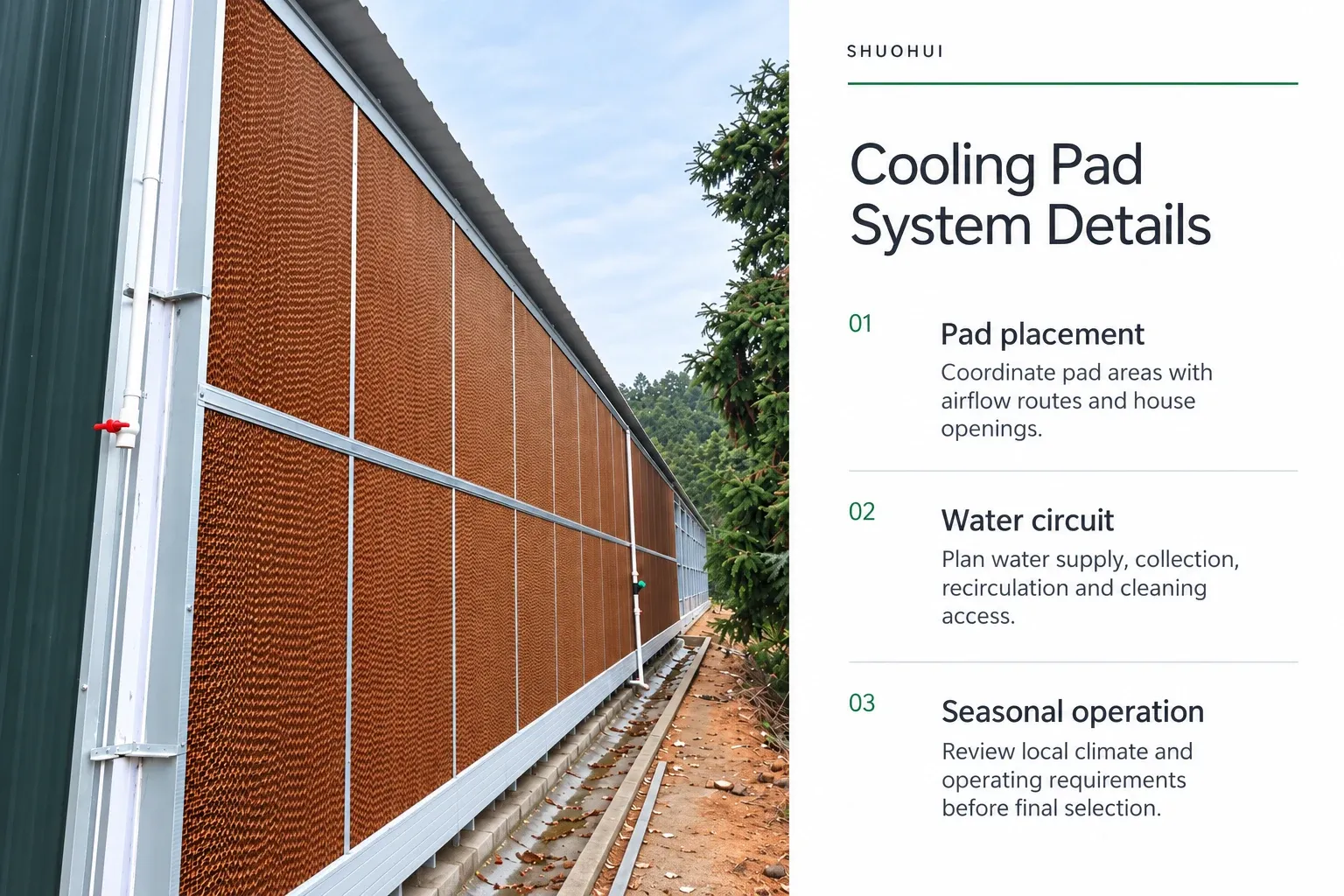
Read the selection checklist
Sizing Pad Area for Your House
Pad area is a straight calculation: pad face area = total tunnel airflow ÷ face velocity. Set your tunnel airflow from house size and target bird-level air speed, then divide by the face velocity for your pad thickness. As a worked reference, a house of about 16,500 birds needs on the order of 39 m² of pad face to cool its full tunnel airflow at the correct velocity — that is 39 m² × 1.8 m/s × 3600, roughly 250,000 m³/h, spread across the pad. Undersize the pad and you starve the fans; oversize it and you pay for material you never wet.
The Water Circuit: Pump, Distribution and Bleed-Off
A pad only cools where it is wet, so the water system is half the product. Look for a recirculating pump sized to keep the whole pad face uniformly flooded, a distribution header that wets evenly across the top, a clean sump and gutter, and — critically — a continuous bleed-off that dumps a fraction of the water so dissolved minerals cannot concentrate and scale the pad. Skip the bleed-off and hard water will clog the flutes and kill efficiency within a season.
Efficiency and What Erodes It
Pad efficiency measures how close the cooled air gets to its theoretical limit; quality cellulose pads run 70 to 90 percent in good condition. Efficiency falls fast with dry streaks from poor water distribution, mineral scale from no bleed-off, and dust clogging the intake face. The frame material matters here too: an aluminium or galvanized frame with a proper gutter keeps water where it belongs and resists the constant wet-dry corrosion cycle.
Humidity Limits: When Pads Help and When They Don't
Evaporative cooling adds moisture, so air leaving the pad sits at about 75 to 85 percent relative humidity. In dry heat that is a fantastic trade — big temperature drop, tolerable humidity. In already-humid climates the same pad adds less cooling and more moisture load, so you run it more cautiously and watch bird behaviour rather than leaving pads flat-out by reflex. And on young birds, keep pads off for roughly the first three weeks: chicks need warmth, not cooling or soaked litter.
Pairing Pads With Your Fan Bank
Pads are an inlet, not a standalone cooler — they only work under tunnel ventilation, where exhaust fans pull all the house air through them. That draw creates about 20 to 25 Pa of negative pressure across the pad. The fan bank sets the airflow, the airflow sets the pad area, and the pad area must let fans hit that pressure without choking. Specify pads and fans as a matched pair, never in isolation.
Buyer's Pad Checklist
Before ordering, confirm: pad thickness and the face velocity it is designed for; calculated pad area against your tunnel airflow; frame material and gutter design; pump capacity and whether a continuous bleed-off is included; and water treatment for hard supplies. Get those right and the system buys back 5-6.5°C of air temperature every hot afternoon for many seasons. Send us your house dimensions and fan bank and we will size the pad area, frame and water circuit as one system.
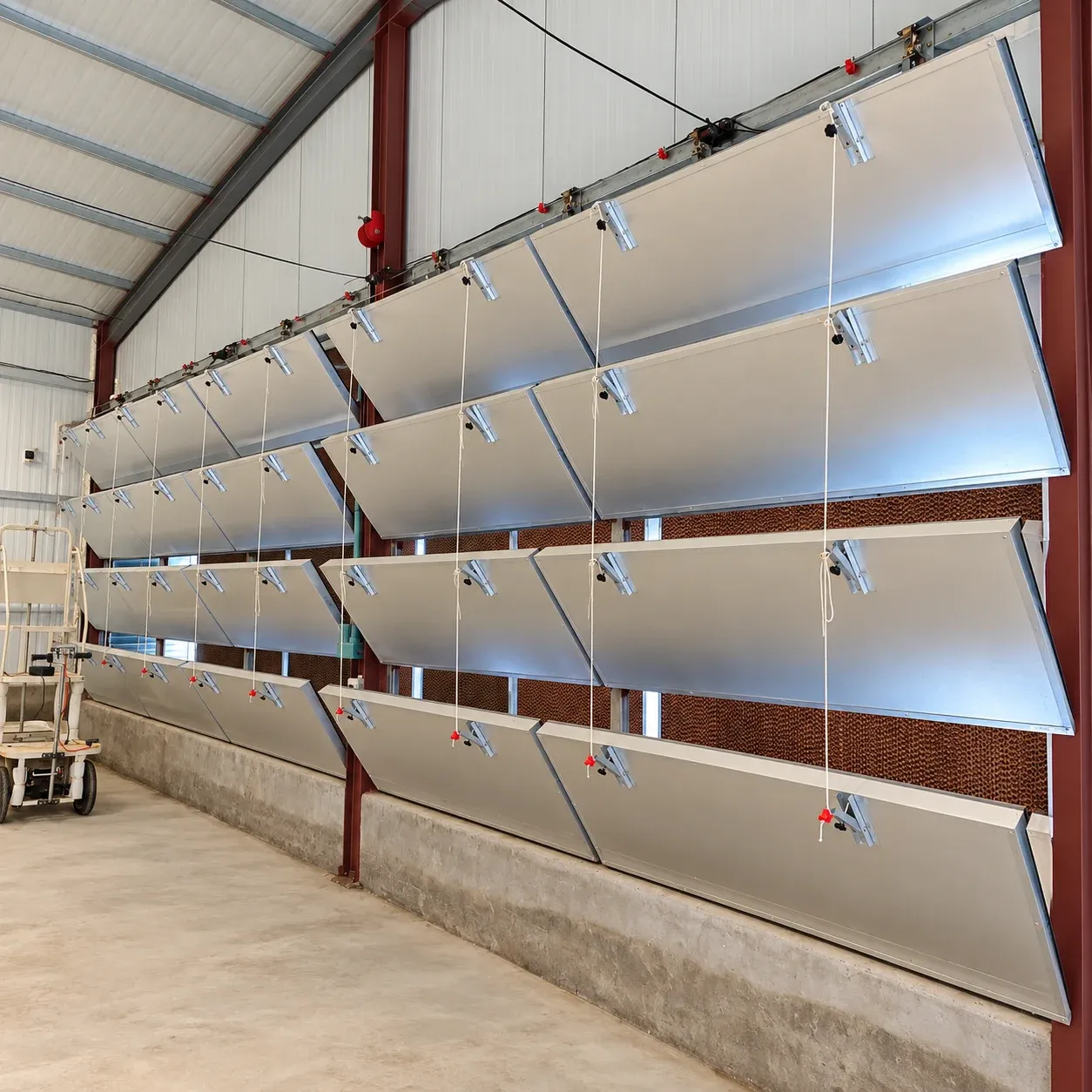
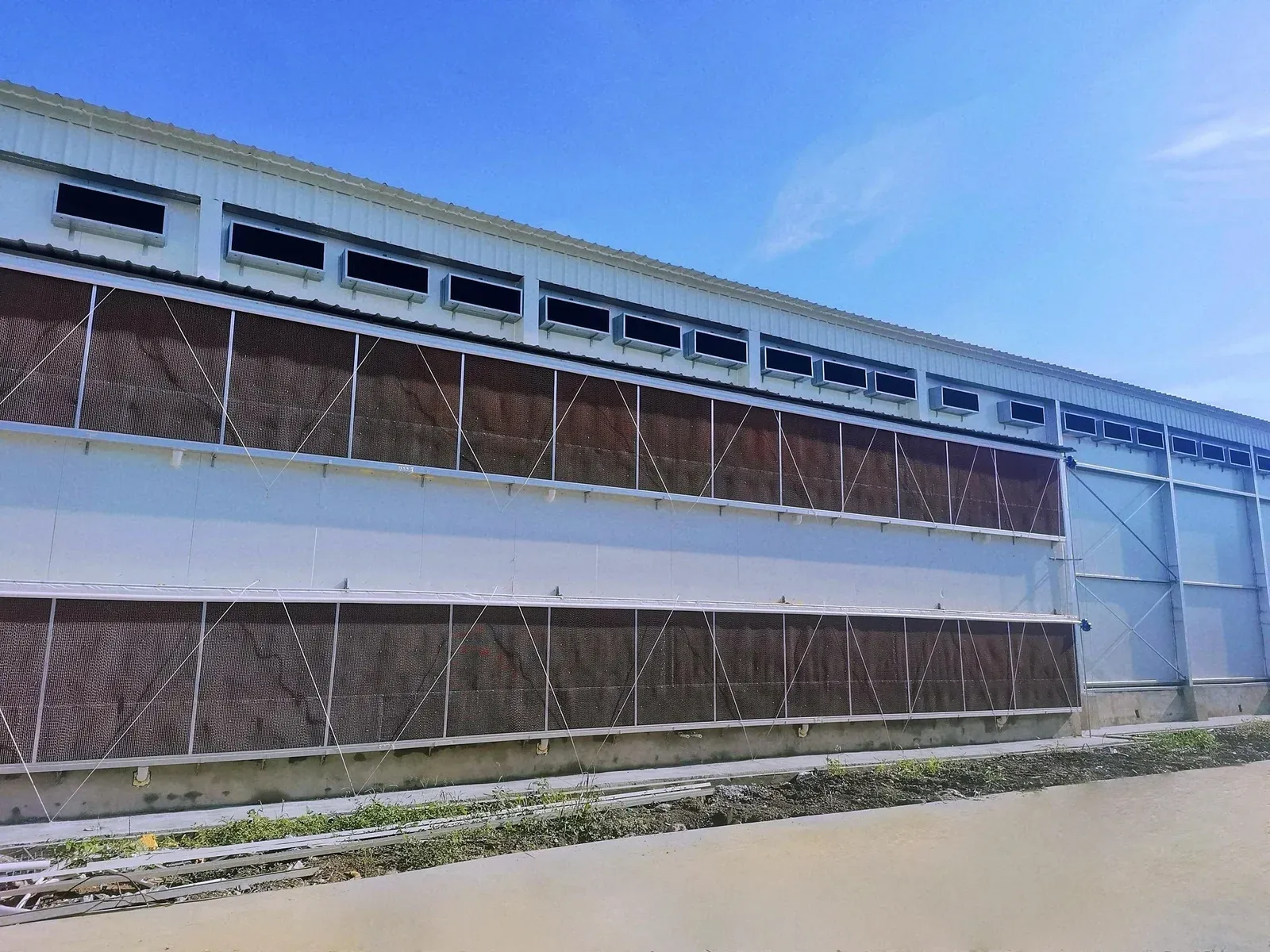
Equipment views & details
ORDER & DELIVERY
Shipping process
- 01
Requirements
Share your bird type, planned capacity, destination and project needs.
- 02
Configuration and order
Confirm the equipment list, drawings, quotation and agreed order terms.
- 03
Production and inspection
Prepare and inspect the equipment against the confirmed configuration.
- 04
Packing and loading
Check the packing list and coordinate protective packing and loading arrangements.
- 05
Transport and dispatch
Arrange shipment and the required documents according to the agreed delivery terms.
- 06
Arrival and handover
Check the delivered packages and equipment, and coordinate the next installation steps.