At a glance. Explore how air movement, humidity and bird age affect cooling, and why a poultry-house thermometer cannot describe every aspect of bird comfort.
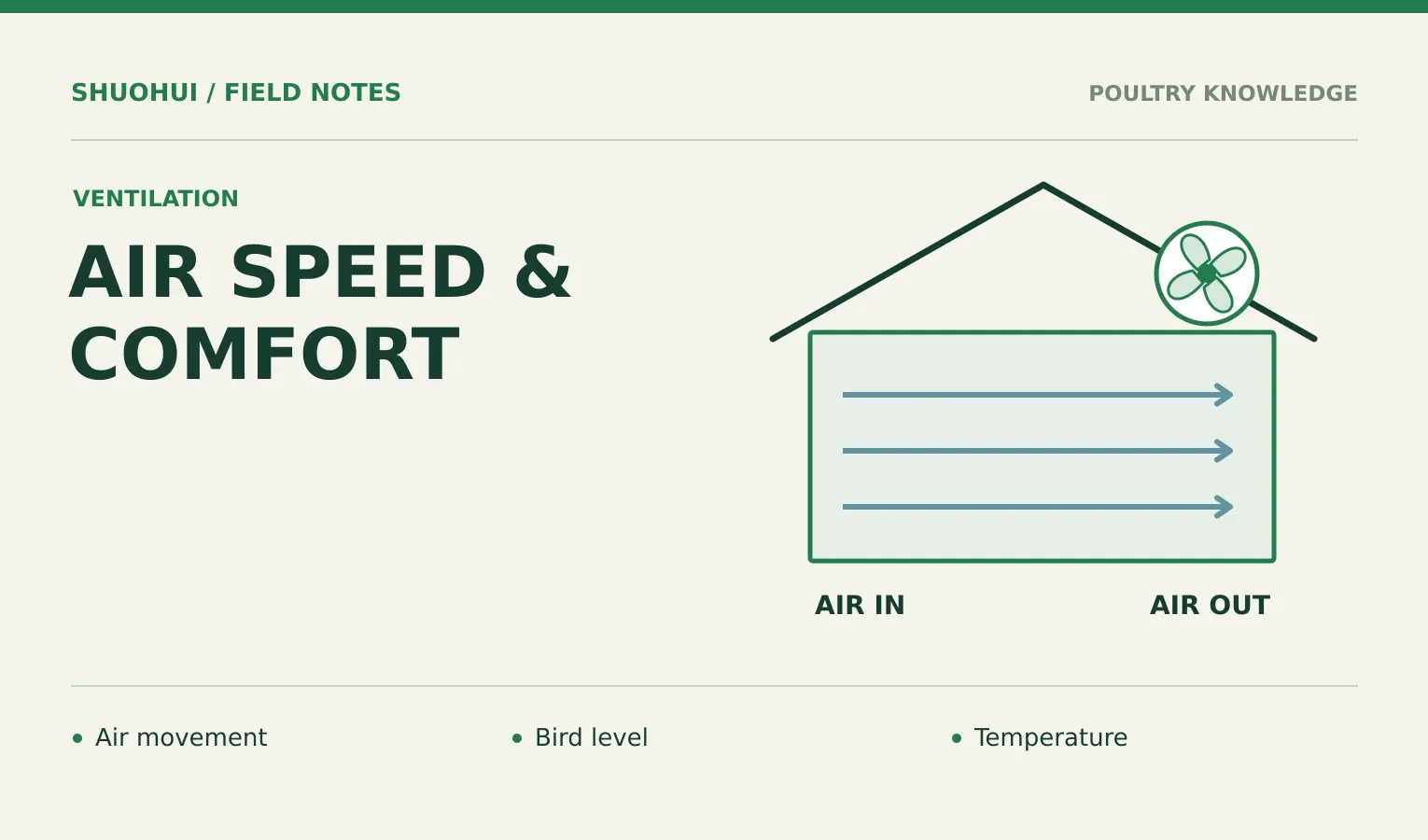
A thermometer in a poultry house measures the air, not the bird. On a hot day the two can be worlds apart: a hen standing in a 2.5 m/s tunnel current experiences a very different reality than the same hen in dead-still air at the identical temperature. That gap is the effective, or felt, temperature — the wind-chill effect — and it is the physics that makes tunnel ventilation the workhorse of hot-climate poultry production. Understanding effective temperature tells you how much cooling you can get from moving air alone, and just as importantly, when moving air stops being enough and you need to cool the air itself.
Air Temperature Versus What the Bird Feels
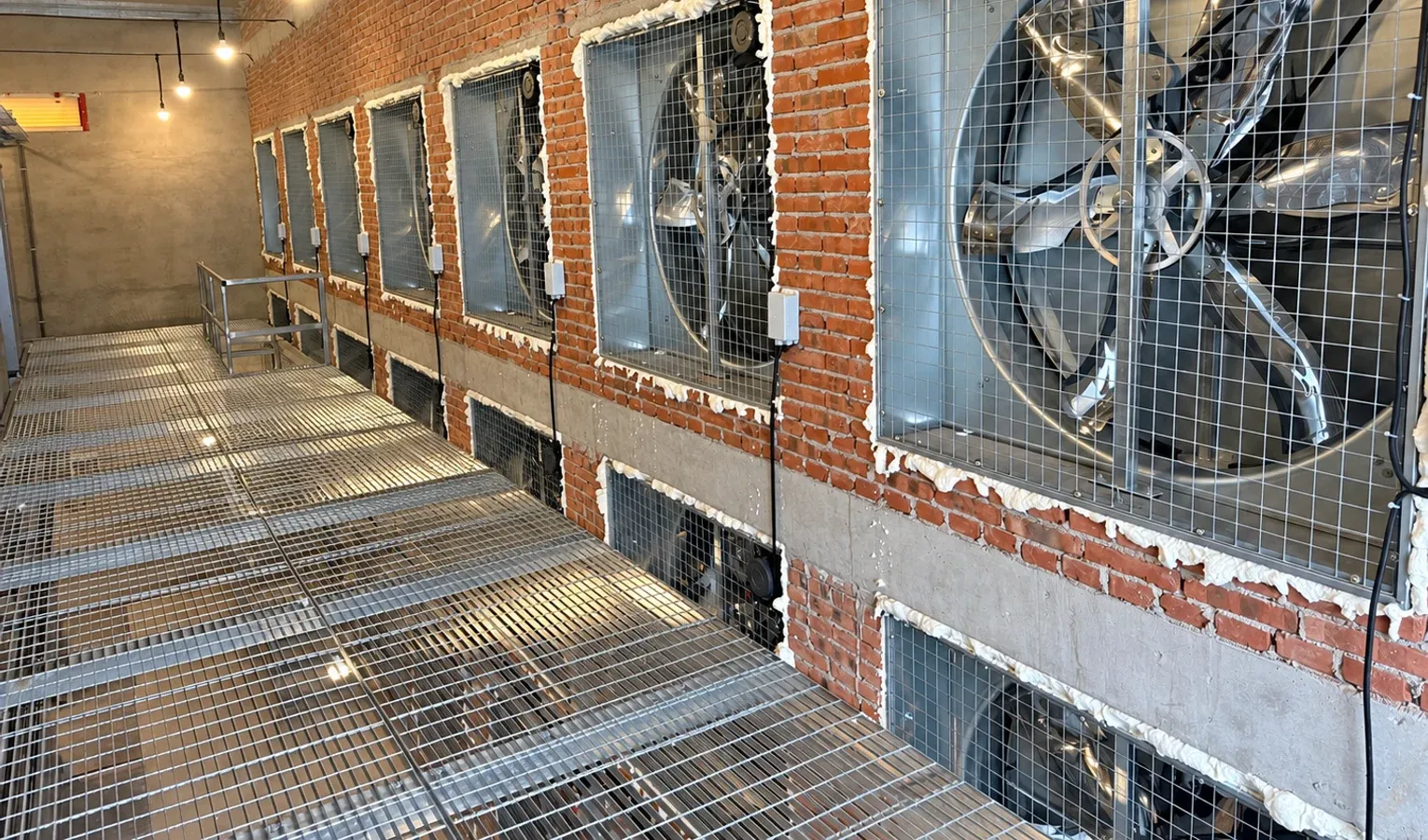
Birds lose heat to moving air far faster than to still air, so wind lowers their effective temperature even when the thermometer does not move.
- Air temperature is what a thermometer reads.
- Effective temperature is what the bird actually experiences, factoring in air speed.
- Moving air strips the warm boundary layer off the bird's body, accelerating heat loss.
This is why a tunnel house can keep birds comfortable at air temperatures that would be dangerous in a still house — the wind is doing cooling the thermometer cannot register.
What One Meter Per Second Buys
Even modest air speed produces a meaningful drop in felt temperature.
- At about 28°C, adding just 1 m/s of airflow makes birds feel roughly 3 to 5°C cooler.
- The effect scales with air speed: faster air feels progressively cooler.
- This is free cooling — it comes from air movement, not refrigeration.
That first meter per second of air speed is some of the cheapest cooling on the farm, which is why moving air is always the first tool reached for in heat.
Tunnel Airflow Adds Ten to Twelve Degrees
Full tunnel ventilation, with air racing the length of the house, produces a large wind-chill benefit.
- Tunnel airflow can add roughly 10 to 12°F of felt cooling compared with still air.
- At around 30°C, an air speed of 2 to 2.5 m/s can make birds feel about 5.5°C cooler.
- The combination of high air speed and long, uniform travel is what makes tunnel houses effective.
This wind-chill bonus is precisely why a tunnel house holds production through heat that would crush a naturally ventilated house.
The 350 ft/min Threshold
Wind chill does not turn on gradually from zero; there is a practical air-speed threshold below which the cooling benefit is small.
- Meaningful wind-chill cooling arrives at air speeds of about 350 feet per minute and above — roughly 1.78 m/s.
- Below that, air is moving but not fast enough to strip heat efficiently.
- Above it, each increase in air speed delivers real, felt cooling.
Designing a tunnel house means designing to clear this threshold comfortably at bird level, not just on paper.
Design Air Speed for Laying Birds
For the laying period, the target air speed reflects both the wind-chill benefit and the birds' tolerance.
- A common design air speed for laying-house tunnel ventilation is about 2.5 to 3 m/s at bird level.
- This clears the wind-chill threshold with margin and delivers strong felt cooling.
- It is fast enough to cool without being so fast that it stresses or unsettles the birds.
Sizing fans and tunnel geometry to hit 2.5–3 m/s across the whole cross-section is the core of hot-climate layer-house design.
Where Wind Chill Runs Out
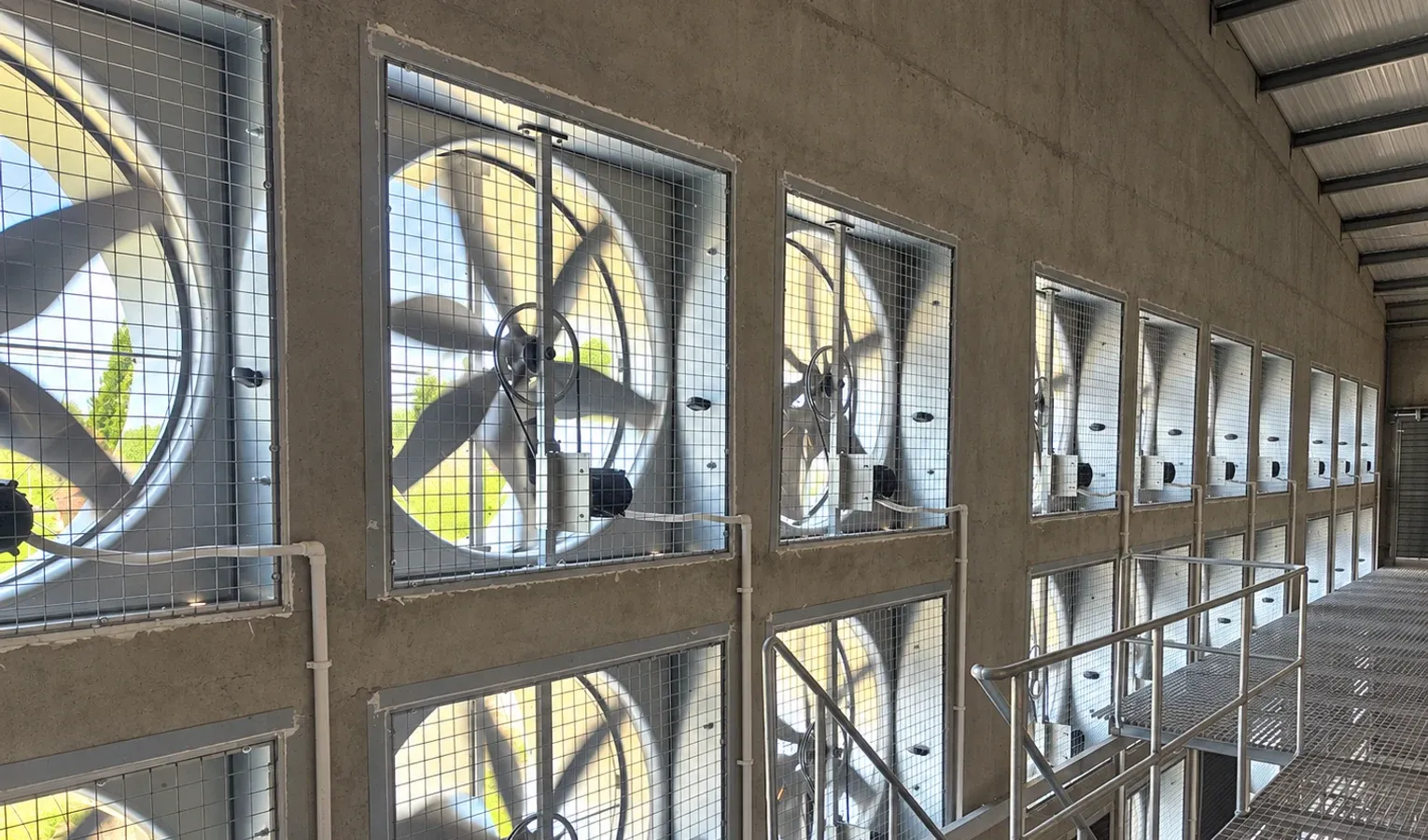
The critical limit of wind chill is that it works by helping birds shed heat — and once the air is nearly as hot as the bird, moving it faster stops helping.
- Above about 32°C, roughly 80 percent of the wind-chill benefit is lost.
- Above about 35°C, moving air is nearly ineffective at cooling.
- At those temperatures, faster air just delivers hot air faster.
This is the single most important thing to understand about effective temperature: it is a diminishing tool, and past the mid-30s it runs out entirely. Recognizing this limit is what tells you when air movement alone can no longer save the flock.
Why Air Movement Alone Eventually Fails
Wind chill relies on a temperature gap between the bird and the air; heat only flows from hot to cold.
- A bird's body sits around 41°C, so cooler air can pull heat off it.
- As air temperature climbs toward body temperature, the gap shrinks and cooling weakens.
- Once air is very hot, moving it faster simply increases the heat delivered to the bird.
At that point the only remedy is to cool the air itself — which is exactly the job of evaporative cooling pads.
Wind Chill and Evaporative Cooling Together
The two hot-weather tools are complementary, and above 32°C they must work as a team.
- Evaporative pads lower the actual air temperature entering the house.
- Tunnel airflow then adds wind chill on top of the already-cooled air.
- Together they can make birds feel far cooler than the outside thermometer — the cooled air plus the moving air.
Neither alone is enough in extreme heat; the pad restores the temperature gap that wind chill needs to do its work.
The Flip Side: Wind Chill in Cold Weather
The same physics that cools birds in summer chills them dangerously in winter, which is why cold-weather air speed limits exist.
- In cold weather, air movement over birds must be kept very low — a fraction of a meter per second.
- A winter draft produces unwanted wind chill, forcing birds to burn feed to stay warm.
- This is why minimum-ventilation inlets throw air to the ceiling, keeping air speed at bird level near zero.
Effective temperature is a double-edged tool: the wind that saves birds in July can kill them in January if it reaches them at floor level.
Reading the Birds for Effective Temperature
Because effective temperature is invisible to a thermometer, bird behaviour is the real gauge.
- Comfortable, active, evenly spread birds mean the felt temperature is right.
- Panting, wings held out, and crowding toward inlets mean the effective temperature is too high even if the thermometer looks acceptable.
- Birds huddling away from a current in cool weather mean unwanted wind chill.
Trust the birds over the gauge; they respond to what they feel, which is exactly what you are trying to manage.
An Effective-Temperature Checklist
To manage what the birds actually feel:
- Remember the thermometer reads air, not birds.
- Expect 3–5°C of felt cooling per 1 m/s, and about 10–12°F from full tunnel airflow.
- Design bird-level air speed above the ~350 ft/min (1.78 m/s) threshold — around 2.5–3 m/s for layers.
- Know that wind chill loses ~80 percent of its value above 32°C and nearly all above 35°C.
- Add evaporative cooling once air movement alone stops keeping birds comfortable.
- In cold weather, keep air speed at bird level near zero to avoid harmful wind chill.
Bringing It Together
Effective temperature is the difference between what your thermometer says and what your birds feel, and it is the engine of hot-weather ventilation. Air movement of 2.5–3 m/s can make birds feel many degrees cooler and hold production through real heat — but only until about 32°C, above which wind chill fades and evaporative cooling has to take over. Manage the felt temperature, not just the reading, and you will keep birds comfortable across a far wider range of weather.
If you want help designing tunnel airflow and evaporative cooling that deliver the right effective temperature for your climate and flock, our team can size the whole system for you. Get in touch and we will help you cool the birds, not just the thermometer.
Visual checklist
Related reading
Poultry Heat Stress: Production and Cooling Decisions
Poultry Climate Control: Ventilation and Cooling
Further reading
UGA poultry ventilation resources
Check operating targets against bird age, local climate, measured house conditions and the equipment specifications. A general design example does not replace a house-specific ventilation assessment.