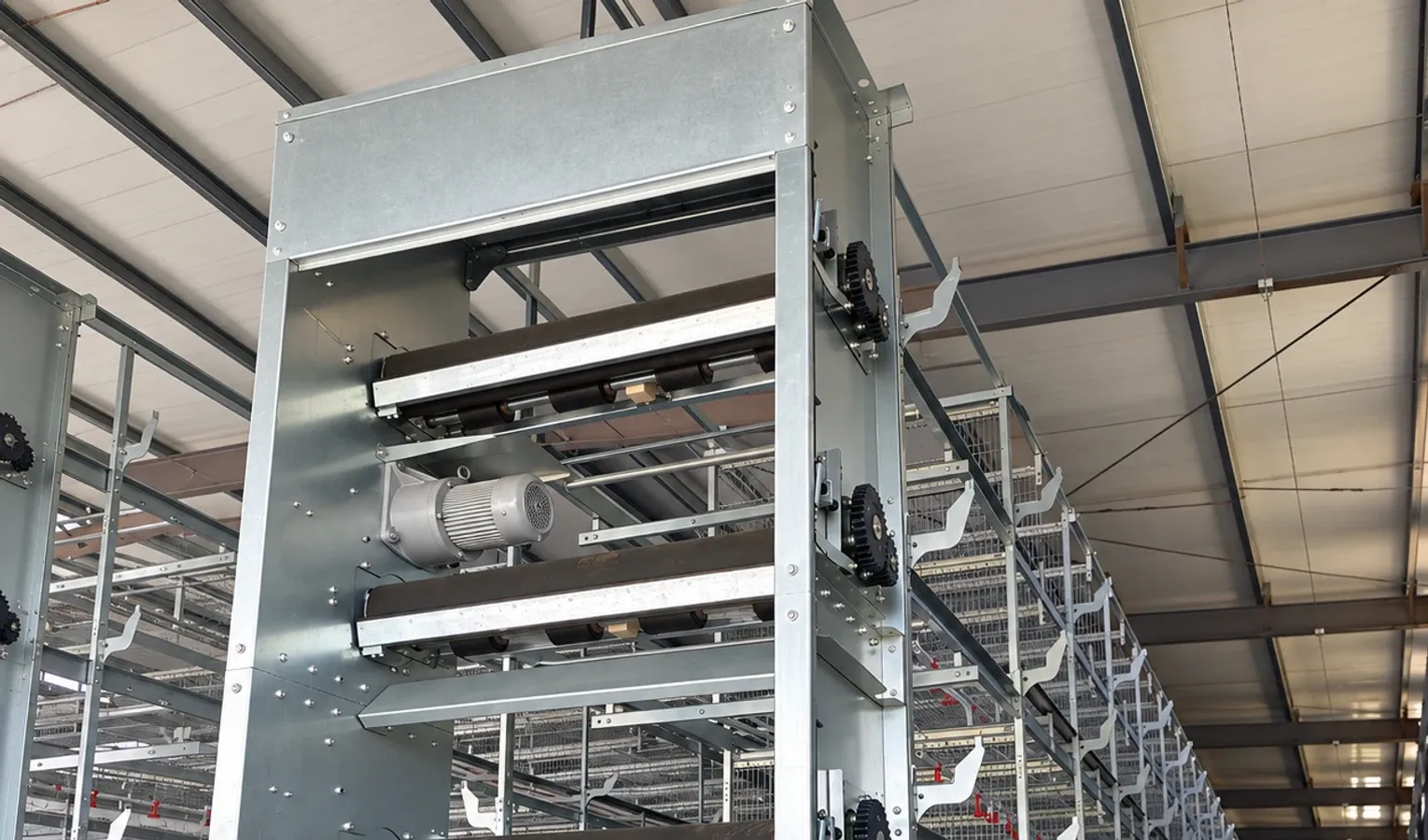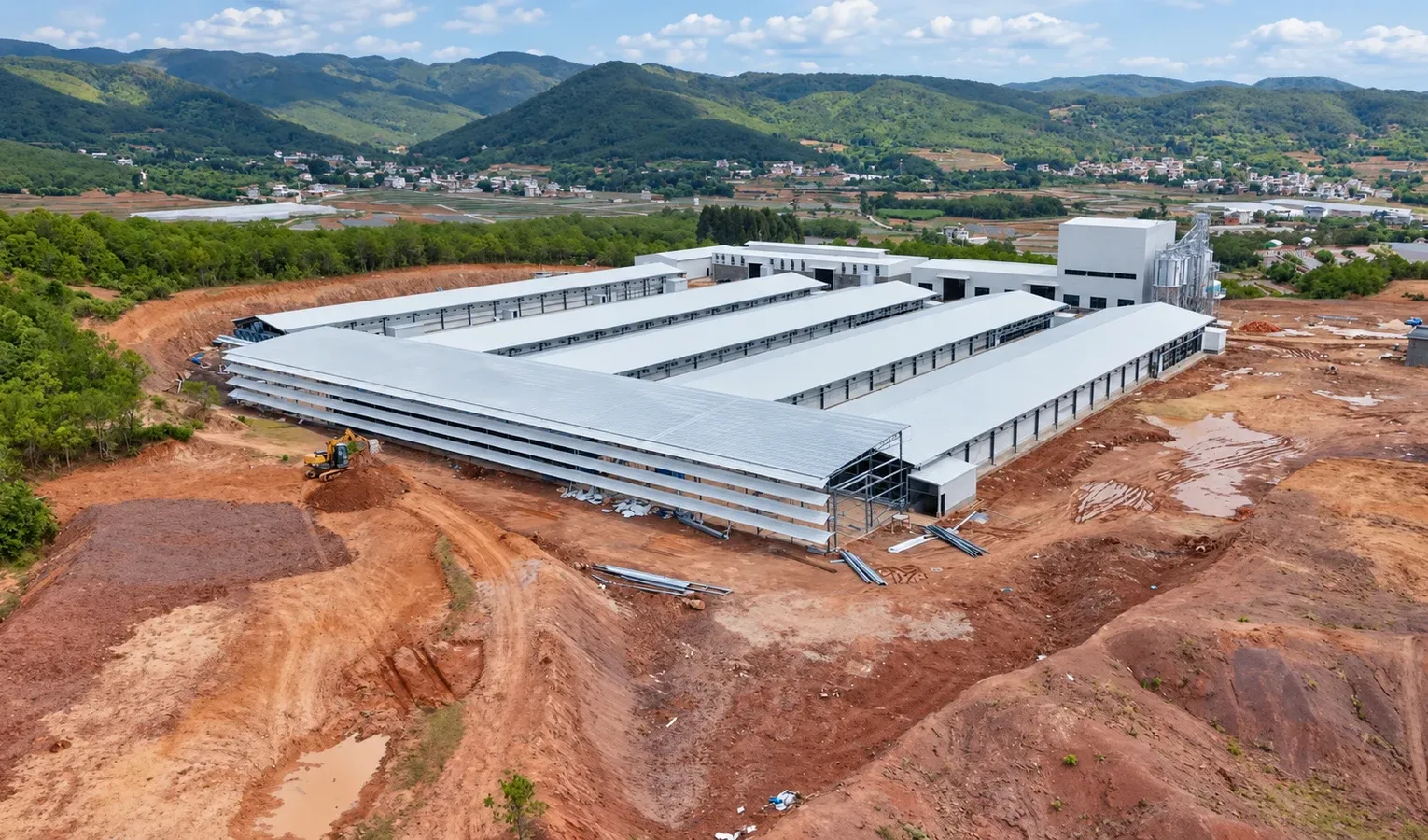
At a glance. Plan poultry ventilation and evaporative cooling together, including air distribution, sensors, operating observations and emergency arrangements.
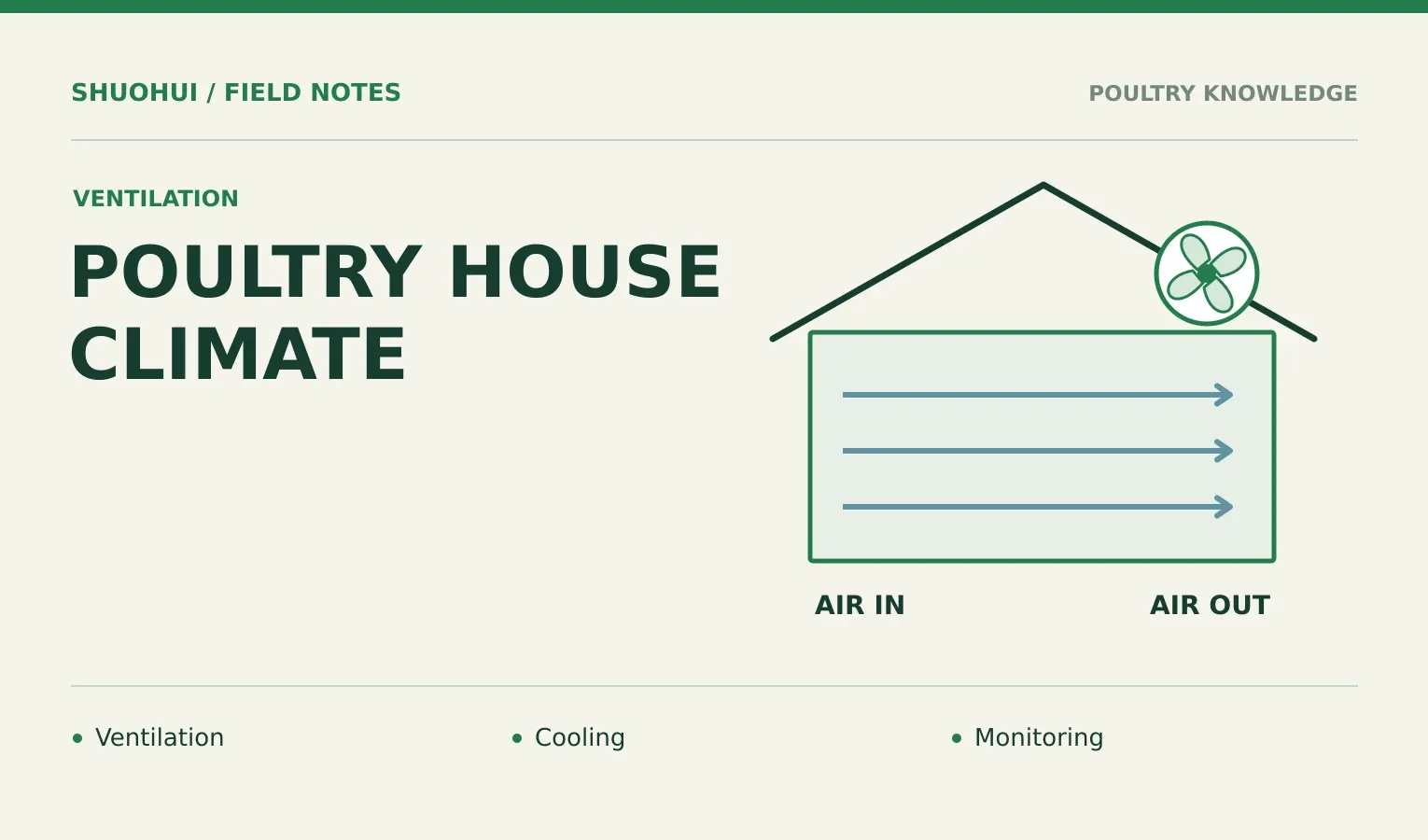
Birds perform best in a narrow temperature and humidity band. In hot climates, tunnel ventilation combined with evaporative cooling pads keeps houses comfortable and protects egg output during heat waves.
This guide walks through fan sizing, cooling pad placement, and how a well-designed climate system pays for itself in higher production and lower mortality.
Treat ventilation as a house system
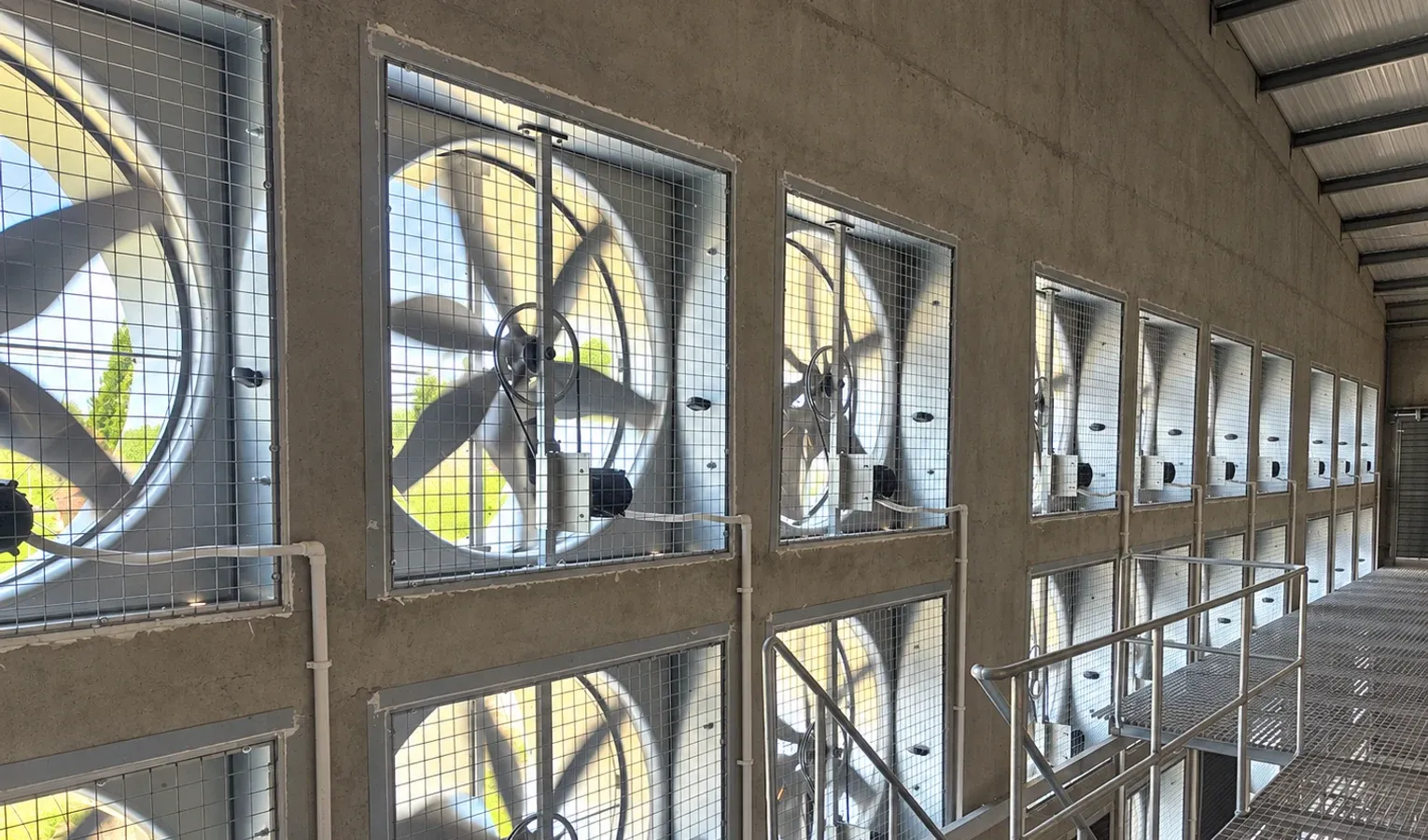
Fans, inlets, controls and the building envelope operate together. Selecting fans by their diameter alone misses the resistance created by the installed house. Give the designer the internal dimensions, housing layout, local climate and planned flock. Ask for the design assumptions and how the equipment will operate during cool weather as well as the hottest part of the year.
Separate fresh-air control from cooling
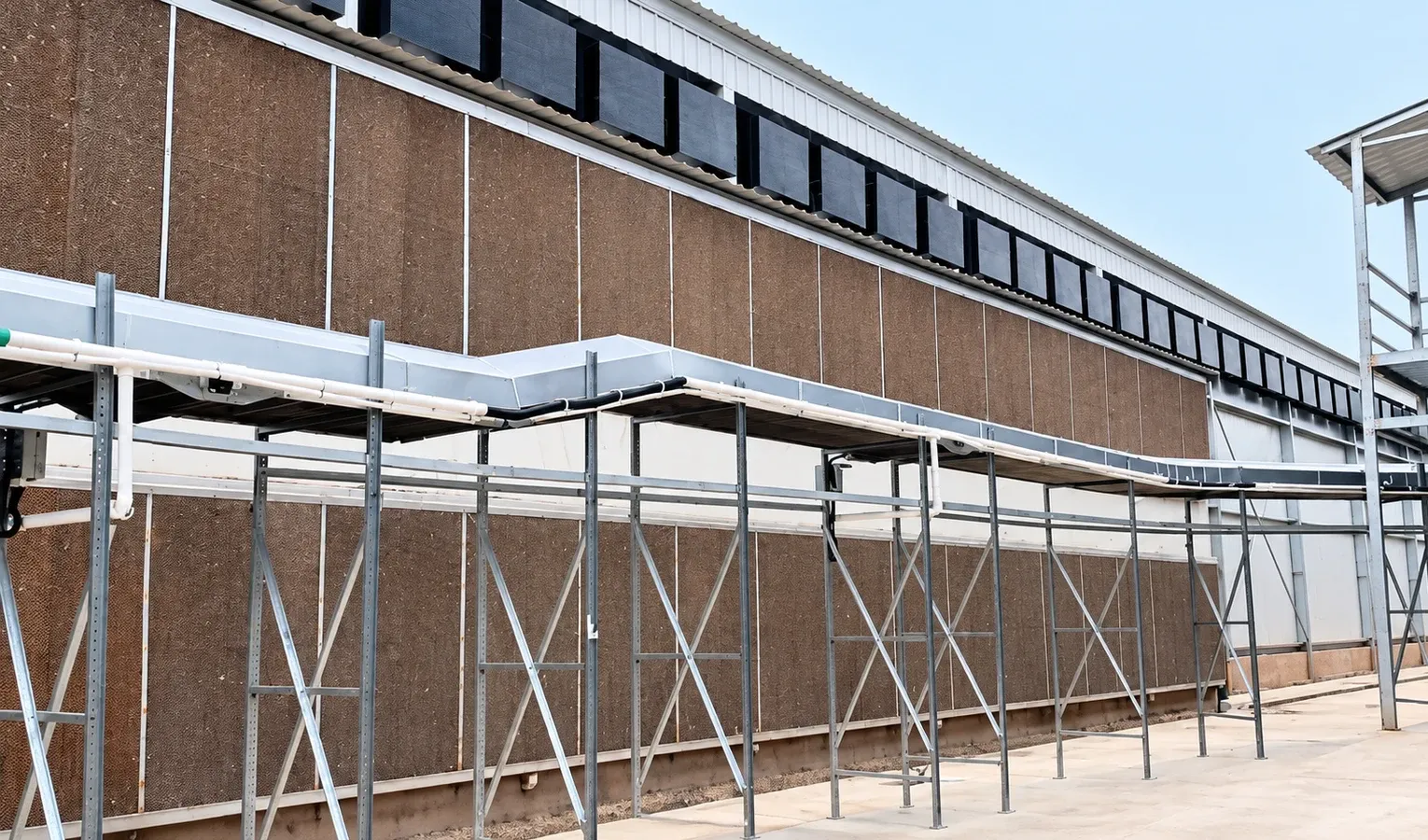
Air exchange and evaporative cooling perform related but different jobs. A cooling pad does not replace the need to move air through the house. Pad condition, water supply and the available outdoor conditions affect the result. The control strategy should explain when cooling is used and how it interacts with fan stages, inlets and the bird-age programme.
Put sensors where they inform decisions
A sensor reading should represent the area being managed. A measurement beside a door or in direct sun may not describe conditions across the flock. Discuss sensor locations, access for cleaning and the calibration procedure. During checks, compare more than one position in the building and record where each measurement was taken.
Plan for equipment and power failures
Confirm the response to a failed fan, blocked inlet, lost water supply or power outage before the flock is placed. The system proposal should identify alarms, manual controls and the responsibilities of the operator. Test backup arrangements according to the equipment and electrical instructions. An alarm is useful only when somebody receives it and knows the next action.
Review the system through the season
Keep a record of weather, flock stage, readings and control changes. A comfort problem should be investigated as a combination of building, equipment and management factors. Use the current management guide for the flock and a qualified ventilation designer when determining operating targets. The same settings should not be copied blindly between houses with different dimensions or conditions.
Visual checklist
Related reading
Poultry Ventilation Modes: Cross, Transition and Tunnel
Poultry Cooling Pads: Sizing and Operating Checks
Further reading
UGA poultry ventilation resources
Check operating targets against bird age, local climate, measured house conditions and the equipment specifications. A general design example does not replace a house-specific ventilation assessment.