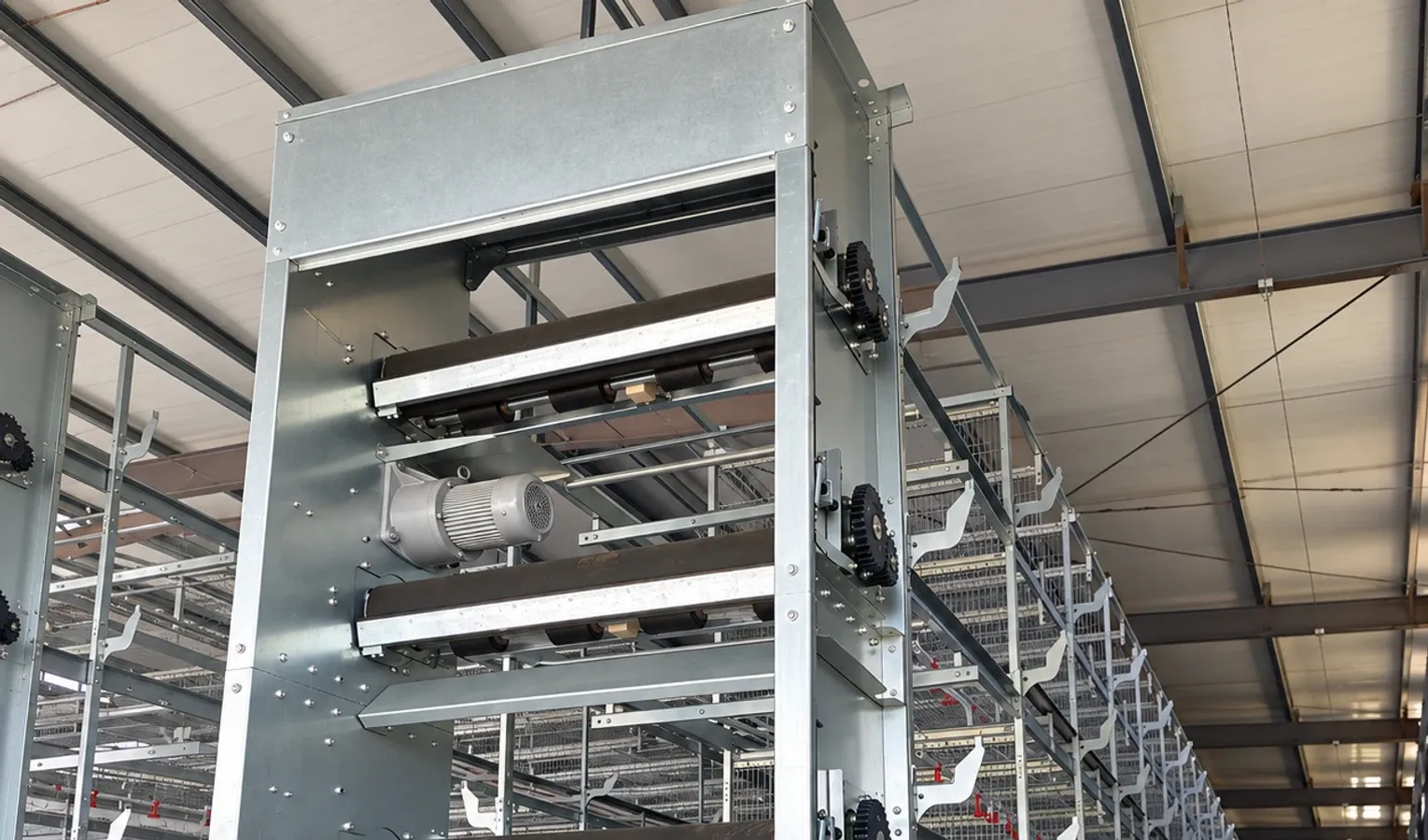
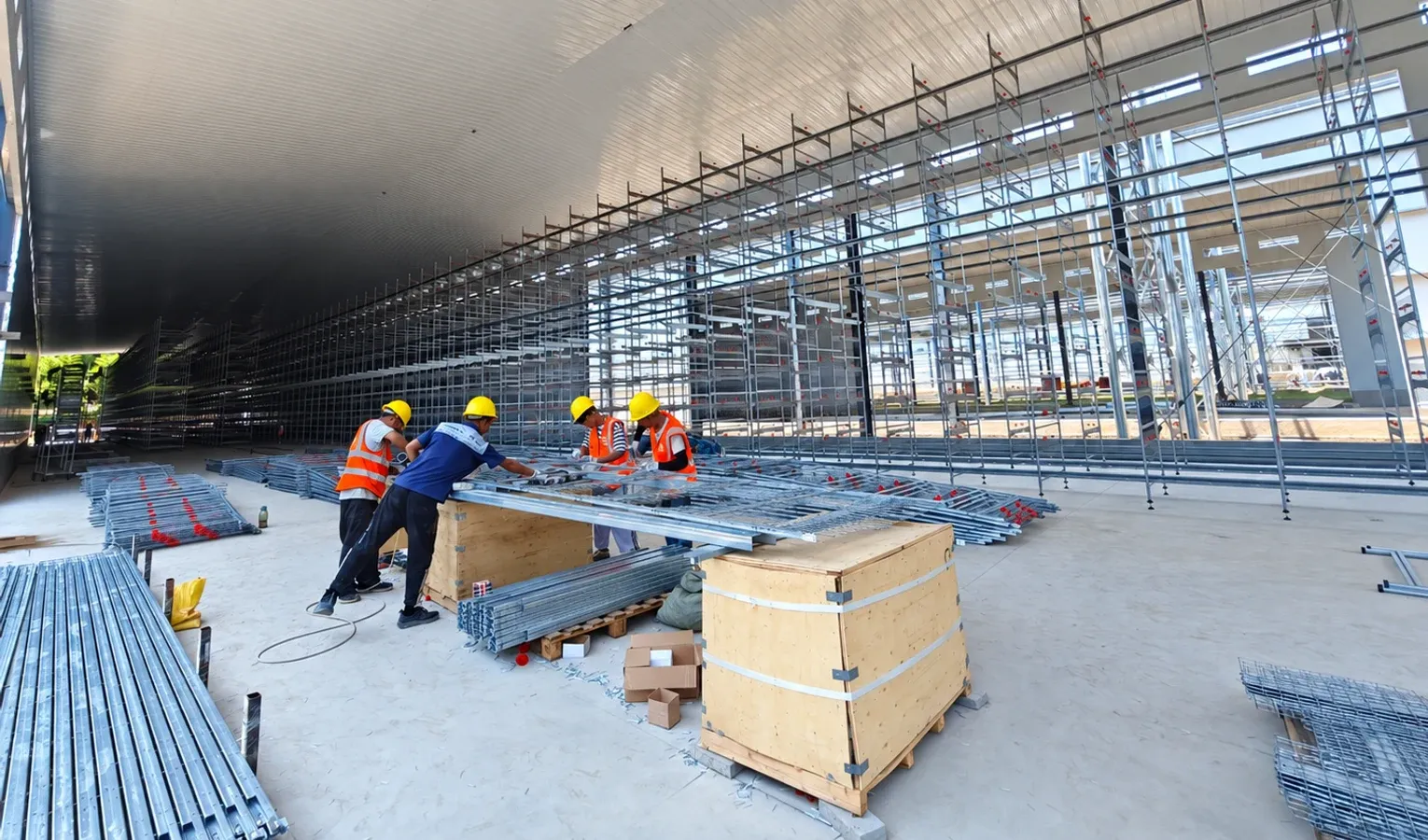
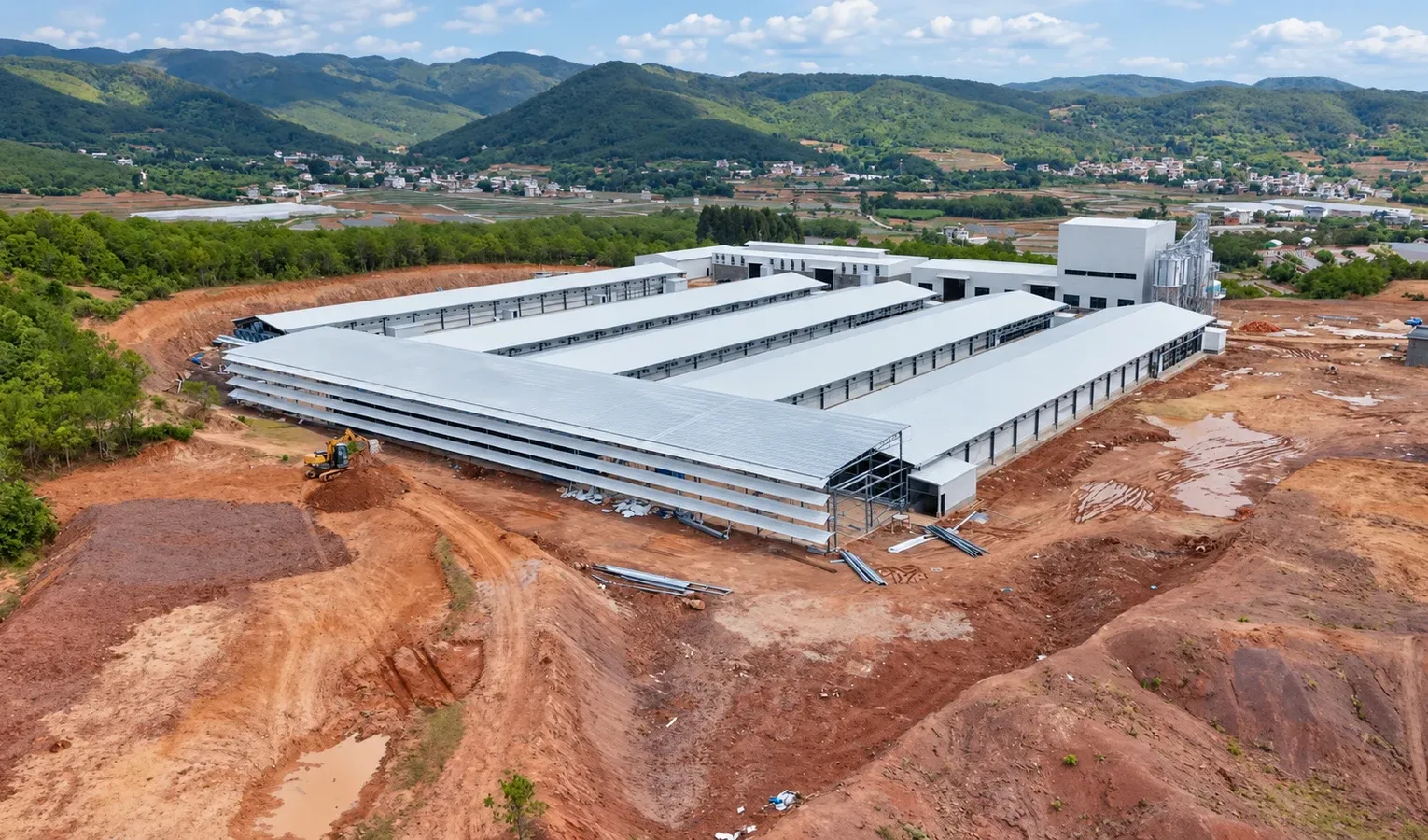
A-type cages step outward from the upper tiers to the lower ones. H-type cages stack tiers more directly above one another. That difference affects the space around the rows, the equipment beneath each tier and how staff reach the birds.
It does not give you a reliable rule such as “A-type below 30,000 hens, H-type above it.” Flock size matters, but the existing building, available height, daily work and complete installed cost can change the answer.
If the house already exists, begin with the awkward spaces
Measure columns, braces, low roof sections, doorways and the distance available at each row end. A layout that fits between four lines on a plan may still block an inspection route or leave too little room to service a drive.
An A-type arrangement uses width differently because of its stepped profile. A stacked H-type proposal may use more of the building's height, but upper-tier access has to be part of the offer. Ask both suppliers to draw those access arrangements. Empty space on the drawing is often working space, not spare capacity.
Compare the manure route, not the label on the cage
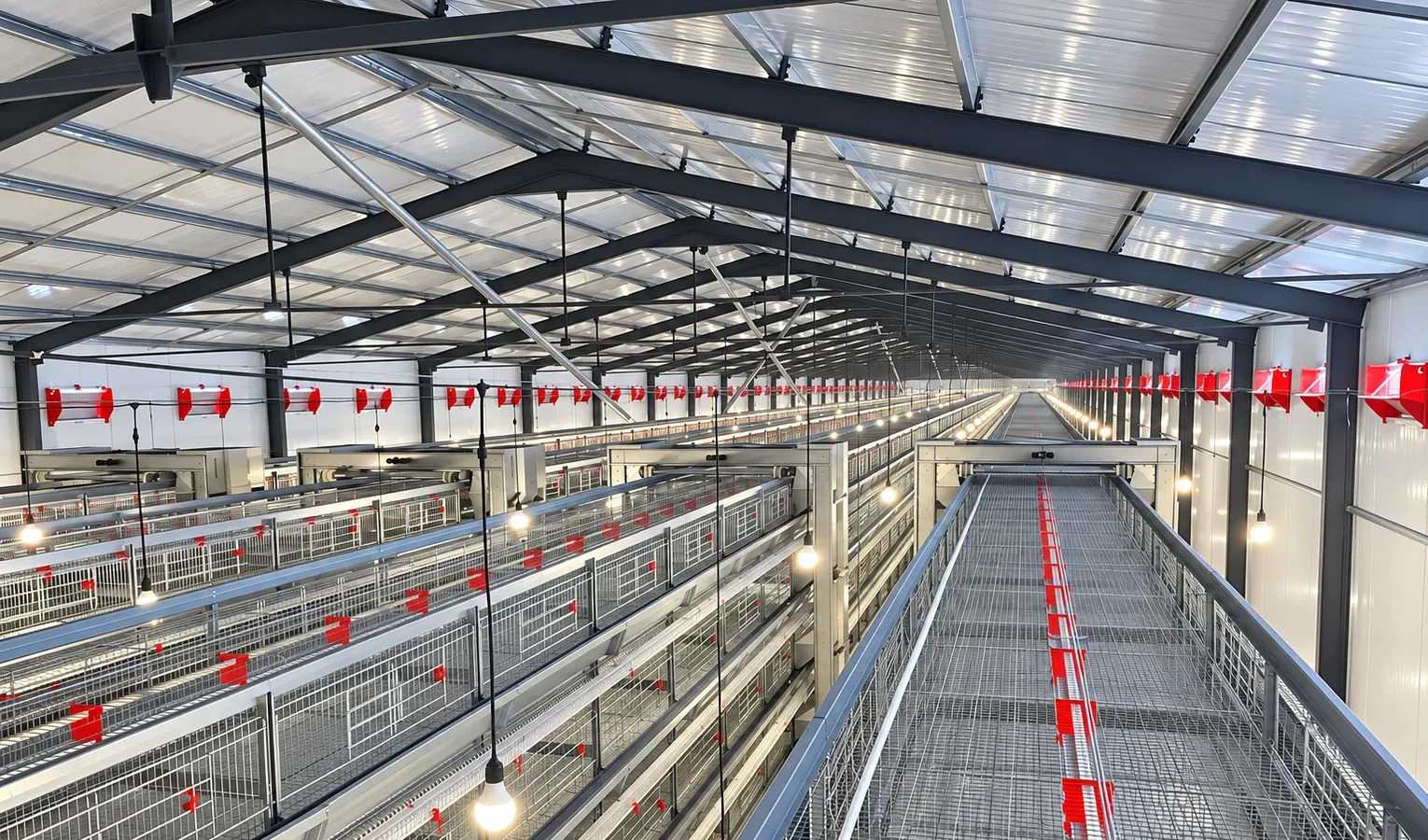
Manure equipment varies with the actual model. Do not assume that every A-type system has one belt or that all H-type systems use the same drive arrangement. Trace the route from each tier through the row end, cross conveyor and outside discharge.
For each proposal, ask which belts and drives are supplied, how a blockage is reached and where the manure goes after leaving the house. An inexpensive cage package can leave a substantial handling job outside its quoted scope. The manure-removal guide covers those interfaces in more detail.
Walk through an ordinary working day
Picture a worker checking a drinker at the top tier, removing a bird, dealing with a feed fault and cleaning a transfer point. How does that person reach the task? What stops while the work is done? Where do tools and replacement parts go?
- Bird inspection: access to the far side of each compartment and every tier.
- Egg handling: the route to the egg room, with transfers and cleaning access shown.
- Feeding: distribution along the row and the procedure when a drive stops.
- Maintenance: access to motors, guards and adjustment points without dismantling unrelated equipment.
Both cage families can be offered with different automation packages. If you intend to add automation later, obtain a written compatibility and installation plan now. “Can be upgraded” is too vague to budget against.
Does H-type always make the farm cheaper?
No. A taller layout may reduce the building footprint for a given permitted capacity, but any saving has to be compared with access equipment, building height, services and installation. Higher capacity in the same floor area also changes the requirements placed on the house environment and utilities.
Use a complete-house comparison: equipment plus required building work, local services and installation. Then compare operating and maintenance assumptions over the same period. Do not infer the result from an online cage price per bird.
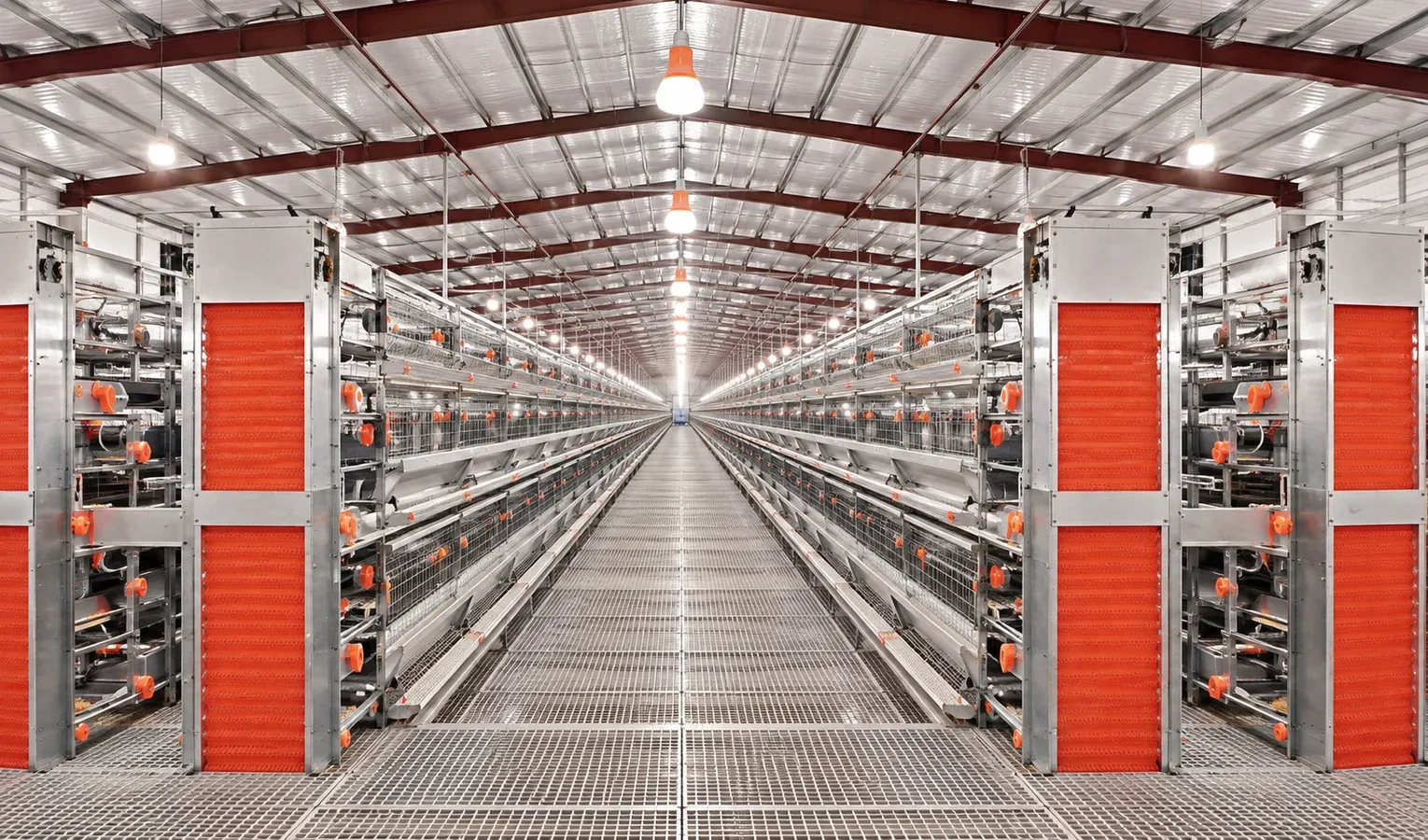
Ask for these two drawings before deciding
Give the suppliers one design brief and request two layouts for it. Each should state the bird allowance used, total usable capacity, row and tier count, aisles, inspection access and the proposed feed, egg and manure connections. If one arrangement cannot meet the brief, have the designer state the constraint instead of squeezing extra birds into the calculation.
For a worked approach to the space calculation, see layer cage capacity and house area. Compare the A-type layer system and H-type layer system against your drawing, rather than choosing the name first.
Can either system produce cage-free eggs?
No. A-type and H-type describe cage arrangements. If your customer requires cage-free production, evaluate a suitable alternative housing system and its market requirements before ordering cages. FAO's housing overview explains why housing and management have to meet the needs of the birds; it does not supply a universal stocking allowance for either cage family.