At a glance. Review the nutrition, flock age, environment and health questions to investigate when eggshell quality declines during the later laying period.
Ask any layer manager what happens to shell quality as a flock ages and the answer is the same: shells get thinner, cracks rise, and downgrades creep up. The instinct is to add more calcium. But in late lay, more calcium is usually the wrong lever — the problem is rarely that the hen is offered too little, and often that she can no longer absorb and use what she gets. Understanding why old-hen shells weaken points to the interventions that actually work: better vitamin D, smarter trace minerals, and the right particle size, rather than a blunt calcium increase.
The Core Problem: Absorption Falls With Age
As hens age, the efficiency with which the intestine absorbs calcium declines. The same diet that built strong shells at peak now delivers less usable calcium to the shell gland, even though nothing about the feed has changed. On top of that, the eggs are larger in late lay, so the same amount of shell material is stretched over a bigger surface — thinner by simple geometry. The result is a shell that is both under-supplied and over-stretched.
Why Piling On Calcium Backfires
Because the bottleneck is absorption, not supply, simply raising dietary calcium often does nothing for shells and creates new problems.
- Diminishing returns — extra calcium the gut cannot absorb passes straight through
- Mineral antagonism — high calcium suppresses zinc and other trace mineral uptake, and zinc is essential to shell formation
- Palatability and intake — very dense, chalky diets can depress feed intake
In other words, blindly adding calcium in late lay can quietly worsen the very trace-mineral status that shells depend on. The smarter response starts by fixing absorption and the micronutrients around calcium.
Vitamin D3: The First Real Fix
Vitamin D3 controls how much calcium the gut absorbs and how readily bone reserves are mobilized. Aging hens need more of it to overcome falling absorption efficiency, which is why D3 supplementation is a first-line late-lay intervention. Research comparing levels has found that a higher dose — around 125 µg/kg — supports better shell quality than a lower 62.5 µg/kg level in older flocks. Raising D3 (in consultation with your nutritionist) frequently does more for shells than any amount of extra calcium.
Organic Trace Minerals at Lower Doses
Trace minerals — zinc, manganese, copper — are the catalysts and structural players of shell formation, and their *form* matters as much as their amount. Organic (chelated) trace minerals are absorbed more efficiently than inorganic sulfate forms, so they reach the shell gland even as gut efficiency falls. Studies show that replacing inorganic sources with organic ones at roughly one-third of the dose can improve the ultrastructure of the shell — the microscopic arrangement of calcite crystals that determines real strength. Better shell architecture from less mineral is exactly the leverage late-lay flocks need.
Manganese and the Shell Membrane
Manganese deserves special mention because it strengthens the shell membrane — the protein scaffold on which calcite crystals are deposited. A weak or poorly formed membrane produces a weak shell no matter how much calcium is available, because the mineral has nothing sound to build on. Ensuring adequate manganese, ideally in an organic form, reinforces the foundation of the shell rather than just the top layer. It is a small dietary detail with an outsized effect on cracks in older flocks.
Shell Ultrastructure: Strength Is Architecture
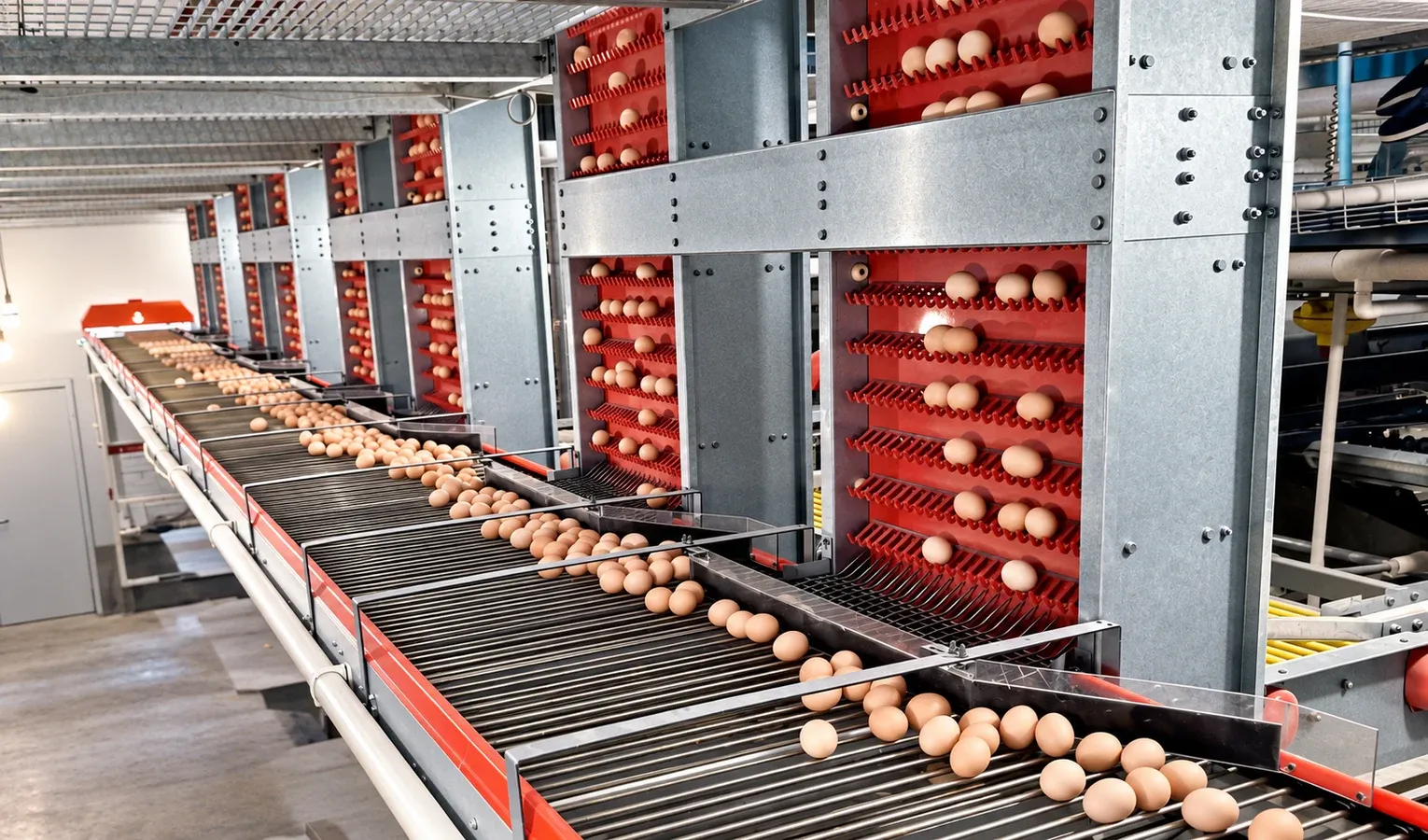
Shell strength is not just thickness — it is the quality of the crystalline structure. A well-organized layer of calcite crystals resists cracking far better than a thick but poorly formed one. This is why interventions that improve ultrastructure (organic trace minerals, adequate manganese, proper vitamin D) can strengthen shells without adding weight. When you think about late-lay shells, think architecture first, mass second.
Particle Size Still Matters — More Than Ever
The overnight calcium-timing problem intensifies with age. Older hens rely even more heavily on a slow, steady supply of calcium during the dark hours when the shell forms and they are not eating. Coarse limestone or oyster shell particles (roughly 0.8-2.0 mm) that sit in the gizzard and dissolve slowly become increasingly valuable in late lay. Shifting the calcium blend coarser, and offering some in the afternoon, is one of the cheapest and most effective late-lay shell fixes.
The Role of Medullary Bone Depletion
Over a long cycle, hens repeatedly draw on medullary bone to cover overnight shell needs. If the diet never quite refills that reserve, the skeleton is slowly depleted, weakening both bones and shells and raising the risk of cage layer fatigue. Supporting bone through adequate calcium, phosphorus, and vitamin D across the whole cycle — not just in a late-lay panic — keeps that reserve available when the hen needs it most.
Ruling Out Disease and Stress
Not every late-lay shell problem is nutritional. A sudden worsening, rather than the gradual age-related slide, should prompt a check for disease and stress, since several respiratory and reproductive infections attack shell quality directly. Heat stress also degrades shells by disrupting the acid-base balance the shell gland depends on. Before overhauling the diet, confirm with your veterinarian that a health or environmental cause is not driving the change.
A Practical Late-Lay Shell Program
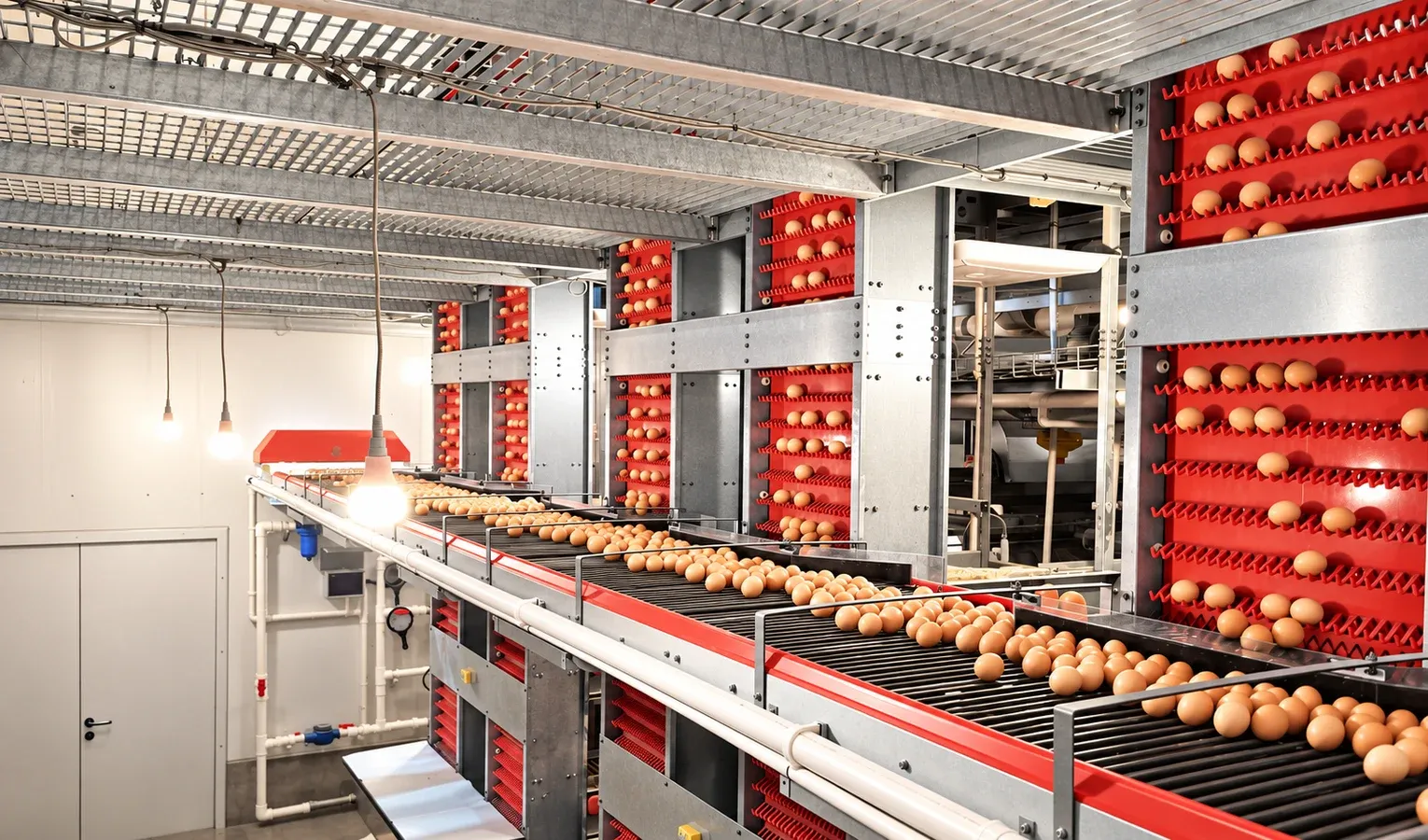
Putting it together, the interventions that genuinely help aging flocks hold shell quality are:
- Raise vitamin D3 toward 125 µg/kg to overcome falling absorption
- Switch to organic trace minerals, effective at about one-third the inorganic dose
- Ensure adequate manganese to strengthen the shell membrane
- Coarsen the calcium blend with 0.8-2.0 mm particles for overnight supply
- Hold, do not blindly raise, total calcium — fix absorption first
Each should be tuned to your flock with professional advice rather than applied as a blanket rule.
Late Lay Is Won Early
The best defense against weak late-lay shells is built long before the flock gets old. Steady calcium, phosphorus, and vitamin D through the whole cycle keep bone reserves full and the shell gland healthy, so the flock enters late lay with something in the bank. Managers who wait until shells crack to react are always playing catch-up; those who feed for persistency from onset keep shells sound to depletion.
Let Us Help You Hold Shell Quality
If your older flocks are slipping on shell strength, the fix is usually smarter micronutrition and particle size, not just more calcium. Tell us your flock size, breed, and age, and our team will help you review your late-lay program and match equipment that supports strong shells to the end of the cycle. Share your details and we will help you cut those late-lay downgrades.
Visual checklist
Related reading
Calcium, Phosphorus and Eggshell Quality
Layer Calcium Nutrition: Intake and Particle Size
Further reading
Use the management guide for the actual breed, age and housing system when selecting flock targets. Review changes with the farm team and the relevant nutrition, health or equipment specialist.