At a glance. Review calcium intake, feed particle size, flock age and shell observations when discussing a laying-hen mineral programme with a nutritionist.
Every eggshell a hen lays is a small feat of biology. The shell is roughly 95% calcium carbonate, and forming it takes about 2 g of calcium deposited in a matter of hours, mostly overnight when the hen is not eating. Meeting that demand is one of the defining challenges of layer nutrition, because the timing of calcium supply matters as much as the amount. Get it right and shells stay strong across a long cycle; get it wrong and you see thin shells, cracks, and downgrades. This article explains how a hen actually uses calcium and how to feed her so the shell is never short.
How Much Calcium a Hen Really Needs
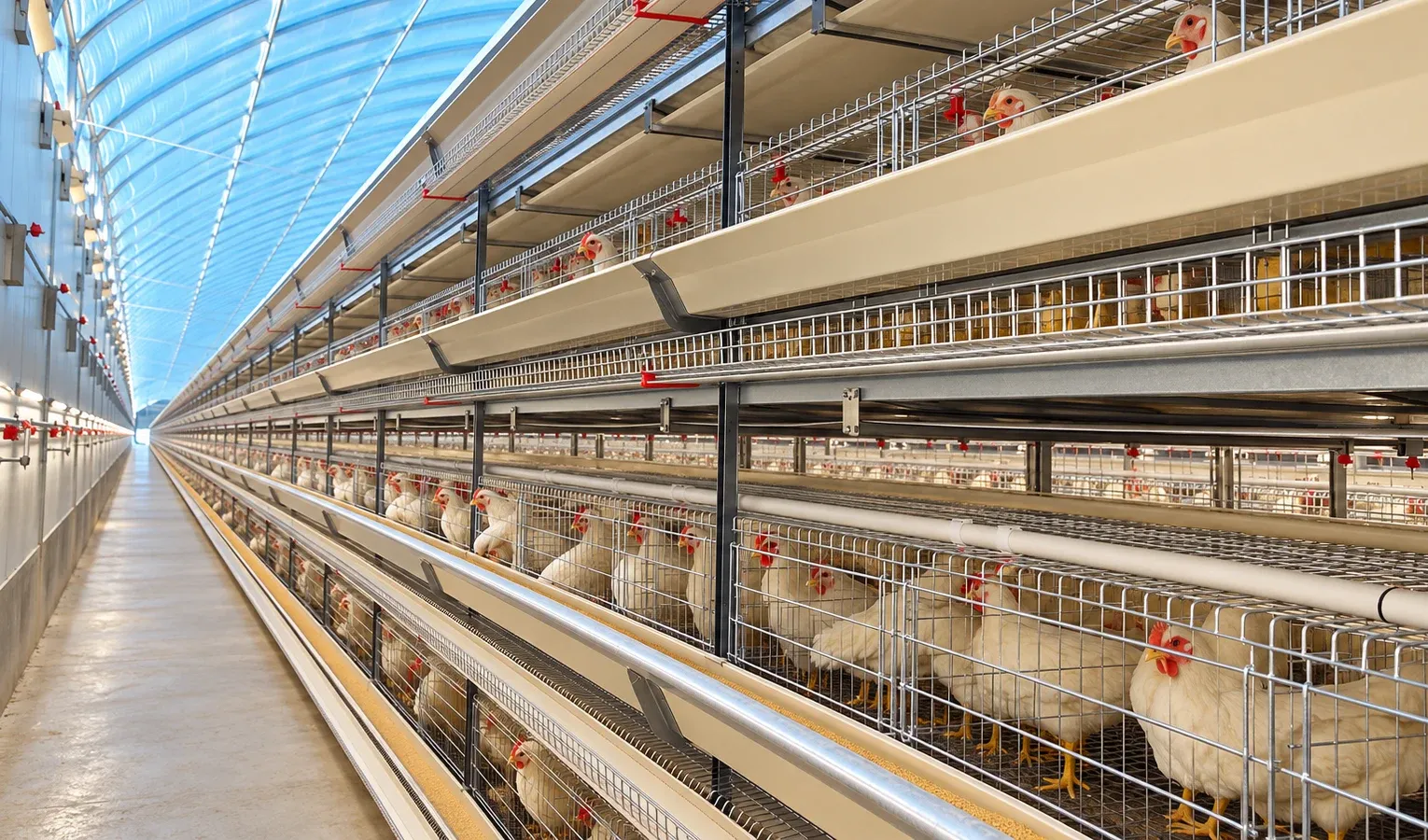
A laying hen needs roughly 4-5 g of calcium per day to sustain production and skeletal health. Of that, about 2 g goes into each shell, with the remainder covering maintenance and the constant turnover of bone. Because a hen at peak lays nearly every day, that demand is relentless — she is essentially rebuilding a calcium-intensive structure every 24 hours. Meeting the daily gram target, not just hitting a percentage in the feed, is the real objective.
The Two Sources: Diet and Bone
The hen draws shell calcium from two reservoirs working together.
- The diet — supplies roughly 60-70% of shell calcium directly from feed in the gut
- Medullary bone — a special reserve inside the long bones supplies the rest, especially overnight
Medullary bone is the hen's overnight bank account. When the diet cannot keep up during dark hours, she withdraws calcium from this reserve and repays it the next day from feed. A well-fed hen keeps that account topped up; a chronically short hen depletes her skeleton, leading to weak bones and thin shells.
The Timing Problem: Shells Form at Night
Here is the crux of calcium nutrition: the shell is deposited mostly at night, but the hen stops eating at dusk. So the calcium available in her gut during the critical overnight hours depends on what she ate late in the day and how slowly it dissolves. This mismatch between when she eats and when she needs calcium is the single biggest reason shell quality fails despite an apparently adequate diet. Solving it is mostly about particle size.
Coarse and Fine: The Particle-Size Strategy
The professional answer is a blend of fine and coarse calcium particles. Fine limestone dissolves quickly and serves daytime needs; coarse limestone or oyster shell (particles roughly 0.8-2.0 mm) sits in the gizzard and dissolves slowly, releasing calcium steadily through the night exactly when the shell is forming.
- Fine particles — fast release, cover daytime metabolic needs
- Coarse particles — slow overnight release, supply the forming shell
- A mixed source gives the hen calcium on the schedule she actually uses it
Shifting toward coarser particles, and offering some in the afternoon, is one of the most effective shell-quality interventions available.
Setting the Dietary Calcium Level
Layer diets typically supply calcium in the 3.5-4% range, rising through the cycle as hens age and shell quality gets harder to hold. Because shell demand increases while feed intake may fall, older flocks and hot-weather flocks often sit near the top of that range. During heat stress or peak stress, calcium may be pushed toward 3.6-3.8%, and briefly to 4%, to compensate for lower intake. Always confirm exact levels with your nutritionist or vet, since overshooting has its own costs.
Why More Is Not Always Better
It is tempting to fix any shell problem by pouring in more calcium, but excess calcium backfires. High dietary calcium interferes with the absorption of other minerals, particularly zinc, and can depress feed intake because the diet becomes unpalatable and dense. In older hens especially, the limit on shell quality is often not how much calcium is offered but how well the gut absorbs it — so blanket calcium increases can do more harm than good. When shells weaken, the smarter move is to check particle size, vitamin D, and trace minerals before simply raising the total.
Vitamin D3: The Absorption Partner
Calcium cannot be absorbed or mobilized without adequate vitamin D3, which governs uptake from the gut and withdrawal from bone. In aging flocks, improving vitamin D status often does more for shell quality than adding raw calcium. This is why supplementing D3 is a first-line response to late-lay shell problems, working with calcium rather than in place of it. Levels should be set with your nutritionist, as requirements rise with age.
Phosphorus Keeps the Balance
Calcium never works alone — it is balanced against phosphorus for both bone and shell. Layer diets pair the calcium level with available phosphorus in the 0.30-0.40% range, and the ratio matters. Too much phosphorus relative to calcium weakens shells; too little undermines the medullary bone the hen relies on overnight. As hens age and lean more heavily on bone reserves, phosphorus is trimmed carefully to keep the balance right.
Reading Feed Intake Into the Calcium Plan
A calcium percentage only becomes grams per bird when multiplied by feed intake, which drifts down in heat and up in cold. A flock eating less in summer gets less calcium from the same feed, so shell quality can slip even though the formula never changed. This is why hot-weather diets are often concentrated — the same daily grams of calcium packed into fewer grams of feed. Always convert your target back to grams of calcium per hen per day before trusting the percentage.
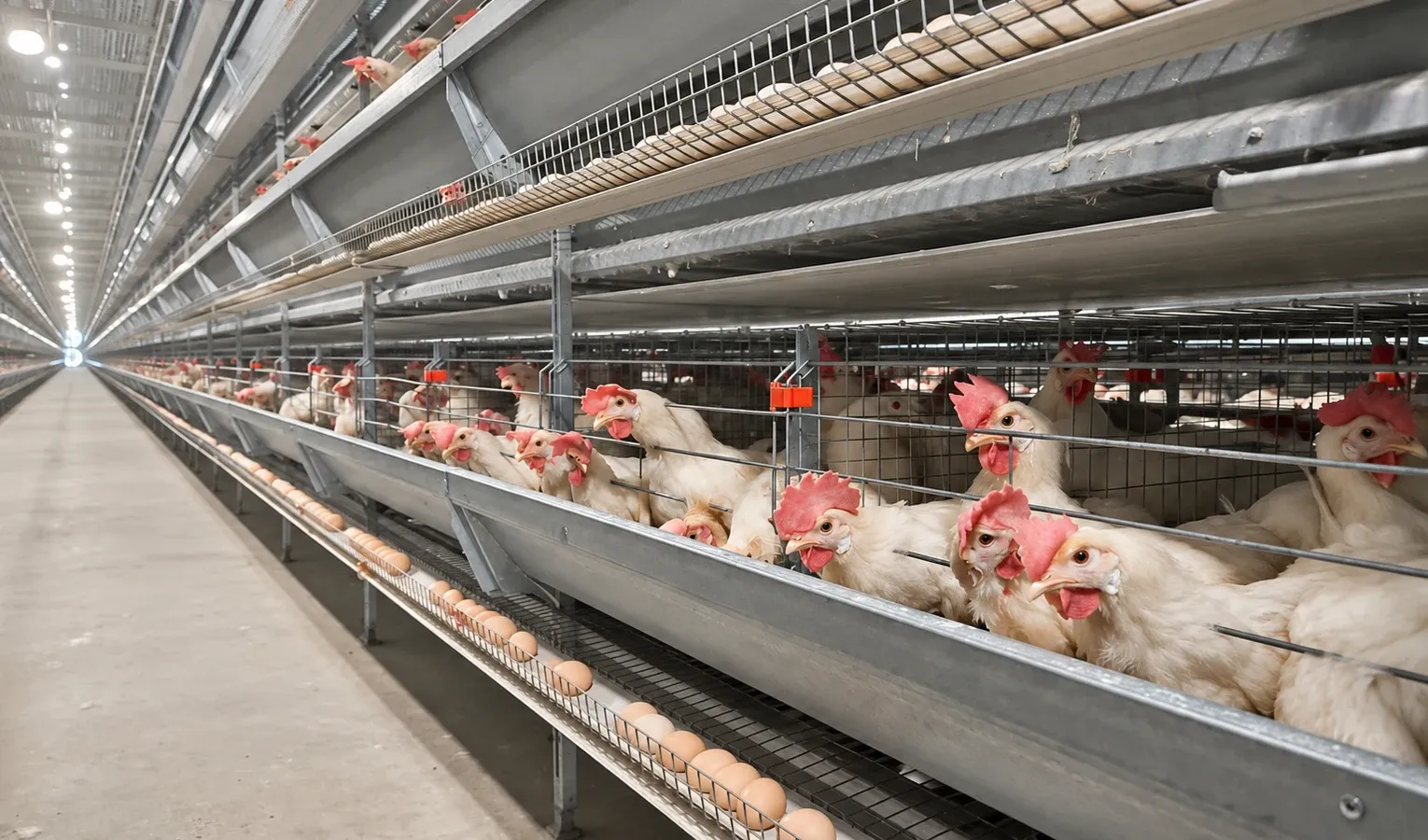
Signs Your Calcium Program Is Failing
Watch the flock and the eggs for early warnings that the calcium plan needs attention.
- Thin or rough shells — the classic sign of inadequate available calcium
- More cracks and downgrades — shell strength is slipping below target
- Bone weakness or cage fatigue — the hen is drawing down medullary bone reserves
- Shell quality worse in the morning — points to an overnight calcium shortfall, often a particle-size issue
Any persistent pattern is worth investigating with your veterinarian before it costs a lot of eggs.
Calcium Across the Laying Cycle
The calcium program is not static. Early in lay the hen is still mineralizing her skeleton while producing shells, so calcium starts moderate and rises. Through mid and late lay, as absorption efficiency falls and eggs grow larger, calcium climbs toward the top of the range and coarse particles become more important. Treating calcium as a rising, phase-fed requirement rather than a fixed number is what keeps shells sound from the first egg to the last.
Let Us Help You Feed Better Shells
Strong shells come from the right calcium level, the right particle size, and the right vitamin and mineral partners, all matched to your flock's age and climate. Tell us your flock size, breed, and where you farm, and our team will help you plan a calcium and feeding-equipment setup that protects shell quality across the whole cycle. Send us your details and we will help you cut cracks and downgrades.
Visual checklist
Related reading
Calcium, Phosphorus and Eggshell Quality
Layer Phase Feeding: Matching Nutrition to Production
Further reading
Use the management guide for the actual breed, age and housing system when selecting flock targets. Review changes with the farm team and the relevant nutrition, health or equipment specialist.