At a glance. Plan water-line cleaning and vaccination as separate procedures, with product-specific instructions, water checks and flock-health supervision.
Water is the most consumed input on any poultry farm, and the drinker line is where flock health is quietly won or lost. Inside those pipes, a slippery layer of biofilm shelters bacteria from disinfectant and, critically, inactivates the live vaccines you deliver through the same lines. A farm can run an excellent vaccination program on paper and still see poor immunity simply because the water system undid the work. Managing drinker lines means two disciplines that seem to pull in opposite directions: keeping the water sanitised day to day, then deliberately stopping that sanitiser so a live vaccine survives the journey to the bird. Getting both right - holding roughly 0.5-1 ppm free chlorine at the nipple most of the time, then pausing it for 24-48 hours around vaccination - is the heart of good water management.

Why the Water Line Is a Battleground
The drinker line touches every bird, every day, from the first drink to the last. That makes it the single most efficient route to deliver medication and vaccines - and equally the most efficient route to spread disease if it is dirty.
Because the line is closed and dark, problems grow unseen. By the time water quality shows up as poor performance, the biofilm inside is usually well established.
- Every bird drinks from the same shared system
- Contamination spreads flock-wide through the water
- The line is also your vaccine delivery route
- Problems develop hidden inside the pipe
- Clean water underpins gut health and uniformity
Biofilm - The Hidden Reservoir
Biofilm is a community of bacteria encased in a protective slime that clings to the inside of pipes, nipples and header tanks. It forms fastest where water is warm, stagnant or sweetened by leftover medication and vitamins.
The slime does two damaging things: it shields pathogens from chlorine, and when a live vaccine passes through, it binds and inactivates the virus. Removing biofilm is therefore central to both hygiene and successful vaccination.
- Forms wherever water is warm or stagnant
- Protects bacteria from routine disinfectant
- Feeds on residues from medications and supplements
- Inactivates live vaccines passing through the line
- Must be physically stripped, not just disinfected
Free Chlorine Targets and ORP
Routine sanitation usually relies on chlorine, but the number that matters is the amount of active, free chlorine, not simply how much you added. A useful reference is to target about 3-5 ppm free chlorine at the source, which typically corresponds to an oxidation-reduction potential (ORP) of 650-700 mV.
ORP measures the actual sanitising power of the water and is a better real-time guide than dosing volume alone. What ultimately counts is the level reaching the bird.
- Target roughly 3-5 ppm free chlorine at the source
- Aim for an ORP of about 650-700 mV
- Confirm delivery of 0.5-1 ppm free chlorine at the drinker
- Use ORP as a live measure of sanitising power
- Treat these as a reference protocol - confirm targets and products with your veterinarian and label directions
The pH Factor
Chlorine's effectiveness depends heavily on water pH, because it is the hypochlorous acid form that does the sanitising. As pH rises, the fraction present as hypochlorous acid falls, and the same chlorine reading kills far less.
Chlorine works best when water pH sits in the range of 5-7. Many farms acidify their water to hold pH in this band so their chlorine actually works.
- Chlorine is most active at pH 5-7
- Rising pH sharply reduces hypochlorous acid
- Acidify water where the supply is alkaline
- Measure pH alongside free chlorine
- Adjusting pH is a reference protocol; verify products and rates with your local veterinarian
Sanitising Lines Between Flocks
The empty period between flocks is the moment to strip biofilm out entirely, because you can use stronger products without birds present. Oxidising cleaners break down the slime that daily chlorination cannot remove.
Hydrogen peroxide or peracetic acid products are commonly left standing in the lines to lift biofilm, then flushed out completely before birds return.
- Use hydrogen peroxide or peracetic acid products
- Fill and leave lines to soak per the label
- Scrub or brush header tanks and reservoirs
- Flush thoroughly until the cleaner is gone
- Follow a reference protocol and confirm concentrations and contact times with your veterinarian and product labels
Routine Flushing
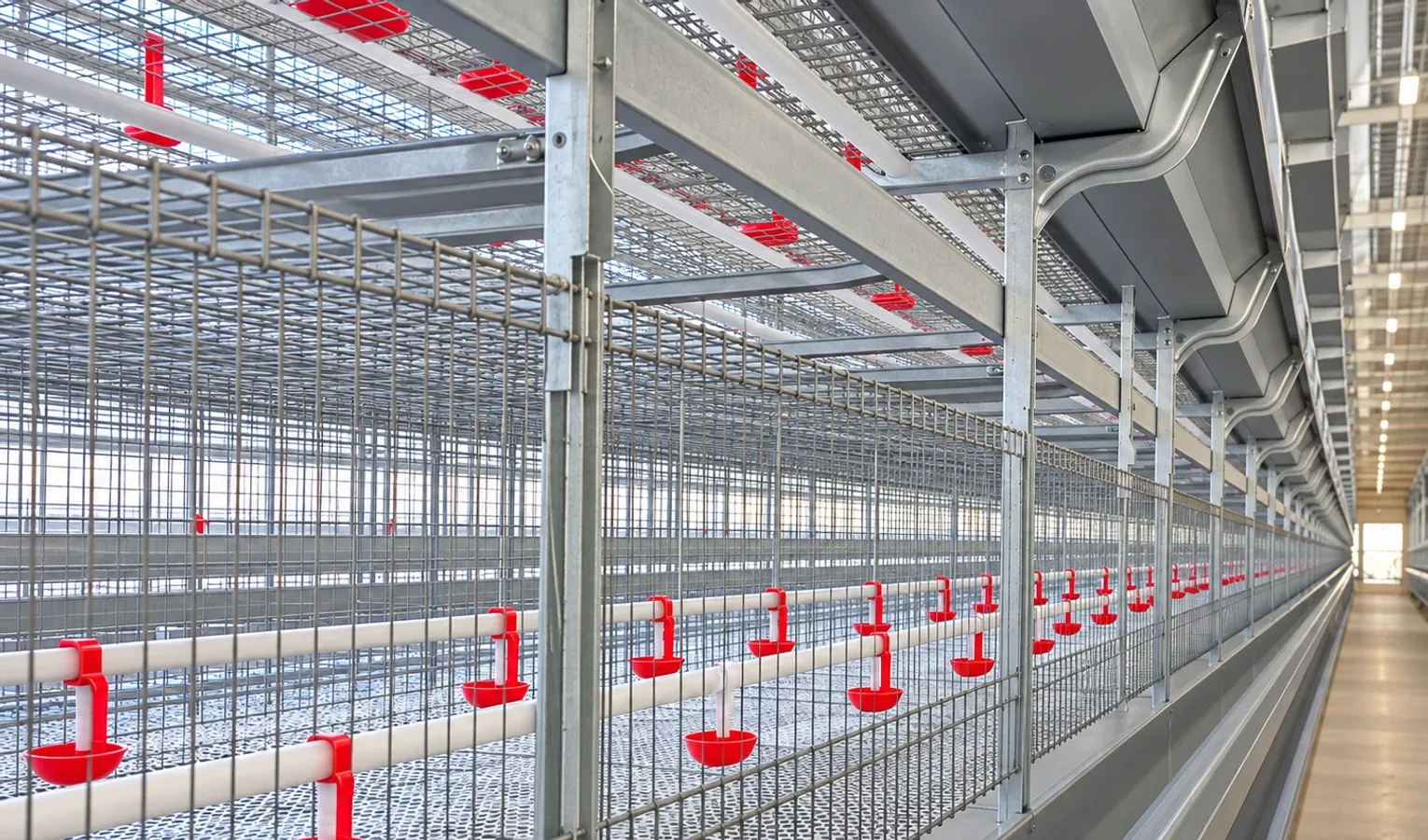
Between deep cleans, regular flushing keeps biofilm from re-establishing. A high-velocity flush physically scours the pipe wall and clears out the warm, stagnant water where bacteria multiply.
Flush more often in hot weather and whenever water sits still, such as during feed withdrawal or low-consumption periods.
- Flush lines regularly at high flow
- Increase frequency in hot weather
- Never let water sit stagnant for long
- Flush after any medication or supplement
- Keep header tanks cool and covered
Measuring What's Actually at the Nipple
The reading at the medicator tells you what went in; the reading at the last drinker tells you what the bird actually gets. Biofilm, distance and chlorine demand can consume sanitiser along the line, so the far end may be almost unprotected.
Test at the end of the line, not just the source, and adjust dosing so that even the last nipple delivers effective water.
- Sample free chlorine at the far end of each line
- Compare source and end-of-line readings
- Confirm at least 0.5-1 ppm free chlorine at the nipple
- Investigate any large drop across the line
- Log readings to catch slow declines early
Drinking-Water Vaccination: Preparing the Flock
Delivering a live vaccine through water only works if every bird drinks its share quickly. Preparation starts with making the birds thirsty so they crowd the drinkers when the vaccine goes in.
Withhold water for about 2-4 hours beforehand - adjusted for temperature so birds are never heat-stressed - so that when water returns, they drink promptly and evenly.
- Withhold water for about 2-4 hours before vaccinating
- Shorten the withdrawal in hot conditions
- Ensure enough drinker space for all birds at once
- Reconstitute so the flock drinks the correct doses
- Aim for uptake within about 2 hours of offering
Follow this as a reference protocol and confirm withdrawal times and dosing with your veterinarian and the vaccine label, since the right approach varies with age, climate and vaccine type.
Stabilisers and Neutralising Chlorine
Even trace chlorine or metal ions left in the water will kill a live vaccine. A stabiliser both neutralises residual chlorine and protects the virus from light and stress during the drinking window.
A common approach is to add 0.1-0.5% skim milk powder, or a purpose-made commercial stabiliser, to the vaccine water shortly before dosing.
- Add 0.1-0.5% skim milk powder as a stabiliser
- Or use a commercial dye-and-stabiliser product
- Mix the stabiliser in before adding the vaccine
- Neutralises residual chlorine that would kill the virus
- Protects the live vaccine during the drinking window
The Golden 2-Hour Window
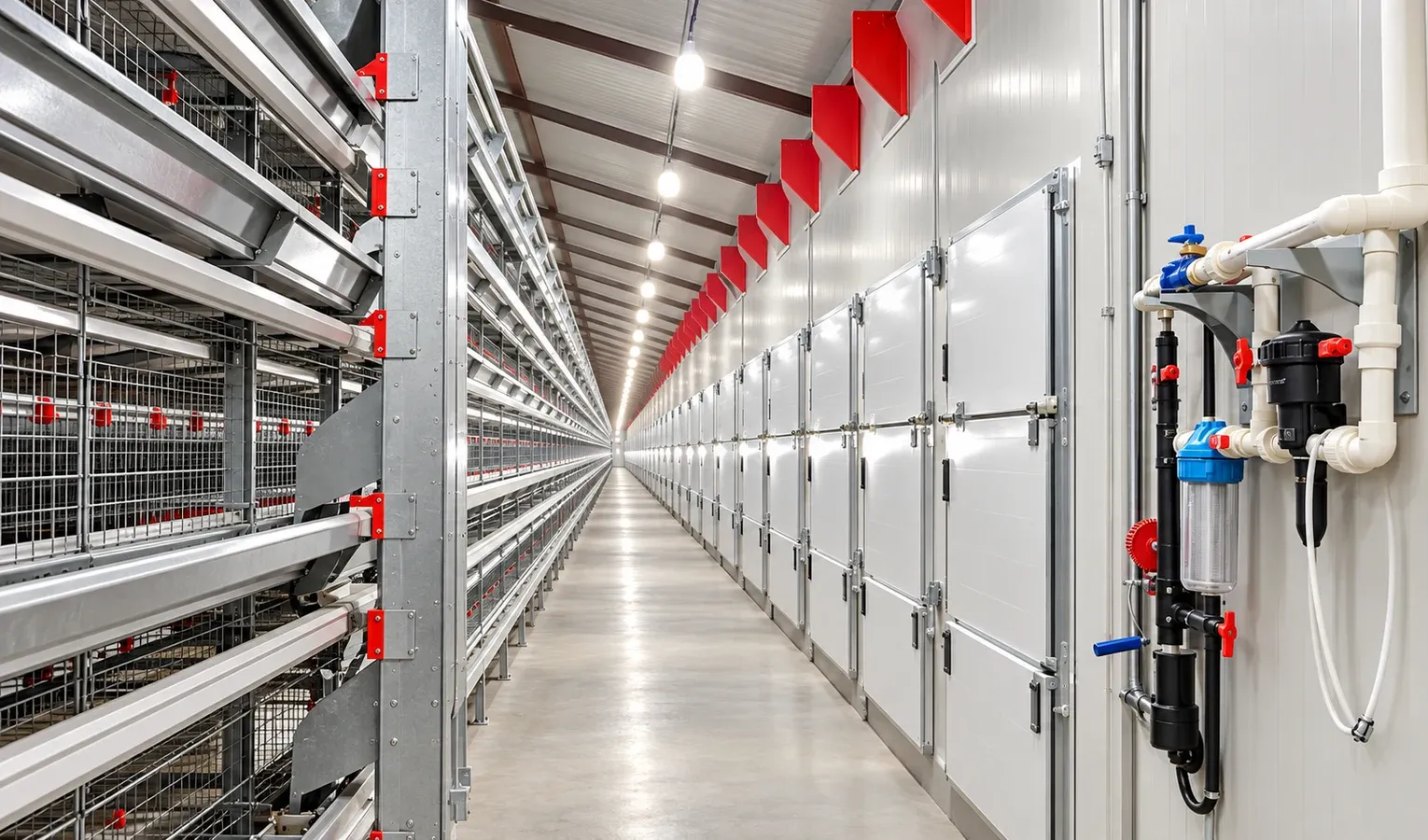
Once mixed, a live vaccine does not last. Warmth, light and time all degrade it, so the whole flock needs to consume the dosed water quickly.
Plan for the birds to finish the vaccine water within about 2 hours, and complete the exercise before the day warms and water intake patterns shift.
- Target complete uptake within about 2 hours
- Vaccinate in the cooler part of the day
- Keep mixed vaccine out of direct sunlight
- Use cool water to slow degradation
- Do not stretch the window to reach stragglers
Stop the Sanitiser Before Live Vaccination
This is the step most often missed. Every sanitiser that protects water day to day - chlorine, peroxide and the rest - will destroy a live vaccine on contact.
Stop all chlorine and disinfectant dosing for 24-48 hours before and during live water vaccination, and flush the sanitiser out of the lines first so the birds drink clean, cool, non-chlorinated water.
- Stop all sanitiser 24-48 hours before vaccinating
- Flush the lines to clear residual chlorine
- Use clean, cool, non-chlorinated water
- Keep sanitiser off during the whole drinking window
- Resume normal sanitation only after vaccination is done
Treat these timings as a reference protocol - always confirm the stop time and water source with your veterinarian and the vaccine label, because the margin here decides whether the vaccine works at all.
Confirming Uptake With Dye
You should never have to guess whether the birds drank the vaccine. A harmless dye added to the vaccine water stains the tongue and crop, giving you an immediate visual check on coverage.
Walk the house afterward and inspect a sample of birds; a high proportion of stained beaks confirms good uptake, while pale birds flag drinkers or areas that need attention.
- Add an approved dye to the vaccine water
- Inspect tongues and crops after dosing
- A blue-stained mouth confirms the bird drank
- Investigate zones with many unstained birds
- Record coverage to improve the next round
Water line sanitation and drinking-water vaccination are two halves of one discipline: keep the water clean enough to protect health, but know exactly when and how to step back so a live vaccine can survive. Master the biofilm, the chlorine chemistry and the vaccination window, and you protect both everyday health and hard-won immunity. If you are planning a drinker system, header tanks, medication dosing or flushing layout for a new or upgraded house, our technical team is glad to help you design water lines and controls that make clean water and reliable vaccination straightforward. Reach out and let's build a water system your flock can thrive on.
Visual checklist
Related reading
Poultry Water-Line Biofilm: Prevention and Monitoring
Layer Vaccination Planning: Records and Local Advice
Further reading
Disease prevention and treatment must be adapted to the flock and local requirements. Confirm medicines, vaccines and disinfectant procedures with the responsible veterinarian and the approved product instructions.