At a glance. Understand the information needed for a layer vaccination plan, including flock history, local disease risks, product instructions and veterinary advice.
A layer hen has to stay healthy for well over a year, which makes her vaccination program one of the most demanding in all of poultry. Unlike a broiler that leaves the farm in about 6 weeks, a layer must resist disease through rearing, through the stress of coming into lay, and across a long production period that can stretch to 72-80 weeks. That means many more vaccines, careful timing around onset of lay, and repeated boosters. This article lays out a complete reference vaccination framework for layers and explains the reasoning behind each step, so you can plan an effective calendar with your own veterinarian.
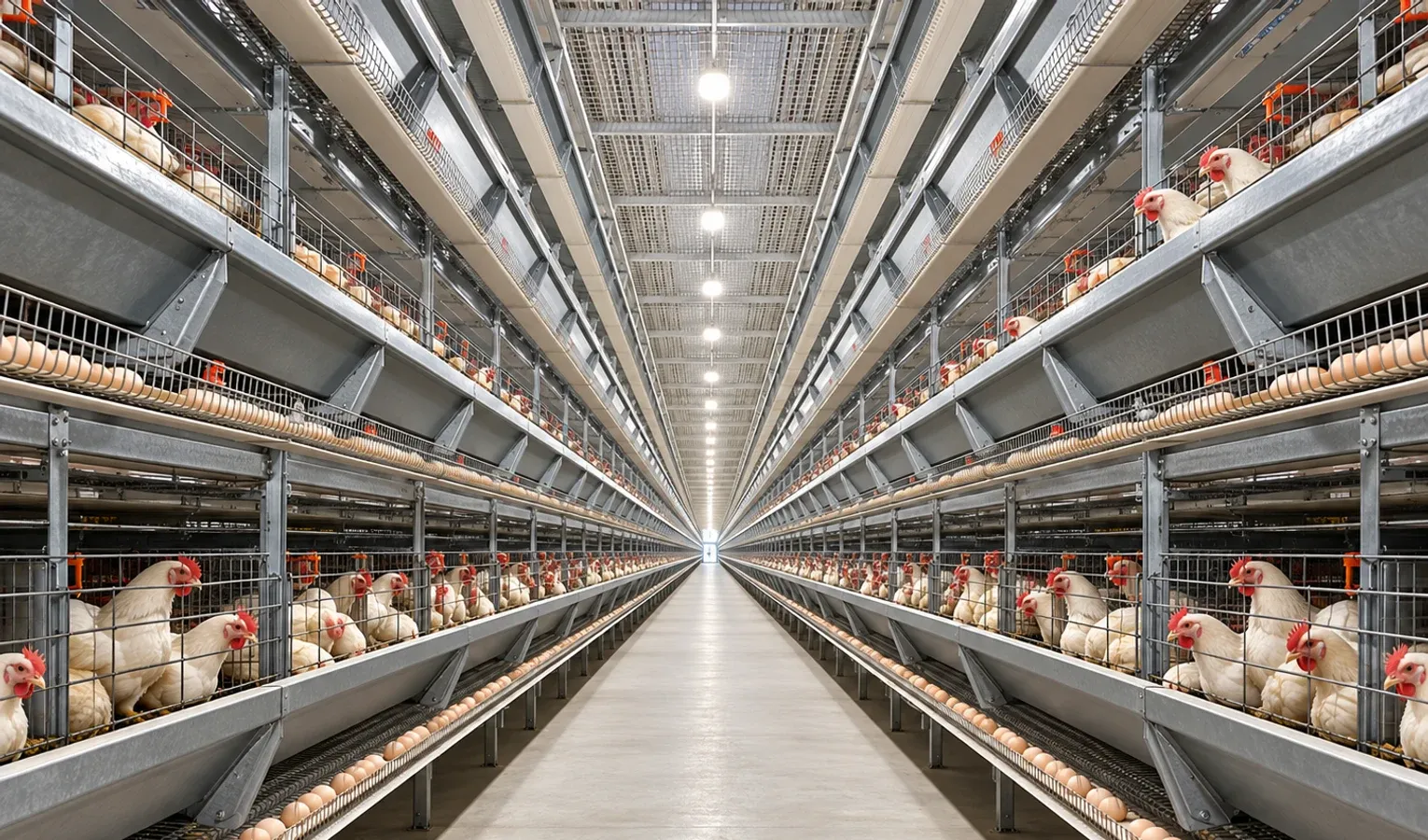
Why a Layer Needs a Longer Plan Than a Broiler
The single biggest driver of a layer's vaccine schedule is her working life. Protection that only lasts a few weeks is fine for a broiler but useless for a hen expected to lay for more than a year.
The long life cycle changes everything about the plan:
- Immunity must last through 72-80 weeks of production, not 6
- Killed vaccines are added before lay for long, even protection
- Boosters continue throughout the laying period
- The stress of coming into production can suppress immunity, so timing matters
- More diseases must be covered because exposure time is far longer
Reading a Vaccination Calendar
A vaccination calendar looks intimidating until you see its logic. Each disease gets a primary dose to introduce the immune system to the pathogen, then boosters to raise and hold protection.
When you read any layer program, watch for these patterns:
- Day-old primes at the hatchery, where handling is controlled
- Live vaccines early to build a broad first response
- Killed (inactivated) vaccines later for durable, uniform titres
- Boosters clustered before onset of lay at roughly 16-18 weeks
- Periodic re-vaccination during production for the longest-lived threats
Everything below is a reference program - always confirm the exact ages and products with your local veterinarian and adapt them to the current disease situation in your region.
Marek's Disease at the Hatchery
Marek's disease vaccination happens before the chick ever reaches your farm, and it must not be skipped. Because the virus is ubiquitous, protection has to be in place from the very first hours of life.
Marek's is given at the source:
- Subcutaneous injection at day 1 in the hatchery, or
- In-ovo administration at 17-19 days of incubation
- Always applied by the hatchery, never on the farm
- Handled carefully as a cell-associated vaccine with a strict cold chain
- Confirmed on the chick delivery paperwork before placement
Because Marek's provides no useful boosters later, getting this single early dose right is critical.
The Newcastle Disease Program
Newcastle disease (ND) is one of the most serious threats to layers worldwide, so it receives repeated attention across the whole life cycle. The goal is to keep antibody levels high from brooding through late lay.
A typical reference ND program looks like this:
- First vaccination at 7-10 days of age
- Booster at 18-20 days
- Booster at 35-45 days
- A pre-lay booster at 130-140 days
- Periodic re-vaccination every few weeks to months during lay
Live vaccines build the early response while an inactivated ND vaccine before lay locks in long protection. Treat these ages as a reference framework and let your veterinarian fine-tune them to local Newcastle pressure.
Infectious Bronchitis
Infectious bronchitis (IB) spreads rapidly and can permanently damage the reproductive tract if it strikes young birds, harming egg quality for life. It is usually managed alongside Newcastle disease.
IB control commonly follows ND:
- Combined ND and IB spray at day-old in many programs
- Repeated with the ND boosters through rearing
- Live IB strains matched to the types circulating locally
- An inactivated IB component often included in the pre-lay killed vaccine
- Attention to variant strains, which may need specific vaccines
Because IB has many variants, your local veterinarian's strain advice is essential rather than optional.
Gumboro (IBD) Timing
Infectious bursal disease (IBD, or Gumboro) attacks the young bird's immune system itself, so poor IBD control undermines every other vaccine. Timing is the whole game here.
Gumboro vaccination hinges on maternal antibody:
- Live vaccination commonly around 14 days of age
- Exact timing set by the level of maternal antibody in the chicks
- Intermediate or intermediate-plus strains chosen to match the challenge
- Some flocks receive a second dose where field pressure is high
- Vaccinating too early wastes the dose against maternal antibody; too late leaves a gap
This is another point where the ages given are a reference - confirm the precise day and strain with your veterinarian based on your chicks' maternal antibody status.
Avian Influenza in Layers
Where H5 avian influenza is endemic or legally required, layers receive a structured series because they are exposed for so long. This is one of the most repeated vaccines in the whole calendar.
A common reference H5 series is:
- First dose at 10-15 days of age
- Second dose at 40-50 days
- Third dose at 120-130 days
- Fourth dose at 250-270 days
- Boosters roughly every 3 months through the laying period
Avian influenza vaccination is tightly regulated, so always follow national rules and your veterinarian's guidance on products and timing.
Live Versus Inactivated Vaccines
Understanding the two vaccine types explains why layers get both. They do different jobs and work best in sequence.
The two families complement each other:
- Live vaccines multiply in the bird, giving a fast, broad, local immune response
- Live vaccines are ideal for early priming and mass application by spray or water
- Killed (inactivated) oil-emulsion vaccines give high, long-lasting, uniform antibody levels
- Killed vaccines are injected, usually before onset of lay, for durable protection
- Priming with live then boosting with killed produces the strongest, longest immunity
Choosing the Right Route: Spray Beats Water
How a vaccine is delivered matters almost as much as which vaccine you choose. A perfect vaccine applied badly gives poor protection.
Route strongly affects the result:
- Spray and intranasal or eye-drop delivery place vaccine directly on respiratory surfaces
- These routes give more reliable, more uniform protection
- Drinking-water delivery is convenient but easily done poorly
- A badly run water vaccination can be only about 1/4 as effective as it should be
- If using water, remove chlorine, add a stabilizer, and withhold water briefly beforehand so birds drink promptly

Handling, Storage and the Cold Chain
Vaccines are living or delicate biological products, and mishandling silently ruins them. A flock can appear vaccinated on paper while receiving no protection at all.
Protect vaccine potency at every step:
- Keep vaccines refrigerated at roughly 2-8 degrees C until use
- Never freeze inactivated oil-emulsion vaccines
- Keep vials out of direct sunlight and use cool boxes in the field
- Reconstitute only the amount you can use within the recommended window
- Discard leftover mixed vaccine rather than saving it for later
Timing Around Onset of Lay
The weeks just before a hen starts laying are a critical window. Once she is in production, injecting killed vaccines becomes stressful and can knock back egg output, so heavy vaccination is front-loaded.
Plan the pre-lay period carefully:
- Complete the main killed vaccinations before lay begins, around 16-18 weeks
- Cluster ND, IB and other pre-lay boosters into this window
- Avoid unnecessary handling and stress once birds are laying well
- Allow time for immunity to develop before peak production
- Continue only the essential in-lay boosters, such as ND and H5, thereafter
Because flocks come into lay at slightly different ages, treat these week numbers as a reference and adjust with your veterinarian.
Monitoring the Response With Titres
Vaccinating is only half the job; confirming the birds responded is the other half. Blood testing turns a hopeful program into a measured one.
Use serology to check your work:
- Draw samples and run HI or ELISA titre tests after key vaccinations
- Check that antibody levels are high enough and uniform across the flock
- Watch for wide variation, which points to poor application technique
- Time tests to catch both the response and any decline before boosters
- Use the results to adjust future timing rather than guessing
Record Keeping
Good records turn one season's experience into next season's improvement. Without them, every flock starts from scratch.
Keep clear, retrievable records:
- Log every vaccine by name, batch number, date and age of birds
- Record the route, operator and any problems during application
- File titre results alongside the vaccination history
- Note disease events so you can link them back to the program
- Review the full history with your veterinarian before planning the next flock
A layer program is a long partnership between your birds, your team and your veterinarian. If you are planning new layer housing or upgrading an existing site, our team is happy to help you design the house, cage and ventilation layout that keeps a long-lived flock comfortable and easy to vaccinate. Get in touch and we will map out a setup that supports your whole production cycle.
Visual checklist
Related reading
Poultry Farm Biosecurity: People, Vehicles and Equipment
Poultry Water Lines: Cleaning and Vaccination Planning
Further reading
Disease prevention and treatment must be adapted to the flock and local requirements. Confirm medicines, vaccines and disinfectant procedures with the responsible veterinarian and the approved product instructions.