At a glance. Plan pullet lighting around development, daylight exposure, house conditions and the breeding-company guide before changing the rearing programme.
Light is the switch that tells a pullet when to become a layer. Get the timing right and she comes into production at the correct age, at the correct body weight, laying properly sized eggs. Get it wrong — increase daylength too early, even by accident — and you trigger sexual maturity before the bird is physically ready, producing a flock that lays small eggs, peaks poorly, and suffers prolapse and mortality. Managing the rearing light program is therefore one of the highest-leverage, lowest-cost jobs in raising replacement pullets. It costs almost nothing to run correctly, yet a single careless change to daylength can compromise a flock's entire production year — which is why disciplined, written lighting management pays back many times over. The core recipe is disciplined: cut rearing light to 8-10 hours at 10-15 lux, hold it perfectly flat through the middle of rear, and only then add light back — about one hour per week from week 16 — to bring the flock into lay at the right time.
Light Is a Hormonal Trigger, Not Just Illumination
Pullets sense daylength through photoreceptors that drive the reproductive hormone cascade. Increasing daylength signals "spring" and switches on sexual development. This is why the direction light changes matters more than the absolute level.
- Increasing daylength stimulates the hormones that start egg production.
- Decreasing or constant daylength holds sexual maturity in check.
- The bird responds to change in photoperiod, so every change must be deliberate.
The Danger of Early Maturity
Triggering lay too soon is one of the most damaging and common lighting mistakes. A pullet that starts before she has the frame and reserves cannot support production, and the consequences follow the flock all cycle.
- Early maturity produces small first eggs that take too long to reach saleable size.
- It causes prolapse and higher mortality as underdeveloped birds strain to lay.
- The flock peaks lower and holds it for less time, costing eggs across the whole cycle.
Step Down Into the Rearing Program
After the bright, near-continuous light of the first days that establishes feed and water intake, the program steps daylength down to the rearing level. This reduction signals the bird to grow rather than mature.
- Bring rearing daylength down to about 8-10 hours after the early establishment phase.
- Hold intensity low, around 10-15 lux, to keep birds calm and discourage pecking.
- The step-down reinforces frame and reserve development instead of premature sexual maturity.
Hold the Photoperiod Flat Through the Middle
The heart of the program is a long, constant daylength through the middle weeks of rear. During roughly weeks 5 through 15, daylength should neither increase nor decrease. Any wobble risks starting the hormonal cascade early.
- Keep the photoperiod constant from about week 5 to week 15 — no increases, no decreases.
- Even a small accidental increase can prematurely stimulate the flock.
- Stability here is what lets body weight, not calendar age, dictate readiness.
Watch Out for Natural Daylight
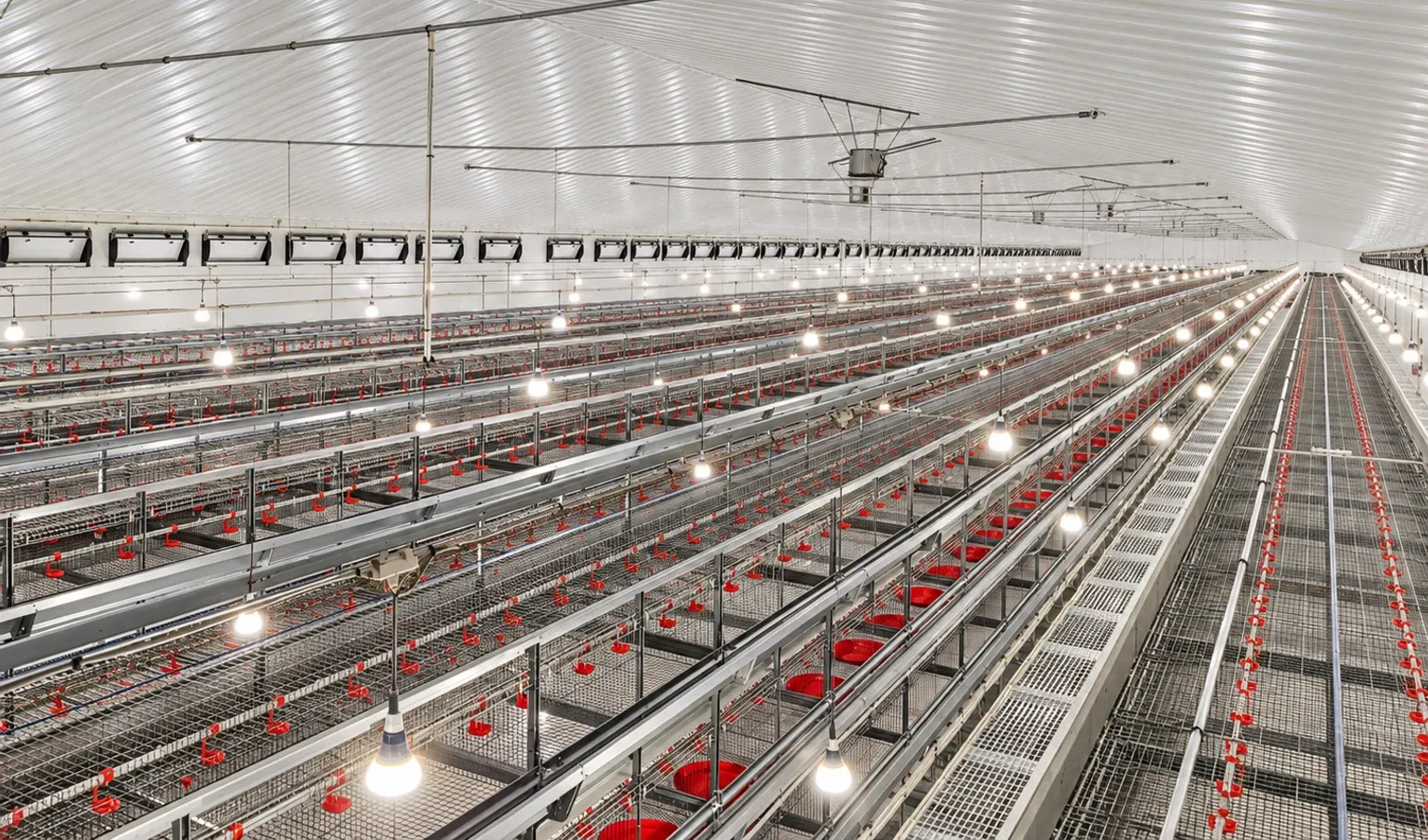
In open or curtain-sided housing, the sun undoes your program. Natural daylength changes with the season, and a flock reared as days lengthen can be stimulated no matter what the controller says. This is a frequent, hidden cause of early maturity.
- In open houses, seasonal increases in natural daylight can trigger early lay on their own.
- Light-proof (blackout) housing gives full control over the photoperiod.
- Where full control is impossible, plan the placement date against the season and the natural light curve.
The Body-Weight-and-Light Partnership
Light stimulation only works properly if the bird is physically ready. Age, body weight, and photoperiod must line up. Stimulating a flock that has not reached target weight gives a weak, drawn-out onset even with perfect light timing.
- Photostimulate based on body weight and uniformity, not calendar age alone.
- A flock at target weight and tight uniformity responds sharply to added light.
- Under-weight flocks should reach their weight target before, or alongside, light increase.
Photostimulation: Adding Light Back
Once the flock is physically ready — typically from around week 16 — you begin increasing daylength to switch on production. The increase is gradual and steady, not a single large jump.
- Begin increasing daylength from about week 16.
- Add roughly one hour per week until you reach the target laying photoperiod.
- The steady climb brings the flock into a synchronized, sharp onset of lay.
Landing on the Right Onset Age
The combination of correct rearing light, correct body weight, and a well-timed increase brings the flock into production at the target age. For most modern layers that means an onset around 19-21 weeks.
- Expect onset of lay at 19-21 weeks when light and body weight are aligned.
- Onset that is too early signals a lighting or weight error to diagnose for next flock.
- A synchronized onset produces a clean, fast climb to a high peak.
Intensity Management Through Rear
Beyond duration, light intensity shapes behavior. Rearing at low intensity keeps birds calm, reduces feather pecking and cannibalism, and conserves energy, while the layer house is often brighter to stimulate activity and production.
- Rear at low intensity, around 10-15 lux, to keep the flock calm.
- Uniform intensity avoids bright spots that draw pecking and dark spots that isolate birds.
- Plan the intensity change into the transfer so birds are not shocked by a sudden jump.
Matching Rear and Lay House Programs
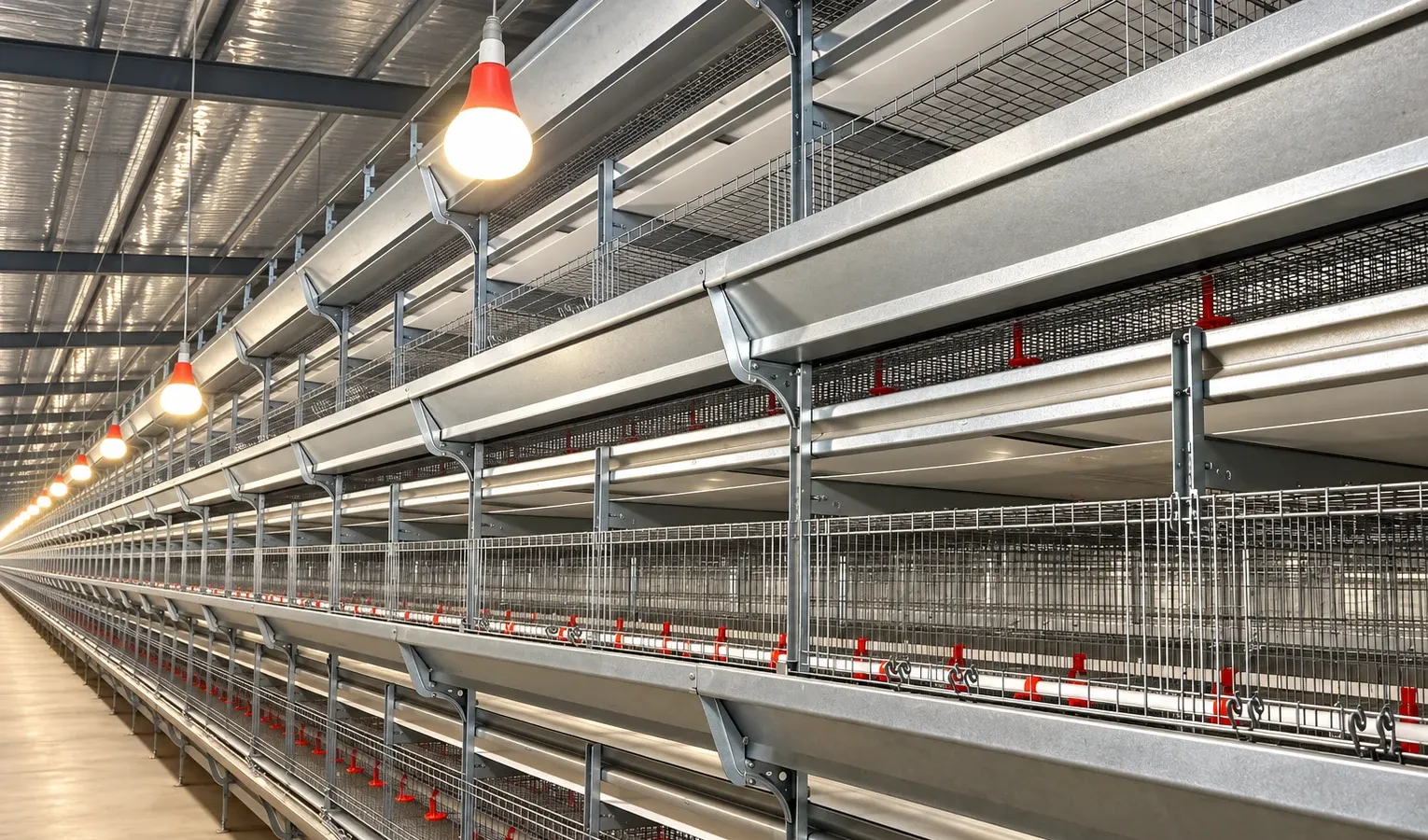
Problems often appear at transfer, when birds move from a rearing house to a laying house with different lighting. The two programs must be planned as one continuous curve so the move does not accidentally stimulate or set back the flock.
- Coordinate the rearing and laying light programs as a single continuous plan.
- Avoid an unintended daylength jump at transfer that could mistime maturity.
- Communicate the exact photoperiod at transfer so the lay house continues, not resets, the program.
Light Sources, Dimming, and Distribution
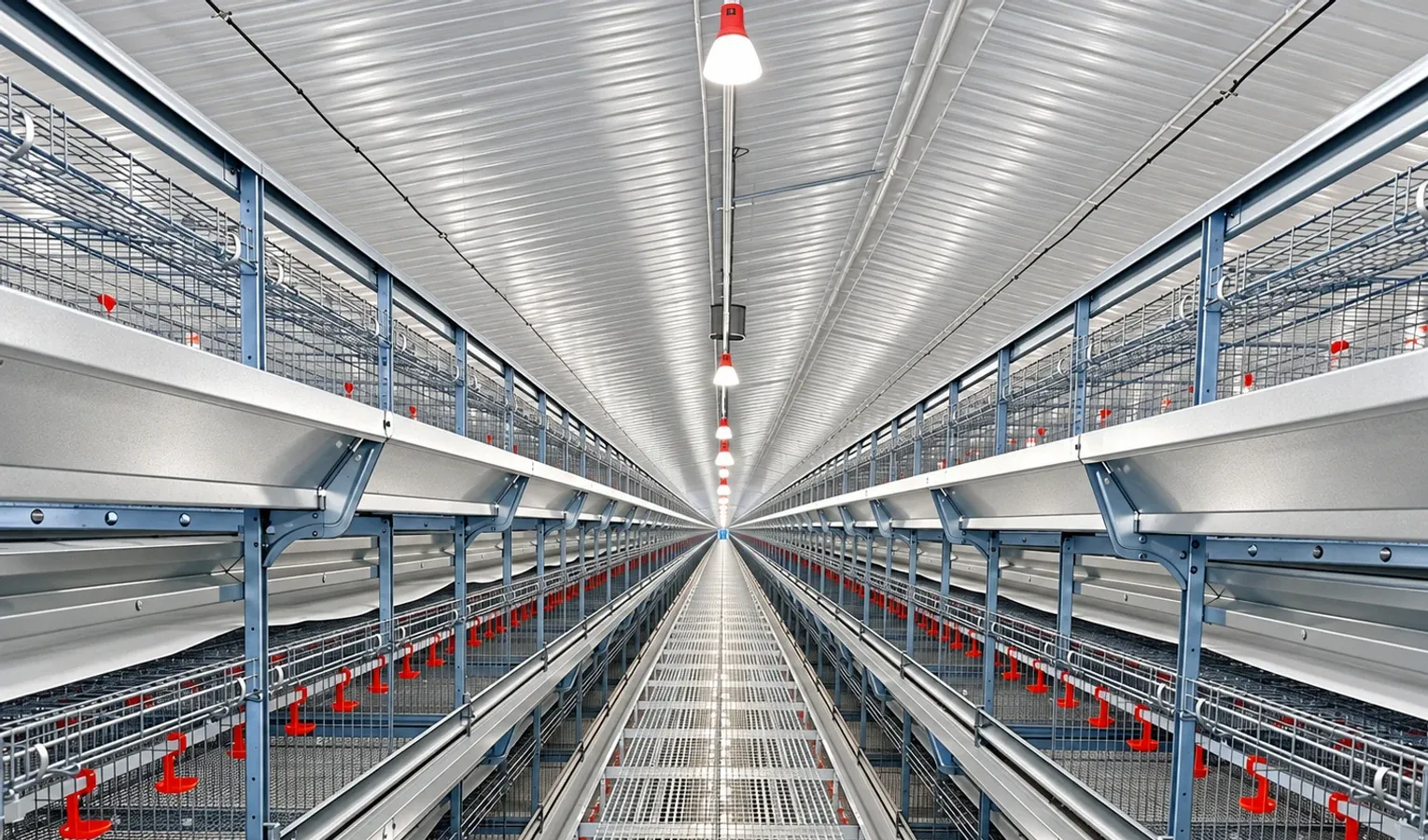
The hardware behind the program matters as much as the schedule. Dimmable, evenly distributed lighting lets you hit intensity targets precisely and step them up or down smoothly, while patchy or non-dimmable lighting undermines an otherwise sound plan.
- Use dimmable fixtures so you can hold and adjust intensity to target (around 10-15 lux in rear).
- Distribute light evenly to avoid bright spots that provoke pecking and dark spots that isolate birds.
- Choose a light source with a spectrum suited to poultry and verify actual lux at bird level, not just at the fixture.
Common Lighting Mistakes to Avoid
Most lighting failures come down to a handful of repeatable errors. Knowing them in advance is the cheapest way to prevent an expensive flock.
- Increasing daylength during the flat middle phase, triggering early maturity.
- Ignoring natural daylight changes in open housing.
- Photostimulating under-weight or uneven flocks and getting a weak onset.
- A daylength mismatch at transfer between rear and lay houses.
Building Your Pullet Lighting Plan
A written, flock-specific program keeps every crew on the same page and turns lighting from a risk into a reliable tool. Map it out before the birds arrive.
- Establishment: bright light early for intake, then step down to 8-10 h at 10-15 lux.
- Hold constant from week 5-15; photostimulate with +1 h/week from week 16.
- Confirm body weight and uniformity before increasing light; target onset at 19-21 weeks.
Lighting is quiet, cheap, and decisive — a program that costs almost nothing to run yet determines whether your flock lays well for a full year. If you are planning a rearing or laying house, it is worth ensuring the housing and controls can hold a stable photoperiod and a smooth transfer, so the biology of maturity happens on your schedule rather than the season's.
Visual checklist
Related reading
Layer Lighting Programmes: Rearing Through Production
Pullet Rearing: Monitoring Growth and Uniformity
Further reading
Use the management guide for the actual breed, age and housing system when selecting flock targets. Review changes with the farm team and the relevant nutrition, health or equipment specialist.