At a glance. Build a practical water-quality review around source testing, samples at the drinker, delivery checks and daily consumption trends in the flock.
Water is the first limiting nutrient in poultry, and it is also the cheapest and most overlooked input on the farm. Birds drink roughly twice as much water as they eat feed by weight, so anything wrong with the water supply shows up in performance faster than almost any feed change. A laying hen typically drinks about 230-300 ml of water per day, climbing to 400-500 ml in hot weather, and every one of those millilitres passes through the same nutritional gatekeeping as the ration. Despite this, water is tested far less often than feed is formulated. This guide lays out the practical quality standards worth knowing and the intake patterns that let you spot a problem before it costs you eggs.
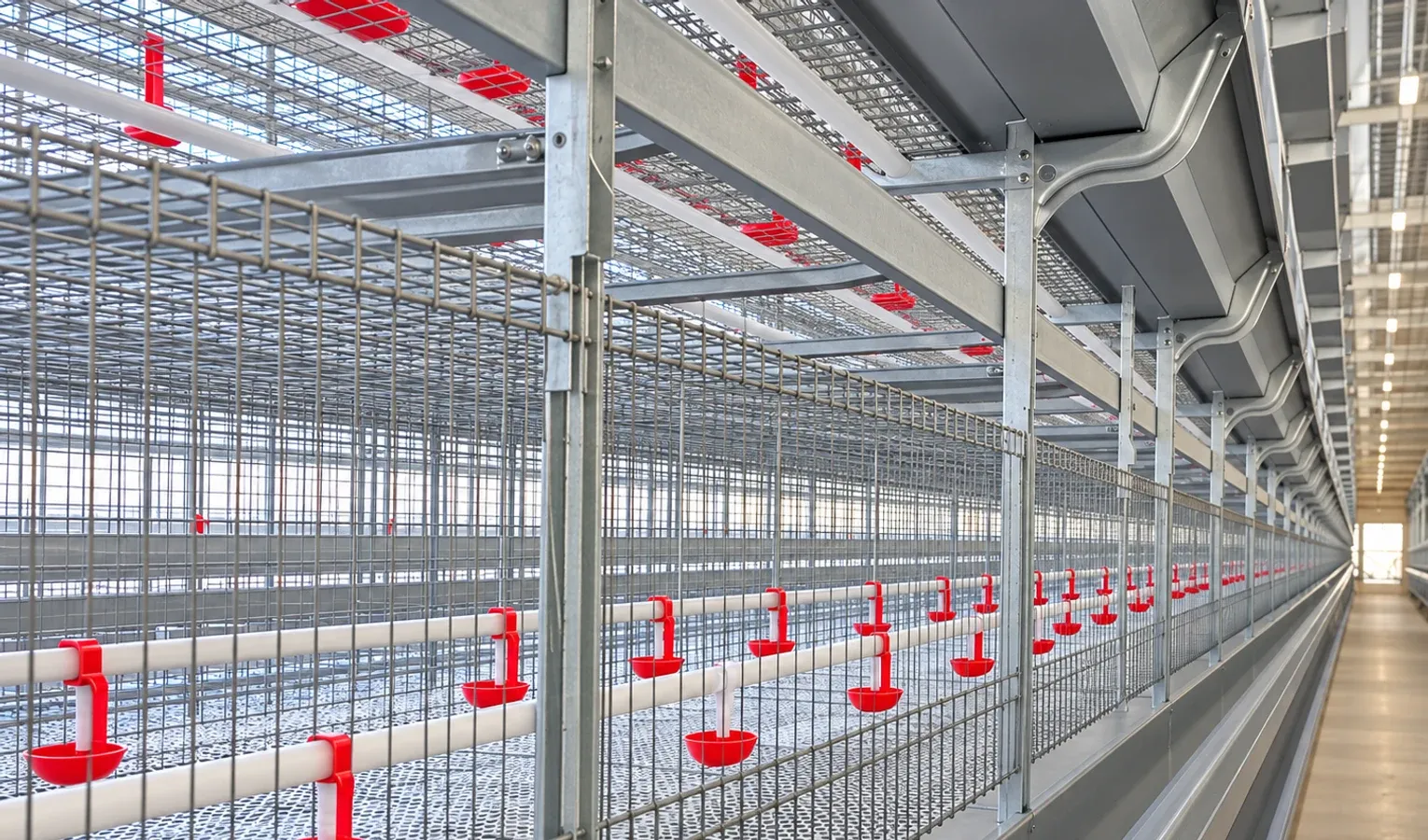
Water Is the First Limiting Nutrient
If a bird cannot drink enough clean water, nothing else in its nutrition program matters. Feed intake drops when water intake drops, because birds simply stop eating when they cannot drink. That link is why water is called the first limiting nutrient: restrict it and you cap everything downstream, including growth, egg production, and shell quality. And unlike most inputs, better water usually costs very little — it is mostly a matter of testing, treatment, and maintenance rather than a large ongoing bill.
Consider the sheer volume involved. Because birds drink roughly twice as much water as they eat feed by weight, a house of laying hens moves an enormous quantity of water every day, and each bird's body is more than half water. Water regulates body temperature, carries nutrients, lubricates joints, softens feed in the crop, and flushes waste through the kidneys. Interfere with any of that — through a mineral imbalance, a contaminant, or simply a shortage — and the whole animal slows down. Yet feed gets formulated to the gram while water often goes untested for years. Closing that attention gap is one of the highest-leverage moves a producer can make.
How Much Water a Hen Actually Drinks
A useful baseline is that a laying hen drinks about 230-300 ml per day under comfortable conditions. In heat that figure can rise to 400-500 ml as birds drink to cool themselves. Because intake scales with temperature, body size, and production, the number is a range rather than a fixed value, but knowing your flock's normal band lets you notice deviations quickly.
- Comfortable conditions — roughly 230-300 ml per hen per day is a typical layer baseline.
- Heat stress — intake can reach 400-500 ml per bird as evaporative cooling demand rises.
The Water-to-Feed Ratio and the 7% Rule
Under normal conditions, birds consume water and feed in a ratio of about 1.8-2:1 by weight — that is, close to twice as much water as feed. This ratio is one of the most useful diagnostic tools you have, because it is stable enough that a change signals something real.
- Baseline ratio — expect roughly 1.8-2:1 water to feed under comfortable temperatures.
- Temperature response — above an ambient temperature of about 21°C, water intake rises by roughly 7% for every additional 1°C.
That 7% per degree adds up fast. A jump from 21°C to 31°C can lift water demand by well over half, which is exactly why drinker capacity that felt generous in spring becomes a bottleneck in summer.
Reading Water Meters as an Early Warning
Because intake is so predictable, a daily water reading is one of the best health monitors on the farm. A sudden drop often precedes visible signs of disease by a day or more, while an unexplained spike can indicate a leak, a health issue, or heat stress. Log water use every day, ideally per house, and treat any deviation from the flock's normal curve as a prompt to walk the line and look closer.
- Overnight comparison — compare each day against the same day of the week and the same point in the production cycle, not just yesterday, so normal weekly rhythms do not mask a real signal.
- Water-to-feed drift — if water climbs while feed holds steady, suspect heat, salt, or gut upset; if both fall together, suspect illness or a restriction in the supply.
A meter costs little and pays for itself the first time it catches a problem a day early.
pH: Keep It in the Comfortable Band
The acceptable pH range for poultry water is about 6.5-8.5. Within that band birds drink normally and most water treatments behave as expected. Water that drifts below or above this range can suppress intake, corrode equipment, or interfere with the chlorine and acid products used to sanitize the line. pH also matters enormously for disinfection, since chlorine is far more effective at the lower end of the scale — a point worth remembering when planning any sanitation program.
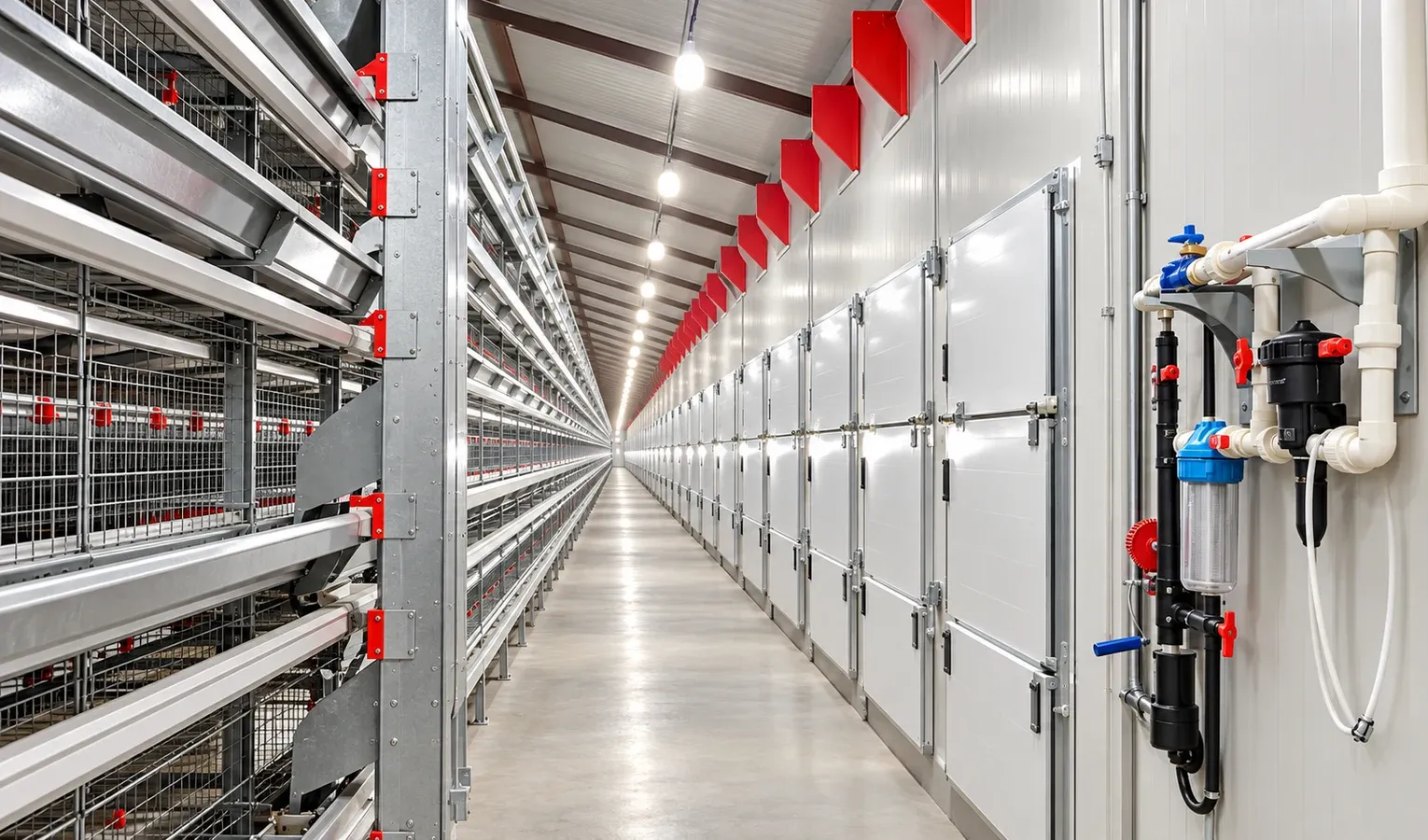
Total Hardness and Total Dissolved Solids
Hardness and total dissolved solids describe how much mineral is carried in the water. Both have thresholds worth respecting.
- Total hardness — keep it at or below 450 ppm, with an ideal window of 60-180 ppm; very hard water scales up nipples and reacts with medications and sanitizers.
- Total dissolved solids (TDS) — below 1000 ppm is considered safe, 1000-3000 ppm is marginal and may affect intake and litter, and higher levels warrant treatment.
Hard, high-TDS water is not just a bird issue; it is an equipment issue, building scale that shortens the life of drinker lines and regulators.
Nitrate, Sulfate, Sodium, and Chloride
Several dissolved ions cause trouble at surprisingly low levels, particularly through gut and litter effects.
- Nitrate — keep it at or below 25 ppm; elevated nitrate can indicate contamination from fertilizer or manure runoff and stresses the birds.
- Sulfate — keep it below 250 ppm; above 500 ppm it acts as a laxative, producing wet litter and its cascade of foot, hock, and air-quality problems.
- Sodium and chloride — generally keep each in the low range, roughly 50-250 ppm depending on the ion; excess sodium and chloride drive up water intake and contribute to wet droppings.
Wet litter is one of the most common downstream symptoms of poor water chemistry, and sulfate and sodium are frequent culprits.
Iron and Manganese: The Nipple Cloggers
Some minerals cause more grief through equipment fouling and bacterial feeding than through direct toxicity. Iron is the classic offender.
- Iron — keep it at or below 0.3 ppm; at 2-3 ppm it clogs nipple drinkers with rusty deposits and, worse, feeds iron-loving bacteria that build slime in the lines.
- Manganese — keep it below 0.05 ppm; like iron, it deposits in lines and contributes to fouling and off taste.
Iron is a double problem: the physical scale restricts flow while the bacterial slime it supports becomes a reservoir for pathogens. Water that tests fine at the well can still fail at the drinker because of what iron has grown along the way.
The Microbial Standard: Zero Coliforms
Chemistry is only half the picture. Microbiologically, the target is strict: coliform bacteria should read 0 CFU per 100 ml. Any coliform presence indicates faecal or environmental contamination and a route for pathogens into the flock. Because contamination frequently develops between the source and the bird — in tanks, lines, and biofilm — a clean well is not proof of clean drinking water. This is precisely why sampling location matters so much.
Test at the Drinker, Not Just the Source
The single most important habit in water quality management is where you take the sample. Water should be tested at least once a year, and critically, at the drinker rather than only at the source. A pristine well can deliver contaminated, iron-fouled, or biofilm-laden water by the time it reaches the nipple, because everything between the source and the bird — storage tanks, pipe runs, regulators, and the lines themselves — can add minerals, bacteria, and slime.
- Frequency — test at minimum once per year, and more often if you have had problems or changed source.
- Location — sample at the end of the drinker line to capture what the bird actually consumes, not just what leaves the well.
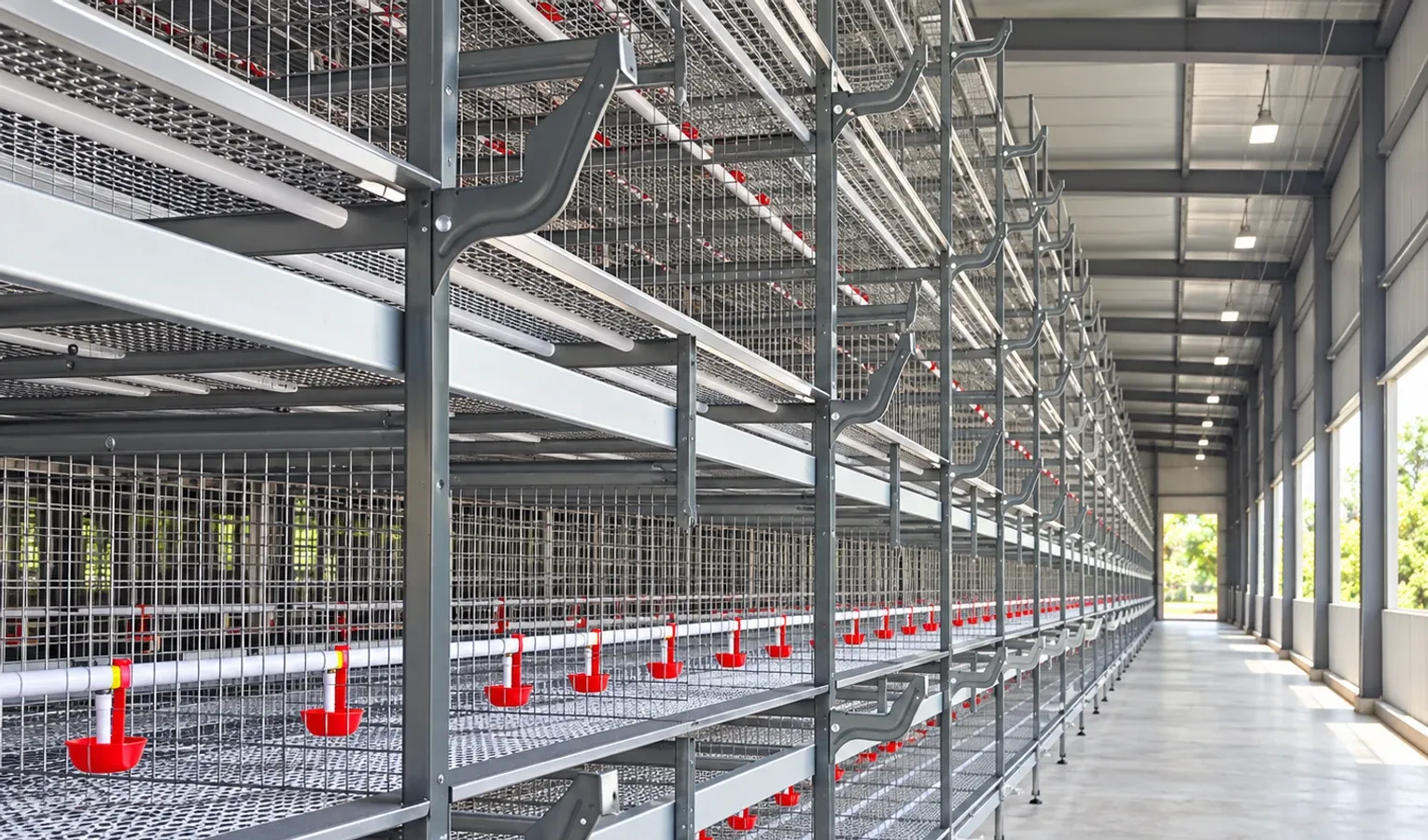
Softeners, Filters, and Treatment Choices
When a test comes back out of range, treatment usually follows one of a few well-worn paths, and matching the fix to the problem saves money. Hardness and scale respond to softening or scale-inhibition; iron and manganese respond to filtration, oxidation, or aeration; a low or high pH is corrected with acid or neutralizing media; and microbial contamination is handled by sanitation of the lines and, where needed, treatment of the source.
- Hard water — above 180 ppm and especially near the 450 ppm ceiling, scale management protects nipples and regulators as much as it helps the birds.
- Iron and manganese — filtration or oxidation keeps iron under 0.3 ppm and manganese under 0.05 ppm, preventing the deposits that clog drinkers and feed bacteria.
- pH correction — bringing water into the 6.5-8.5 band, and lower toward 5-6 when you rely on chlorine, makes every other treatment behave predictably.
Treat the specific fault the test reveals rather than adding products blindly; over-treating can create new imbalances of its own.
Heat, Salt, and Wet Litter
The interaction between water chemistry and hot weather deserves its own attention because the two compound each other. In heat, birds drink far more — up to that 400-500 ml per hen — which means any dissolved salt, sulfate, or sodium in the water is delivered in a much larger daily dose. Water that is merely marginal in cool weather can push litter over the edge into wet, ammonia-heavy conditions once summer intake climbs. Keeping sulfate under 250 ppm and sodium and chloride in the low range matters most exactly when the weather is working against you, so it is worth reviewing water results before the hot season rather than during it.
A Practical Standards Summary
Pulling the numbers together gives you a checklist you can run against any water report:
- pH — 6.5-8.5 acceptable, and toward 5-6 if you want chlorine to work well.
- Total hardness — under 450 ppm, ideal 60-180 ppm.
- TDS — under 1000 ppm safe, 1000-3000 ppm marginal.
- Nitrate — under 25 ppm.
- Iron — under 0.3 ppm; problems appear at 2-3 ppm.
- Sulfate — under 250 ppm; laxative above 500 ppm.
- Sodium/chloride — roughly 50-250 ppm.
- Manganese — under 0.05 ppm.
- Coliforms — 0 CFU/100 ml.
Why This Pays Off
None of these targets requires exotic equipment to hit, and the payoff is disproportionate to the effort. Because water is cheap to supply but central to every biological process in the bird, small improvements ripple outward: steadier intake, drier litter, cleaner lines, more consistent egg production, and vaccines and medications that actually work as intended when delivered through the water. The daily water meter reading, the annual test at the drinker, and a short list of thresholds are among the highest-return habits in the entire operation.
If you are evaluating drinker lines, regulators, or nipple systems and want hardware that stands up to real-world water, explore our watering equipment or talk with our team about matching a system to your water chemistry. For the next step in protecting that supply, read our related guide on water-line sanitation and biofilm control.
Visual checklist
Related reading
Water Management for Laying Hens
Poultry Water-Line Biofilm: Prevention and Monitoring
Further reading
Use the management guide for the actual breed, age and housing system when selecting flock targets. Review changes with the farm team and the relevant nutrition, health or equipment specialist.