At a glance. Review ventilation, dust, biosecurity and flock observations as part of respiratory-disease prevention and a veterinarian-led investigation plan.
Few problems frustrate a farm manager more than a flock that keeps sneezing, rattling and losing condition despite a "correct" vaccination program. The reason is that respiratory disease on a commercial farm is almost never one disease. It is a complex - a chain reaction where a primary virus or Mycoplasma damages the airway, secondary bacteria move in, and environmental stress such as dust, chilling and ammonia above 20 ppm tips the whole system into open disease. Understanding that chain, rather than chasing one pathogen at a time, is the key to prevention. This guide walks through each link so you can break the chain before your birds ever start to gasp.
What the Respiratory Disease Complex Really Means
The phrase "respiratory disease complex" describes a multifactorial problem, not a single named illness. Three ingredients usually act together: a primary respiratory insult, one or more secondary bacterial invaders, and environmental stressors that weaken the bird. Remove any one ingredient and the outbreak often fizzles out.
This is why two farms can carry the same virus yet only one breaks with severe disease. The difference is rarely the pathogen alone - it is the sum of the pressures on the flock.
- A primary agent (virus or Mycoplasma) opens the door by damaging the airway
- Secondary bacteria exploit the damage and cause the visible, fatal disease
- Environmental co-factors decide whether the balance tips toward illness
- The same pathogens can circulate quietly for weeks before conditions trigger a break
- Prevention means managing all three ingredients, not just vaccinating
The Airway's Natural Defences
A healthy chicken has an elegant self-cleaning airway. The lining of the trachea and bronchi is carpeted with microscopic hair-like cilia that beat in waves, moving a thin sheet of mucus - and any trapped dust or bacteria - up and out toward the throat where it is swallowed. This "mucociliary escalator" is the bird's first line of defence.
When the escalator works, inhaled bacteria are cleared before they can colonise. When it stalls, bacteria settle in the lungs and air sacs and multiply. Almost every serious respiratory break begins with damage to this system.
- Cilia beat constantly to sweep mucus and trapped particles upward
- Mucus traps dust, bacteria and viral particles before they reach the lungs
- Air sacs have very little defence of their own, so they rely on clean incoming air
- Anything that paralyses cilia - ammonia, dust, cold, viruses - disables the escalator
- Once cilia stop, even normal "harmless" bacteria can become deadly
The Primary Viral and Mycoplasma Players
The chain almost always starts with a primary agent that injures the airway lining. In most regions the usual suspects are a short, well-known list, and your local disease history should guide which ones you prioritise.
Newcastle disease and infectious bronchitis are the two most widespread viral triggers worldwide, while infectious laryngotracheitis, avian influenza and Mycoplasma gallisepticum round out the primary group. Mycoplasma is especially important because it can smoulder silently and flare whenever the birds are stressed.
- Newcastle disease (ND): severe, fast-moving, often with nervous signs
- Infectious bronchitis (IB): highly contagious, hits airways and egg quality
- Infectious laryngotracheitis (ILT): causes marked tracheal damage and gasping
- Avian influenza (AI): notifiable in most countries and demands immediate reporting
- Mycoplasma gallisepticum (MG): a chronic, stress-triggered "opener" for bacteria
Vaccination ages and program design for these agents are reference figures only - always confirm the exact schedule with your local veterinarian and adapt it to the diseases circulating in your region.
The Secondary Bacterial Invaders
Once the airway is damaged, opportunistic bacteria do the real killing. The classic secondary invader is Escherichia coli, which turns a mild viral reaction into airsacculitis and colisepticaemia - the cloudy air sacs and pericarditis you see so often at necropsy.
Other bacteria play supporting roles depending on region and age. Recognising that these are secondary, not primary, changes your strategy: antibiotics may rescue a broken flock, but they never fix the underlying viral or environmental cause.
- E. coli: the number-one secondary invader, causing airsacculitis and septicaemia
- Ornithobacterium rhinotracheale (ORT): swollen, inflamed lower airways
- Avibacterium paragallinarum: the cause of infectious coryza with facial swelling
- Aspergillus mould: brooder pneumonia in young chicks from contaminated litter or feed
- These organisms thrive precisely because the primary agent cleared their path
How the Environment Tips the Balance
Environment is the third ingredient and, unlike the pathogens, it is fully under your control. High stocking density, poor ventilation, dust, litter moisture, chilling and ammonia all press on the same weak point: the airway defences. A flock carrying a mild virus may stay healthy in clean air yet break badly in a stuffy, damp, overcrowded house.
Think of environmental stress as the multiplier that decides outcome. Managing it is often more effective - and always cheaper - than adding another medication.
- High stocking density raises dust, humidity, ammonia and bird-to-bird spread
- Poor ventilation lets moisture, gases and airborne pathogens accumulate
- Chilling and temperature swings suppress immunity and paralyse cilia
- Wet litter drives both ammonia and bacterial load upward
- Dust carries bacteria and physically irritates the airway lining
Ammonia and Dust as Airway Irritants
Ammonia deserves a brief mention because it is such a common, silent contributor - though it is only one factor among many. The practical upper limit for bird health is around 20 ppm. Sustained exposure at that level paralyses and strips the cilia, disabling the mucociliary escalator and inviting secondary infection long before you smell a strong problem.
Ammonia is released when litter moisture climbs above roughly 30%, so keeping litter drier - around 21-25% - is the single most effective way to hold gas levels down. Dust works alongside ammonia, carrying bacteria deep into the airway and adding mechanical irritation.
- Aim to keep ammonia below 20 ppm at bird level, not just at head height
- Litter above ~30% moisture starts releasing ammonia rapidly
- Target litter moisture near 21-25% to suppress gas release
- If your eyes sting on entry, ammonia is already stressing the birds
- Reduce dust with correct litter management and steady, adequate airflow
These ppm and moisture figures are practical reference points - verify targets for your climate and housing with your local veterinarian or technical advisor.
Stocking Density and Ventilation
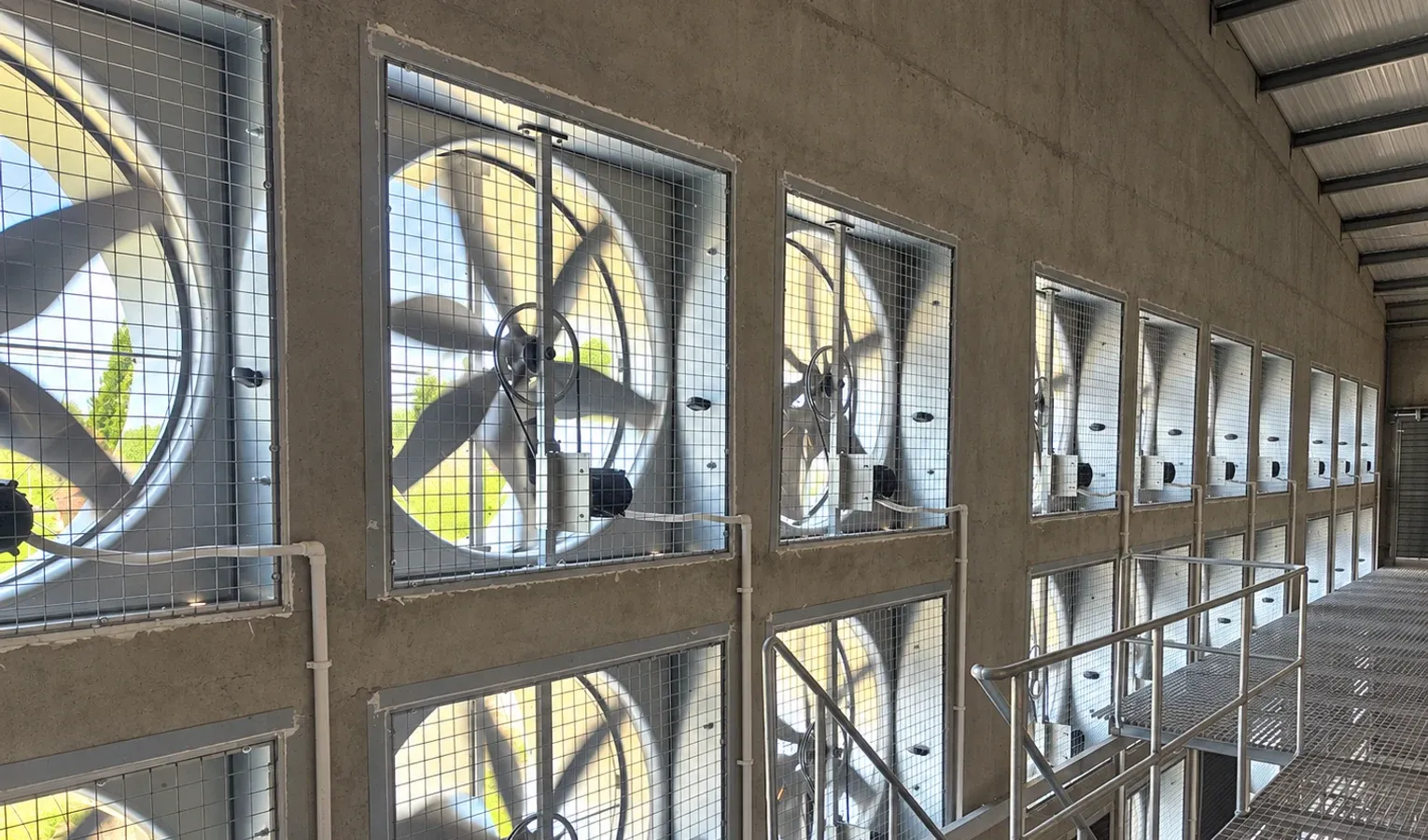
Density and ventilation are two sides of the same coin. Every extra bird adds heat, moisture, dust and manure to the same volume of air, so a house that is comfortable at the correct density becomes a disease incubator when overstocked. Ventilation must then remove that heat and moisture while delivering fresh oxygen without chilling the flock.
You do not need elaborate equipment to get the basics right, but you do need airflow that matches bird age, weight and weather. The goal is fresh air without draughts on the birds.
- Match stocking density to bird size, climate and house ventilation capacity
- Provide enough air exchange to remove moisture, ammonia and dust continuously
- Avoid cold draughts blowing directly on birds, especially young chicks
- Increase ventilation as birds grow and produce more heat and moisture
- Overstocking silently overwhelms even a good ventilation system
The Vaccination Backbone
Vaccination is the backbone of respiratory prevention because it blocks or blunts the primary agents that start the chain. In most commercial programs Newcastle disease and infectious bronchitis form the core, with ILT and avian influenza added where those diseases are present and where regulations permit.
A program is only as good as its execution. Poorly stored, wrongly timed or badly administered vaccine can leave a flock exposed while the paperwork says "protected."
- Build the core around ND and IB, then layer in ILT/AI as your region requires
- Follow the cold chain from delivery to the moment of administration
- Time boosters to maintain immunity through the highest-risk periods
- Check application technique - spray droplet size, water quality, eye-drop accuracy
- Keep clear records so gaps and reactions are easy to trace
All vaccination timings and schedules here are general reference figures; confirm the exact program with your local veterinarian and adjust it to your flock, age and regional disease pressure.
Biosecurity and All-In-All-Out
Even the best vaccine cannot cope with a constant flood of field virus. Biosecurity limits how much pathogen reaches your birds, and all-in-all-out management prevents disease cycling from older birds to younger, immunologically naive ones. Together they lower the pressure that vaccination must overcome.
Running a single age group and emptying the house completely between flocks breaks the endless carry-over that keeps multi-age sites chronically sick.
- Keep one age group per house or, ideally, per site
- Clean, disinfect and rest the house fully between flocks
- Control visitors, vehicles, equipment and wild-bird access
- Use footbaths, boot changes and clear clean/dirty zones
- Source chicks from healthy, Mycoplasma-monitored parent flocks where possible
Recognising a Respiratory Break Early
Early recognition decides whether you manage a minor event or a disaster. The first signals are often subtle: a slight rise in respiratory noise at night, a small dip in feed and water intake, or a soft edge coming off egg production before any bird looks obviously sick.
Learn to separate a mild, expected vaccine reaction - transient and mild, resolving within days - from a true field break that worsens, spreads and carries mortality.
- Watch for sneezing, tracheal rales and night-time "snick" sounds
- Look for swollen sinuses, watery eyes and facial swelling
- Note gasping or open-mouth breathing, a sign of lower-airway involvement
- Track daily feed, water and egg numbers - a drop often precedes visible signs
- Distinguish mild vaccine reactions from a spreading, deepening field outbreak
Treatment Versus Prevention
When a break happens, treatment targets the secondary bacteria, not the primary virus - antibiotics can rescue birds from E. coli or coryza, but they do nothing to the virus that opened the door. That is why treatment is always the weaker, more expensive strategy compared with preventing the chain in the first place.
Any medication decision should follow a diagnosis, not a guess, and should respect withdrawal periods and local regulations.
- Antibiotics address secondary bacteria only, never the primary virus
- Supportive care - warmth, air quality, electrolytes - helps birds recover
- Treat on the basis of diagnosis and, where possible, sensitivity testing
- Respect withdrawal times to protect food safety
- Prevention through vaccination, air quality and biosecurity always outperforms treatment
Mortality figures, treatment choices and dose notes vary widely - treat any numbers here as reference points and confirm the plan with your local veterinarian.
Monitoring and Diagnostics
You cannot manage what you do not measure. Daily monitoring of feed, water, mortality and respiratory sound gives you an early-warning system, while proper diagnostics - necropsy, swabs and serology - tell you which link in the chain to attack. Guessing wastes time and money.
Diagnostics also protect the future: knowing exactly which virus and which bacteria were involved lets you refine vaccination and management for the next flock.
- Record feed, water and mortality every single day
- Perform routine necropsies on birds that die to spot air-sac changes early
- Use laboratory swabs and serology to identify the true primary agent
- Track results across flocks to see patterns and trends
- Feed findings back into your vaccination and air-quality plan
Respiratory disease is a chain, and every chain has a weakest link you can break. If you would like help laying out housing, ventilation and stocking that keeps airways healthy and the complex from ever taking hold, our technical team is glad to work through a plan tailored to your climate, flock and goals - reach out whenever you are ready to design it together.
Visual checklist
Related reading
Poultry E. coli and Mycoplasma: Prevention and Diagnosis
Poultry Farm Biosecurity: People, Vehicles and Equipment
Further reading
Disease prevention and treatment must be adapted to the flock and local requirements. Confirm medicines, vaccines and disinfectant procedures with the responsible veterinarian and the approved product instructions.