At a glance. Review manure-belt operation, moisture, air movement and gas monitoring when planning waste handling and air-quality management in a layer house.
In a modern cage or aviary layer house, the manure belt running beneath each tier is one of the most important pieces of equipment nobody talks about. It quietly carries droppings out of the house before they can rot, and how you run it decides the single biggest air-quality variable in the building: ammonia. Get the belt schedule and drying air right, and house ammonia sits comfortably at or below 20 ppm with dry, compost-ready manure leaving the building. Get it wrong, and wet manure sits under the birds generating ammonia that damages respiratory tracts and pulls down egg production. This is a system worth understanding number by number.
What the Manure Belt Actually Does
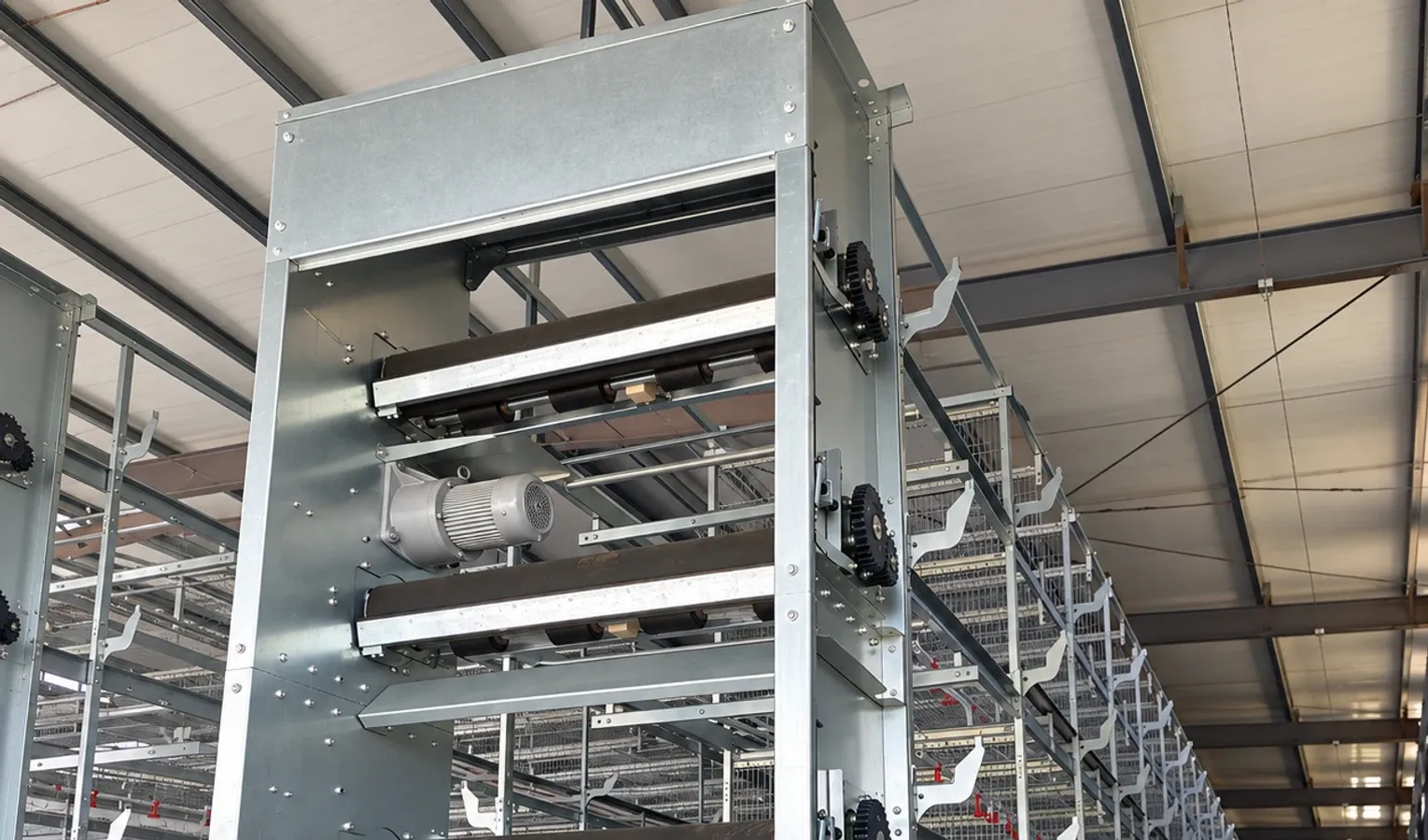
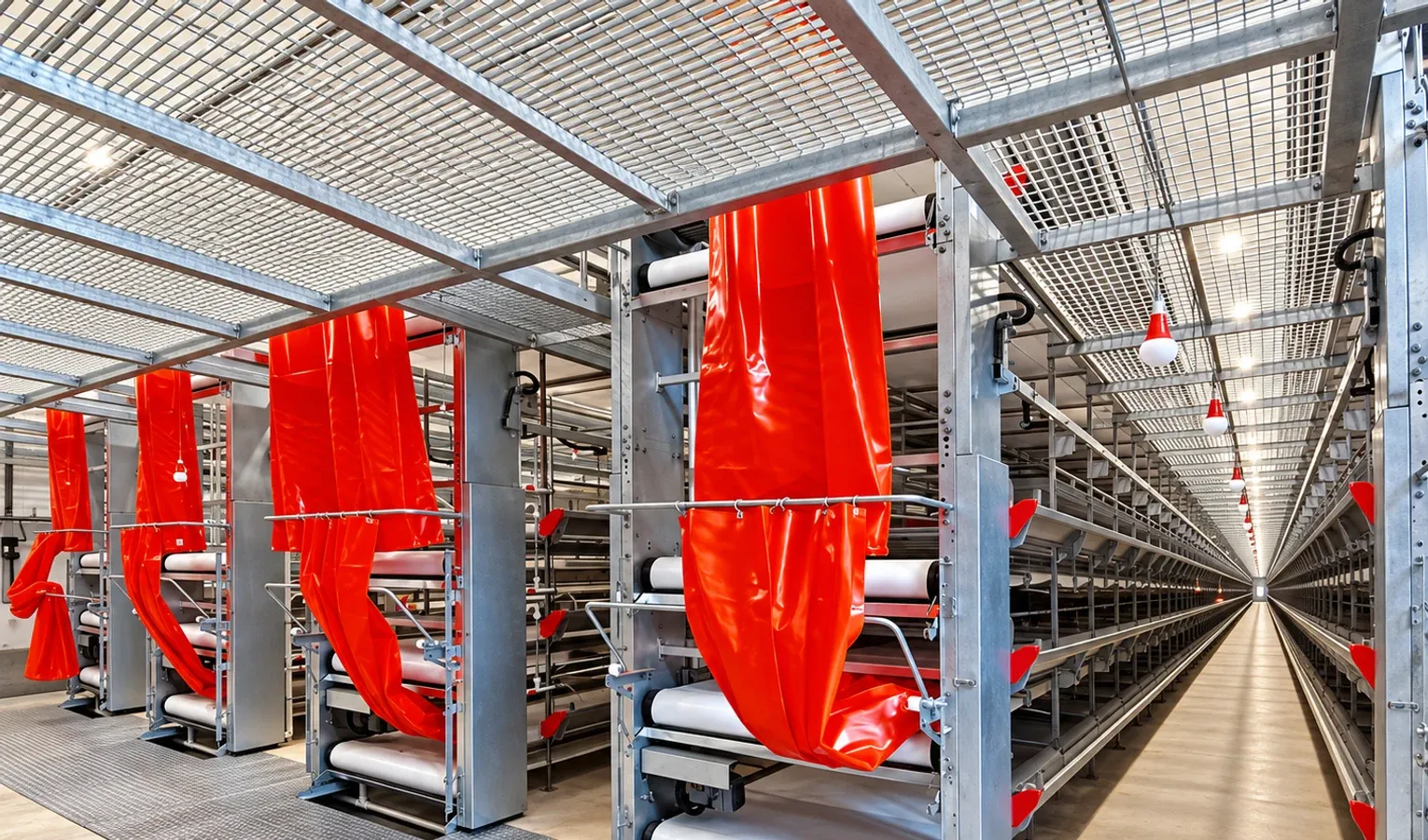
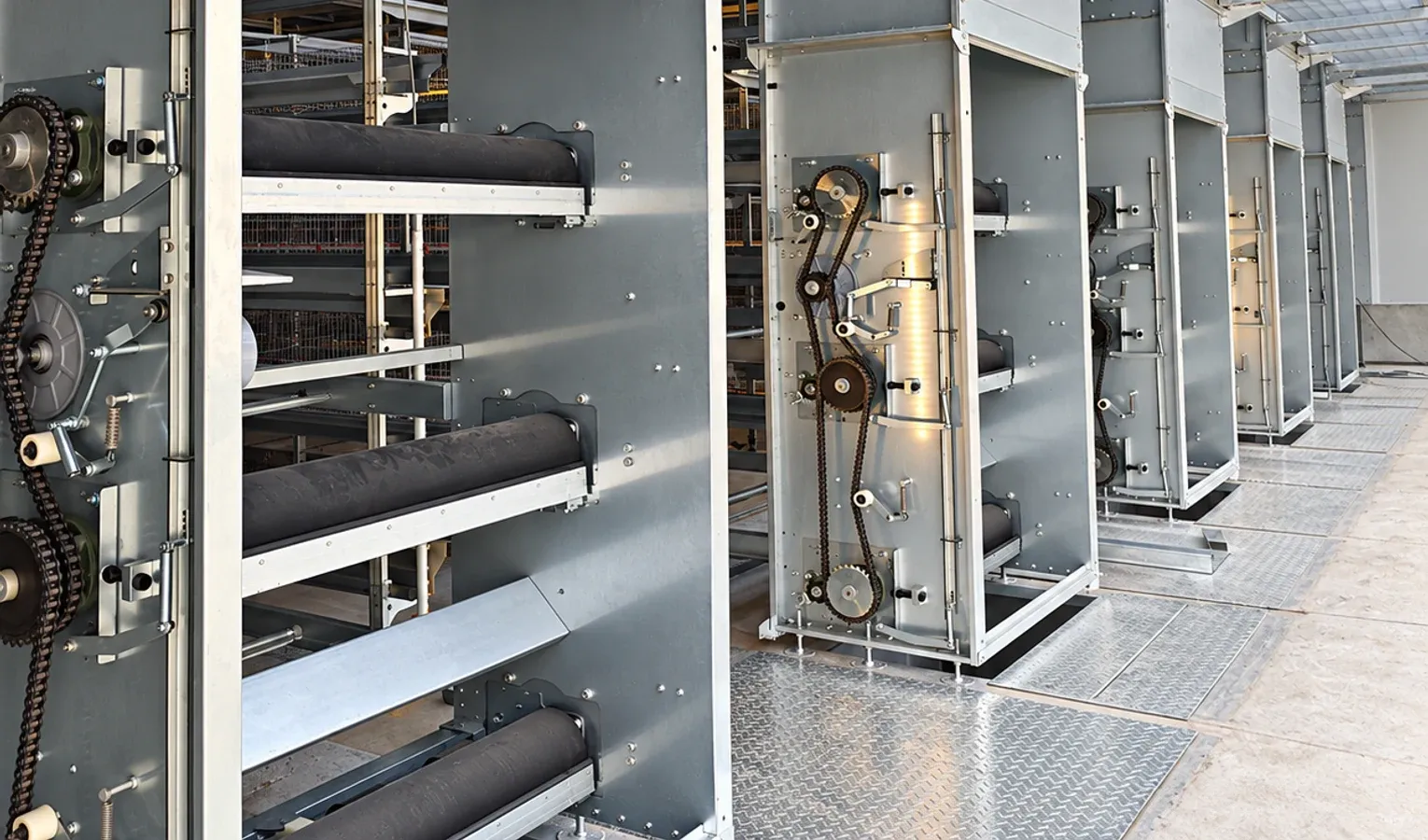
Under each tier of cages or each level of an aviary, a wide belt catches droppings as they fall. On a set schedule the belt runs, carrying manure to a cross belt at the end of the house and then up an elevator to storage or a spreader.
- The belt under each tier collects droppings continuously between runs.
- A cross belt gathers the output of all the tier belts at one end.
- An elevator lifts the combined manure to a storage area or truck.
Because the droppings leave the house frequently, they never accumulate into the deep, wet, ammonia-generating mass you find under old-style pit systems. The belt is the first line of defense against bad air.
Why Ammonia Forms in the First Place
Ammonia is not inevitable; it is a product of wet manure. Uric acid and undigested protein in droppings break down into ammonia when microbes have enough moisture to work.
- Ammonia production ramps up when manure moisture climbs above roughly 30%.
- Below about 30% moisture, that microbial breakdown largely stops, and ammonia generation falls sharply.
- Warmth and time both accelerate the process, which is why fresh, dry, quickly removed manure is the goal.
This single fact — moisture above ~30% drives ammonia — is the key to the entire strategy. Everything the belt system does is ultimately about keeping manure dry.
The Moisture Journey of a Dropping
Follow a single dropping and the drying opportunity becomes obvious. Fresh manure is very wet, and the belt system exists to change that.
- Fresh droppings run about 75-80% moisture the moment they land on the belt.
- Left on the belt with normal house air, manure naturally settles to around 60% moisture.
- With forced air-drying from ducts blowing over the belts, moisture drops to about 30-35%.
That gap between 60% passive and 30-35% forced is the entire ballgame. Passive drying alone leaves manure well above the ammonia-forming threshold; forced drying pushes it below.
Belt-Drying Air: The Active Tool
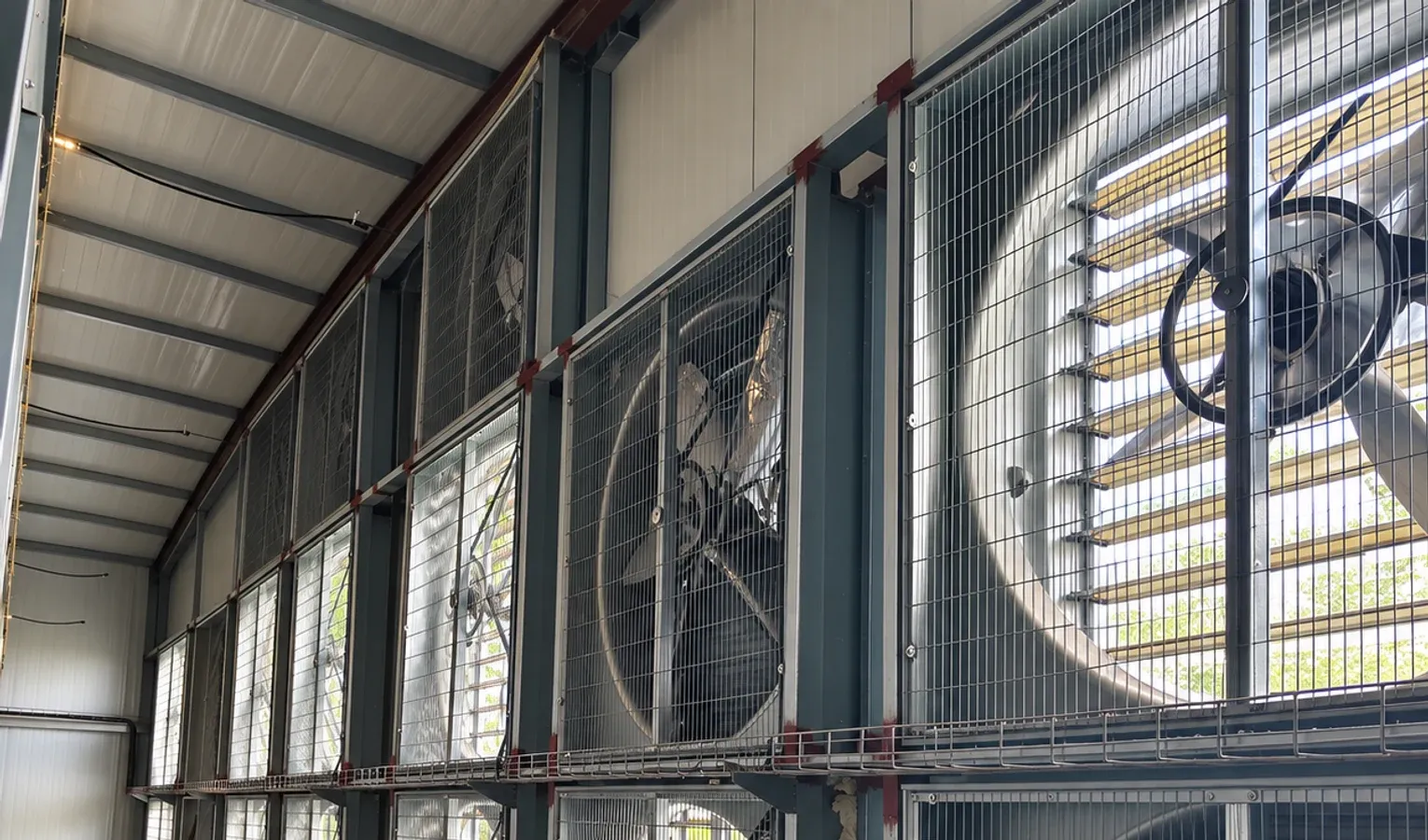
Manure-belt drying systems run perforated air ducts along the belts, blowing house or tempered air across the manure between removal cycles. This is what closes the moisture gap.
- Run belt-drying air 2-4 times through the cycle to steadily drive moisture down.
- The airflow both evaporates water and sweeps ammonia away before it builds up.
- Effective drying can press house ammonia below 25 ppm and, tuned well, down toward the target.
The air does two jobs at once: it removes water so less ammonia forms, and it carries away what little does form. Both effects push the house toward clean air.
How Often to Run the Belt
There are two viable schedules, and both work as long as drying keeps pace.
- Remove manure every 3-4 days when the belt-drying air is doing its job of drying the manure in place first.
- Or remove manure daily if you want droppings out of the house as fast as possible.
- The choice depends on your drying capacity, climate, and how you plan to use the manure downstream.
The 3-4 day approach lets manure dry on the belt before removal, which produces a lower-moisture product. The daily approach minimizes the time manure spends in the house at all. Either can hold ammonia down; what fails is infrequent removal without drying.
The Ammonia Targets That Matter
Ammonia is measured in parts per million, and the thresholds are well established. Aim low and treat the limits as ceilings, not goals.
- Target house ammonia at or below 20 ppm.
- Below 10 ppm is better and is a realistic goal for a well-run belt-drying system.
- Keeping manure below about 30% moisture is what makes these targets achievable, because it stops ammonia at the source.
Humans start to smell ammonia well below these levels, so your nose is an early warning device. If you can smell it strongly on entering the house, the belt or drying system needs attention.
What High Ammonia Does to Birds
The reason all this matters is bird health and production. Ammonia is a respiratory irritant, and sustained exposure is genuinely damaging.
- Ammonia at 20 ppm for 6 weeks damages the respiratory tract, harming the cilia and mucous membranes that keep pathogens out.
- Damaged airways leave birds more vulnerable to respiratory disease.
- High ammonia depresses egg production, so the air-quality problem shows up directly on your production sheet.
The costs are real but invisible until you look for them: a house that smells of ammonia is a house leaking performance every day, not just an unpleasant place to work.
Drier Manure, Fewer Flies and Less Disease
Ammonia is the headline, but dry, frequently removed manure pays off in other ways too.
- Frequent removal cuts fly breeding, because flies need moist manure to lay eggs and complete their life cycle.
- Lower disease pressure follows, since dry manure is a poorer home for pathogens and their carriers.
- A cleaner house means healthier birds and fewer secondary problems for the whole flock.
Flies are not just a nuisance; they are disease vectors and a sign that manure is sitting too wet for too long. A dry belt system starves them out.
The Downstream Bonus: Better Compost Feedstock
What leaves the house on the elevator does not disappear; it becomes an input somewhere. Drier manure is a better input everywhere.
- Drier manure weighs less, so transport and handling cost less per unit of nutrient.
- Manure already down at 30-35% moisture is a far better compost feedstock, closer to the moisture range composting wants.
- Starting a compost pile with drier manure makes it easier to hit the target moisture and carbon balance without adding as much bulking agent.
In other words, the drying you do for air quality inside the house directly improves the value of the product outside it. One investment, two returns.
Tuning the System That Moves the Manure
Beyond schedule and drying air, the mechanical settings of the belt system shape how well it performs.
- Belt speed controls how gently and completely manure transfers without spilling or piling.
- The cross belt must keep pace with the tier belts so nothing backs up at the transfer point.
- The elevator carries the combined output to storage, and its capacity has to match the removal schedule.
A belt system is only as good as its slowest link. If the cross belt or elevator lags, manure backs up and sits, which is exactly what you are trying to avoid.
A Simple Operating Checklist
Pulling the numbers together gives a routine you can run and verify.
- Choose a schedule: remove every 3-4 days with belt-drying, or daily.
- Run drying air 2-4 times per cycle to drive manure from ~75% toward 30-35% moisture.
- Keep manure below ~30% moisture to stop ammonia at the source.
- Verify house ammonia stays at or below 20 ppm, ideally under 10 ppm.
- Watch for flies and odor as early signals that moisture is creeping up.
Measure ammonia regularly rather than trusting your nose alone, since you acclimate to it over a shift. A simple handheld meter turns air quality from a guess into a number you can manage.
Bringing It Together
Manure-belt drying is where equipment, air quality, bird health, and manure value all meet. The logic runs in a straight line: dry the manure below 30% moisture with belt-drying air run 2-4 times, remove it on a 3-4 day or daily schedule, and house ammonia falls to the 20 ppm or lower range that protects respiratory health and egg output — while the drier manure leaving the house becomes cheaper to move and better to compost. It is one of the highest-leverage systems in a layer house.
If you are specifying a new cage or aviary system or upgrading manure handling in an existing house, our team can help you size belts, drying ducts, cross belts, and elevators to your flock and climate. Explore our layer-house and manure-management equipment or reach out to talk through the details, and pair this with our guide on composting poultry manure to see where that drier, cleaner manure can go next.
Visual checklist
Related reading
Poultry Manure Removal: Routes, Access and Maintenance
Poultry Manure Composting: Materials and Monitoring