At a glance. Review compost materials, moisture, airflow, temperature records and local waste requirements before planning poultry manure composting.
Every laying or broiler house produces a steady stream of manure, and how you handle it decides whether that stream is a liability or an asset. Raw poultry manure is one of the richest nitrogen sources in agriculture, but raw is exactly the problem: it smells, it burns crops, it breeds flies, and it can carry pathogens straight back to your birds or into a food supply. Composting fixes all of that at once. Done to the right numbers — a starting carbon-to-nitrogen ratio of 20-35:1, moisture at 50-60%, and a thermophilic core holding 55-70°C long enough to sanitize — the same manure becomes a stable, earthy-smelling fertilizer you can spread on a field with confidence. This guide walks through the recipe and the process step by step.
Why Raw Manure Needs Composting
Fresh chicken manure is nitrogen-dense and biologically hot in the wrong way. Spread raw, it releases ammonia, ties up soil nitrogen as microbes scramble to balance it, and can scorch roots.
- Pathogens like Salmonella and E. coli survive in raw manure and can recontaminate crops or livestock.
- Odor and flies from raw manure create nuisance complaints and disease vectors.
- Nutrient loss is high, because ammonia volatilizes into the air instead of staying in the material.
Composting turns an unstable, hazardous material into a stabilized soil amendment. The heat of the process does the sanitizing, and the microbial activity locks nutrients into forms plants can use gradually.
The Carbon-to-Nitrogen Ratio That Runs Everything
The master number in composting is the carbon-to-nitrogen ratio of the starting mix. Microbes want roughly 20-35:1 — enough carbon for energy, enough nitrogen for protein. Miss this and the whole pile misbehaves.
- Too much nitrogen (a low ratio) and the pile stinks of ammonia and loses nitrogen to the air.
- Too much carbon (a high ratio) and the pile heats slowly or not at all, because microbes are starved of nitrogen.
- The sweet spot of 20-35:1 gives fast, hot, low-odor decomposition.
Aim for the middle of that band when you can. It gives you margin on both sides as the mix settles and moisture shifts.
Why Manure Alone Cannot Compost
Raw chicken manure sits at a C:N of only about 7-10:1 — far too rich in nitrogen to compost on its own. Pile it up alone and it goes anaerobic, reeks of ammonia, and hemorrhages nitrogen. It must be diluted with carbon.
- Blend roughly 2-3 parts carbon bulking agent per part manure by volume to climb from 7-10:1 up into the 20-35:1 target.
- Good bulking agents include straw, sawdust, rice hull, and wood shavings.
- The bulking agent does double duty: it adds carbon and it opens up air space in the pile.
The exact ratio depends on your manure's moisture and your carbon source's coarseness, so treat 2-3:1 as a starting point and adjust by how the pile heats and smells.
Getting Moisture Into the Squeeze-Test Range
Water is the medium microbes live in, but too much drowns the pile. Target 50-60% moisture in the starting mix.
- Use the squeeze test: a fistful should feel like a damp sponge and hold together, with no water dripping out.
- If it drips, add dry bulking agent; if it crumbles apart, add water.
- Fresh manure is wet, so most mixes get their moisture from the manure and their structure from dry carbon.
Moisture and C:N are linked, because your carbon source is usually also your dry material. Adjust them together rather than one at a time.
Building In Enough Air Space
Composting is an aerobic process, so the pile needs to breathe. Structure matters as much as chemistry.
- Keep free air space, or porosity, above 30% so oxygen can move through the pile.
- Coarse bulking agents like straw and wood shavings create channels that fine sawdust alone cannot.
- A pile that is too dense or too wet goes anaerobic, which is when the sour, rotten smells appear.
If a pile smells foul rather than earthy, the usual culprit is lost air space from compaction or excess moisture. Turning and adding coarse carbon restores it.

Reaching and Holding Thermophilic Temperatures
Once the recipe is right, biology takes over and the pile heats. The thermophilic phase is where sanitizing happens, and it runs at 55-70°C in the core.
- Aim to hold the pile above 50-55°C for at least 8-15 days to kill pathogens and weed seeds.
- Under recognized process-to-further-reduce-pathogens guidance, that means roughly 55°C for 3 days in an in-vessel system, or 15 days in a windrow with at least 5 turns.
- Every part of the material must reach lethal temperature, which is why turning is not optional.
A compost thermometer with a long probe is the most important tool you own here. The outer shell of a pile never gets as hot as the core, so turning moves cool outer material into the hot center.
Turning on Schedule
Turning re-oxygenates the pile, redistributes moisture, and exposes all material to the killing heat. It is the single most important physical task.
- Turn when the core exceeds about 65-70°C, because beyond that heat starts killing the very microbes doing the work.
- Turn when the temperature drops, which signals the microbes have used up available oxygen or food in that zone.
- Turn to expose all material, moving edges and bottom into the center.
Each turn typically triggers a fresh temperature spike as newly exposed material and oxygen feed the microbes. Track those spikes; they tell you the pile is still active.
The Full Timeline From Pile to Product
Composting is not instant. Plan for a process measured in weeks, not days.
- The active thermophilic and mesophilic phases run roughly 6-12 weeks depending on materials, turning frequency, and climate.
- After the pile stops reheating, add a curing period of 3-4 weeks at lower temperature.
- Curing lets slower reactions finish, stabilizes the material, and mellows any remaining harshness.
Rushing the cure is a common mistake. Compost that is still biologically active can rob nitrogen and even damage plants when applied, so give it the full window.
Knowing When It Is Finished
Finished compost announces itself through the senses and through the numbers. Both should agree before you spread it.
- It smells earthy, like forest soil, with no ammonia and no sour rot.
- Organic matter stays above 50%, and the material is dark, crumbly, and uniform.
- The C:N drops to about 15-20:1 as carbon burns off and the ratio narrows toward soil values.
A finished pile also stops reheating after turning. If it flares back up above 50°C, it is not done and needs more time.
The Nutrient Value You End Up With
Well-made poultry compost is a balanced fertilizer, not a single-nutrient shot. The numbers land in a useful, forgiving range.
- Expect N-P-K each roughly 2-2.5%, a fairly even balance that suits general soil improvement.
- Because nutrients are stabilized, they release gradually rather than flushing out in the first rain.
- The high organic matter above 50% improves soil structure, water holding, and microbial life beyond what the raw NPK figure suggests.
These are typical ranges. Actual analysis varies with diet, bedding, and process, so if you are formulating a field program, send a sample for testing and consult your agronomist for application rates.
The Payoff of Composting
The reasons to compost stack up across the whole operation, from the barn to the field.
- Pathogen kill from sustained heat protects both your flock and any crop the compost touches.
- Odor and fly reduction improves the working environment and cuts neighbor complaints.
- Bulk and weight reduction means cheaper handling and transport, since composting drives off water and volatile material.
- Nutrient stabilization locks nitrogen into slow-release forms instead of losing it to the air.
- Safe field application becomes possible because the finished product no longer burns crops or spreads disease.
In short, composting converts a disposal cost into a product with agronomic value, while solving the environmental problems raw manure creates.
Common Problems and Quick Fixes
Most composting troubles trace back to one of three variables: air, water, or the C:N balance. Read the pile and correct the cause.
- Ammonia smell means too much nitrogen or too little air — add carbon and turn.
- No heat means too little nitrogen, too little moisture, or a pile too small — check the recipe and moisture.
- Sour, rotten smell means anaerobic conditions from excess water or compaction — turn and add coarse bulking agent.
- Pile dries out in hot weather and stalls — add water back to the squeeze-test range and turn.
Keep a simple log of temperature, turns, and observations. Patterns across a few batches teach you more about your specific materials than any single guide can.
Putting It Into Practice
Composting poultry manure is a recipe you can learn: start near 20-35:1 C:N by blending 2-3 parts carbon per part manure, hold moisture at 50-60% and porosity above 30%, drive the core to 55-70°C and hold it above 55°C for 8-15 days with regular turns, then cure 3-4 weeks until it smells like soil and settles near 15-20:1. The result is a stable fertilizer running roughly 2-2.5% N-P-K that is safe to spread and easy to handle.
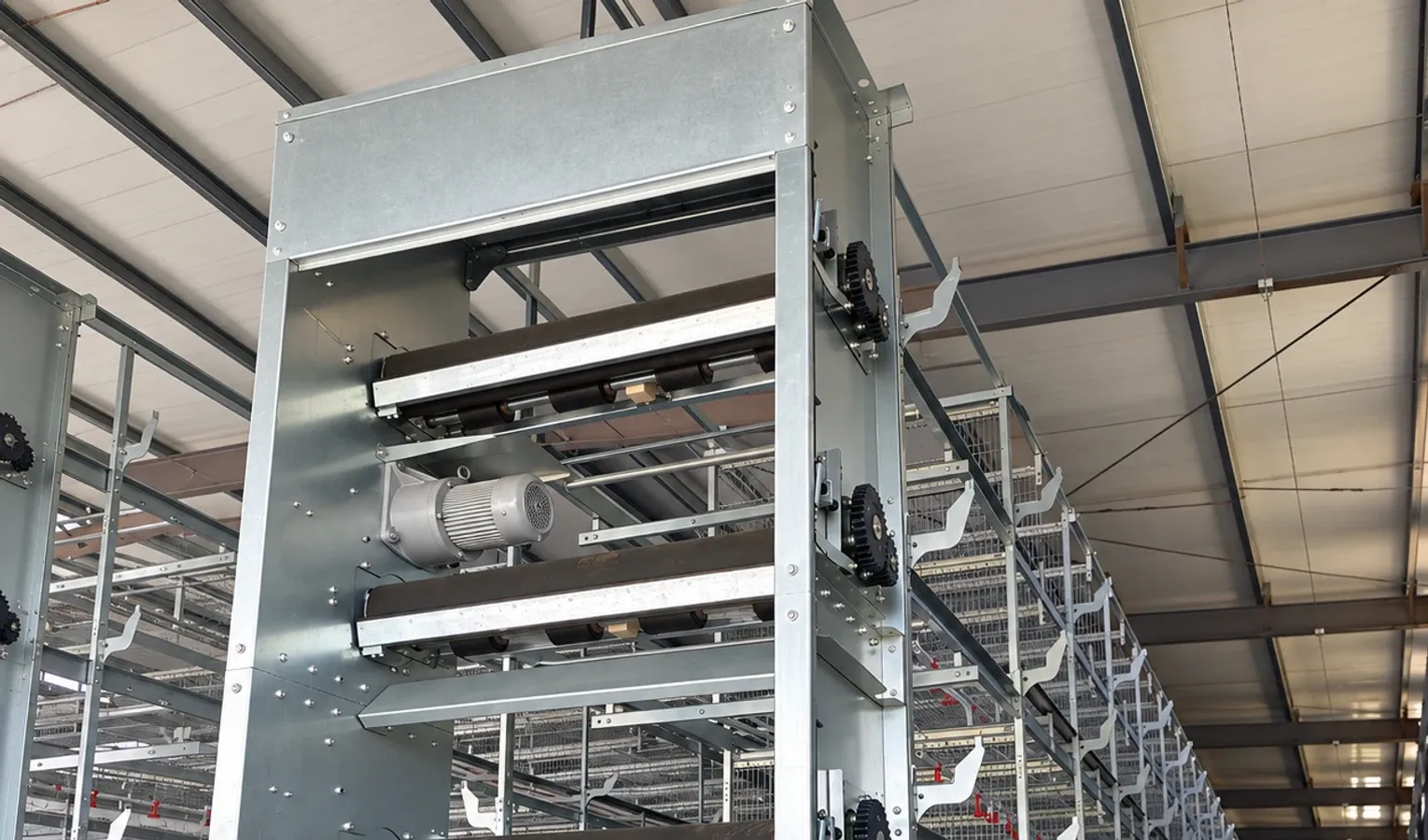
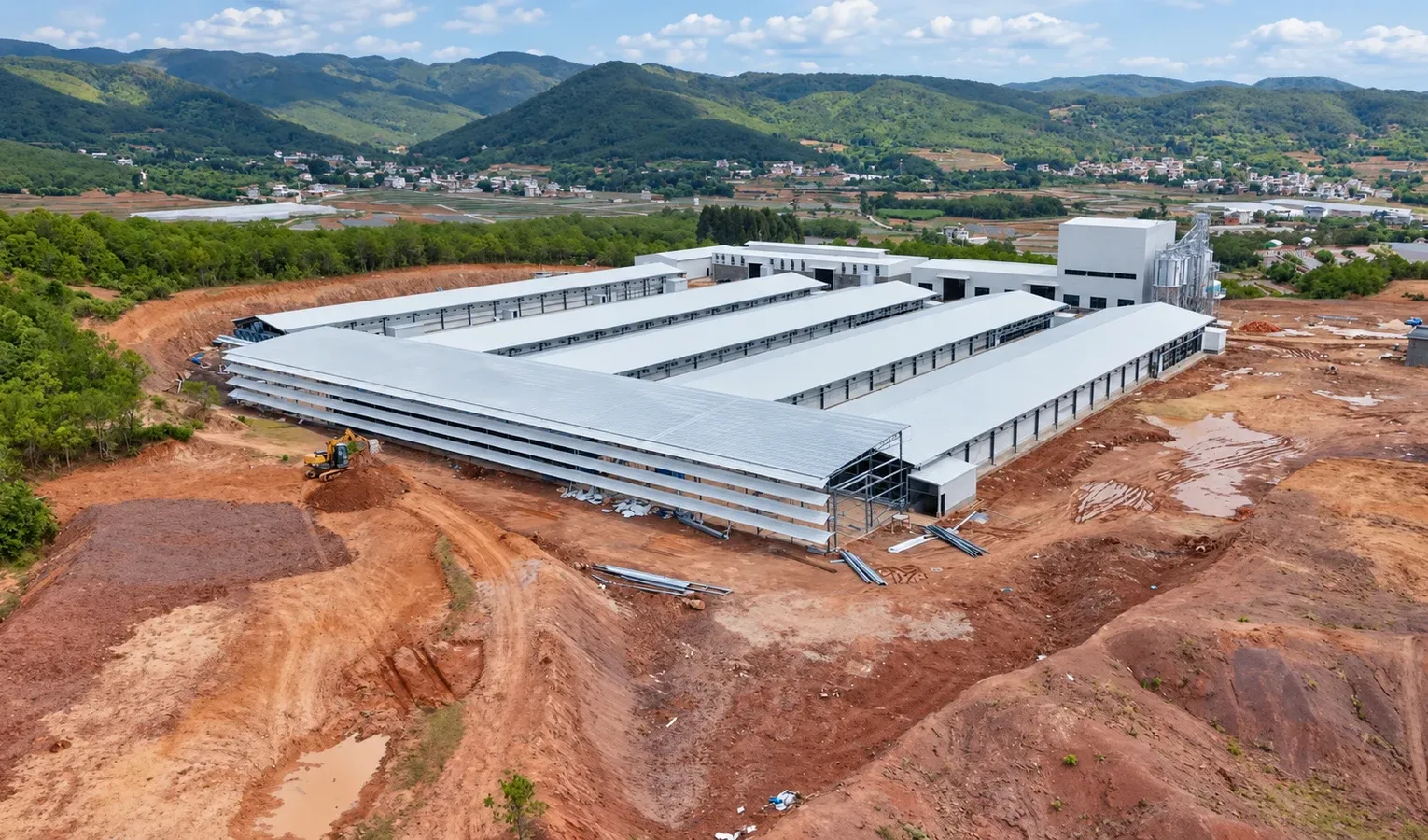
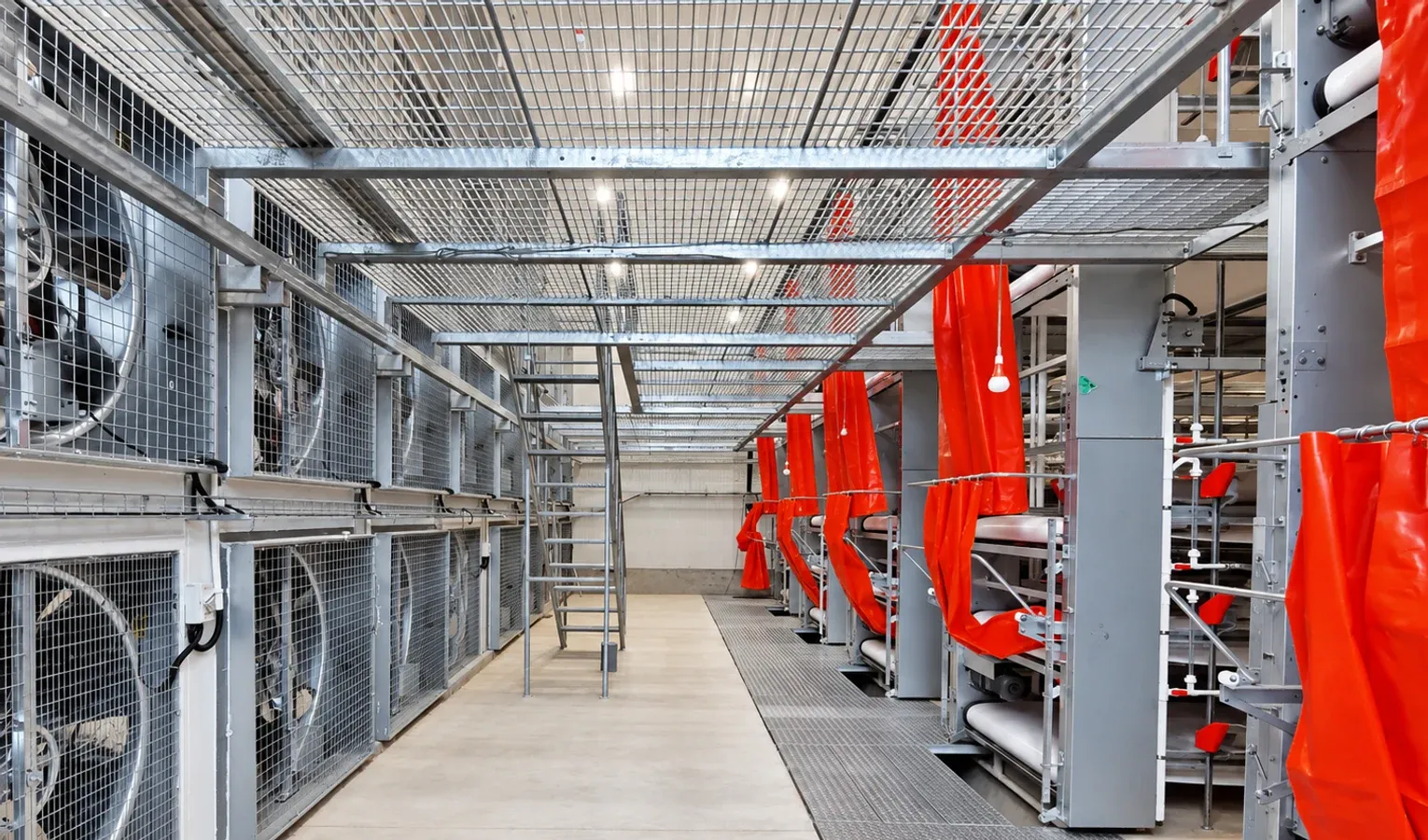
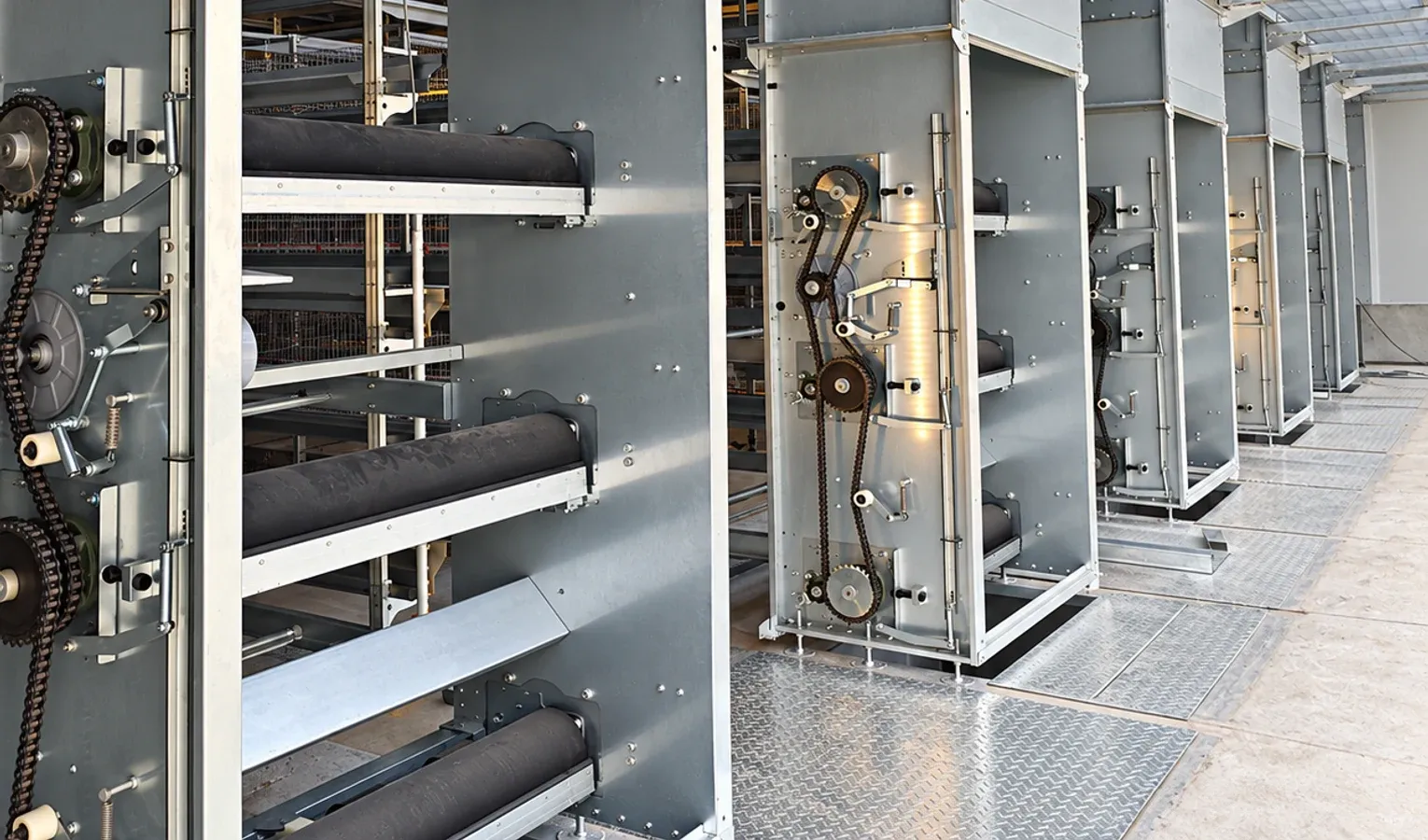
If you are planning manure handling for a new house or scaling up an existing operation, our team can help you think through collection, drying, and composting infrastructure that fits your flock size and climate. Explore our manure-management equipment or get in touch to talk it through, and pair this with our guides on manure-belt drying and house ventilation for the complete waste-to-value picture.
Visual checklist
Related reading
Poultry Manure Belts: Drying and Ammonia Management
Poultry Manure Removal: Routes, Access and Maintenance