At a glance. Follow the main feeding stages from chick rearing to late lay, and discuss flock-specific nutrient targets using intake and production records.
A hen is not one animal nutritionally — she is at least five. The pullet building her frame at week 4, the developer laying down reserves at week 14, and the peak-lay hen pushing out an egg almost every day each want something different from the feed bin. Get the sequence right and you bank skeletal strength, body weight, and shell integrity that pay dividends for a 60-week-plus production cycle. Get it wrong and you spend the whole laying period chasing problems that were baked in during rearing. This guide walks the nutrient targets stage by stage.
Why Life-Stage Feeding Beats One Bag for All
A single "all-purpose" ration is always a compromise. Chicks need dense protein and amino acids for tissue growth; hens in lay need calcium the chick would never use. Feeding a flat diet either overspends on protein for pullets or starves layers of the shell-building calcium they must have. Phase feeding matches supply to the bird's changing biology and trims waste.
- Growth first, then reproduction — early diets build the bird, later diets fuel the egg
- Protein trends down, calcium trends up as the bird matures
- Precision saves money by not overfeeding nutrients a given stage cannot use
Chick and Starter Phase (0-6 Weeks)
The starter period sets the growth trajectory. Chicks are building organs, feathers, and the beginnings of the skeleton, so the diet is the richest of the whole life cycle. Aim for crude protein around 20%, dietary energy of 2900-3000 kcal/kg, and lysine above 1.0% to drive lean tissue.
- Crude protein ~20% to support rapid early tissue growth
- Energy 2900-3000 kcal/kg to fuel metabolism without excess fat
- Lysine >1.0%, the first-limiting amino acid for growth
- Feed a fine crumble or starter mash that small chicks can physically handle
Grower and Pullet Phase (Roughly 6-12 Weeks)
Once the fastest growth slows, protein steps down. The grower diet typically runs 16-18% crude protein. The goal shifts from raw speed to a well-proportioned frame and good uniformity across the flock — a flock that reaches sexual maturity together comes into lay together and holds a cleaner production peak.
- Crude protein ~16-18% as growth rate moderates
- Prioritize flock uniformity so birds mature as a group
- Monitor body weight against the breed target rather than feeding blindly
Developer Phase (12-16 Weeks)
The developer diet is the calm before lay. Protein eases further to about 14-15%, and the emphasis is on finishing skeletal development and reaching target body weight without laying down excess fat around the reproductive tract. Across the whole rearing period, lysine descends steadily from over 1.0% in the chick down toward 0.65% in the developer — a useful mental picture of how amino-acid demand falls as growth completes.
- Crude protein ~14-15% to consolidate frame and condition
- Lysine tapering toward ~0.65% by the end of rearing
- Avoid over-fattening, which hurts later laying performance
The Pre-Lay Bridge Diet
The two weeks before the first egg are a distinct, easily missed window. The pullet's medullary bone — her internal calcium reserve for shell formation — needs to be charged up before she starts laying. A pre-lay diet raises calcium to roughly 2-2.5%, well above developer levels but below full layer levels, priming her physiology for the calcium demand about to arrive.
- Calcium raised to ~2-2.5% about 2 weeks before first egg
- Builds medullary bone reserves the hen draws on overnight during shell formation
- Smooths the transition and helps protect early-lay shell quality
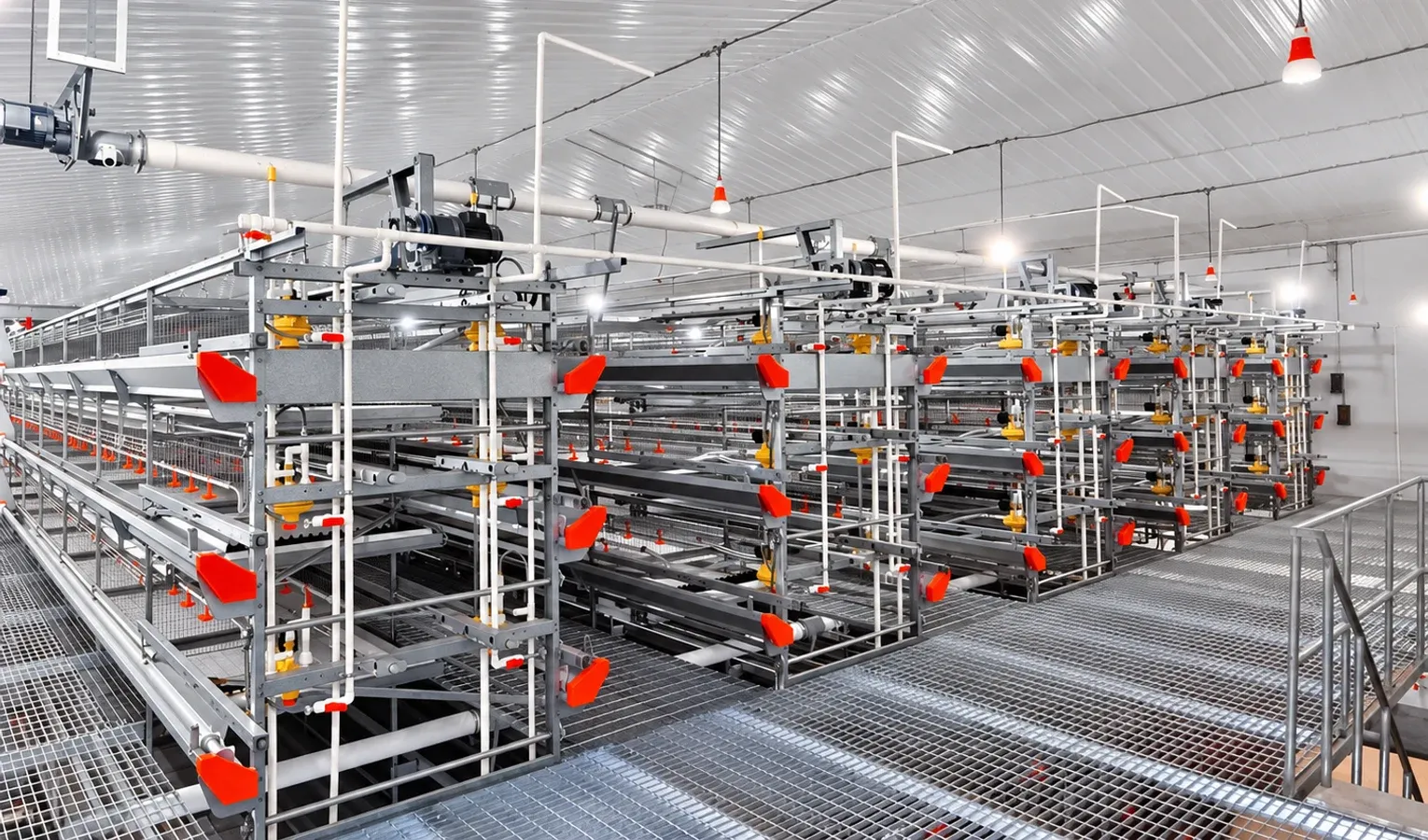
Onset of Lay and the Three Layer Phases
Once hens are laying, feeding is usually split into three phases: onset to about 40 weeks, 40-60 weeks, and 60 weeks and beyond. Each phase reflects a shifting balance of egg output, egg size, body maintenance, and the hen's declining ability to use calcium. Rather than one static layer ration, you nudge the formula as the flock ages.
- Phase 1 (onset-40 wk) — climbing to and holding peak production
- Phase 2 (40-60 wk) — sustaining output as egg size grows
- Phase 3 (60+ wk) — protecting shell quality as efficiency declines
Core Layer Ration Targets
Across the laying period, the working ranges are worth memorizing. Crude protein sits at 16-18%, energy at 2700-3000 kcal/kg, and calcium at 3.5-4% of the diet — which works out to roughly 4 grams of calcium per hen per day. Available phosphorus lands around 0.30-0.40%. These are the numbers a layer diet is built around.
- Crude protein 16-18%
- Energy 2700-3000 kcal/kg
- Calcium 3.5-4%, about 4 g/hen/day
- Available phosphorus 0.30-0.40%
Daily Feed Intake and Delivering the Targets
Percentages on a feed tag only matter if the hen eats enough to hit the daily gram target. A laying hen typically consumes 100-120 g of feed per day. Intake drifts with ambient temperature, energy density, body size, and production rate, so the same bag delivers different daily nutrient loads under different conditions. Track actual intake, not just the formula.
- Daily intake ~100-120 g/hen, varying with temperature and energy density
- Verify that grams-per-day of calcium and protein actually meet targets
- In hot weather, hens eat less — nutrient concentration may need to rise
Peak-Lay Nutrition
At peak, the hen is close to an egg a day and under maximum nutritional pressure. Protein is held at the top of the range, around 17-18%, to support both egg mass and egg weight. Any shortfall shows up fast as smaller eggs or a shortened peak. This is the phase where skimping is most expensive.
- Peak protein 17-18% to sustain egg mass and size
- Guard energy and amino-acid supply to hold the production peak
- Shortfalls at peak are hard to recover later
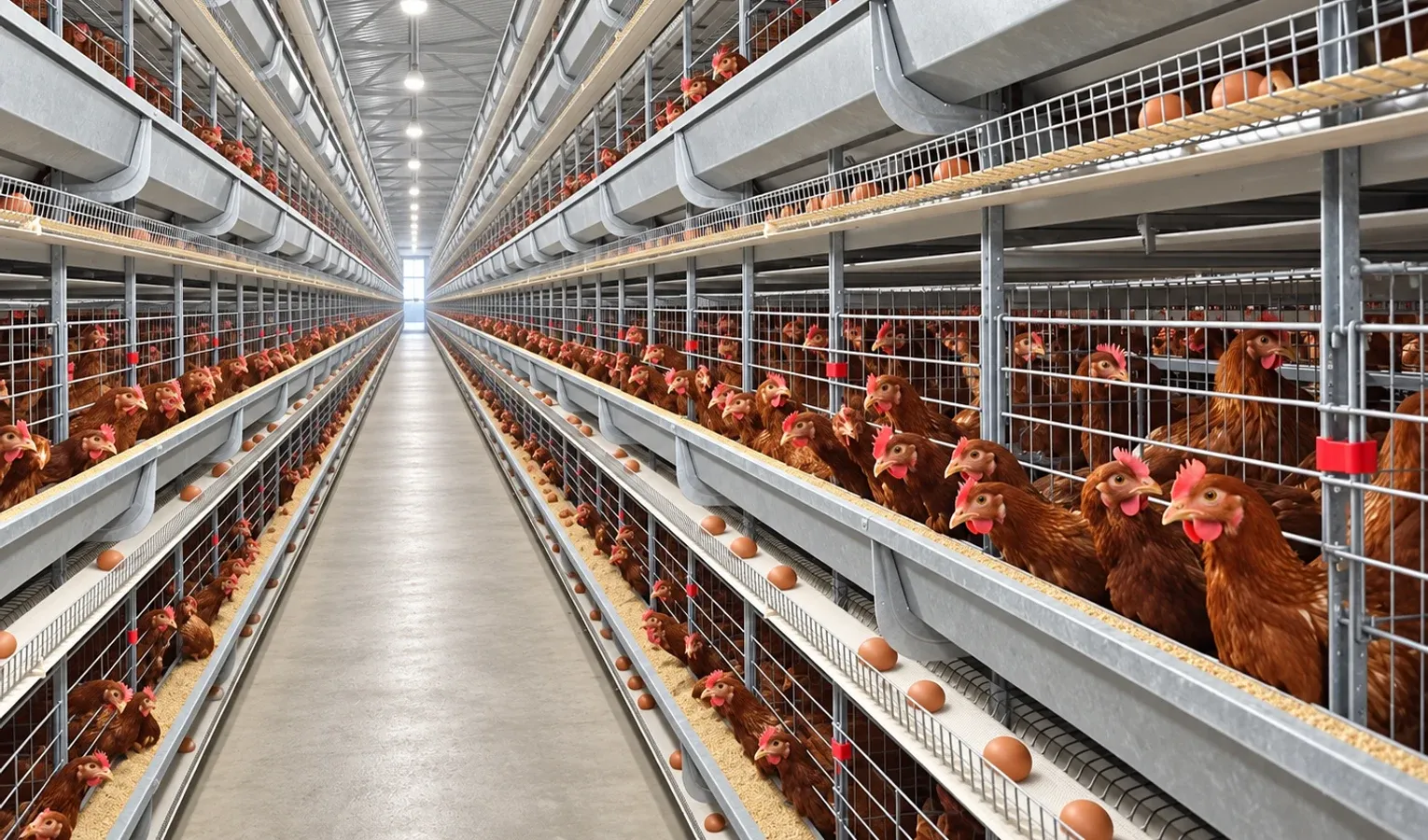
Late Lay: Reduce Protein, Protect Calcium
As hens pass 60 weeks, output eases and their appetite for protein falls, so protein can be trimmed. Calcium, however, is maintained or even raised — older hens absorb and deposit calcium less efficiently, and their eggs are larger, spreading the same shell over more surface area. Holding calcium up defends shell strength in the flock's final stretch.
- Reduce protein as production and egg-mass demand decline
- Maintain or raise calcium to counter falling absorption efficiency
- Late-lay shell quality is largely won or lost here
The Energy-Protein Trap
One of the most common and costly mistakes is under-supplying energy. When a diet is short on energy, the hen will burn dietary protein as a fuel source instead of using it to build egg. That is expensive protein wasted as calories, and it can leave the bird short of amino acids for production. Balance energy and protein together — a "high-protein" diet that lacks energy underperforms.
- Energy shortage makes hens burn protein for fuel, wasting an expensive nutrient
- Balance the energy-to-protein ratio, not just the protein number
- Low energy can quietly cap production even when protein looks generous
Protein, Amino Acids, and Egg Weight
Protein does more than sustain output — it sizes the egg. Within the practical 12-17% dietary range, each additional 1% of crude protein raises egg weight by roughly 1.2 g. That gives you a lever: if a flock's eggs are undersized for their market grade, modest protein and amino-acid adjustments can shift average egg weight. It also warns against cutting protein too aggressively in late lay if egg size matters to your buyers.
- +1% dietary protein (12-17% range) ≈ +1.2 g egg weight
- Use amino-acid balance, not just crude protein, to fine-tune egg size
- Weigh egg-size goals against feed cost and shell-strength needs
Reading the Flock, Not Just the Label
Published targets are a starting point, not a prescription. Body weight curves, egg weight, shell quality, feed intake, and house temperature all tell you whether the ration on offer is actually landing. Breed and strain differences are real, so treat every range here as a typical range and consult your breed guide or a local nutritionist or vet before locking in a program.
- Track body weight, egg weight, intake, and shell quality as feedback
- Adjust for breed, strain, climate, and housing
- Treat all figures as typical ranges and confirm with your breed guide or a nutritionist/vet
Feeding by life stage is really about anticipating the hen's next chapter before she reaches it — charging the skeleton before lay, holding protein at peak, defending calcium in old age. If you are refining a rearing-to-lay program or setting up housing that lets you deliver the right ration cleanly at each stage, explore our layer cage and feeding equipment range, or talk with our team about matching the setup to your flock's life-stage plan.
Visual checklist
Related reading
Layer Phase Feeding: Matching Nutrition to Production
Pullet Rearing: Monitoring Growth and Uniformity
Further reading
Use the management guide for the actual breed, age and housing system when selecting flock targets. Review changes with the farm team and the relevant nutrition, health or equipment specialist.