At a glance. Use egg-size trends, flock age, feed intake and environmental observations to guide a nutrition and management review of egg weight.
Egg size is money. Grading premiums, packing efficiency, and shell quality all hinge on hitting the right egg weight at the right time. Yet egg weight is not fixed by fate — it rises predictably with hen age and can be nudged up or down by nutrition and temperature. The skilled manager treats egg weight as a dial to be steered, not a number to be accepted. This article lays out how egg weight moves through the cycle and the levers that let you shape it toward your market's target.
How Egg Weight Changes With Age
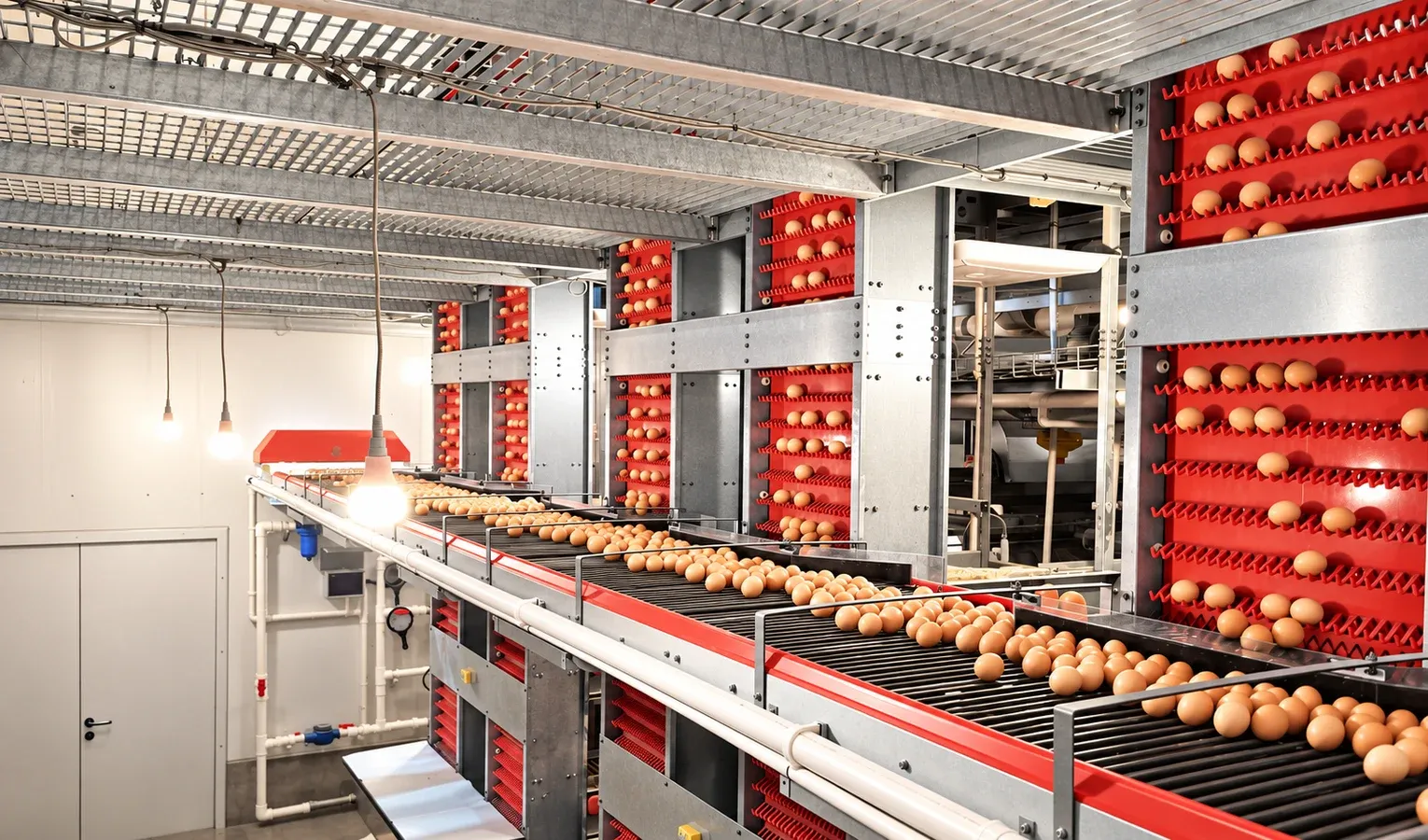
Egg weight climbs steadily across the laying cycle in a mirror image of the production curve. The first eggs a pullet lays are small — often around 45 g, roughly 80% of standard size. From there they grow: a flock typically reaches about 60 g by around 300 days of age, and continues to roughly 65 g by 72 weeks. Knowing this trajectory lets you anticipate when the flock will move between grading categories and plan accordingly.
- First eggs — about 45 g (~80% of standard)
- ~300 days — around 60 g
- 72 weeks — approximately 65 g
The First-Egg Standard
There is a practical floor for early eggs: the flock should not come into lay producing eggs that are too small to market. A common benchmark is that eggs at the onset of lay should reach at least 50 g relatively quickly. Flocks that start with very small eggs and rise slowly cost money in unsellable early production, which is one reason body-weight and lighting management at onset matter so much — mature-body pullets lay larger first eggs.
Protein and Amino Acids Drive Egg Size
Nutrition is the most powerful egg-weight lever, and protein leads it. Within the working range of roughly 12-17% dietary protein, each additional 1% of protein raises egg weight by about 1.2 g. Behind that crude protein figure, the key amino acids — especially methionine and lysine — do the real work of building egg mass. This relationship cuts both ways: to increase egg size, lift protein and key amino acids; to hold egg size down in late lay, trim them. Adjust with your nutritionist so shell quality and cost stay in balance.
Linoleic Acid: The Egg-Weight Fatty Acid
Beyond protein, dietary fat composition matters. Linoleic acid, an essential fatty acid, has a specific and well-documented effect of increasing egg weight. Diets adequate in linoleic acid support larger eggs, which is useful when you want to push egg size up early in the cycle. Because it acts independently of protein, linoleic acid gives you a second nutritional dial for egg weight — valuable when protein is already at its practical limit.
Temperature Pulls Egg Weight Down
Heat shrinks eggs. Above about 25°C, egg weight falls by roughly 1% for every additional 1°C. This happens partly because hot hens eat less — cutting nutrient intake — and partly through direct physiological effects. In hot climates or summer months, this can pull a flock down a grading category even when the diet is unchanged. Recognizing the temperature effect explains seasonal egg-size dips and points to cooling and diet concentration as the corrective levers.
Body Weight at Onset Sets the Baseline
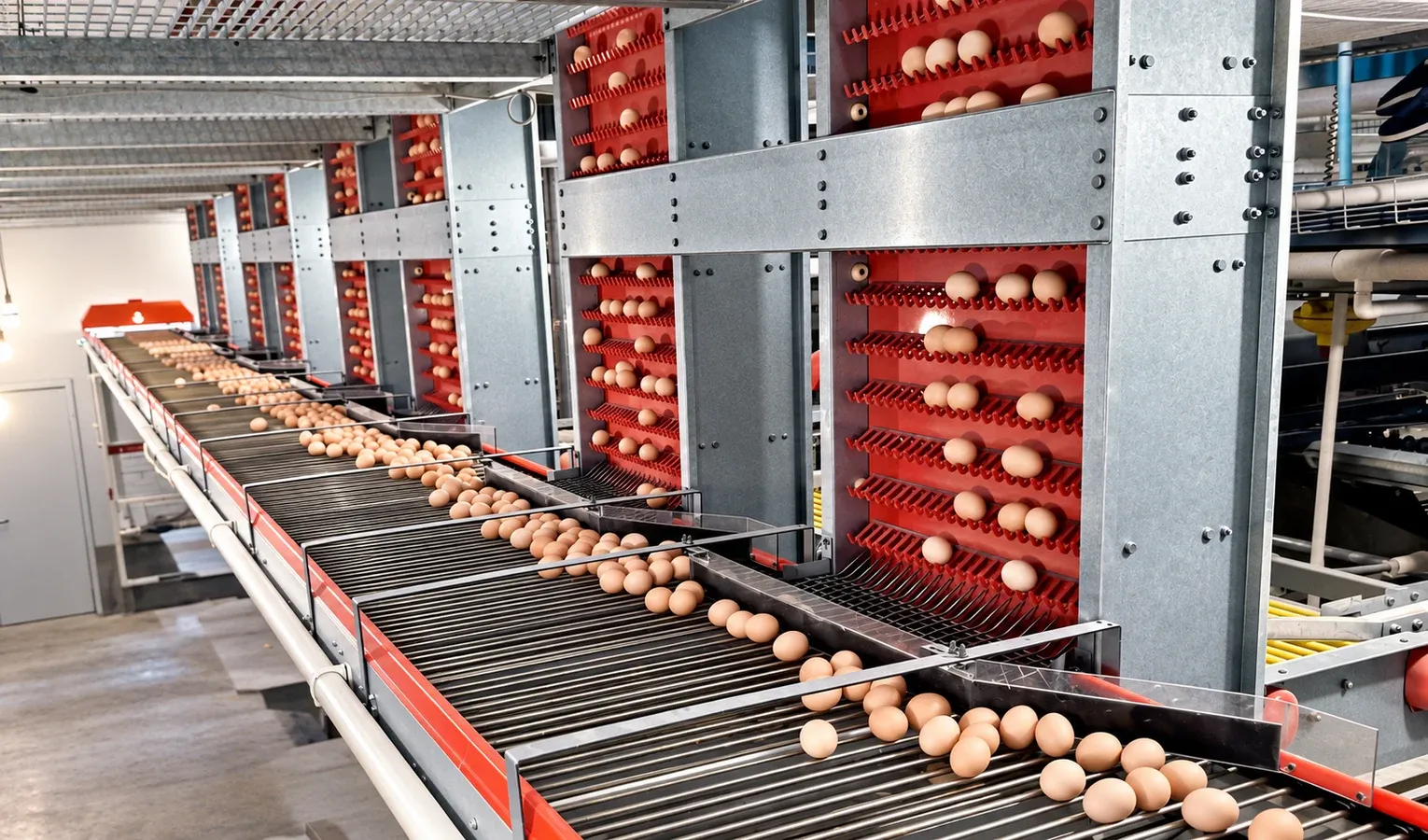
Egg size in early lay is strongly tied to the pullet's body weight when she starts. Heavier, well-grown pullets lay larger first eggs and reach saleable size sooner; light-framed pullets lay small eggs and take longer to catch up. Because you cannot easily add frame after onset, hitting the body-weight target during rear is the foundation of good early egg weight. This is one more reason rearing uniformity pays off in the laying house.
Steering Egg Size Up Early in the Cycle
When your market rewards larger eggs and the flock is producing too many smalls early on, several levers push egg size up:
- Raise protein and key amino acids within the safe range (~+1.2 g per +1% protein)
- Ensure adequate linoleic acid in the diet
- Confirm pullet body weight hit target at onset
- Keep the house cool so heat does not suppress size
Each should be applied within limits, because pushing egg size too high too early stresses shells and can raise the rate of very large, weaker-shelled eggs.
Holding Egg Size Down in Late Lay
The opposite problem appears in old flocks: eggs grow so large that shells thin and cracks rise, and very large eggs may exceed the most profitable grade. Here the levers reverse — modest protein trimming through phase feeding controls egg-size inflation while protecting shell integrity. The goal in late lay is to hold egg mass steady without letting individual eggs balloon past the point where shells can keep up.
Egg Weight and Shell Quality Are Linked
Egg weight and shell strength trade against each other. As eggs get larger, the same amount of shell material stretches over more surface, so shells thin unless calcium and micronutrition rise to compensate. This is why aggressively maximizing egg size can backfire on shell quality, especially in older hens. Managing egg weight is really about finding the sweet spot where size meets grade targets without sacrificing sound shells.
Matching Egg Weight to Your Market
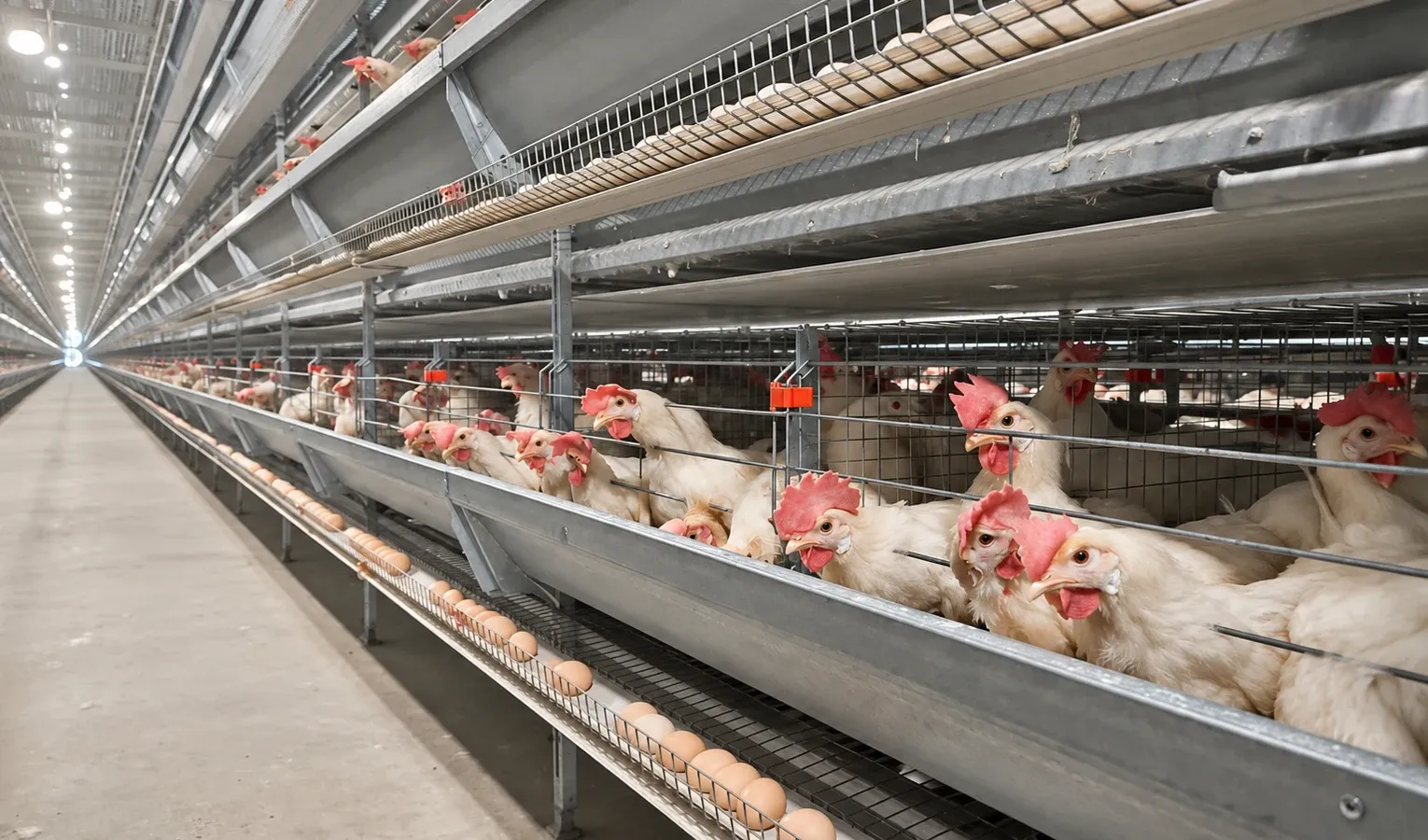
Different markets reward different sizes, so the right egg-weight strategy is the one that maximizes value for where you sell. A market paying a premium for large eggs justifies pushing size up early; a market with penalties for oversized or cracked eggs justifies restraint in late lay. Define your target grade first, then use the nutritional and environmental levers to steer the flock toward it across the cycle.
Tracking Egg Weight on Your Farm
Egg-size management only works if you measure it. Weigh a representative sample of eggs weekly and plot average egg weight against hen age and the breed standard. The trend tells you whether the flock is tracking on target, running small (check protein, body weight, or heat), or running large (consider trimming protein). Read alongside the production curve, egg weight completes the picture of how the flock is really performing.
Let Us Help You Hit Your Egg-Size Target
Egg weight is one of the most controllable levers in layer management once you know how age, nutrition, and temperature interact. Tell us your flock size, breed, and the egg grade your market rewards, and our team will help you plan nutrition and climate control to steer egg size where you want it. Share your target and we will help you dial it in.
Visual checklist
Related reading
Calcium, Phosphorus and Eggshell Quality
Layer Production Curves: Onset, Peak and Late Lay
Further reading
Use the management guide for the actual breed, age and housing system when selecting flock targets. Review changes with the farm team and the relevant nutrition, health or equipment specialist.