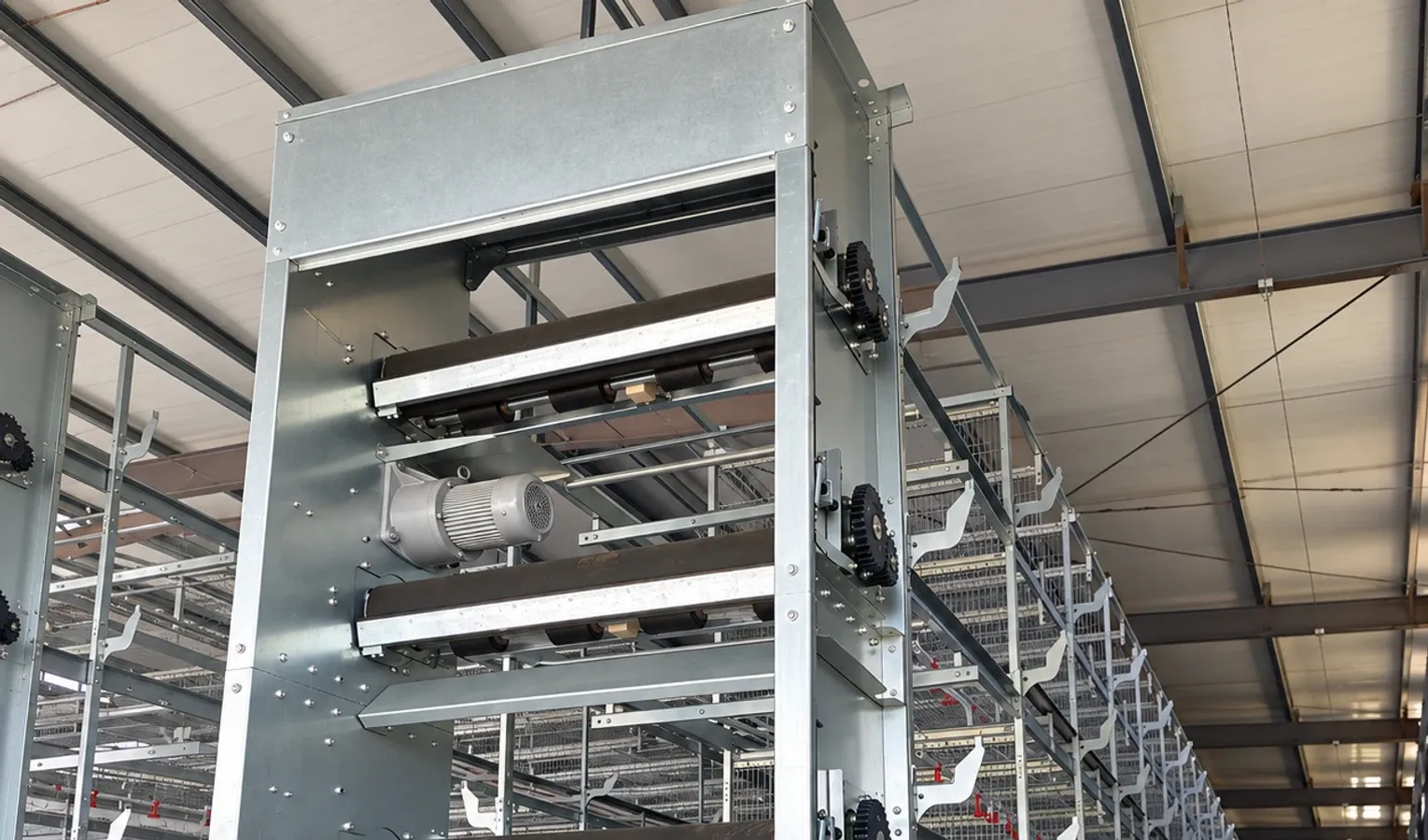
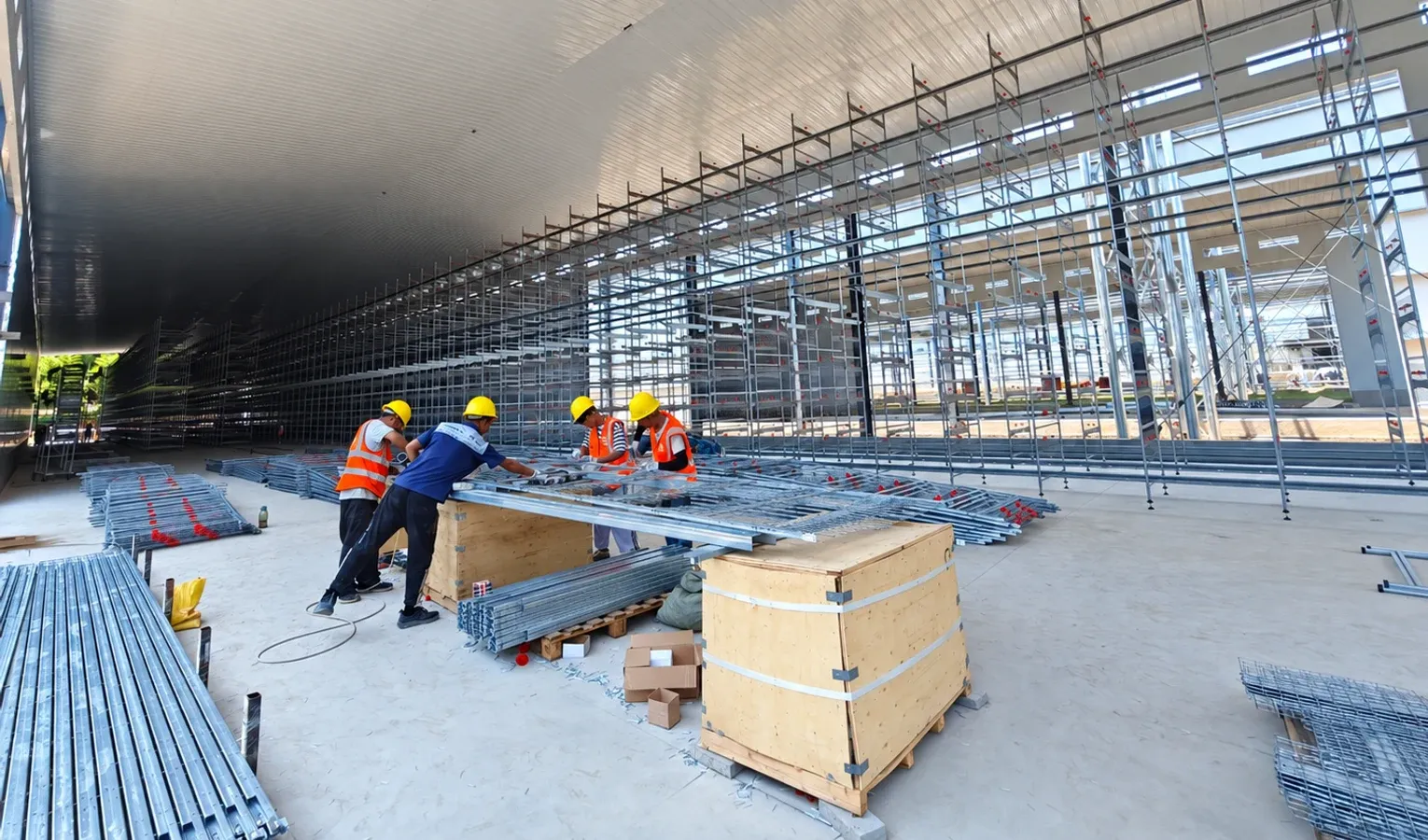
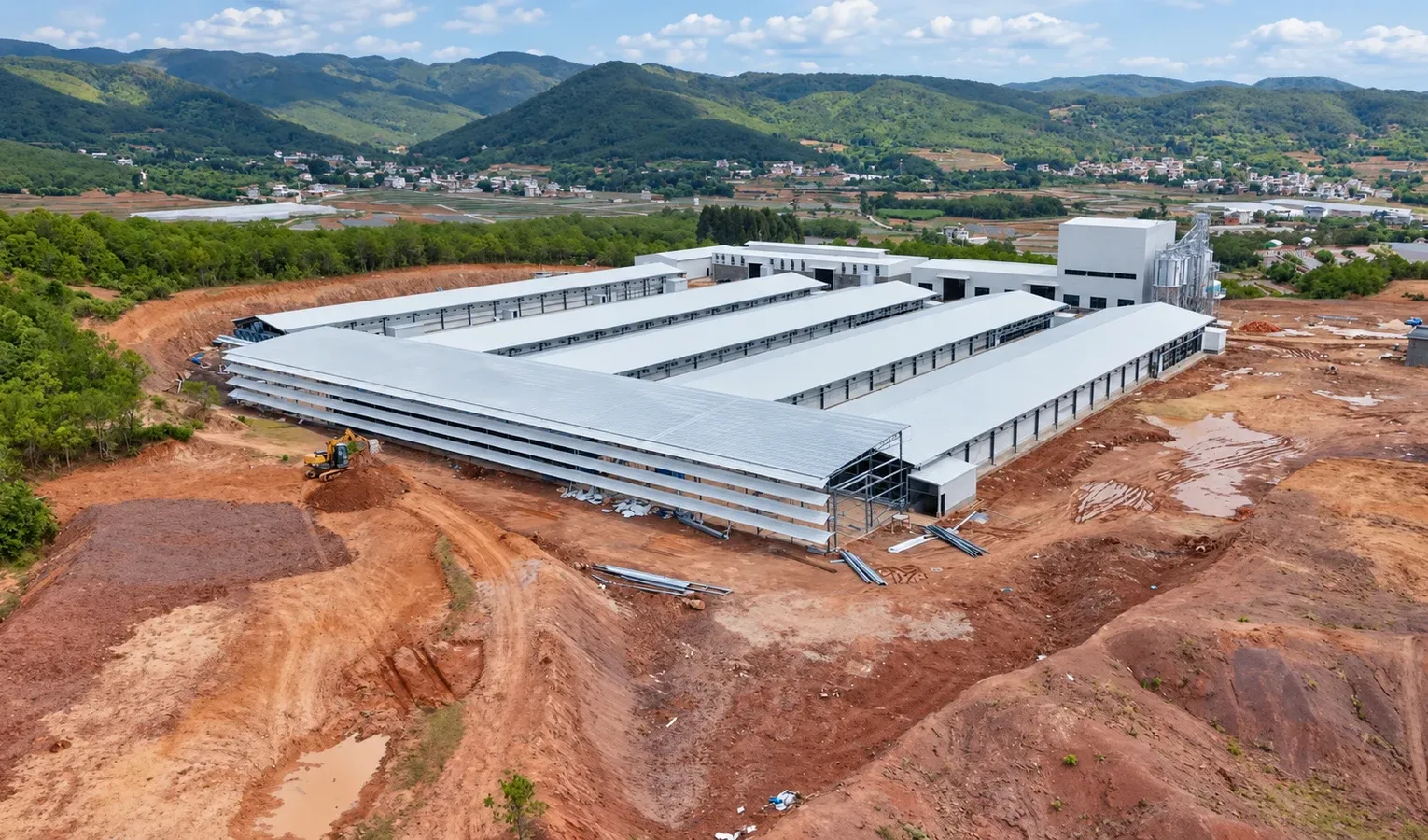
At a glance. Follow eggs from the cage row to the collection room, reviewing transfer points, grading access, cleaning and maintenance before choosing equipment.
Manual egg collection is slow and breaks eggs. An automatic egg collection line gently carries eggs from every cage tier to a central point, lowering breakage and labor while improving hygiene.
We cover how central egg collection integrates with your layer cage, typical breakage rates versus manual collection, and what to check before adding a grading machine downstream.
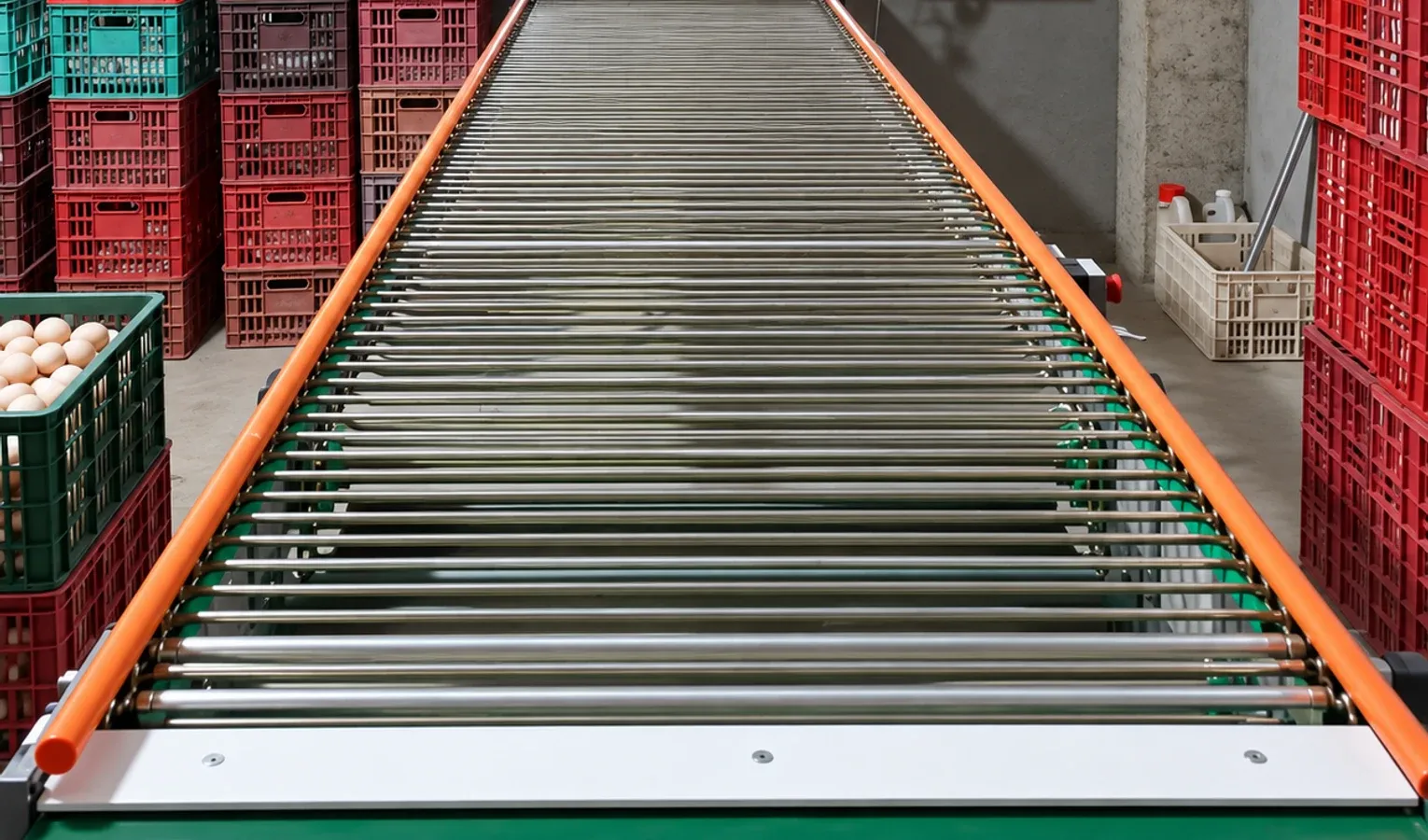
Inspect each transfer point
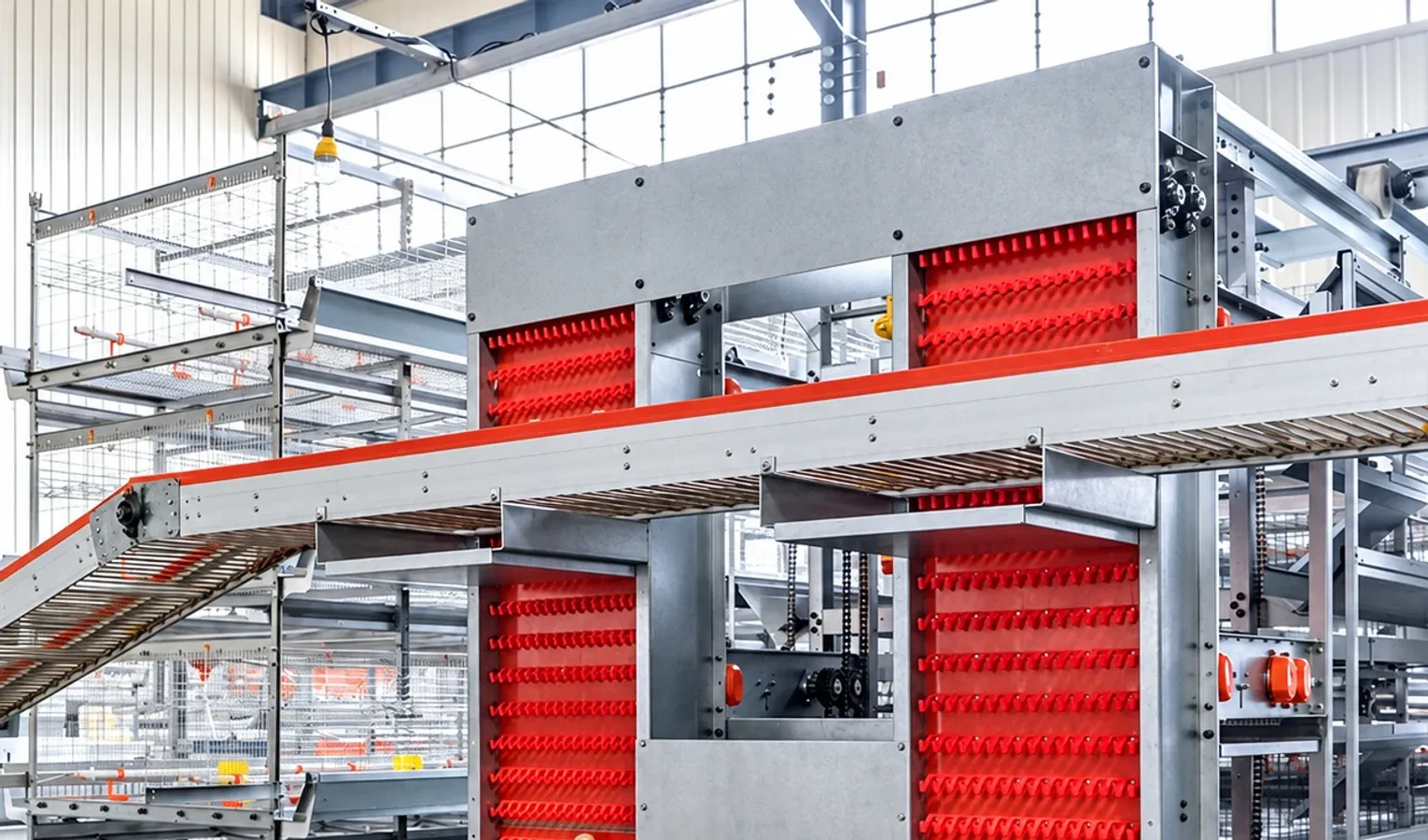
Egg handling is a sequence of transfers: from the laying area to a longitudinal belt, through a lift or collection unit, onto a cross conveyor and finally to packing or grading. Review each interface on the equipment drawing. The height, direction and receiving surface of one machine must match the next; purchasing the machines separately does not guarantee a smooth connection.
Design for the collection room
Locate the egg room before fixing the cage layout. Confirm the route through walls, doorways and service areas, together with working space for operators. Decide whether eggs are collected into trays or delivered onward to grading. The proposal should describe the destination and include the necessary connecting equipment rather than stopping at the end of the cage row.
Check performance with actual product
At commissioning, observe how eggs travel through the complete route under the manufacturer's procedure. Note where eggs stop, accumulate or change direction. Inspect cracked or dirty eggs by collection stage so a problem can be traced to a particular transfer. Compare results consistently rather than attributing every defect to the final grader.
Make cleaning and maintenance practical
Belts, receiving surfaces and transfer areas need access for inspection and the cleaning method specified for the equipment. Ask which components are removable and where adjustments are made. Staff should understand the stopping procedure before reaching into a machine. Keep the parts list and service instructions available near the operating records.
Prepare a useful inquiry
Provide the housing layout, number of rows and tiers, expected collection arrangement and a sketch of the egg room. Explain whether the farm already owns grading equipment. Include photographs of existing transfer points when upgrading a working installation. This information lets the supplier evaluate compatibility and avoids treating an egg belt, collection unit and grader as if they were a single interchangeable product.
Visual checklist
Related reading
Automatic Egg Collection: Transfers, Belts and Cleaning
Egg Weight Management: Nutrition and Flock Records
Further reading
Use the management guide for the actual breed, age and housing system when selecting flock targets. Review changes with the farm team and the relevant nutrition, health or equipment specialist.