At a glance. Review the water source, delivery to the farthest drinker, bird access and a defined cleaning procedure when specifying poultry drinking lines.
Nipple drinking lines deliver clean, measured water to every bird while keeping litter dry and reducing disease. Poor water systems waste water and spread infection fast.
We explain nipple versus cup drinkers, water pressure and medication dosing, and how the right drinking line supports both bird health and consistent egg production.
Describe the source before choosing the line
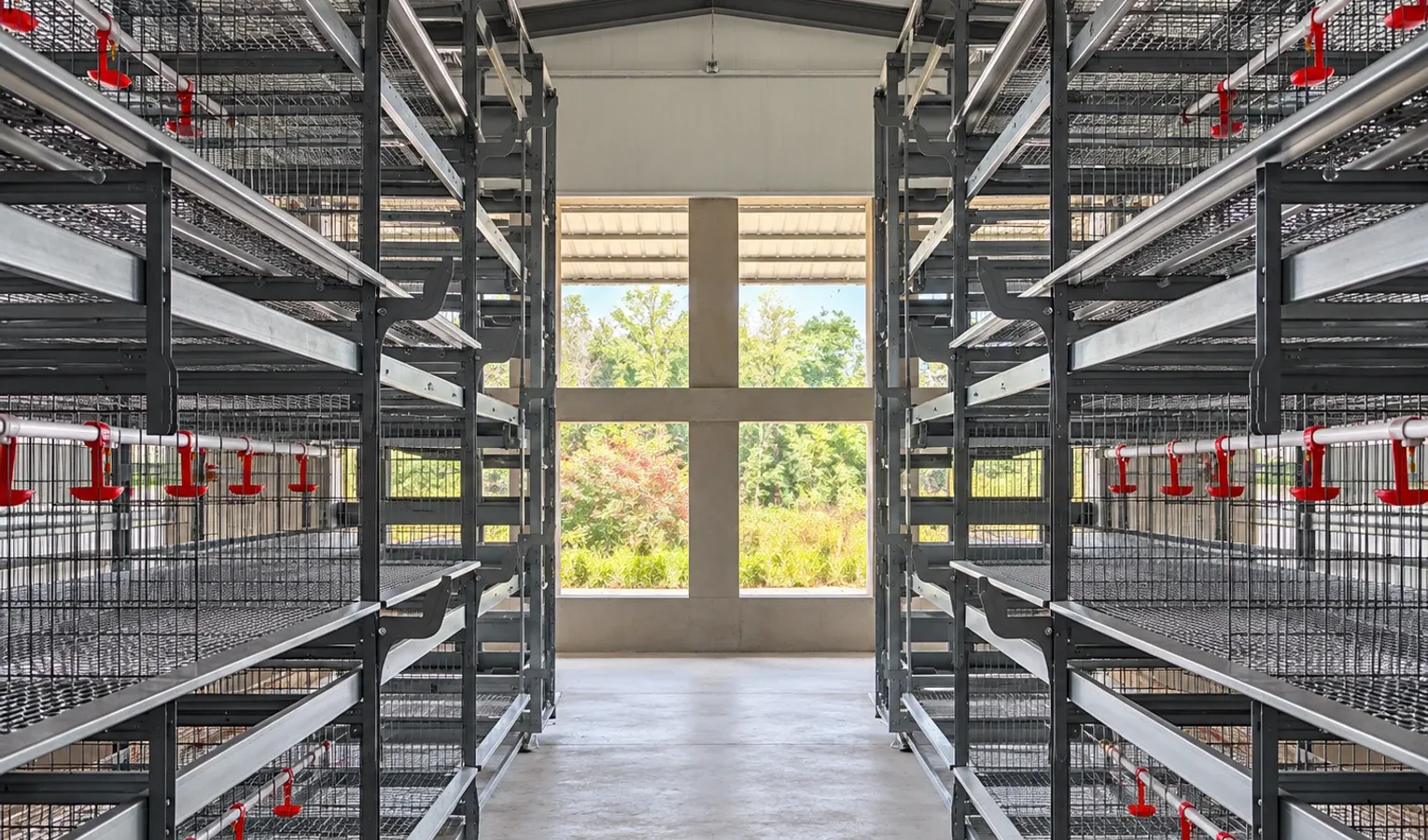
Start with the farm's water source, available supply and existing storage or treatment. Provide water-quality information when available and identify any known seasonal changes. The supplier needs this context to discuss filters, pressure regulation and line layout. A drinker line cannot compensate for every problem upstream of the house.
Follow the route to the farthest drinker
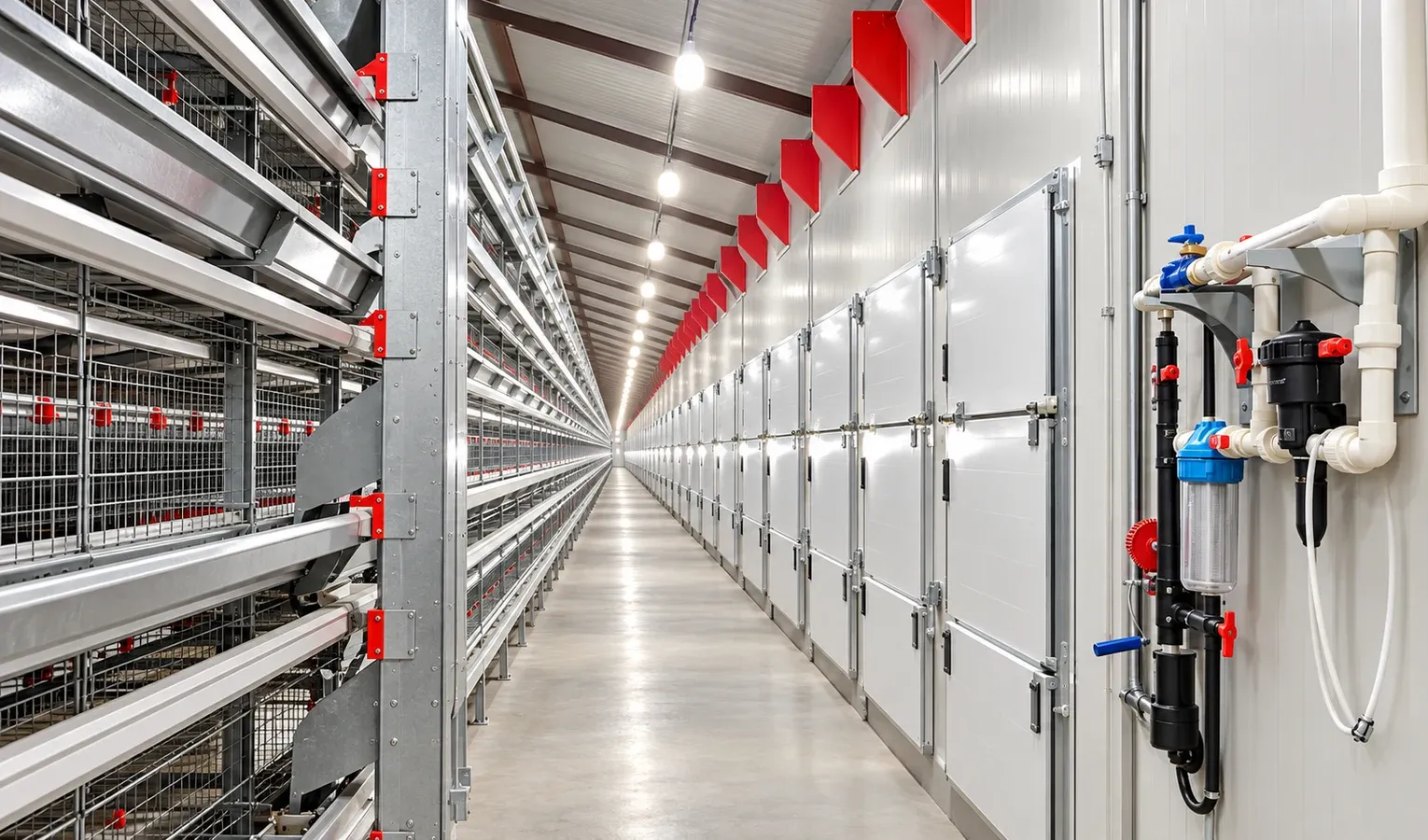
Draw the pipe entry, regulator position, branches and flushing outlets. Ask how the system will be checked at both the beginning and the end of each line. Include access to the regulator and filters in the house plan. Long runs, changing levels and multiple branches should be reviewed in the proposed design rather than dealt with after installation.
Match access to the flock
The drinker arrangement should suit the bird stage and housing. Ask which parts can be adjusted and how adjustments are made as the flock develops. During routine rounds, observe use across different areas instead of looking only at the nearest row. Follow the drinker manufacturer's instructions and the current management guide for the flock when setting up the line.
Make cleaning a defined procedure
Document the approved flushing and cleaning method, isolation points and responsibility for the work. Chemical compatibility and the required handling precautions depend on the materials and product used. Do not mix cleaning products or improvise concentrations. For vaccination through water or a suspected health issue, use a programme agreed with the flock's veterinarian and the relevant product instructions.
Use records to find problems early
Compare water use with the farm's own recent pattern, flock size and conditions. A change can prompt checks for leaks, blocked supply or equipment faults, but it is not a diagnosis by itself. Record the location and action taken. Keep photographs and part references for recurring faults so technical support can identify the installed components accurately.
Visual checklist
Related reading
Nipple Drinker Setup: Flow, Height and Pressure Checks
Poultry Water-Line Biofilm: Prevention and Monitoring
Further reading
Use the management guide for the actual breed, age and housing system when selecting flock targets. Review changes with the farm team and the relevant nutrition, health or equipment specialist.