At a glance. Compare poultry feeding mechanisms through housing layout, bird access, feed properties, drive components and maintenance requirements.
Feed is the largest single cost on almost every poultry operation, so the machine that moves it around the house deserves far more attention than it usually gets. A well-chosen automatic feeding system does three things at once: it puts a precise, even portion in front of every bird, it slashes the labour needed to do so, and it stops the quiet daily leak of spilled and spoiled feed. Done right, automation trims feed consumption by roughly 15-20% compared with hand feeding, holds feed-distribution uniformity above 95%, and lets one worker look after as many as 40,000 birds. This guide walks through the main system types, how they differ, and what to check before you commit to a layout.
Why Automate Feeding at All
Hand feeding looks cheap until you add up what it actually costs. Every manual round introduces variation: some pans get topped up, some birds eat first and eat most, and a surprising amount of ration ends up on the floor. Automated delivery removes that variation. Because feed is metered mechanically and delivered on a fixed schedule, intake becomes predictable, flocks grow more uniform, and the waste that hides in daily routine largely disappears.
- Feed savings of 15-20% — precise portions and less spillage recover a meaningful slice of your single biggest cost.
- Labour cut dramatically — one operator can manage around 40,000 birds where hand feeding would need a whole team.
- A more uniform flock — every bird sees the same feed at the same time, narrowing the spread in body weight and performance.
Chain and Flat-Chain Feeders
A chain feeder runs a continuous loop of flat chain around a long trough, and as the chain travels it drags feed along the entire run. The result is a remarkably even spread of feed from one end of the house to the other, which is why this design is a favourite for floor-raised flocks and breeder houses where birds feed shoulder to shoulder.
- Even distribution end to end — the moving chain carries feed the full length of the trough, so birds at the far end are not left short.
- Well suited to floor and breeder houses — the open trough matches the way ground-housed birds naturally line up to feed.
- Simple, robust mechanics — a single drive turns the whole loop, with few moving parts along the run itself.
The trade-off is that the trough is a fixed line, so the layout is less flexible than tube-based systems and the chain speed must be matched to bird numbers to avoid running the trough empty.
Auger and Tube-and-Pan Systems
In an auger system a motor turns a spiral inside a delivery tube, pushing feed along the pipe to a series of hanging pans. Because feed travels inside a tube, the pans can be positioned almost anywhere the tube can run, which gives this design its biggest advantage: layout flexibility.
- Flexible layout — pans hang wherever you route the tube, so the system adapts to odd house shapes and mixed zones.
- Enclosed delivery — feed stays inside the pipe until it reaches the pan, keeping it clean on the way.
- Scales across long houses — additional pans simply tap off the same tube line.
Pan height is adjustable so the rim can be kept level with the birds' backs as they grow, which is one of the most effective ways to keep feed in the pan rather than on the litter.
Disc and Pan Traveling-Hopper Feeders for Cages
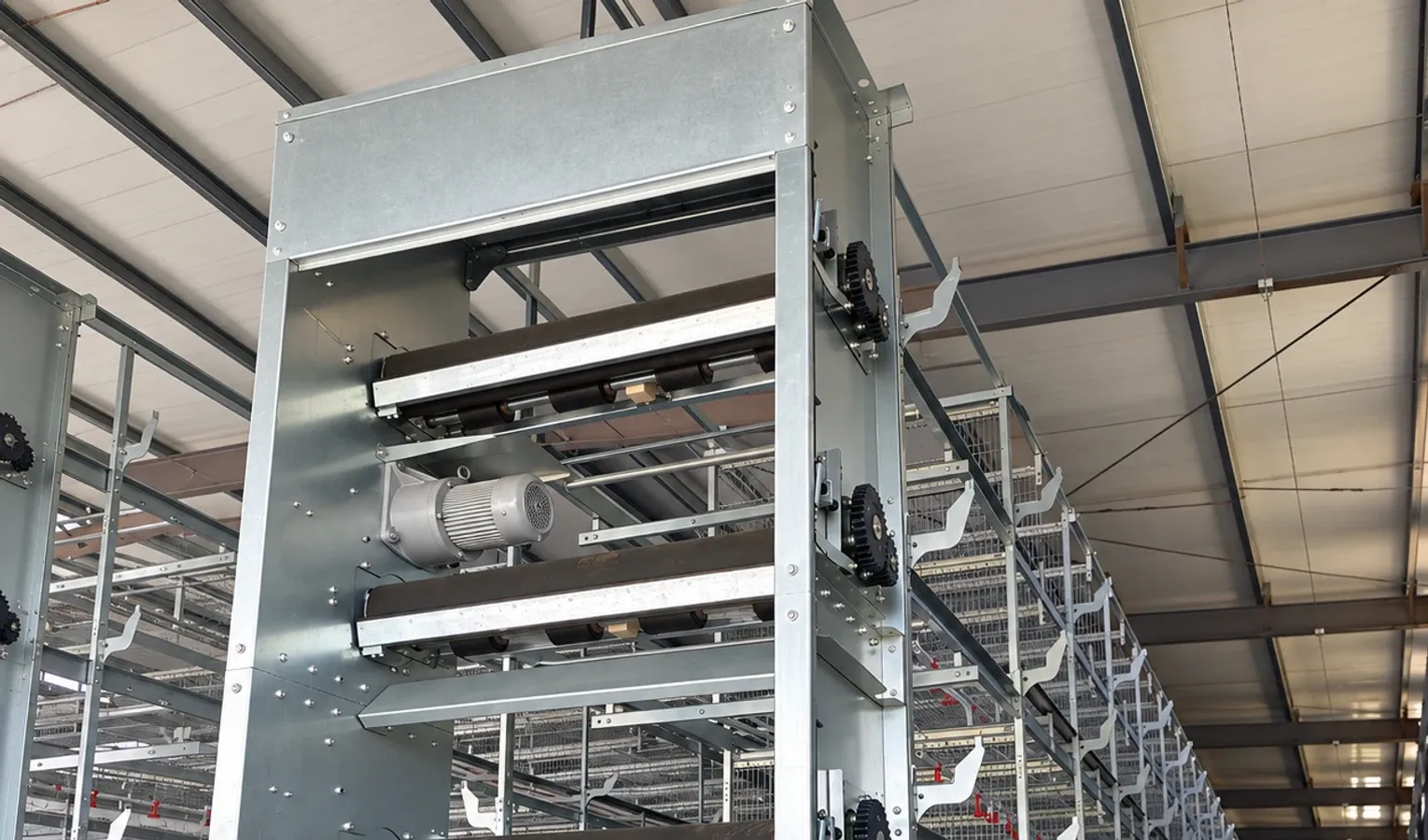
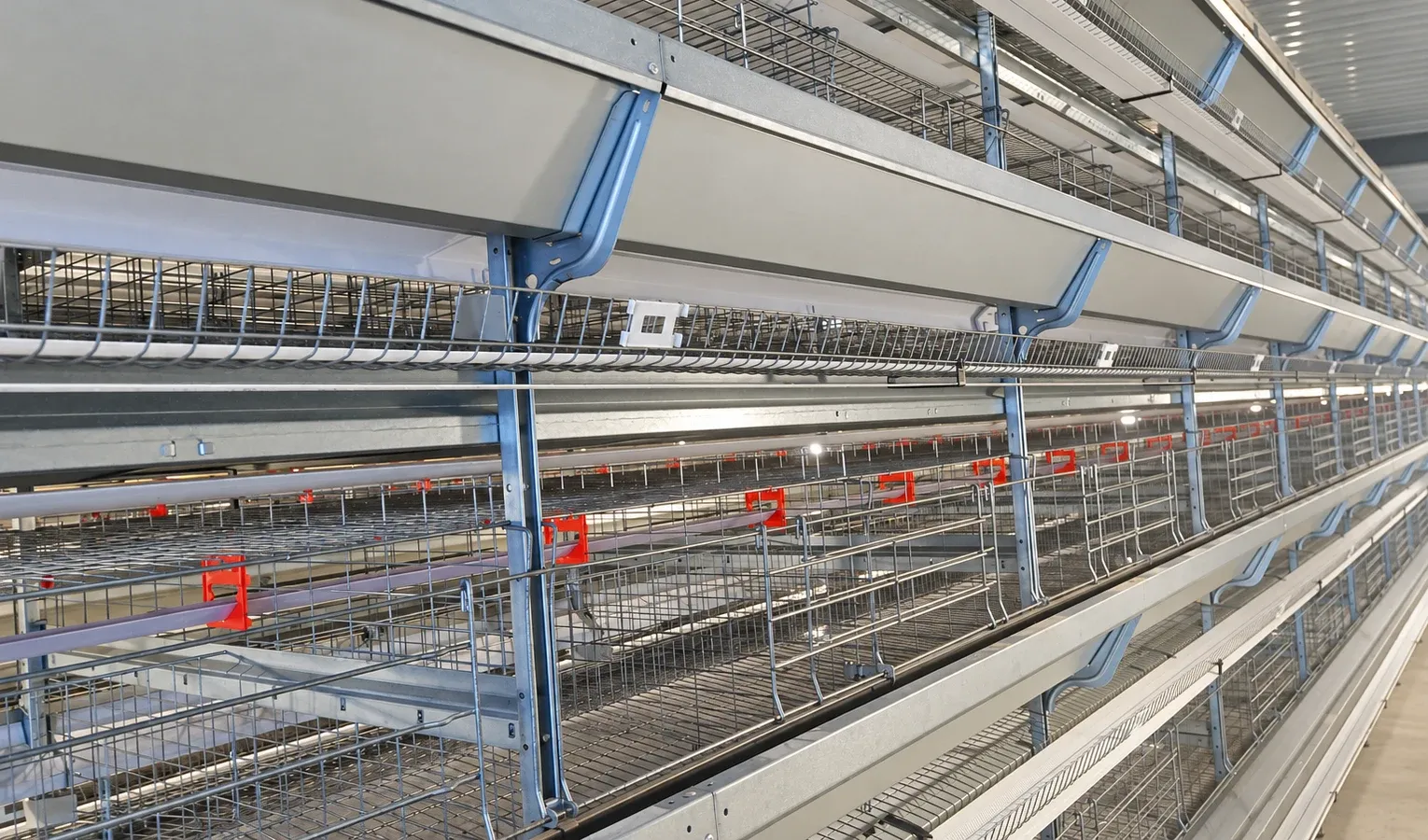
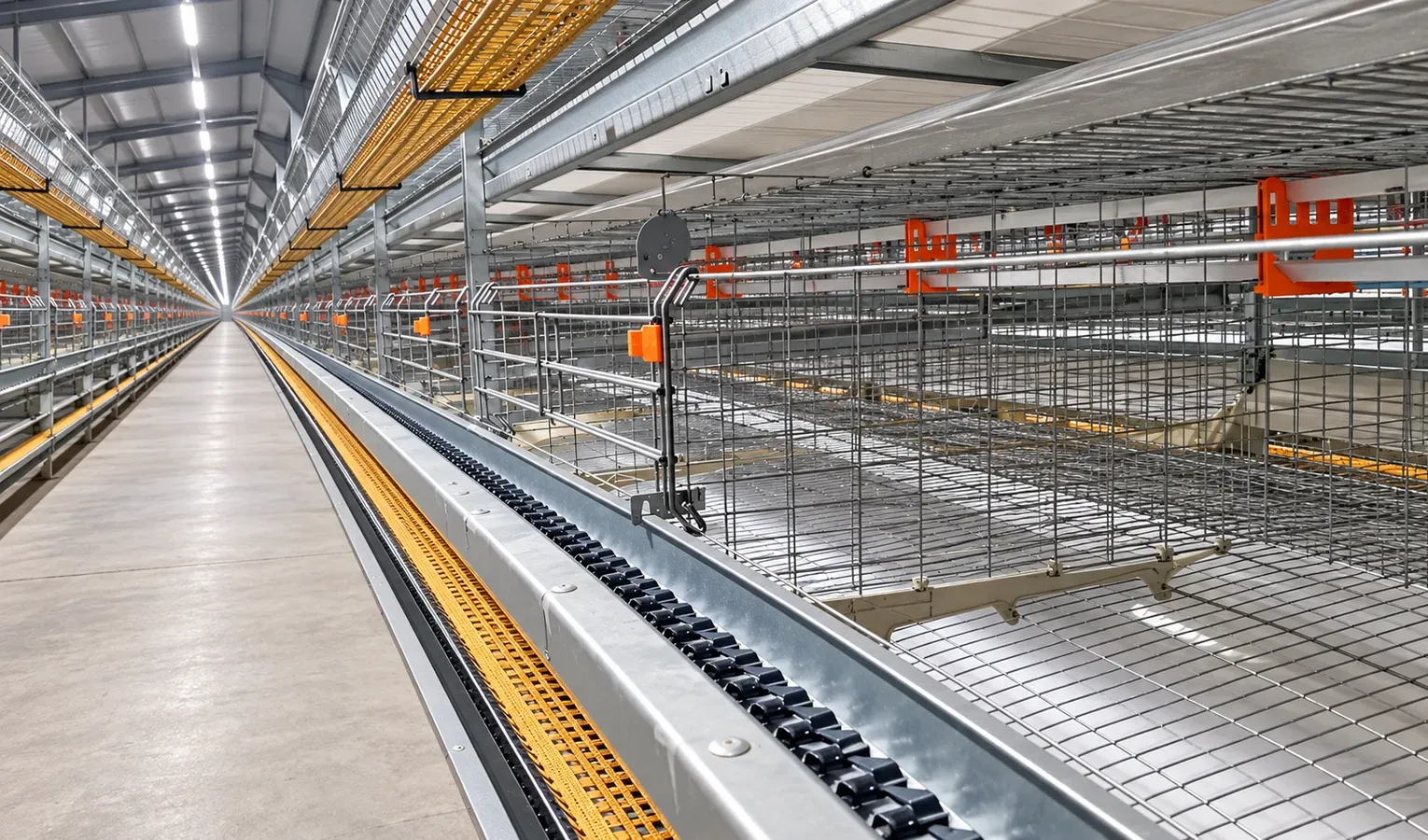
Cage systems often use a traveling-hopper feeder: a hopper trolley rides on rails above each tier and meters feed straight into the cage troughs as it passes. Because the hopper carries the feed to the trough rather than dragging it along a fixed line, this design keeps feed clean and makes portion control straightforward.
- Height-adjustable delivery — the trolley meters feed neatly into each tier's trough without overshooting.
- Cleaner feed — carrying the ration to the point of use avoids the contamination that open, static troughs can collect.
- Easy feed restriction — because the hopper meters a set amount per pass, controlling and restricting intake is simple and repeatable.
There are two cautions worth knowing. In humid conditions damp feed can clog the metering mechanism, so feed quality and house humidity matter. And because many trolley systems rely on a powered pass along the rails, manual operation during a power cut is awkward, which makes reliable power and backup arrangements important.
Hopper, Silo and Conveyor Delivery
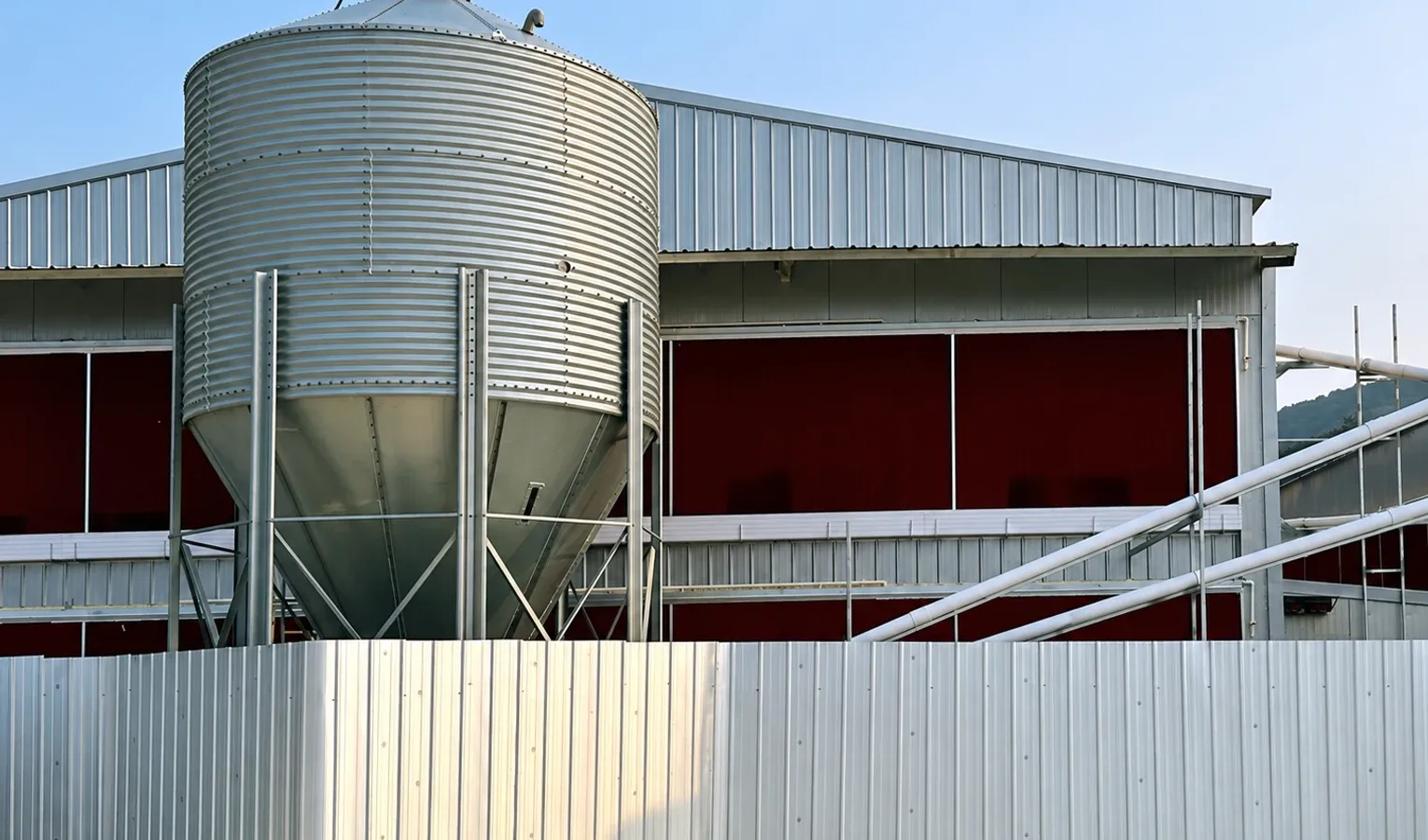
Behind whichever in-house feeder you choose sits the bulk-handling side: a silo or hopper stores the ration and a conveyor moves it into the house feed lines. This upstream stage is easy to overlook but it sets the rhythm for everything downstream.
- Bulk storage — a silo holds days of feed so deliveries and feedings are decoupled from each other.
- Conveyor transfer — augers or chain conveyors carry feed from silo to the house lines on demand.
- A single feed chain — silo, conveyor, and feeder work as one integrated path from delivery truck to bird.
How Automation Saves Feed
The 15-20% saving over hand feeding is not magic; it comes from several small effects stacking up. Mechanical metering delivers precise portions instead of generous guesses. Well-designed troughs and pans keep feed off the floor. And because automation makes it painless to feed little and often, birds face fresh feed several times a day rather than one large fill they can rake through.
- Precise portions — the machine delivers a set amount, not a heaped scoop.
- Less spillage — correct trough and pan geometry keeps feed where birds can only peck it, not fling it.
- Multiple small feedings — frequent, smaller deliveries reduce waste and stimulate steady intake.
Consistent Timing Stimulates Intake
Birds are creatures of habit, and a feeding schedule they can rely on encourages them to eat well. When feed arrives at the same times every day, the flock anticipates it, comes to the trough together, and consumes its ration in an orderly way. That consistency is hard to achieve by hand and almost automatic once a system runs on a timer.
Trough and Pan Design Against Waste
No drive system can save feed that a poorly designed trough throws away. The anti-waste details are worth insisting on: an inward-turned lip that catches feed billed sideways, a rim height that sits near the birds' backs so they reach in rather than rake out, and a depth shaped to hold feed below the lip.
- Anti-waste lip — a rim that curls inward returns billed feed to the trough instead of losing it to the floor.
- Correct rim height — keeping the lip near back height forces downward pecking, not outward raking.
Drive Motors and Feed-Level Sensors
The reliability of an automatic system lives in its drive and its controls. A drive motor sized for the load and the run length will keep the chain or auger moving smoothly for years, while feed-level sensors tell the system when a trough or pan needs topping up so it delivers on demand rather than on a blind timer.
- Right-sized drive motor — matched to run length and bird load for steady, low-stress operation.
- Feed-level sensors — trigger delivery only when needed, cutting both overfilling and empty troughs.
Integrating Weighing and the Silo
The most capable installations tie the feeder into weighing and silo data so that what the birds eat is measured, not estimated. Linking feed delivery to a weigh system turns feeding from a chore into a source of information, revealing intake trends early and flagging problems before they show up in production.
- Feed weighing — measured intake replaces guesswork and exposes trends fast.
- Silo integration — stock levels, delivery timing, and consumption all read from one connected system.
Matching the System to Your House
There is no single best feeder, only the best feeder for a given house and flock. Chain systems shine in floor and breeder houses that need even, full-length distribution. Auger-and-pan systems win where layout flexibility matters. Traveling-hopper feeders suit cage rows that need clean feed and easy restriction. The right choice balances your housing type, bird category, humidity, and power reliability.
Planning for Reliability
Whatever you install, plan for the day the power fails or the humidity spikes. Backup power arrangements, feed kept dry enough to flow, and a maintenance routine for motors and sensors are what keep an automatic system automatic. A feeder that stops during an outage is a bigger problem than one that never automated at all, so build in redundancy from the start.
Choosing a feeding system is one of the highest-leverage decisions on a poultry farm, touching feed cost, labour, flock uniformity, and welfare all at once. If you would like help matching a chain, auger, pan, or traveling-hopper design to your house layout and bird type, explore our range of poultry feeding equipment or talk with our team, and take a look at our related guides on feeder management and reducing feed waste.
Visual checklist
Related reading
Automatic Poultry Feeding: Layout and Labour Planning
Poultry Feeder Management: Finding and Reducing Waste
Further reading
Use the management guide for the actual breed, age and housing system when selecting flock targets. Review changes with the farm team and the relevant nutrition, health or equipment specialist.