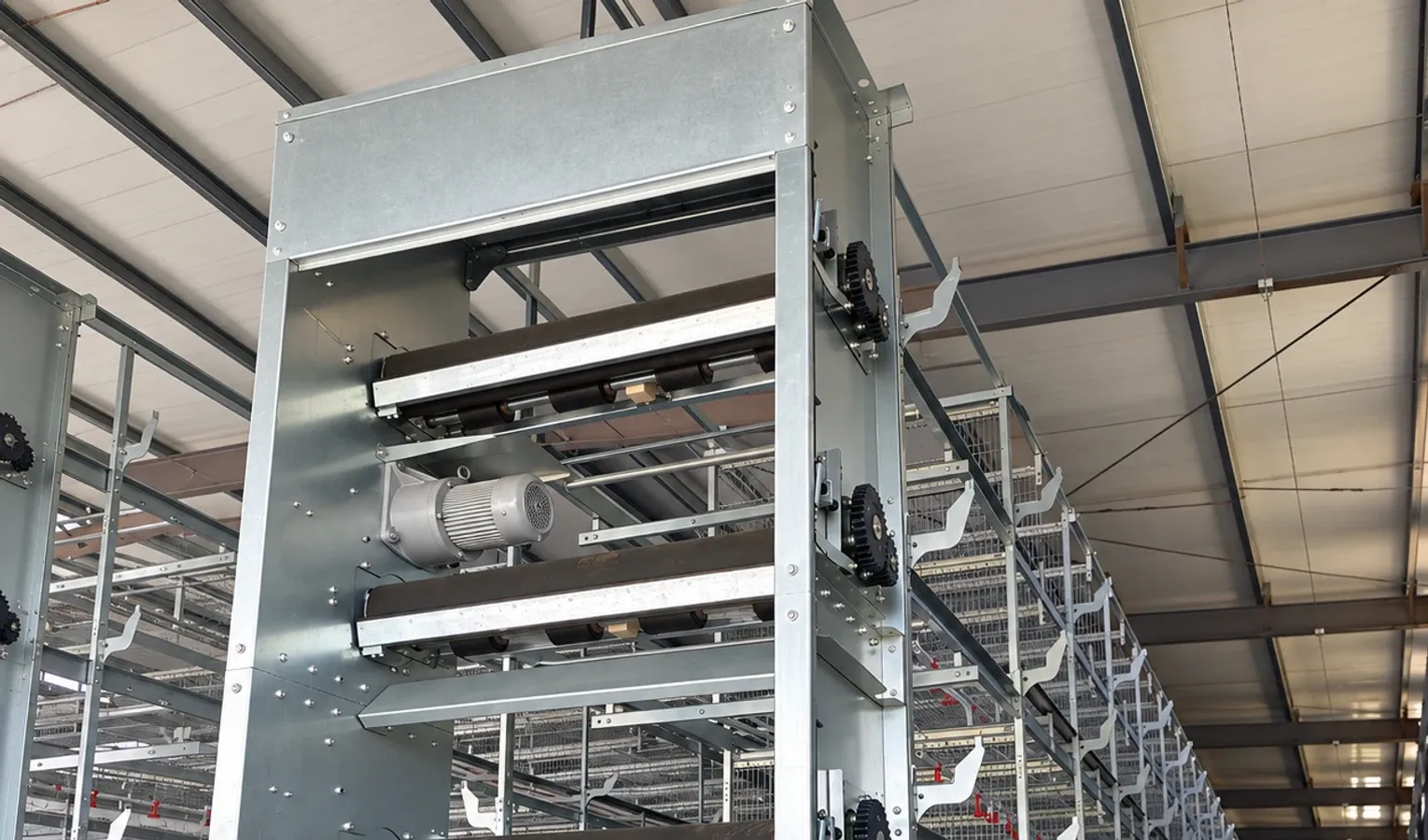
At a glance. Review ventilation, litter, manure handling and sensor checks to investigate harmful gases and maintain an appropriate poultry-house environment.
You can smell a poultry-house gas problem before you can measure it, and by the time you can smell it clearly the birds have already paid for it. Ammonia, hydrogen sulfide, and carbon dioxide are the invisible tax on every flock: they accumulate silently from litter and respiration, they suppress growth and worsen feed conversion long before they cause visible disease, and they punish under-ventilation harder than almost anything else. Controlling ammonia and harmful gases is partly a ventilation job, partly a litter job, and increasingly a job for targeted amendments and scrubbing technology. This guide covers the limits to hold and the tools to hold them.
Why Gases Deserve a Hard Limit
Harmful gases do their damage gradually and mostly out of sight, which is exactly why fixed limits matter.
- They irritate and inflame the respiratory tract, opening the door to secondary infection.
- They suppress appetite and growth well before any bird looks sick.
- They are cumulative — long exposure at a moderate level is as harmful as a brief spike at a high one.
Because the effects are slow and hidden, you cannot manage gases by how the house feels on a walk-through. You need thresholds and, ideally, sensors.
The Ammonia Ceiling: Under 20 ppm
Ammonia is the headline gas in most poultry houses, released whenever wet litter breaks down nitrogen from droppings.
- Keep ammonia at or below 20 ppm as the working ceiling.
- Hold it below 25 ppm at all times; above that, damage accumulates quickly.
- As little as 25 ppm already begins to suppress growth and worsen feed conversion.
The reason the ceiling is so low is that ammonia damage starts far below the level where humans find the smell unbearable. If you can clearly smell ammonia at bird height, you are already over the limit.
What Rising Ammonia Costs
The progression from mild to severe is steep, and the cost tracks it.
- Around 25 ppm, growth slows and feed conversion worsens measurably.
- Higher, sustained levels inflame the airways, damage the lungs, and cut production hard.
- Chronic exposure damages the respiratory lining so that ordinary pathogens cause serious disease.
Ammonia is not just a welfare issue; it is a direct hit to the two numbers that pay the bills — growth rate and feed conversion.
Hydrogen Sulfide and Other Gases
Ammonia gets the attention, but it is not the only gas to watch.
- Keep hydrogen sulfide below about 6.6 ppm; it is toxic at low concentrations and smells of rotten eggs.
- Carbon dioxide climbs whenever ventilation is too low, especially with unvented heaters, and is an early warning that fresh air is inadequate.
- Carbon monoxide from faulty or unvented combustion heaters is an acute, life-threatening hazard.
A gas-control plan covers all of these, not just ammonia, because the same under-ventilation that raises one usually raises the rest.
Ventilation: The First and Biggest Control
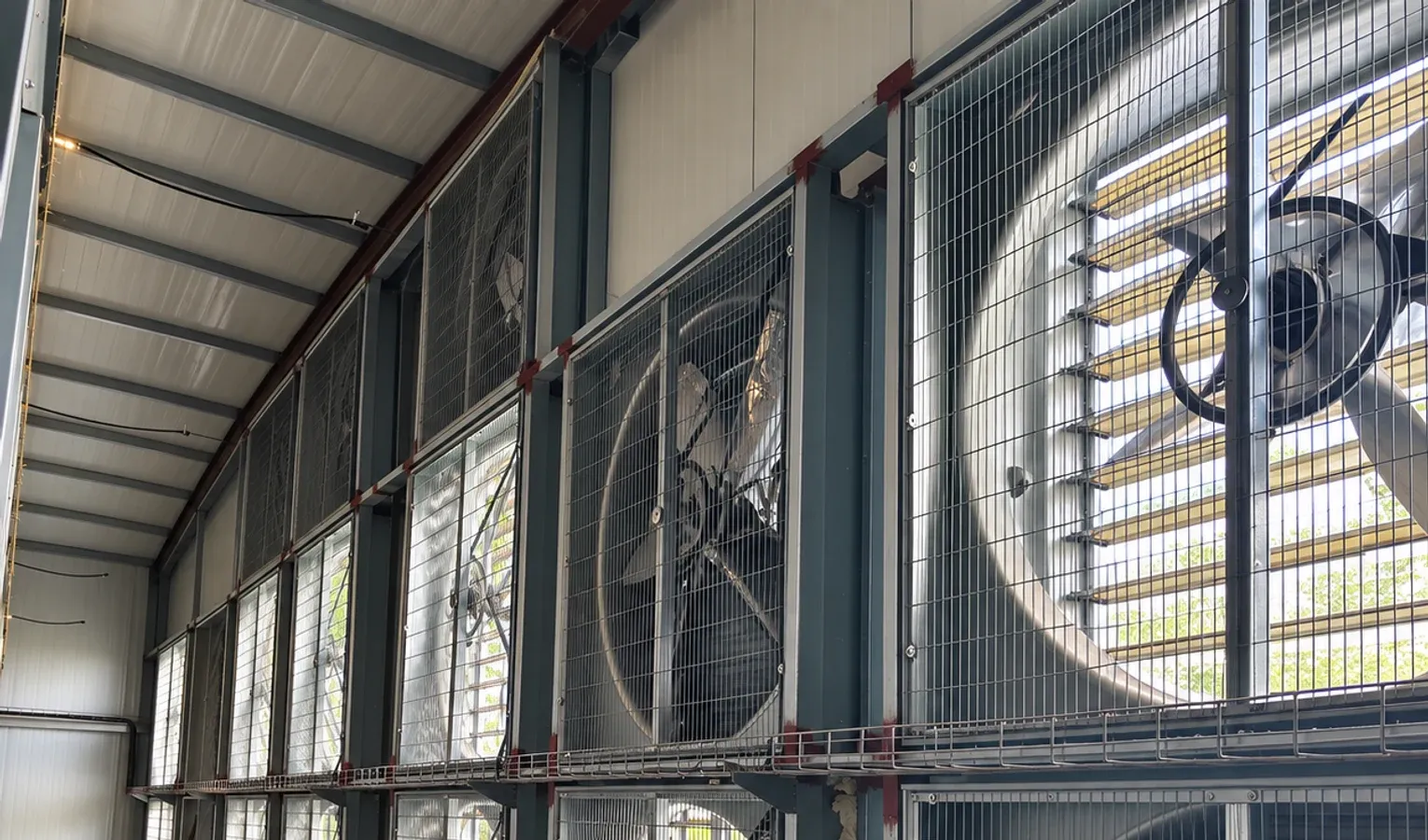
Every gas-control strategy starts with air exchange, because gases that leave the house cannot harm the birds.
- Adequate minimum ventilation removes ammonia and carbon dioxide continuously.
- The same airflow that removes moisture removes the gases that wet litter produces.
- Under-ventilating to save heat is the most common cause of a gas problem.
If ammonia is high, the first question is always whether the house is moving enough air — not whether to reach for an additive.
Litter Management: Cut the Source
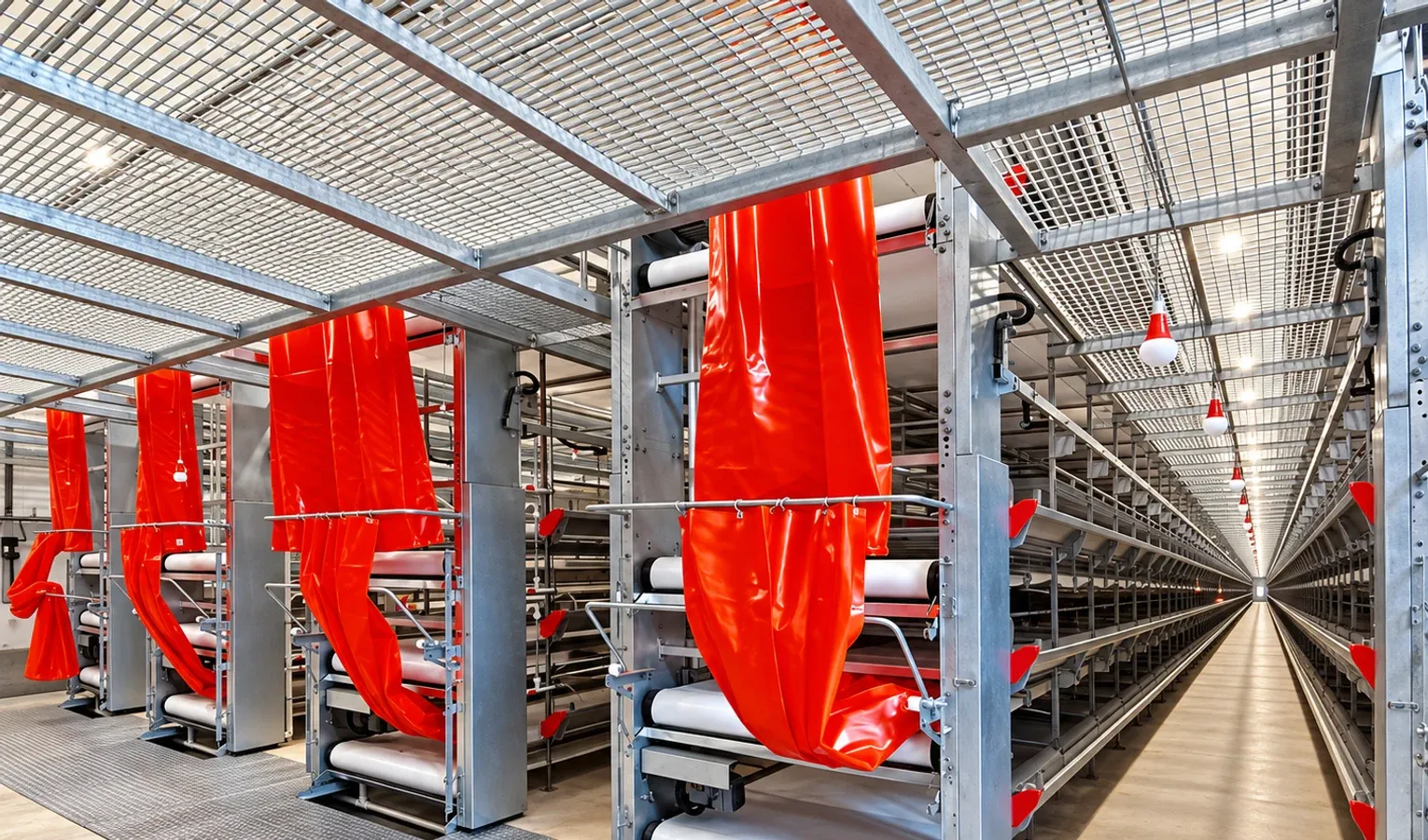
Ammonia comes from wet litter, so keeping litter dry attacks the problem at its origin.
- Dry litter releases far less ammonia than wet, capped litter.
- Control drinkers, ventilation, and litter changes to keep bedding friable.
- Remove wet and caked patches promptly before they turn into ammonia factories.
The cheapest ammonia control is litter that never gets wet enough to break nitrogen down in the first place.
Litter Amendments: 50% Reduction for a Few Weeks
When source control and ventilation are not enough — especially at the start of a flock — chemical litter amendments lower the litter pH so that nitrogen stays bound instead of gassing off as ammonia.
- Acidifying amendments can cut ammonia release by roughly 50 percent.
- The effect typically lasts about 3 to 4 weeks before the treatment is spent.
- They are most valuable during brooding, when young birds are most vulnerable and ventilation is lowest.
Amendments buy you a low-ammonia window at the most critical time, but they are a supplement to good ventilation and dry litter, not a replacement.
Acid Scrubbers: Up to 95% Removal
At the high-technology end, exhaust-air scrubbers treat the air leaving the house rather than the litter inside it.
- Acid scrubbers can strip about 95 percent of ammonia out of exhaust air.
- They protect the surrounding environment and neighbours as well as the birds.
- They are an investment aimed at large operations and areas with strict emission rules.
Scrubbing is the tool when both bird health and environmental compliance are on the line, capturing ammonia that would otherwise leave the stack.
Sensors Turn Guesswork Into Control
Because gas damage is invisible and cumulative, measurement transforms management.
- Ammonia and carbon dioxide sensors give a real number instead of a nose test.
- Linked to the controller, they can trigger extra ventilation automatically when a threshold is approached.
- Continuous monitoring catches slow climbs that a daily walk-through would miss.
Even a simple handheld meter used regularly is a large step up from relying on smell.
Protecting Both Birds and Workers
Harmful gases are a human hazard as well as a bird hazard, and the same controls protect both.
- Ammonia and hydrogen sulfide irritate workers' eyes and airways.
- Carbon monoxide from faulty heaters can be lethal to people entering a closed house.
- Ventilate and, where needed, monitor before anyone spends time in a suspect house.
A gas-control plan that keeps the birds safe keeps the people who tend them safe too.
Diet Also Shapes Ammonia Output
Ammonia begins as nitrogen the bird could not use, so what goes into the feed influences what comes out of the litter.
- Matching dietary protein to the birds' real requirement means less surplus nitrogen excreted as uric acid to break down into ammonia.
- Balancing amino acids so protein is used efficiently reduces nitrogen waste without cutting performance.
- Feed additives that improve digestion leave less undigested material in the droppings to ferment.
Nutrition is a slower lever than ventilation, but it attacks ammonia at its true source — the nitrogen the flock never used. A well-balanced ration paired with dry litter and good airflow gives you three independent controls all pushing the same direction, which is what keeps a house comfortably below the 20 ppm ceiling even under pressure.
A Gas-Control Checklist
To hold gases inside safe limits:
- Keep ammonia at or below 20 ppm, always under 25 ppm.
- Keep hydrogen sulfide below 6.6 ppm and watch carbon dioxide as a ventilation gauge.
- Ventilate enough to remove gases continuously — this is the primary control.
- Keep litter dry to cut ammonia at the source.
- Use acidifying litter amendments (~50% reduction, 3–4 weeks) during brooding.
- Consider acid scrubbers (~95% removal) for large or emission-regulated operations.
- Measure with sensors rather than relying on smell.
Bringing It Together
Ammonia and harmful gases are the quiet cost center of a poultry house, damaging growth and feed conversion long before they cause visible disease. Hold ammonia under 20 ppm and hydrogen sulfide under 6.6 ppm, drive the numbers down first with ventilation and dry litter, then reach for amendments that cut ammonia about 50 percent during brooding or scrubbers that remove up to 95 percent where compliance demands it. Clean air is not a luxury; it is one of the highest-return conditions you can maintain.
If you want help sizing ventilation, monitoring, and gas-control equipment for your house, our team can match a system to your flock size, climate, and local regulations. Get in touch and we will help you keep the air clean and the birds growing.
Visual checklist
Related reading
Poultry Manure Belts: Drying and Ammonia Management
Poultry Climate Control: Ventilation and Cooling
Further reading
UGA poultry ventilation resources
Check operating targets against bird age, local climate, measured house conditions and the equipment specifications. A general design example does not replace a house-specific ventilation assessment.