At a glance. Plan flock movement, clean-out responsibilities and downtime so biosecurity measures can be carried through each poultry production cycle.
Ask an experienced poultry veterinarian to name the one management practice that protects flock health more than any medicine, and the answer is usually the same: all-in-all-out. Fill a house with a single age group, raise them together, ship them together, then leave the cleaned house empty for 10-14 days before the next flock arrives. It sounds almost too simple to matter, yet this rhythm - one age in, one age out, a real rest in between - is the foundation that vaccination, biosecurity and nutrition all build upon. This guide explains why it works and how to plan it on a real farm.
What All-In-All-Out Actually Means
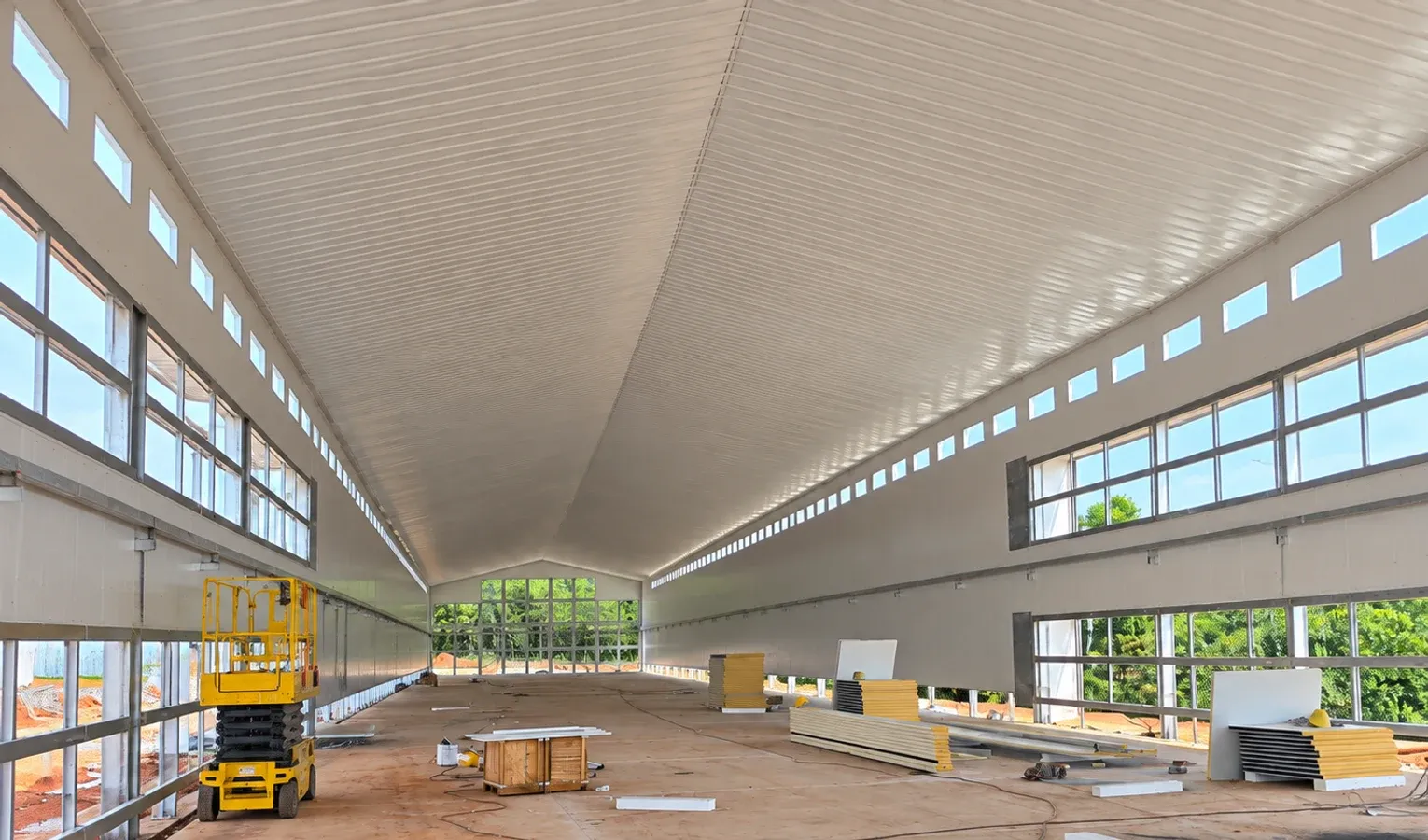
All-in-all-out (AIAO) means every bird in a defined unit shares the same age and the same timeline. You place them all at once, manage them as one group, and remove them all at once, leaving nothing behind but an empty, cleanable space. The unit can be a single house or, in the strongest form, an entire site.
The opposite approach - continuous or multi-age stocking - keeps birds of different ages on the same site at the same time. That convenience comes at a steep, hidden cost in disease.
- A single age group fills and empties the unit together
- No overlap means no living reservoir for pathogens between flocks
- The unit can be a house, a shed row, or a whole site
- Every bird moves through the same vaccination and feed timeline
- The empty period is a deliberate, scheduled part of the cycle
Why Continuous and Multi-Age Sites Stay Sick
On a multi-age site, older birds act as a permanent library of infection. They have met the local pathogens, survived them, and now shed them quietly. When young, naive birds arrive nearby, those pathogens flow downhill from old to young in an endless relay.
This is the single biggest reason infections become endemic - permanently established - on a farm. No amount of medication fully overcomes a site that reinfects itself with every new placement.
- Older birds shed pathogens they have already survived
- Young birds nearby have no immunity and pick the infection straight up
- Disease cycles from house to house and age to age without a break
- The pathogen load on site tends to rise over time, not fall
- Endemic infection means constant low-grade losses and medication use
The Disease-Break Logic
The power of AIAO comes from a break in the chain of infection. Most pathogens cannot survive indefinitely in an empty, clean, dry house - they need living birds to multiply in. Remove the birds, clean out the organic matter they leave behind, and the survivors slowly die off with nothing to infect.
Downtime works hand in hand with terminal cleaning and disinfection. Disinfectant kills the bulk of the load; empty time finishes the job by outlasting whatever survives and starving parasite stages of a host.
- Empty houses starve pathogens of the live hosts they need
- Cleaning removes the organic matter that shelters germs from disinfectant
- Residual survivors die off during the empty, dry period
- The break interrupts coccidial oocyst and parasite life cycles
- Disinfection plus downtime together are far stronger than either alone
Downtime by Flock Type
Not every flock needs the same rest, but every flock needs some. For ordinary commercial broilers or layers, a downtime of 10-14 days between a fully cleaned house and the next placement is a sound working target. For breeders, or after a genuine disease problem, extend that to roughly 28 days - about 4 weeks - to give residual pathogens more time to fade.
These are reference figures rather than fixed rules. Confirm the right downtime for your operation with your local veterinarian, and lengthen it whenever disease history or diagnostics suggest caution.
- Commercial flocks: about 10-14 days of clean, empty downtime
- Breeders or post-outbreak houses: about 28 days (4 weeks)
- Always measure downtime from the end of cleaning, not from bird removal
- Extend the rest after any serious disease event
- Treat these day counts as reference points to confirm with your vet
Why Young Birds Are So Vulnerable
The reason age-mixing is so dangerous lies in how fast and how defenceless young birds are. A chick weighs only about 300 g at 14 days and roughly 600 g at 21 days - doubling in a week - while its immune system is still immature. It is growing explosively yet has little defence of its own.
Drop that naive, fast-growing chick next to older birds shedding field pathogens and the outcome is predictable. AIAO exists precisely to keep the vulnerable young away from the shedding old.
- A chick is about 300 g at 14 days of age
- The same chick reaches roughly 600 g by 21 days
- Rapid growth demands energy the bird cannot spare to fight infection
- Young immune systems are naive and slow to respond
- Keeping ages apart shields the weakest birds from the biggest sources of infection
Growth weights vary by breed and management - use these figures as general reference points and compare them against your own strain's targets.
How All-In-All-Out Simplifies Management
Beyond disease control, AIAO makes the whole farm easier to run. When every bird is the same age, every task lines up. There is one vaccination schedule, one feed phase, one medication window and one set of records to keep - not a tangle of overlapping timelines.
This simplicity reduces mistakes, saves labour and makes performance easy to measure flock by flock.
- One vaccination calendar for the entire group
- A single feed phase and formulation at any given time
- Medication and withdrawal windows apply cleanly to all birds
- Record-keeping and benchmarking become straightforward
- Fewer overlapping tasks means fewer costly errors
Site-Level Versus House-Level
The gold standard is site-level AIAO, where the whole farm holds one age group and empties completely between cycles. That gives the cleanest possible break. Many farms, however, cannot idle an entire site at once and instead run house-level AIAO, where individual houses turn over on staggered dates.
House-level AIAO is a workable compromise, but only if the separation between houses is real. Shared air, staff, equipment and traffic can quietly defeat the whole principle.
- Site-level AIAO gives the strongest, cleanest disease break
- House-level AIAO is a practical compromise for larger farms
- Staggered houses must be genuinely separated to work
- Shared staff, tools and vehicles can carry pathogens between ages
- The wider the age gap between adjacent houses, the higher the risk
Planning the Schedule and Gap
Making AIAO work is a scheduling exercise. You count backward from placement to fit cleaning, disinfection, drying and the empty rest into the calendar, then book chick delivery to match. Rushing any step to save a few days usually costs far more later.
Build the downtime into the plan as a fixed, non-negotiable block, the same way you would treat the grow-out period itself.
- Schedule placement dates around the full clean-and-rest window
- Reserve fixed time for cleaning, disinfection and thorough drying
- Coordinate chick delivery so houses are not filled early
- Protect the downtime block from being shortened under pressure
- Keep a written calendar so every team member knows the sequence
Making Downtime Productive
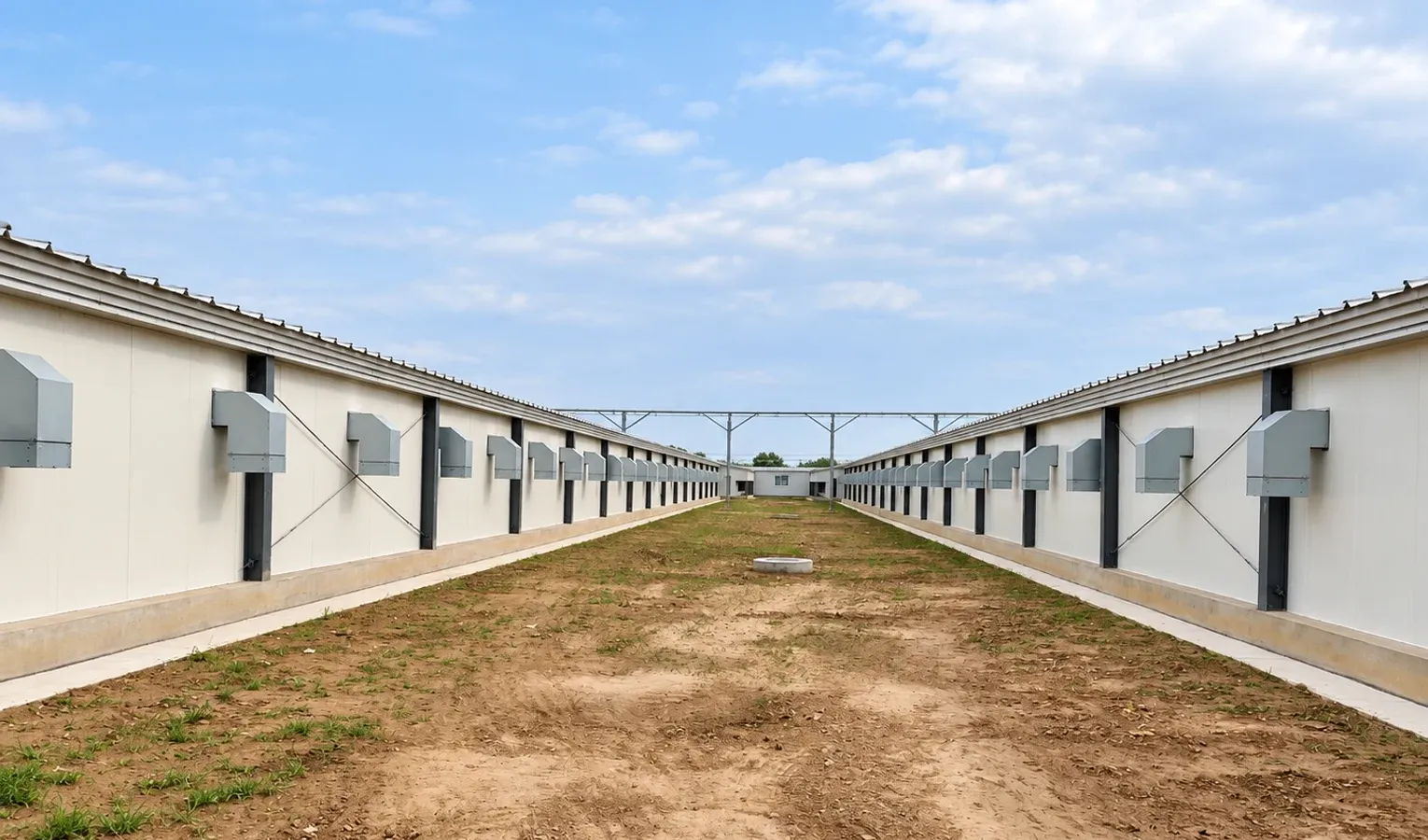
An empty house is not idle - it is working. Downtime is the only window in which you can properly clean, disinfect, dry and rest the building without birds in the way. Each step matters: dry-cleaning removes bulk manure, washing lifts the biofilm, disinfectant kills the load, and drying denies survivors the moisture they need.
Use the empty period for maintenance too - repairs, equipment checks and pest control are far easier with no birds present.
- Dry-clean to remove litter, dust and manure first
- Wash surfaces to strip away grease and biofilm
- Apply disinfectant to clean, not dirty, surfaces
- Let the house dry fully before the rest period counts
- Service equipment, seal gaps and control rodents while empty
Pitfalls That Break the Principle
AIAO fails quietly when small shortcuts creep in. Adding a few "extra" birds of a different age, keeping culls or leftovers in a corner, or letting staff move freely between age groups all reopen the very chain the system is meant to break.
The principle is only as strong as its weakest exception. One overlooked group of old birds can keep a whole site infected.
- Never hold back leftover or "spare" birds from a previous flock
- Do not mix ages in the same air space to fill empty pens
- Prevent staff and equipment from crossing between age groups
- Avoid trimming downtime to squeeze in an extra placement
- Watch for wild birds and rodents that bridge the gap between flocks
The Economics of an Empty House
It is tempting to view an empty house as lost income, but that view is backward. The downtime is an investment that protects the next flock's health, growth and uniformity. A rushed placement into a dirty, still-contaminated house routinely underperforms and costs far more in medication and mortality than the rest ever "saved."
Measured across the year, disciplined downtime raises average performance, not lowers it.
- An empty house prevents carry-over disease into the next flock
- Better health means better growth, uniformity and livability
- Skipped downtime often shows up as higher medication and mortality
- Consistent flocks are easier to plan, sell and finance
- Downtime is protection bought cheaply, not income thrown away
All-in-all-out and honest downtime are the quiet foundation every other health measure stands on. If you are laying out a new site or rethinking an existing one, our team can help you design house numbers, flow and scheduling so that clean single-age batches and proper rest periods fit naturally into your operation - reach out whenever you would like to plan it together.
Visual checklist
Related reading
Poultry Farm Biosecurity: People, Vehicles and Equipment
Empty Poultry House Cleaning and Disinfection Planning
Further reading
Disease prevention and treatment must be adapted to the flock and local requirements. Confirm medicines, vaccines and disinfectant procedures with the responsible veterinarian and the approved product instructions.