


Choosing a feed silo starts with the delivery pattern, not the largest tonnage that will fit beside the house. The farm needs enough usable storage between deliveries, room to receive the next load and a reliable way to move feed to the birds.
Those three requirements can point to different choices. Extra nominal capacity is of little help if the delivery vehicle cannot reach the filling point or the feed-transfer system cannot serve the planned houses.
Turn the delivery schedule into a storage requirement
Estimate daily feed use from the actual flock plan and relevant feeding information. Multiply it by the interval between deliveries, then review the reserve needed for the farm's own supply risks. Account for stock already in the silo when the next vehicle arrives.
As a simple inventory example, assume a farm uses 1.5 tonnes a day and receives feed every four days. That is 6 tonnes between deliveries. A selected two-day reserve would add 3 tonnes, giving a 9-tonne planning quantity before checking usable capacity and filling arrangements. These are invented inputs to show the calculation, not a feed allowance or a recommended reserve for every farm.
Run it again for the busiest part of the flock cycle and the actual delivery quantity. Feed formulations or bird groups that must remain separate may also require separate storage, even when their combined tonnage appears to fit one silo.
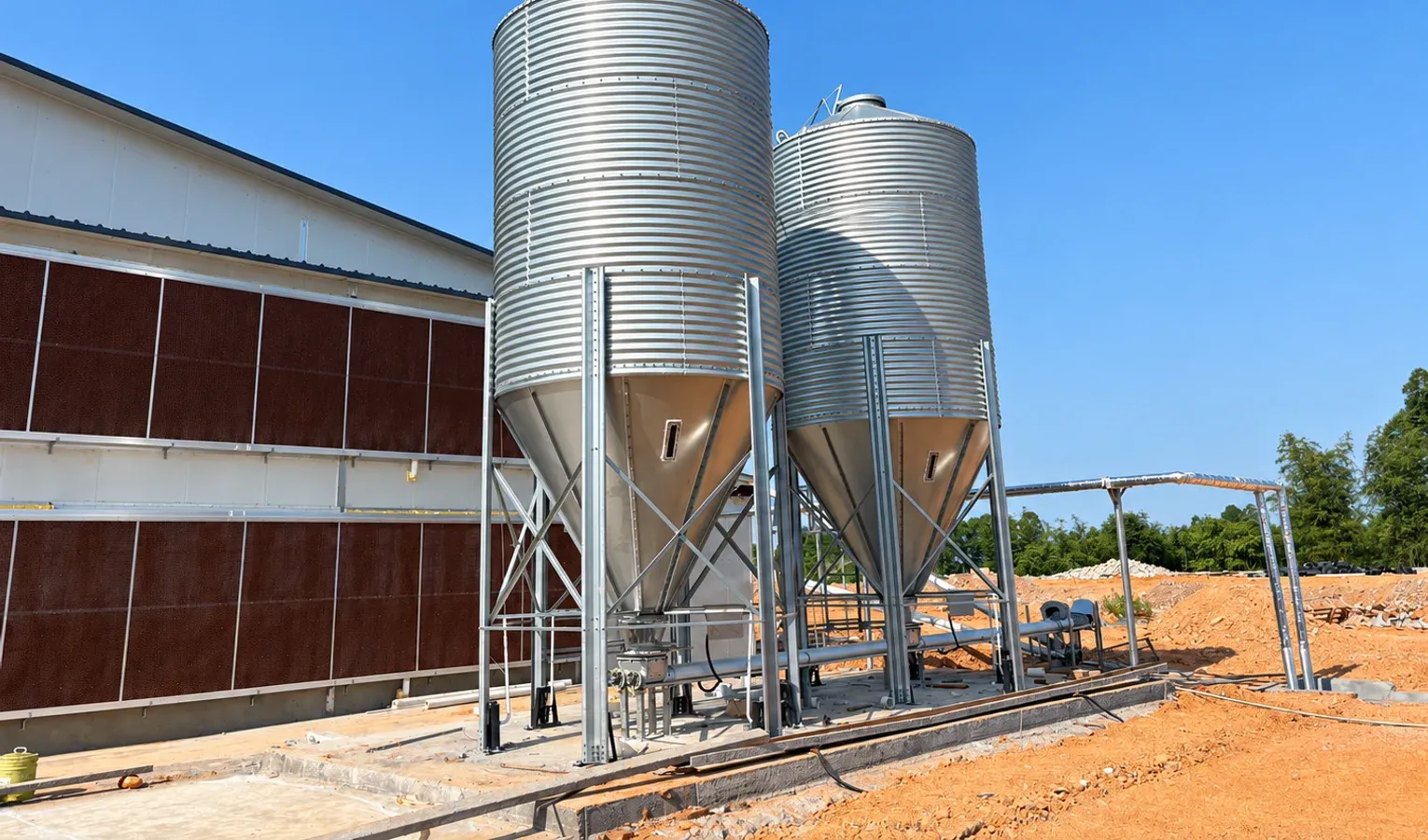
Read nominal tonnes alongside volume and feed properties
Ask the supplier what bulk-density assumption lies behind the stated tonnage and what usable storage volume the model provides. The mass that fits inside a volume depends on the material being stored. Leave the operating clearances and filling limits specified for that silo intact rather than treating every cubic metre as usable feed space.
One equipment quotation in our records lists a 15-ton hot-dip galvanized silo with a six-leg weighing arrangement. It is a specific configuration, not evidence that every 15-ton model has the same dimensions or weighing equipment. The order still needs the diameter, overall height, support layout, foundation information and loading conditions for the selected model.
What weighing can help you see
A weighing system can help track deliveries, remaining stock and changes in use. Ask what is included: the sensing arrangement, display or controller connection, calibration process and the records the farm can retrieve.
Agree how readings will be checked against delivery and usage records. An unexplained change should be investigated, not automatically treated as a change in bird intake. Ask the equipment supplier what installation, connection or operating conditions can affect the measurement on the proposed model.
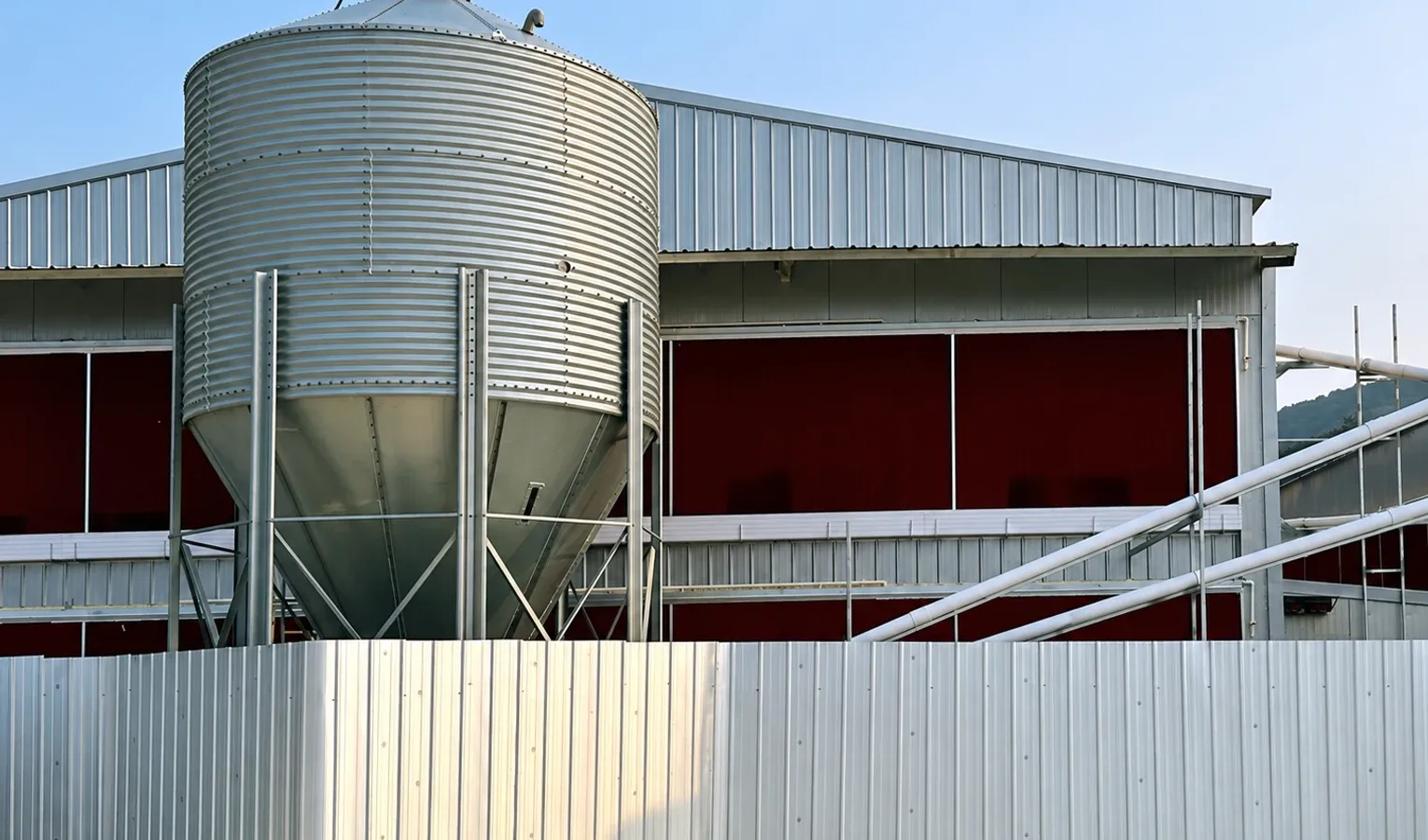
Draw the delivery vehicle and the feed route
Show how the vehicle enters, reaches the filling position and leaves. Check turning space, surface conditions and overhead obstructions with the delivery company and site designer. Keep the access needed for inspections and maintenance clear.
Then draw the route from the silo outlet to the receiving equipment inside the house. Confirm transfer distance, changes in direction or height, required delivery capacity and the responsibility for controls and connections. A silo quotation and a feeding-system quotation should meet at an agreed interface.
Ask the responsible designer to confirm the foundation and support requirements for the actual silo and site. Do not copy a foundation size from a different tonnage or install a support arrangement based on a photograph.
Put the missing information into the order
Before ordering, record usable capacity and its assumptions, model dimensions, foundation requirements, weighing scope, filling connection, outlet and transfer equipment. Include access, operating instructions and the agreed inspection arrangements at handover.
For the next part of the route, see automatic feeding layout and feeding-system mechanisms. If the silo and house equipment come from different suppliers, send both the same drawing so the connection is resolved before either package is shipped.
Related reading
Automatic Poultry Feeding: Layout and Labour Planning
Automatic Poultry Feeding: Comparing Delivery Systems
Automated Poultry Feeding & Silo Delivery Specifications
Feed represents 65% to 70% of total commercial poultry production costs. Minimizing feed waste and ensuring uniform nutrient availability requires precision mechanical feeding hardware.
In multi-tier battery cage installations, automated electric traveling feed hoppers (gantry carts) operate along top rails at an engineered travel speed of approximately 6 m/min (~6 m/min). This speed meters an exact feed ration (100g to 160g per linear meter of deep-lip galvanized trough) without triggering bird stress or causing feed separation between heavy minerals and fine vitamins.
On-farm bulk storage utilizes heavy-gauge corrugated galvanized steel feed silos (275 g/m² zinc coating, 5 to 7 days safety buffer capacity, 10 to 30 metric tons) with 60° steep bottom hopper cones and centerless flexible spiral auger coils (75mm to 125mm OD) delivering up to 5,500 kg/h.
Related Technical Guides & Systems
Automatic Feeding System (Travelling Hopper)
Complete Poultry Feed Mill Equipment
Poultry Feed Silo and Flex Auger Systems: Sizing, Unloader Drives & Automatic Delivery
Poultry Feed Grinder and Mixer Sizing: Hammer Mill & Ribbon Mixer Matching