At a glance. Review air movement and lighting as birds develop, using flock behaviour, house measurements and breeder guidance to inform operating changes.
Two environmental controls do more to shape a broiler flock than almost anything else you touch daily: the speed of the air moving over the birds and the light program that governs how they eat, rest, and grow. Neither is a set-and-forget number — both have to change as the flock ages, and both interact with temperature, humidity, and stocking density in ways that reward daily attention and punish neglect. Get them right and the flock grows fast but sound, with strong legs, healthy hearts, and low sudden-death losses. Get them wrong and you either chill young chicks with premature air movement or drive fast-growing birds into ascites and flip-over mortality with too much light. The playbook is age-based and specific: air speed climbs from near zero in the first two weeks to 0.5 m/s by week three, 0.8 m/s by week four, and over 2.8 m/s in summer tunnel conditions, while a dark period of more than 6 hours protects the birds from their own growth rate.
Two Controls, One Growth Curve
Air speed and light are not independent settings — they interact with temperature, density, and the bird's developmental stage. Managing them by age, rather than by a fixed year-round recipe, is what separates a controlled house from a reactive one.
- Young chicks need still, warm air; older birds need moving, cooling air.
- Continuous light maximizes early intake but late-cycle darkness protects the heart and skeleton.
- Both settings must track the bird's age and the season, not a single fixed number.
Air Speed in the Brooding Phase
For the first two weeks, chicks cannot handle draft. Their thermoregulation is immature, and any perceptible air movement pulls heat away and chills them off feed. The goal in this phase is warmth and stillness.
- Keep air speed effectively near zero for days 0-14.
- Ventilate for air quality and moisture removal, not for cooling, using minimum ventilation.
- Any felt draft at chick level is a problem — chicks will huddle and stop eating.
Stepping Air Speed Up Through the Grow-Out
As birds feather out and gain mass, they generate heat and need air movement to shed it. Air speed increases in deliberate steps that match their growing tolerance and heat production.
- Days 15-21: raise air speed to about 0.5 m/s.
- Days 22-28: increase to around 0.8 m/s.
- Continue increasing toward tunnel speeds as birds approach market weight and heat load peaks.
Summer and Tunnel Ventilation
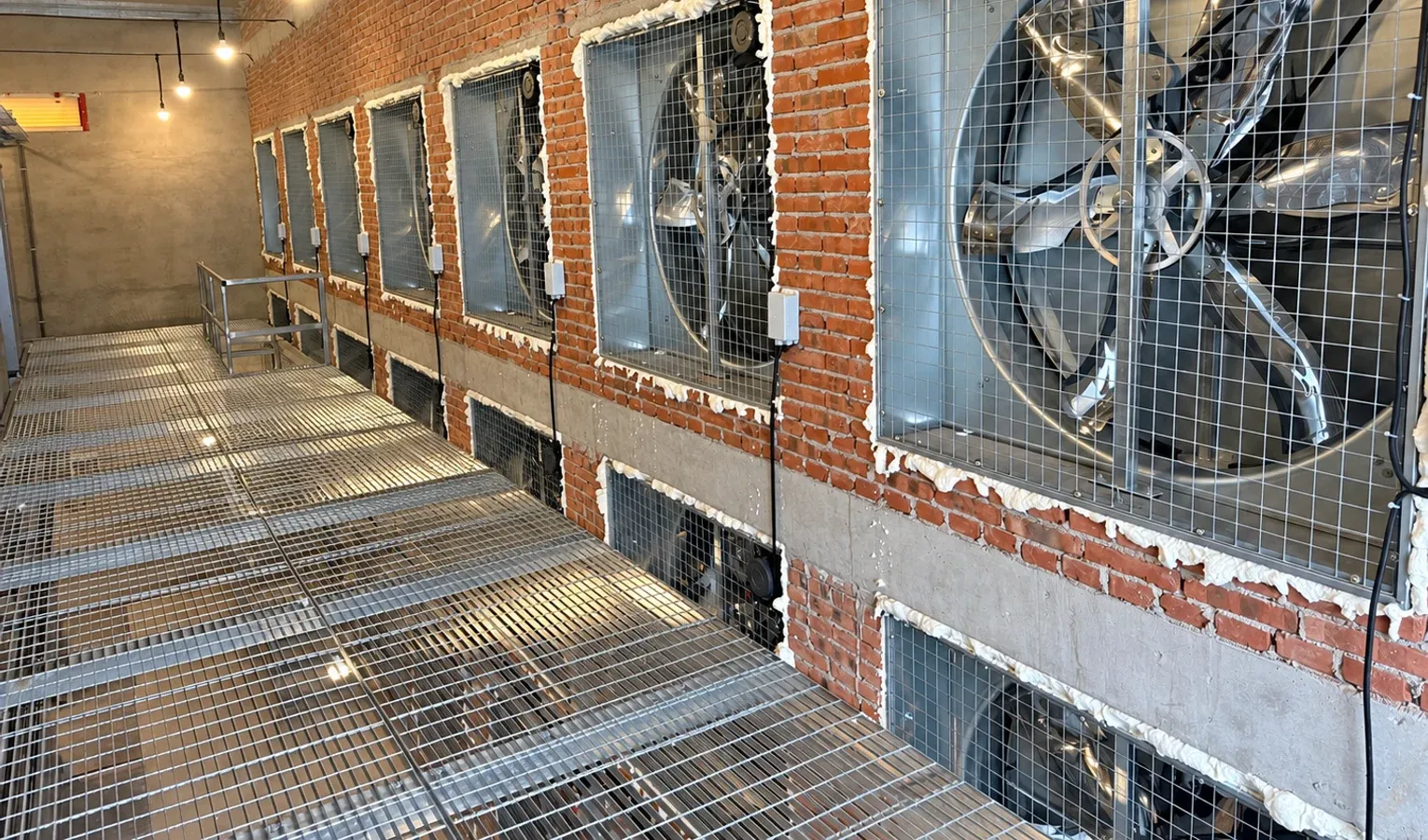
In hot weather, air speed becomes the primary cooling tool through wind chill. Moving air over heavy birds can drop the effective temperature they feel by several degrees, which is often the difference between comfort and heat mortality.
- In summer, push air speed above 2.8 m/s (toward 3 m/s) over market-age birds.
- Wind chill from fast air lowers the effective temperature the bird experiences.
- Heavy, fully feathered birds depend on this air movement to survive heat spikes.
Why Light Restriction Matters
Modern broilers grow so fast that unrestricted feeding can outpace the development of their legs, heart, and lungs. Restricting light for part of the day slows early intake just enough to let the frame and cardiovascular system keep up, reducing metabolic disease.
- Restricting light during roughly days 7-21 curbs excessively fast early growth.
- Slowing the early growth curve reduces leg problems, ascites, and sudden death syndrome.
- The birds still reach target weight, but with sounder legs and hearts along the way.
The Dark Period: More Than Rest
A defined dark period is not just about saving feed — it is a physiological reset. Darkness triggers melatonin, supports immune function, and gives the cardiovascular system recovery time that continuous light denies.
- Provide a continuous dark period of more than 6 hours once past the first days.
- Darkness supports immune function and reduces ascites and flip-over (sudden death) losses.
- A single long dark block works better than several short scattered ones.
Designing the Light Program
The photoperiod changes across the cycle: nearly continuous at placement to establish intake, a restricted middle to protect development, and adjustments at the end depending on target weight and market.
- Day 1: near-continuous light (around 23 hours) to get chicks eating and drinking.
- Days 7-21: introduce the dark period and hold the restricted program.
- Late cycle: adjust the photoperiod to finish birds without sacrificing leg and heart health.
Light Intensity, Not Just Duration
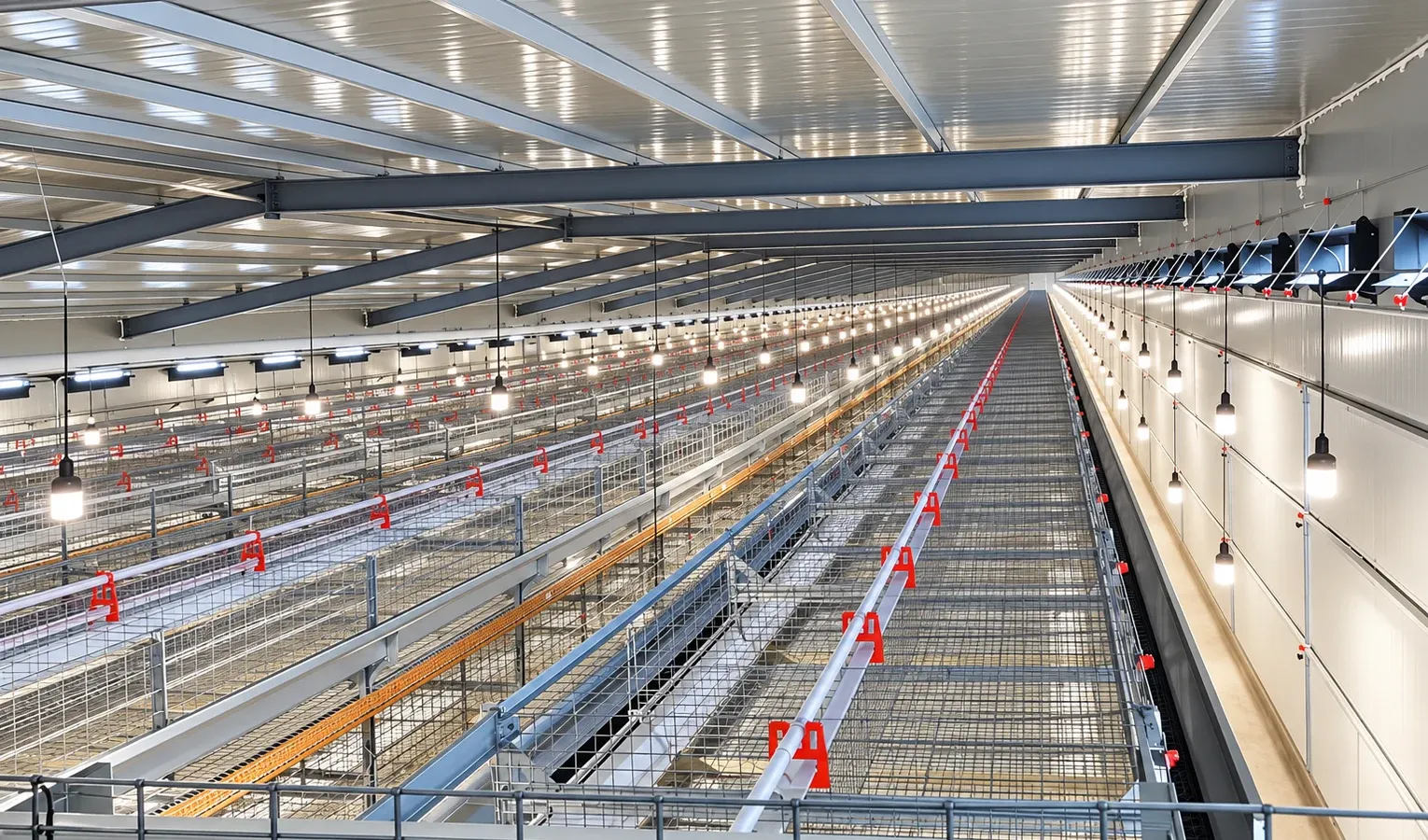
How bright the house is matters as much as how long the lights are on. Bright light early helps chicks find resources; dimmer light later keeps older birds calm and reduces activity-related injuries and scratching.
- Start bright — around 30-40 lux — so chicks locate feed and water.
- Dim to roughly 5-10 lux as birds age to keep them calm and reduce pecking.
- Even light distribution avoids dark corners where birds pile and feed access suffers.
The Daily Walk-Through
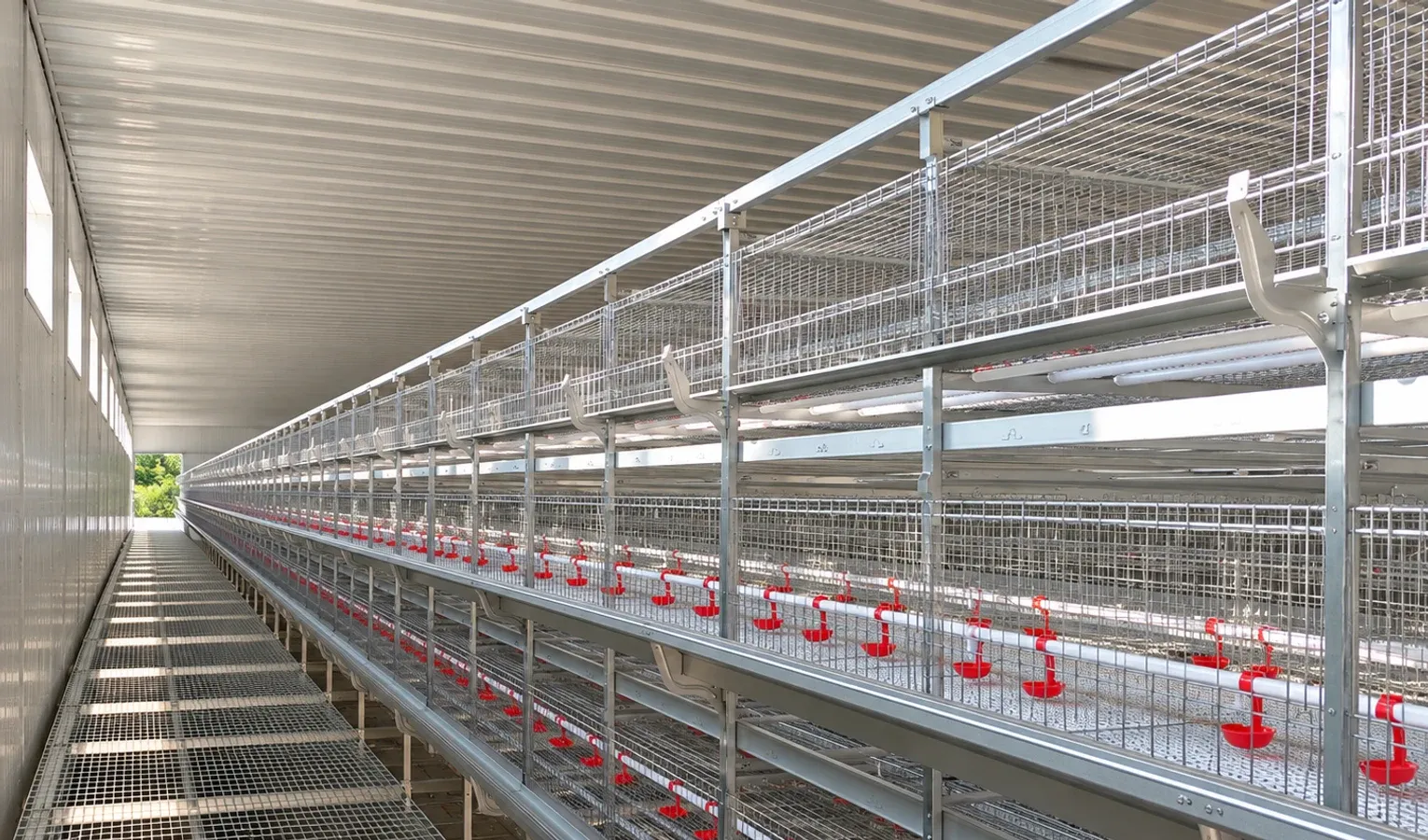
Settings mean nothing without observation. A disciplined daily walk through the house catches problems while they are still small and confirms that the air and light programs are landing as intended.
- Walk the full house at least twice a day, reading bird distribution and behavior.
- Remove and record mortality every day to track the flock's health curve.
- Check feeders, drinkers, litter, and ammonia on every pass.
Reading the Birds
The flock is the most honest sensor in the house. How birds spread, pant, or huddle tells you instantly whether air speed and temperature are right, often before the controller does.
- Evenly spread birds mean the environment is comfortable.
- Panting, wings held out, and crowding the air inlets mean too hot or not enough air movement.
- Huddling away from moving air means the draft is too strong for their age.
Litter and Air Quality Ride Along
Air movement and ventilation are what keep litter dry and ammonia low. As density and weight climb, the ventilation system has to work harder to hold air quality, and slipping on it undoes the benefits of a good light program.
- Keep ammonia under 20 ppm — chronic exposure damages the respiratory tract and depresses growth.
- Dry, friable litter protects footpads and reduces respiratory challenge.
- Minimum ventilation in cool weather is set to remove moisture, not just to bring in oxygen.
Adjusting the Playbook by Season
The same house runs a different playbook in January than in July. Winter management is dominated by holding heat and moisture control at low ventilation rates, while summer management is dominated by wind chill and heat removal. The air-speed and light targets stay, but how aggressively you drive ventilation changes.
- In winter, run minimum ventilation to strip moisture and hold temperature — keep young birds draft-free.
- In summer, ramp air speed hard as birds grow, using tunnel ventilation and wind chill to protect heavy birds.
- Transition seasons demand the most attention, since day-to-night swings can whipsaw a house that is set and forgotten.
Putting the Playbook Together
The winning pattern is a house that changes with the birds: still and warm at the start, progressively airier as they grow, brightly lit then restricted to protect development, and dark enough at night to keep hearts and legs sound.
- Air speed: ~0 (0-14 d), 0.5 (15-21 d), 0.8 (22-28 d), 2.8+ m/s (summer).
- Light: bright and near-continuous at first, restricted with a 6+ hour dark period through the middle.
- Daily observation ties it together — the birds confirm whether the numbers are right.
Managing air speed and light well is the difference between a flock that merely grows fast and one that grows fast and finishes sound. If you are planning a house or upgrading controls, it is worth ensuring your ventilation and lighting can actually deliver these age-specific targets — because the best playbook only works if the equipment can execute it.
Visual checklist
Related reading
Poultry Brooding Temperature: Air, Floor and Bird Checks
Broiler Stocking Density: Weight, Air and Floor Space
Further reading
Use the management guide for the actual breed, age and housing system when selecting flock targets. Review changes with the farm team and the relevant nutrition, health or equipment specialist.