Smart IoT Poultry Farm Control System
Specifications
- DataContinuous logging and per-house analytics
- ScaleSingle house to multi-farm groups
- AccessCloud dashboard plus mobile app
- AlertsPush, SMS and email on over-limit or power fail
- SensorsTemperature, humidity, CO2, ammonia, light per house
- FunctionConnected multi-house monitoring and control
- AutomationAuto ventilation, lighting, cooling and heating
- IntegrationClimate, lighting, feeding and egg-collection data
- ConnectivityWired LAN, Wi-Fi or cellular gateway
- CertificationISO 9001, SONCAP, PVOC
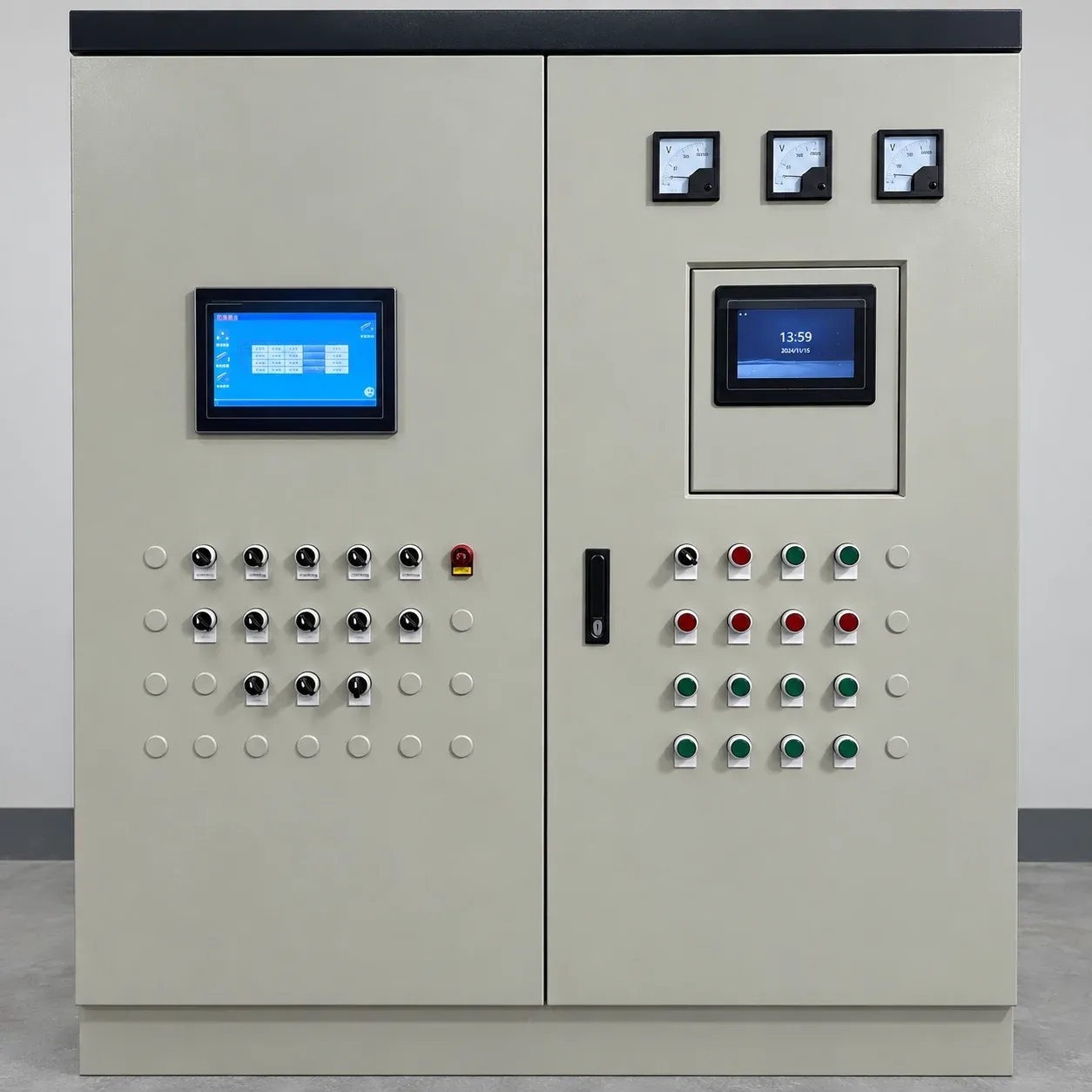
- Local controlOn-site controller runs independently if offline
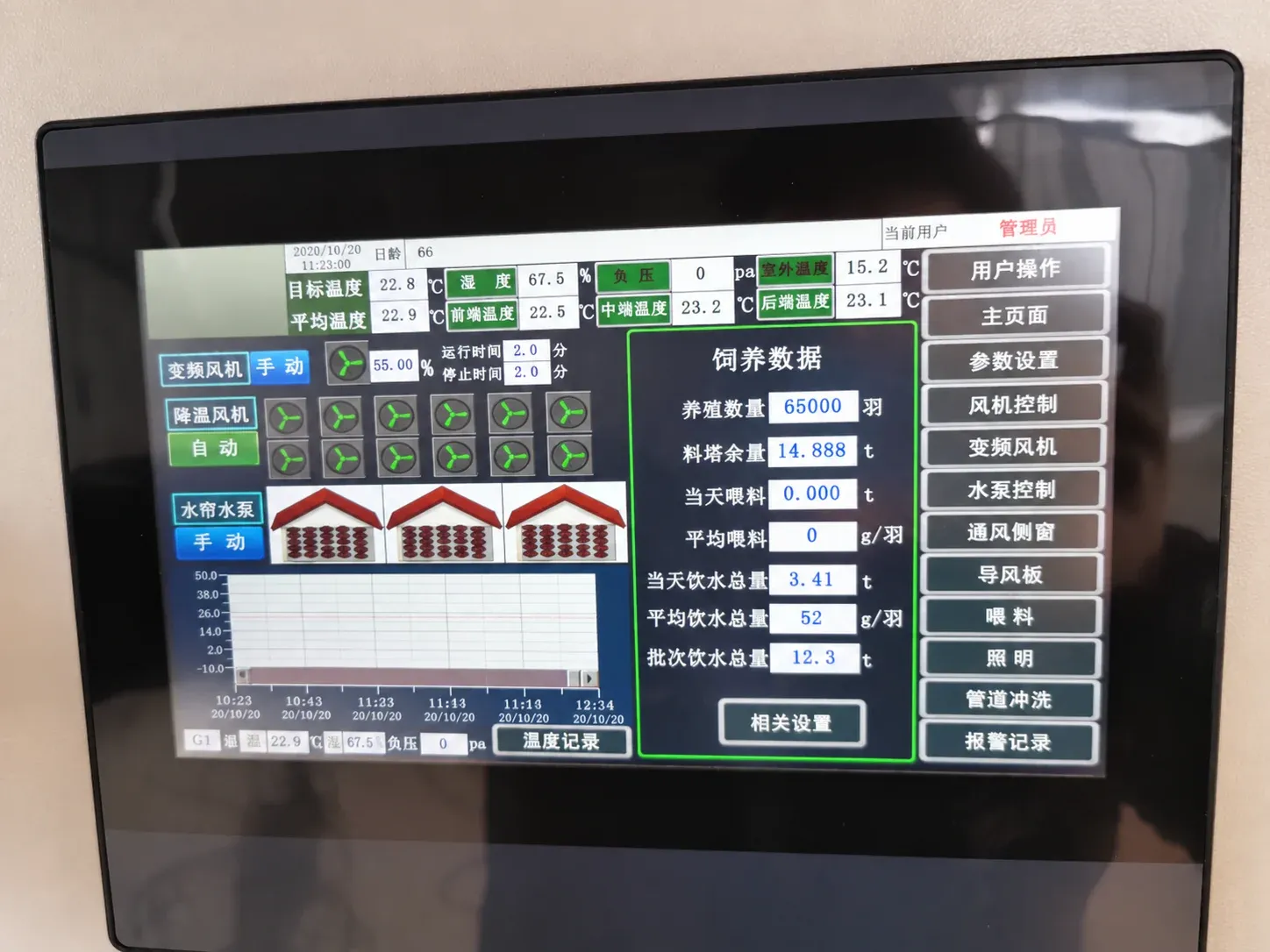
A single house controller keeps that house alive; a smart IoT platform lets one manager run a whole farm from a phone. The difference is connectivity and data: every house's controller reports to a cloud dashboard, so conditions, alarms and trends across dozens of houses are visible in one place, and problems raise an alert before they become losses. For growing operations, the value is not fancier automation in one house — it is oversight, records and early warning across many houses at once. Here is what actually makes an IoT system worth buying.
From Standalone Controller to Connected Platform
An IoT system is built on top of capable house controllers, not instead of them. Each house keeps its own controller running fans, pads, heaters and lights in real time; the IoT layer connects those controllers to a gateway and the cloud so their data and settings are reachable remotely. This architecture matters: you get farm-wide visibility and control without giving up the fast, local response each house needs. When you evaluate a platform, confirm it is adding a network layer over solid controllers, not replacing proven local control with a fragile cloud dependency.
The Sensor Network Per House
The platform is only as good as its sensors. Each house should report temperature, humidity, CO2, ammonia and light, with temperature sampled at several points down the house so the dashboard reflects what birds actually experience rather than one corner. Rich per-house sensing is what lets the system compare houses, flag the one drifting out of range, and drive automation with real data instead of a single reading.
Smart Farm Control Planning
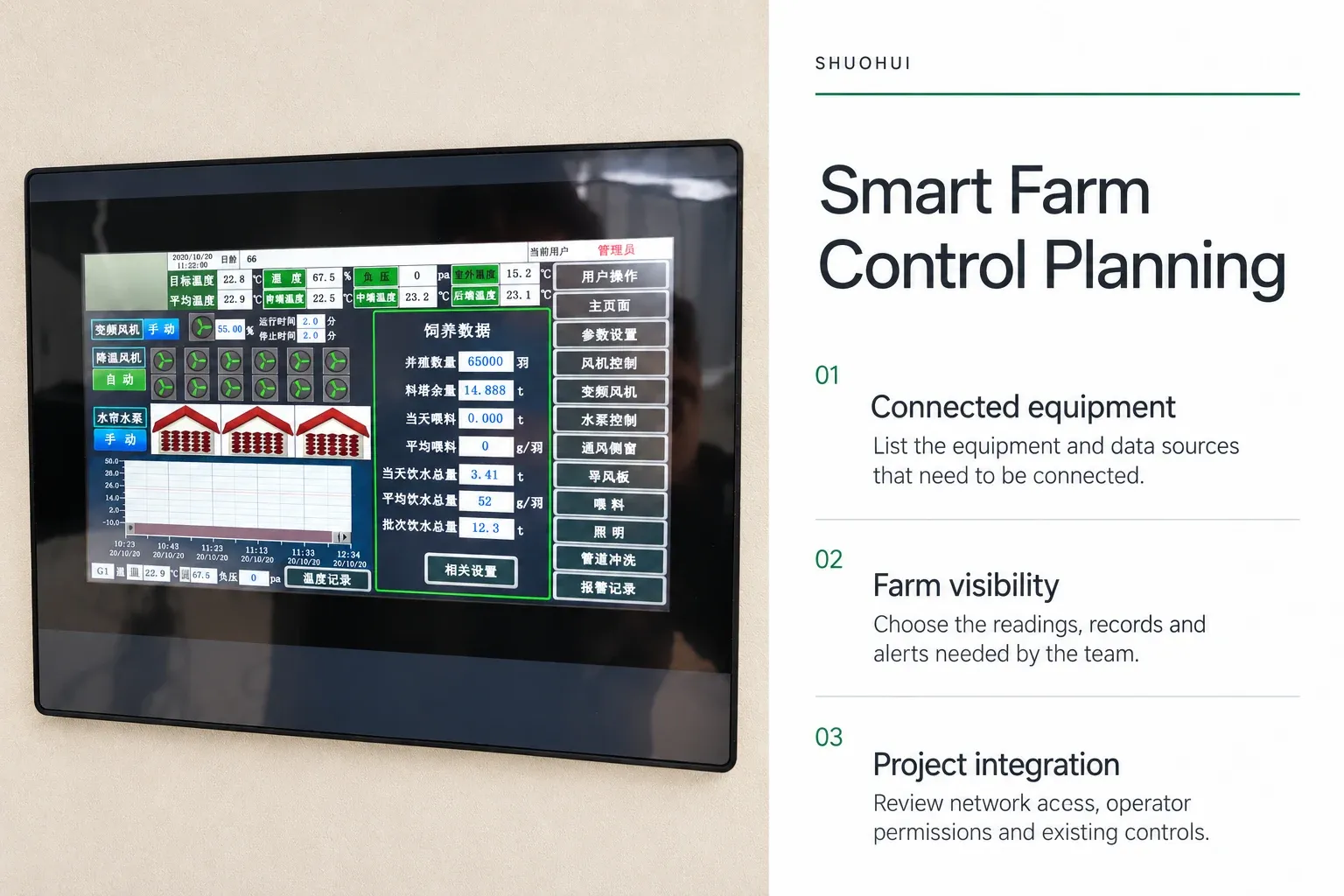
Read the selection checklist
Cloud Dashboard and Mobile Alerts
The headline feature is a cloud dashboard and mobile app that show every house at a glance and let you adjust setpoints from anywhere. The part that prevents losses is alerting: push, SMS and email alarms on over-temperature, power failure or sensor fault, sent the moment a threshold is crossed. A manager who gets a phone alert at 2 a.m. that House 6 lost power can act before the flock is lost — that single capability often justifies the system.
Data, Records and Analytics
Every reading is logged, turning gas, temperature and humidity history into a record you can actually use. Per-house analytics let you compare flocks, spot a house that always runs hot or an ammonia problem building over days, and document conditions for buyers and audits. Over time this data is where the operational improvements come from — you manage what you can measure, and the platform measures continuously and remembers.
Automation Across Climate, Lighting and Feeding
Beyond monitoring, the system automates and coordinates equipment: ventilation, cooling, heating and lighting run to programmes, and the platform can bring in feeding and egg-collection data so one dashboard covers the whole operation, not just climate. Coordinated automation across systems — lights, climate and feed on aligned schedules — is what a connected platform enables that isolated controllers cannot.
Scaling From One House to a Whole Farm
A good platform grows with you, from a single house to a multi-farm group on one account. You should be able to add houses and sites without replacing the system, with role-based access so managers see their farms and owners see everything. Ask specifically how many houses and sites a platform supports and how houses are added, because a system that is easy at one house can become unwieldy at twenty if it was not built to scale.
Connectivity, Cybersecurity and Fail-Safe Local Control
The two questions cheap IoT systems dodge are what happens when the internet drops and who else can reach your dashboard. Insist that each house's local controller keeps running independently if the cloud link fails — connectivity should be for oversight, never a single point of failure for the flock. Confirm the connectivity option that fits your site (wired LAN, Wi-Fi or a cellular gateway), and check that access is secured with proper accounts and permissions so only your team can change setpoints.
Evaluating an IoT Platform
When you compare systems, weigh: sensor coverage per house; the quality and channels of alerting; how setpoints and data are accessed and secured; whether local control survives an outage; and how far it scales. Get those right and you gain a farm you can watch and run from anywhere, with the records to prove your conditions. Tell us how many houses and sites you run and what you want to monitor, and we will scope an IoT platform — controllers, sensors, gateway and dashboard — sized to your operation.
Equipment views & details
ORDER & DELIVERY
Shipping process
- 01
Requirements
Share your bird type, planned capacity, destination and project needs.
- 02
Configuration and order
Confirm the equipment list, drawings, quotation and agreed order terms.
- 03
Production and inspection
Prepare and inspect the equipment against the confirmed configuration.
- 04
Packing and loading
Check the packing list and coordinate protective packing and loading arrangements.
- 05
Transport and dispatch
Arrange shipment and the required documents according to the agreed delivery terms.
- 06
Arrival and handover
Check the delivered packages and equipment, and coordinate the next installation steps.