Negative-Pressure Poultry Exhaust Fan
Specifications
- UseTunnel and negative-pressure ventilation
- TypeBelt-drive or direct-drive exhaust fan
- MotorRoughly 0.75-1.5 kW (1-2 HP)
- BladesGalvanized or aluminium, 3 to 6
- AirflowUp to about 38,000 m3/h (~22,400 CFM) per fan
- HousingG-90 hot-dip galvanized, corrosion resistant
- ShutterGravity or centrifugal, closes when off
- Blade size50 to 54 inch (1250-1380 mm) class
- Sizing ruleAbout one fan per 2,000 birds (minimum ventilation)
- CertificationISO 9001, SONCAP, PVOC
- Static pressureRated to run at 0.10-0.15 in WC in cold weather
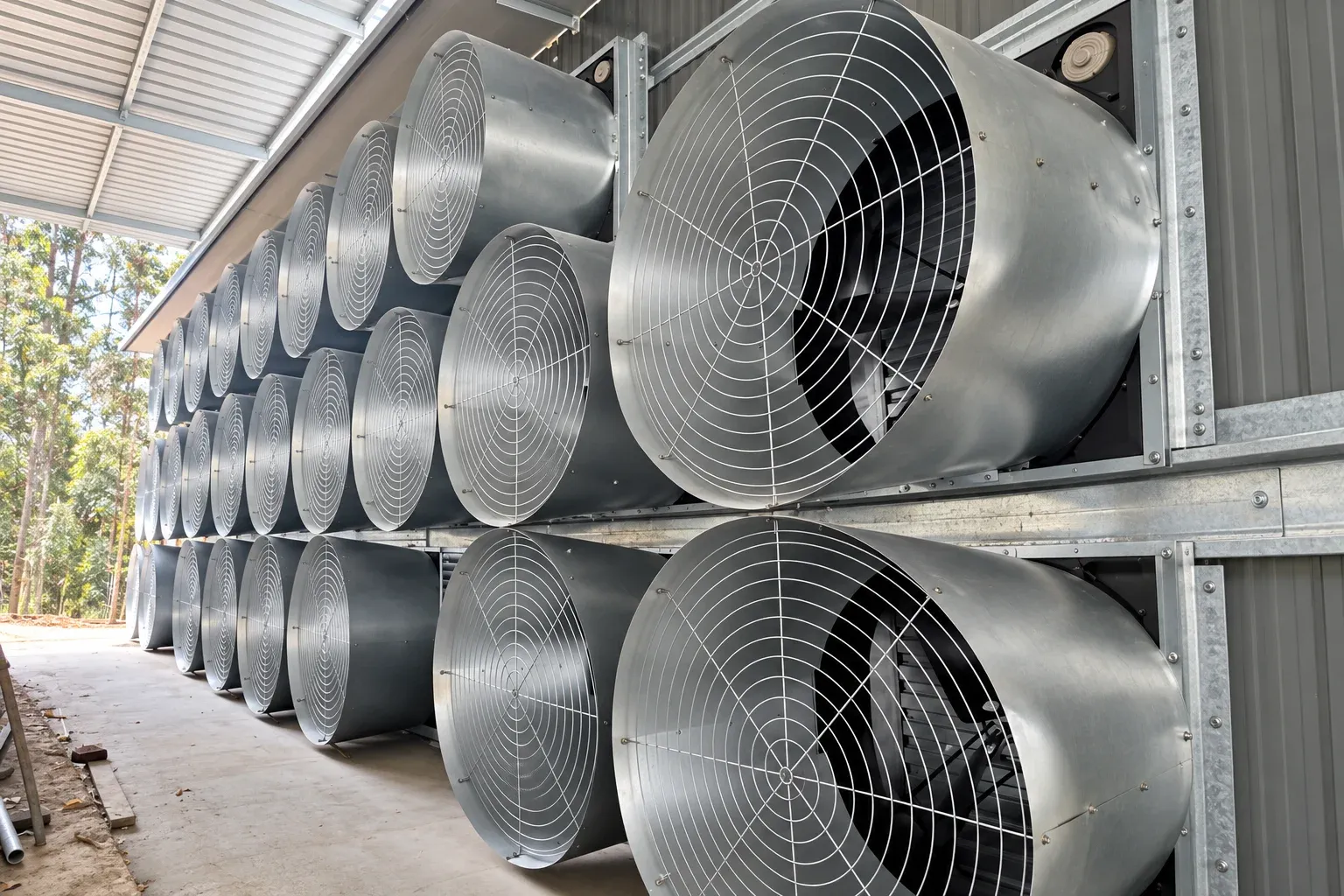
The exhaust fan is the muscle of a mechanically ventilated poultry house: it pulls stale, hot, ammonia-laden air out and creates the negative pressure that draws fresh air in through the inlets or cooling pads. Everything else in the ventilation system — inlet throw, pad cooling, tunnel wind-chill — depends on the fans moving the air volume the house was designed around. Buy fans that are the wrong size or the wrong rating and no controller can rescue the climate. This page covers the numbers that decide whether a fan is right for your house.
Airflow Rating: The One Number That Matters Most
A large tunnel fan in this class moves up to about 38,000 m³/h, roughly 22,400 CFM, which puts it in the 50-to-54-inch (1250-1380 mm) size band. But a single airflow figure is only meaningful with the pressure it was measured at — a fan rated at free air moves far more than the same fan working against house resistance. Always compare fans at a stated static pressure, and treat a big headline number with no pressure attached as marketing, not engineering.
Belt Drive vs Direct Drive
Both drive types have a place. Belt-drive fans use a larger, slower blade and a smaller motor through a pulley, which tends to give high airflow at low static pressure and quiet running — the classic tunnel-fan choice. Direct-drive fans couple the blade straight to the motor, with fewer wear parts and no belt to tension or replace, which suits minimum-ventilation duty and operators who want less maintenance. Many houses mix both: direct-drive fans for cold-weather minimum cycles, belt-drive tunnel fans for summer.
Exhaust Fan Selection
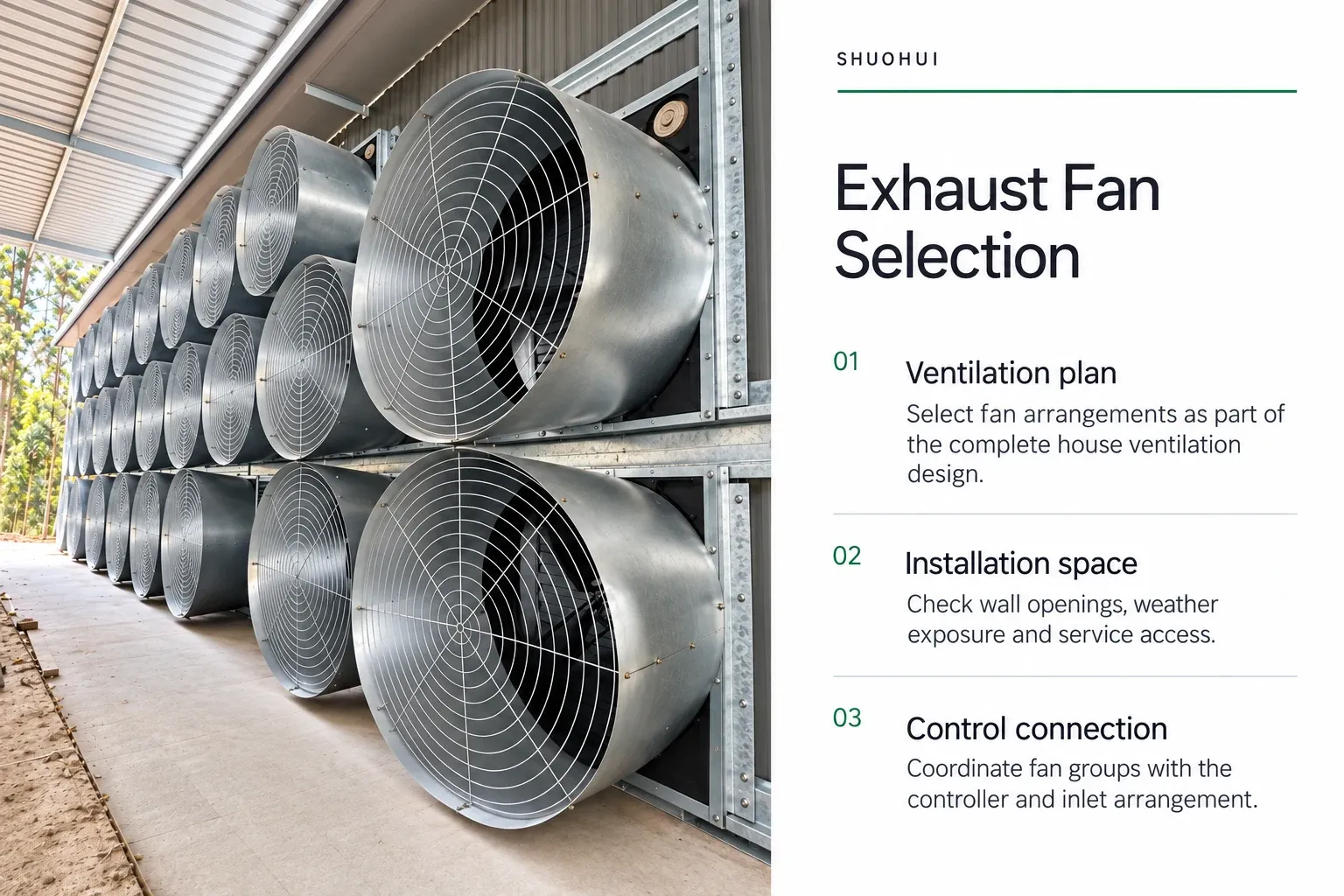
Read the selection checklist
How Static Pressure Changes Real Airflow
A fan's delivered airflow drops as the house pressure it works against rises. That is why cold-weather operation, where you run higher static pressure — around 0.10 to 0.15 inches of water column — to throw inlet air to the ceiling, pulls less volume per fan than a wide-open summer tunnel setup. When you size a fan bank, use the airflow figure at your working static pressure, not the free-air peak, or you will come up short exactly when the house is tightest.
Sizing the Fan Bank: Two Methods
There are two ways to arrive at fan count, and serious buyers check both.
- Quick rule of thumb: about one fan per 2,000 birds for baseline capacity. A 16,000-bird house lands near 8 fans by this method — a good sanity check, not a final answer.
- Engineering method for tunnel air speed: fan count = (house cross-section width × height in m²) × target air speed (m/s) × 3600 ÷ 38,000 m³/h per fan. For a house 12.5 m wide × 3 m high targeting 3.5 m/s, that is 37.5 × 3.5 × 3600 ÷ 38,000 ≈ 13 fans.
The gap between the two is the point: the per-bird rule sizes minimum ventilation, while the tunnel formula sizes for the air speed that actually cools birds in summer. Size the fan bank for the tunnel number, then stage down for winter.
Build Quality: Housing, Blades and Shutters
Fans live in a wet, corrosive, dusty environment for years. Look for a G-90 hot-dip galvanized housing and cone, galvanized or aluminium blades that stay balanced, and a shutter that seals tightly when the fan is off — a leaky shutter bleeds static pressure and lets cold air dump back in. Sealed bearings, a proper belt tensioner and a corrosion-resistant motor separate a fan that lasts a decade from one that rusts in three seasons.
Matching Fans to Cooling Pads and Inlets
Fans do not work alone. The total fan airflow sets how much cooling-pad area you need (pad area = airflow ÷ pad face velocity of 1.5-1.8 m/s) and how much inlet area must open to hold target static pressure. Undersize the pads or inlets for your fans and the fans starve, static pressure spikes, and airflow collapses. Specify fans, pads and inlets together as one matched set.
What to Check on a Fan Datasheet
Before you buy, confirm: airflow at a stated static pressure (not free air), blade size and drive type, motor power and voltage, energy efficiency (airflow per watt, sometimes shown as a ventilation efficiency ratio), housing material and gauge, and shutter type. A fan that looks cheap per unit but moves less air per watt costs more every month it runs.
Getting the Fan Bank Right
We can size a complete tunnel and minimum-ventilation fan bank around your house dimensions, bird numbers and climate, matched to the right cooling pads, inlets and controller. Send us your house length, width, height and flock size, and we will return a fan count and layout built on the tunnel air-speed calculation rather than a guess.
Equipment views & details
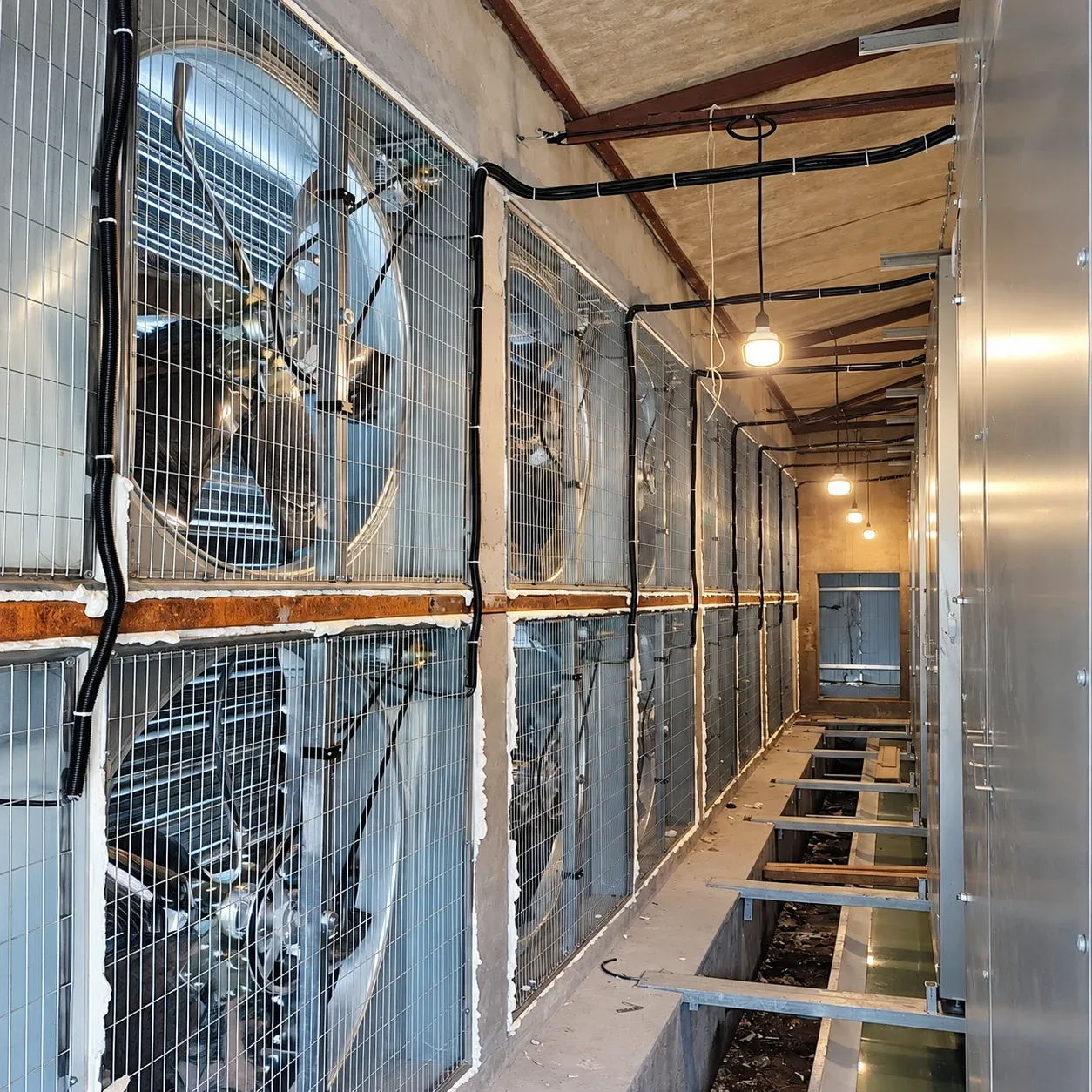
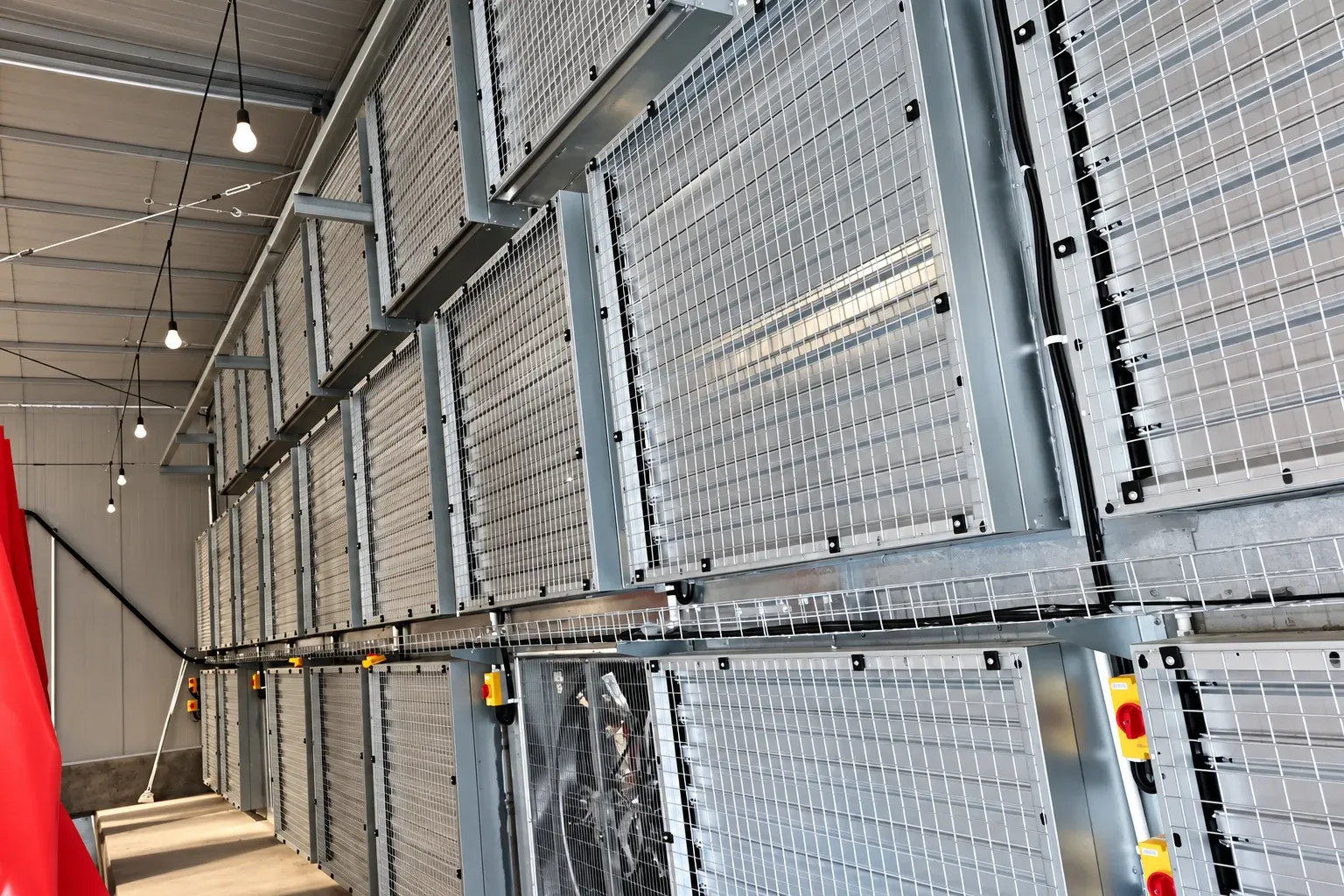
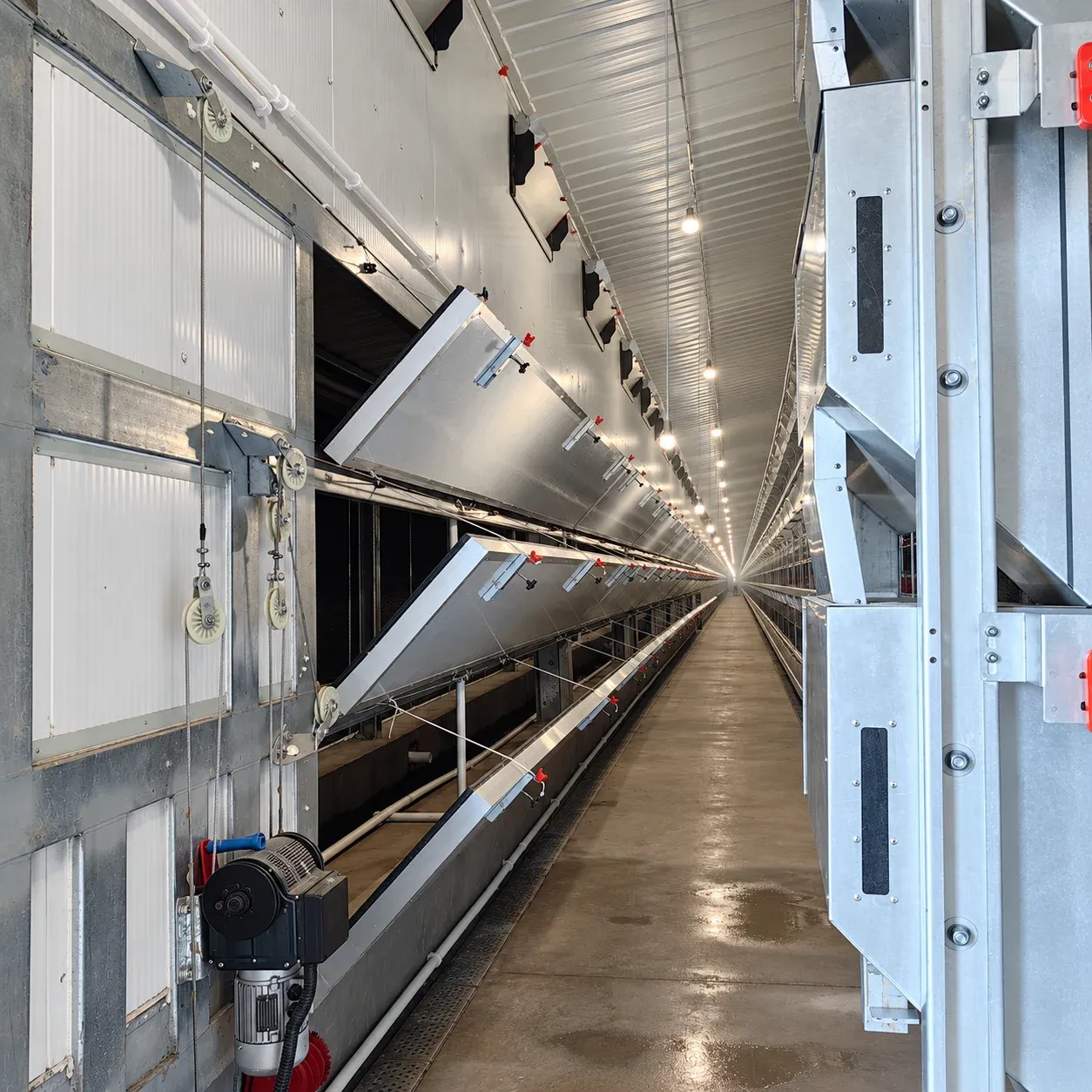
The side view shows the ventilation equipment and access space along the poultry house. Fan layout should be considered alongside inlets, cooling equipment and the available service space.
ORDER & DELIVERY
Shipping process
- 01
Requirements
Share your bird type, planned capacity, destination and project needs.
- 02
Configuration and order
Confirm the equipment list, drawings, quotation and agreed order terms.
- 03
Production and inspection
Prepare and inspect the equipment against the confirmed configuration.
- 04
Packing and loading
Check the packing list and coordinate protective packing and loading arrangements.
- 05
Transport and dispatch
Arrange shipment and the required documents according to the agreed delivery terms.
- 06
Arrival and handover
Check the delivered packages and equipment, and coordinate the next installation steps.