LED Poultry Lighting System
Specifications
- LifeLong-life, low energy versus incandescent
- TypeDimmable LED, poultry-house rated
- OutputAround 530-900 lumens per lamp
- DimmingSmooth 0-100%, 0-10 V or DALI, flicker-free
- FlickerUnder 1% ripple
- SpectrumWarm/tunable; 660 nm red supports lay, blue-white suits broilers
- Intensity20-30 lux in lay, 10-15 lux in rearing
- ProtectionIP65, dust and washdown resistant
- CertificationISO 9001, SONCAP, PVOC
- Fixture powerRoughly 6-10 W per lamp
- Colour temperatureWarm 2700-3700 K, red-shift options
Light is a production input in a poultry house, not just illumination — it drives feeding activity, sexual maturity in pullets and lay persistency in hens. But a lighting system also has to survive an environment that destroys ordinary fixtures: ammonia, dust, humidity and high-pressure washdown between flocks. An LED poultry lighting system is engineered for both jobs at once — the right light on the birds and a fixture that lasts through years of that abuse. Choosing one is about lux, spectrum, dimming and ingress protection, not the wattage on the box.
Light Intensity: Designing for Lux, Not Watts
Birds respond to lux at their eye level, not the wattage of the lamp, so design to a target and measure at the birds. Typical setpoints are 20 to 30 lux during lay to keep hens active and feeding, and a dimmer 10 to 15 lux during rearing to avoid over-stimulating pullets. Because lux falls off with the square of distance from the lamp, mounting height and spacing matter as much as lamp output — a bright bulb hung too high and too far apart leaves dark patches where birds under-eat.
Spectrum and Why Layers and Broilers Differ
Poultry see and respond to light differently from humans, and the spectrum should follow the bird. Red-shifted light around 660 nm supports reproductive activity and lay, which is why warm and tunable lamps suit layer and breeder houses. Blue-white light tends to calm and support growth in broilers. A tunable or warm 2700-3700 K fixture lets one system serve a layer house well, while a broiler operation may deliberately choose a cooler blend. Ask what spectrum a lamp actually emits, not just its Kelvin rating.
Poultry Lighting Planning
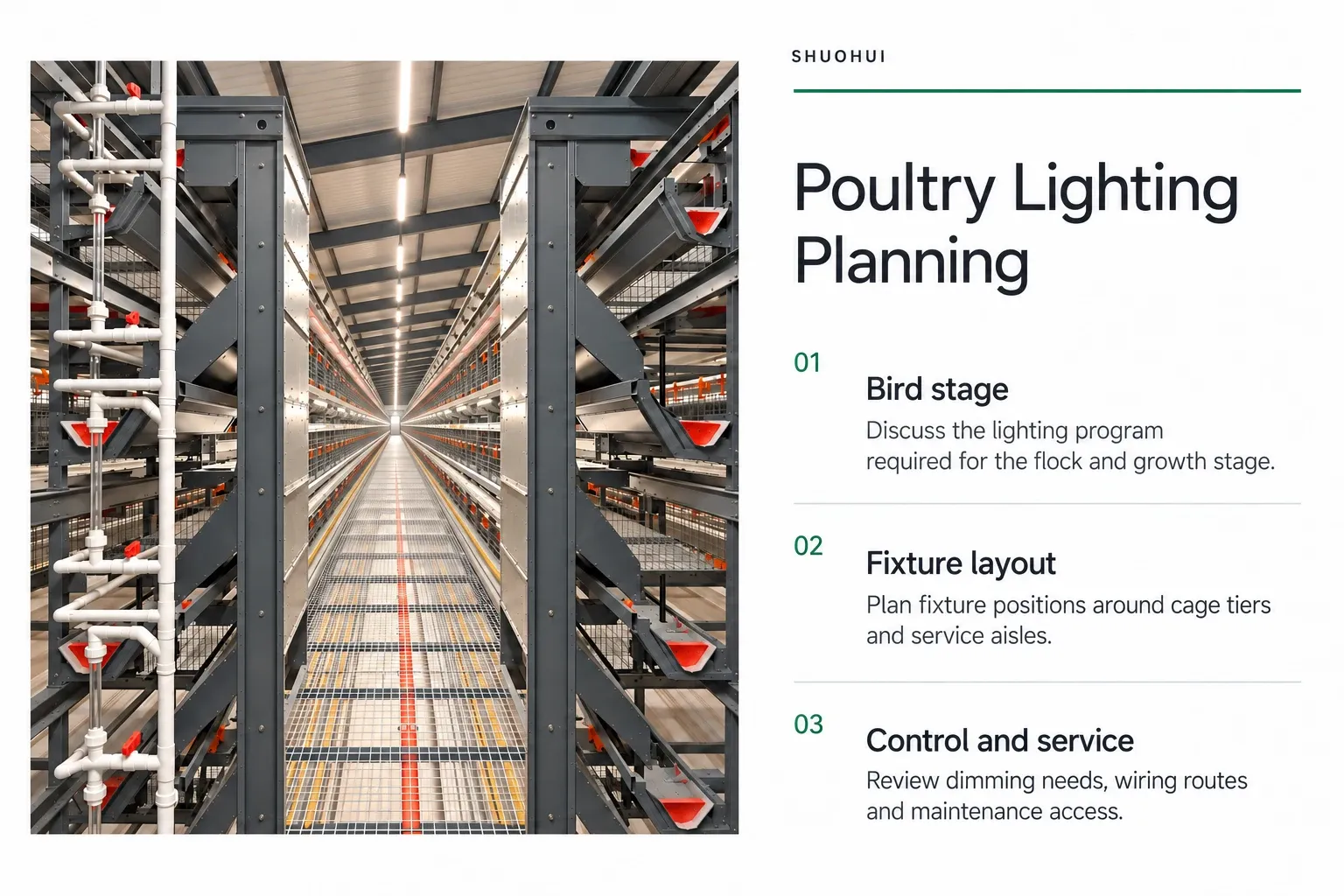
Read the selection checklist
Dimming: Dawn/Dusk and Control Compatibility
Abrupt on/off lighting startles birds and can trigger piling; smooth dimming prevents it. Look for 0-100% smooth dimming with programmable dawn and dusk ramps, driven by a timer or the house controller over 0-10 V or DALI. Just as important, the fixture must be flicker-free — under 1% ripple — because birds perceive flicker that humans miss, and it stresses them. A lamp that only dims in coarse steps, or flickers at low output, undermines the whole lighting programme.
Uniformity: Spacing and Mounting
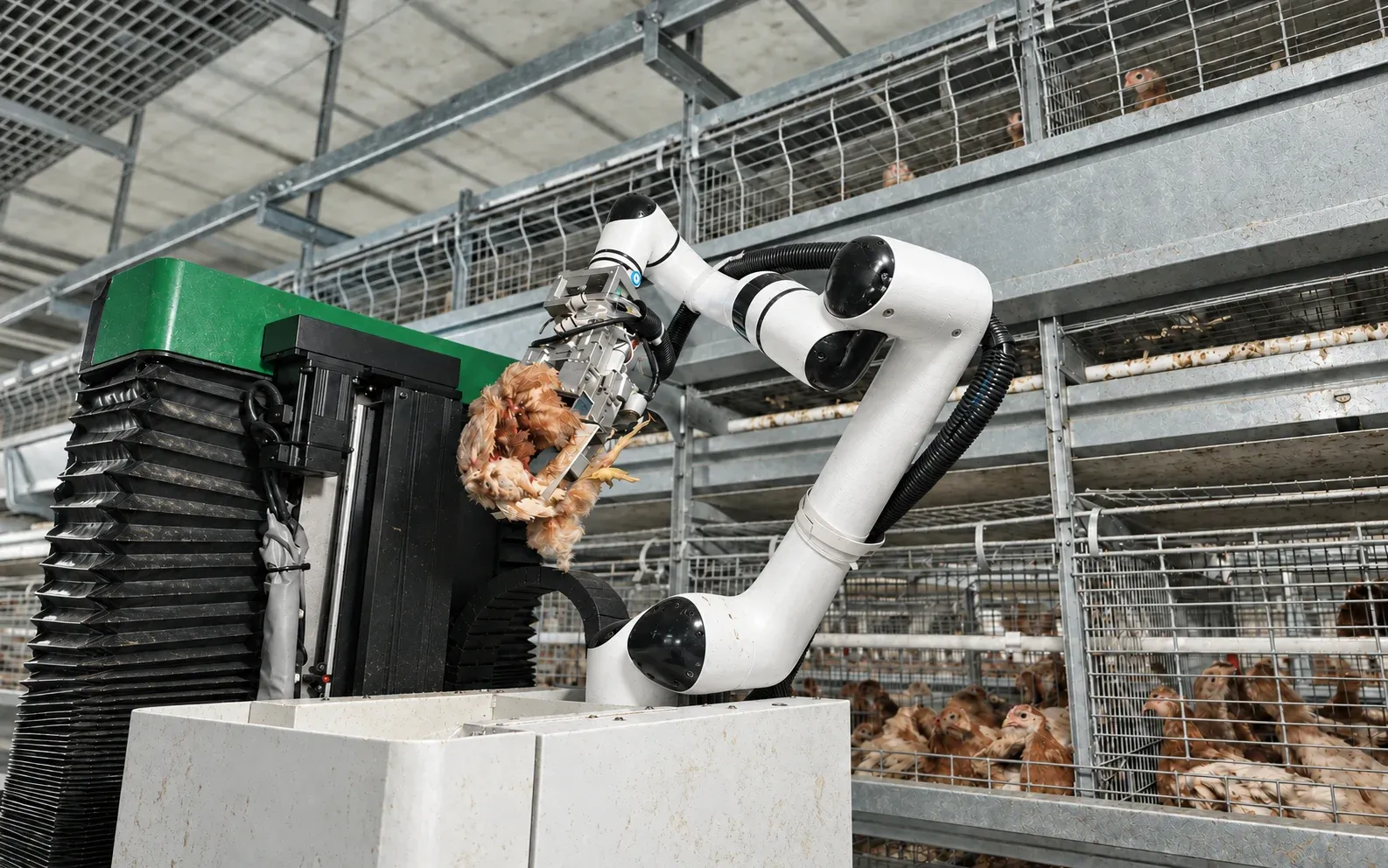
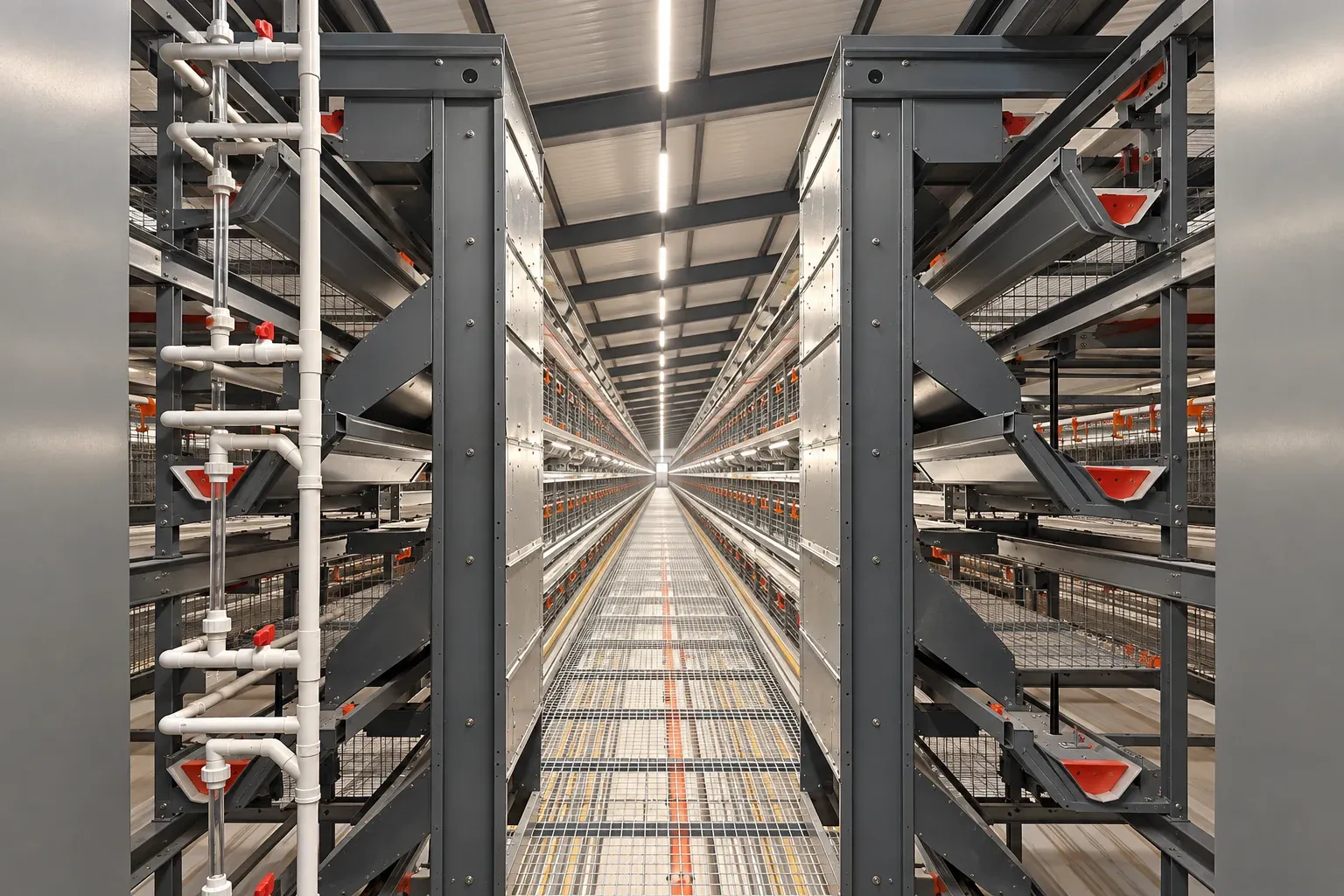
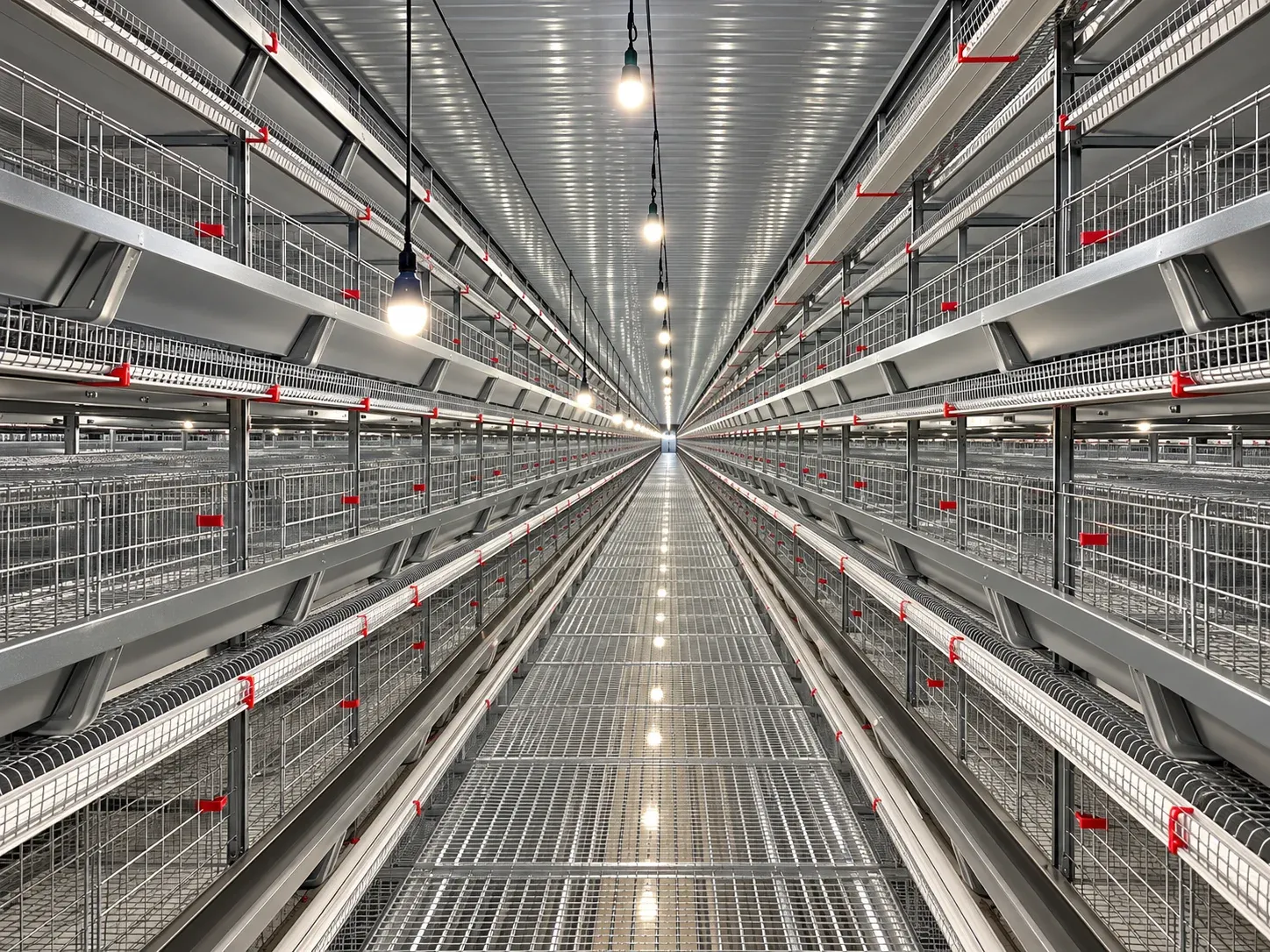
Uniform light across every part of the house — and every tier in a cage system — keeps the flock feeding and laying evenly. Uniformity comes from correct lamp spacing and mounting height, chosen so the pools of light from adjacent lamps overlap without leaving shadows on the floor or lower tiers. In multi-tier cage houses this often means lamps positioned to light the aisles and reflect onto every level, so hens on the bottom tier get the same cue as those on top.
Ingress Protection and Ammonia Resistance
This is where cheap lamps fail. A poultry fixture should carry at least an IP65 rating so it withstands dust and direct washdown, and its housing and electronics must resist ammonia, which corrodes ordinary drivers and solder joints. A sealed, corrosion-resistant lamp that survives repeated between-flock washing is worth far more over its life than a bright bulb that fogs, corrodes or fails in a humid, high-ammonia house.
Energy and Lifetime Math vs Incandescent
The economic case is straightforward. LED lamps draw a fraction of the power of incandescent bulbs for the same light — often a 6 to 10 W LED replacing a 40-60 W incandescent — while lasting many times longer and dimming without the colour shift incandescents suffer. Across a house full of lamps running long daily photoperiods, the energy and replacement-labour savings typically pay back the fixtures well within their service life, and the dimming quality is better on top.
Specifying a Lighting Layout
To get a layout right, we need your house dimensions and layout (floor, single-tier or multi-tier cage), your target lux for the flock type and stage, and your control method. From that we set lamp count, spacing and mounting height to hit 20-30 lux uniformly where it counts, choose the spectrum for layers or broilers, and match the dimming to your controller. Send us those details and we will return a lighting plan built around lux at bird level, not guesswork.
Equipment views & details
ORDER & DELIVERY
Shipping process
- 01
Requirements
Share your bird type, planned capacity, destination and project needs.
- 02
Configuration and order
Confirm the equipment list, drawings, quotation and agreed order terms.
- 03
Production and inspection
Prepare and inspect the equipment against the confirmed configuration.
- 04
Packing and loading
Check the packing list and coordinate protective packing and loading arrangements.
- 05
Transport and dispatch
Arrange shipment and the required documents according to the agreed delivery terms.
- 06
Arrival and handover
Check the delivered packages and equipment, and coordinate the next installation steps.