Floor Breeder System
Specifications
- UseBroiler and layer breeders (parent stock) on the floor
- NestsAutomatic roll-away, community or manual, clean hatching eggs
- SlatsFood-grade PP, raised nesting and feeding zone
- LayoutSlat-and-litter or full-slat house
- ManureDrops through slats, ammonia held low
- FeedingChain or pan line, controlled ration, separate-sex option
- DrinkingCone-valve nipple line, height-adjustable
- IncludesNests, slats, feeding, drinking, egg collection
- Egg handlingRoll-away belt to central collection, low breakage
- Service life15 to 20 years
- CertificationISO 9001, SONCAP, PVOC
Breeders make fertile hatching eggs, and that job demands floor housing, not cages: parent-stock birds need room to mate naturally and nests to lay clean, collectable eggs. A floor breeder system is the integrated package that makes floor rearing productive — nests, slats, controlled feeding, drinking and egg collection working together so a breeder flock delivers hatchable eggs at commercial scale with minimum floor eggs and contamination.
Why breeders are kept on the floor, not in cages
Unlike commercial layers or broilers, breeders exist to reproduce, and natural mating needs open floor space that cages cannot provide. Floor housing lets males and females behave normally, which sustains fertility across the flock, and it gives hens access to nests where hatching eggs stay clean and intact. The engineering challenge is that a floor is harder to keep hygienic than a cage, which is exactly why a purpose-built breeder system layers slats, nests and roll-away egg handling on top of the open floor.
The roll-away nest and clean hatching eggs
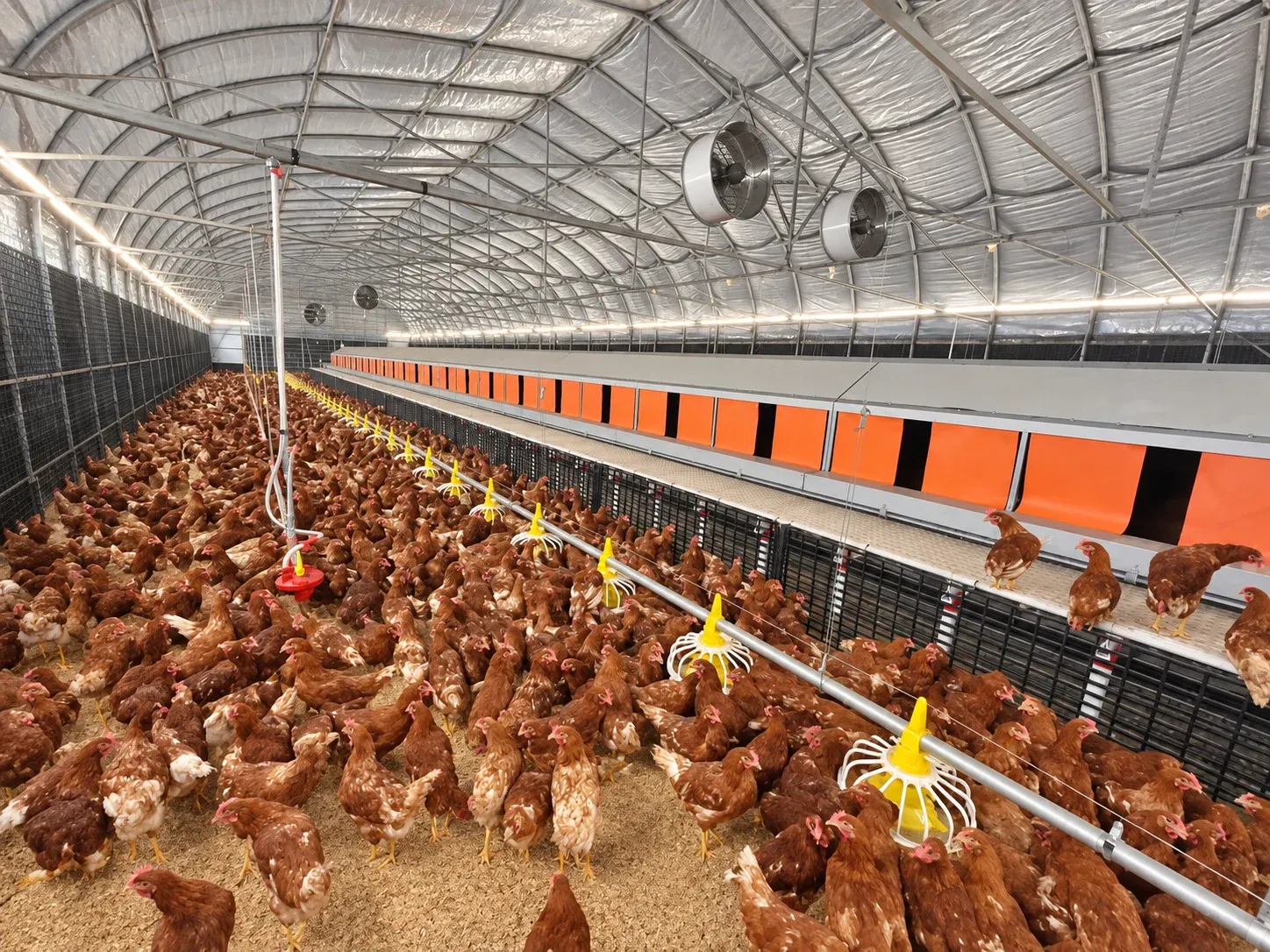
Nest design is the heart of a breeder house because a hatching egg is far more valuable than a table egg and far less tolerant of dirt or cracks. Roll-away nests are floored with a gently sloped mat so each egg rolls out of the nest the instant it is laid, onto a collection belt, before it can be soiled, trodden or pecked. This keeps hatching eggs clean and reduces breakage to a fraction of what open-floor laying produces. Community or individual nest options let you match nest count to flock size so no hen is forced to lay on the litter.
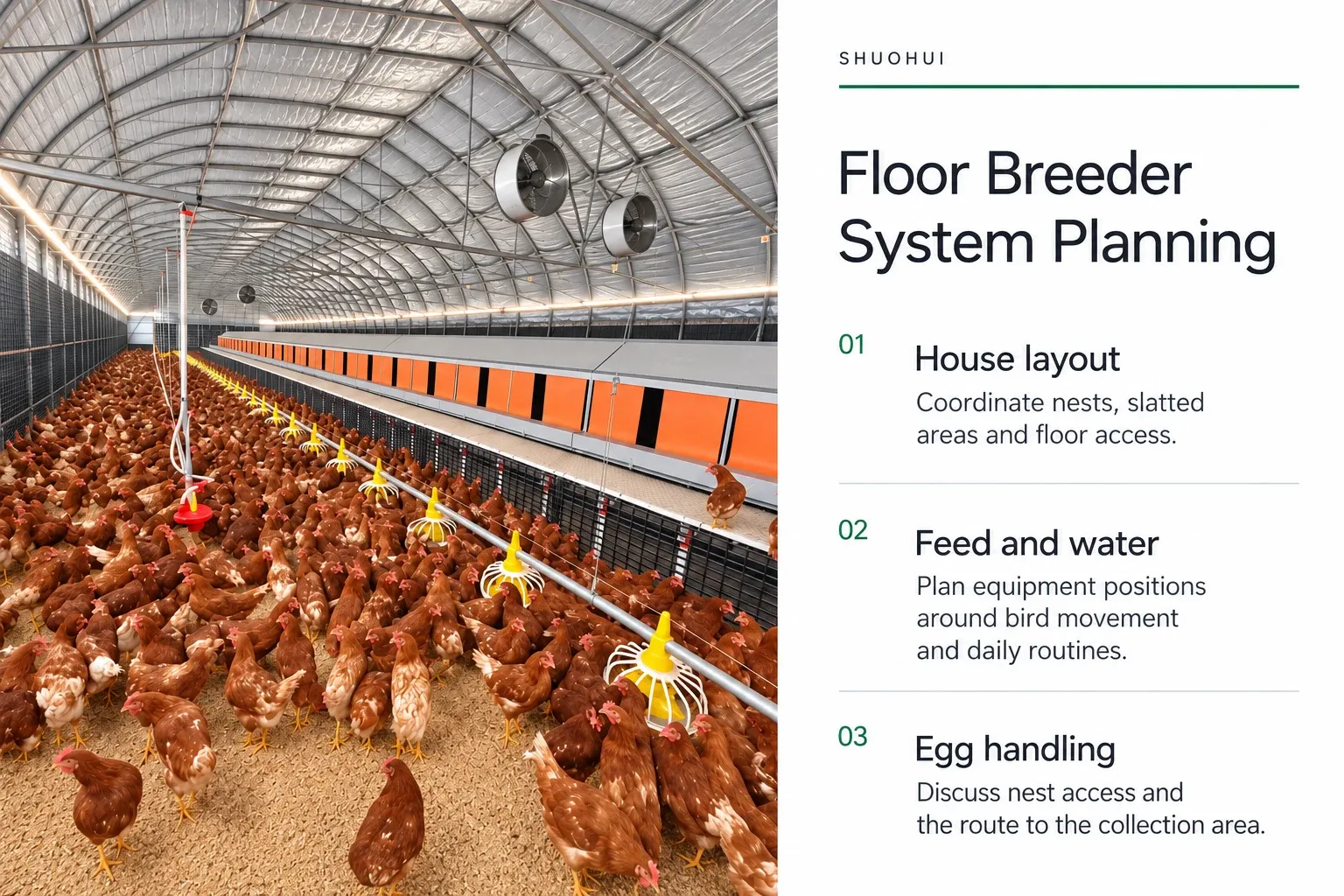
Floor Breeder System Planning
Read the selection checklist
Chain or pan feeding for controlled breeder rations
Breeder feeding is a control problem, not just a delivery one — parent stock must be fed a restricted, precise ration to stay in lay condition without going overweight, which would crash fertility. Chain feeders run a measured ration evenly down the whole line so every bird eats at once, preventing the dominance and unevenness that ruin uniformity; pan feeders offer an alternative with good distribution. Both are timed and portioned rather than free-fed. Even, controlled feeding is what holds breeder flock uniformity and fertility together.
Slat-and-litter house layout for breeders
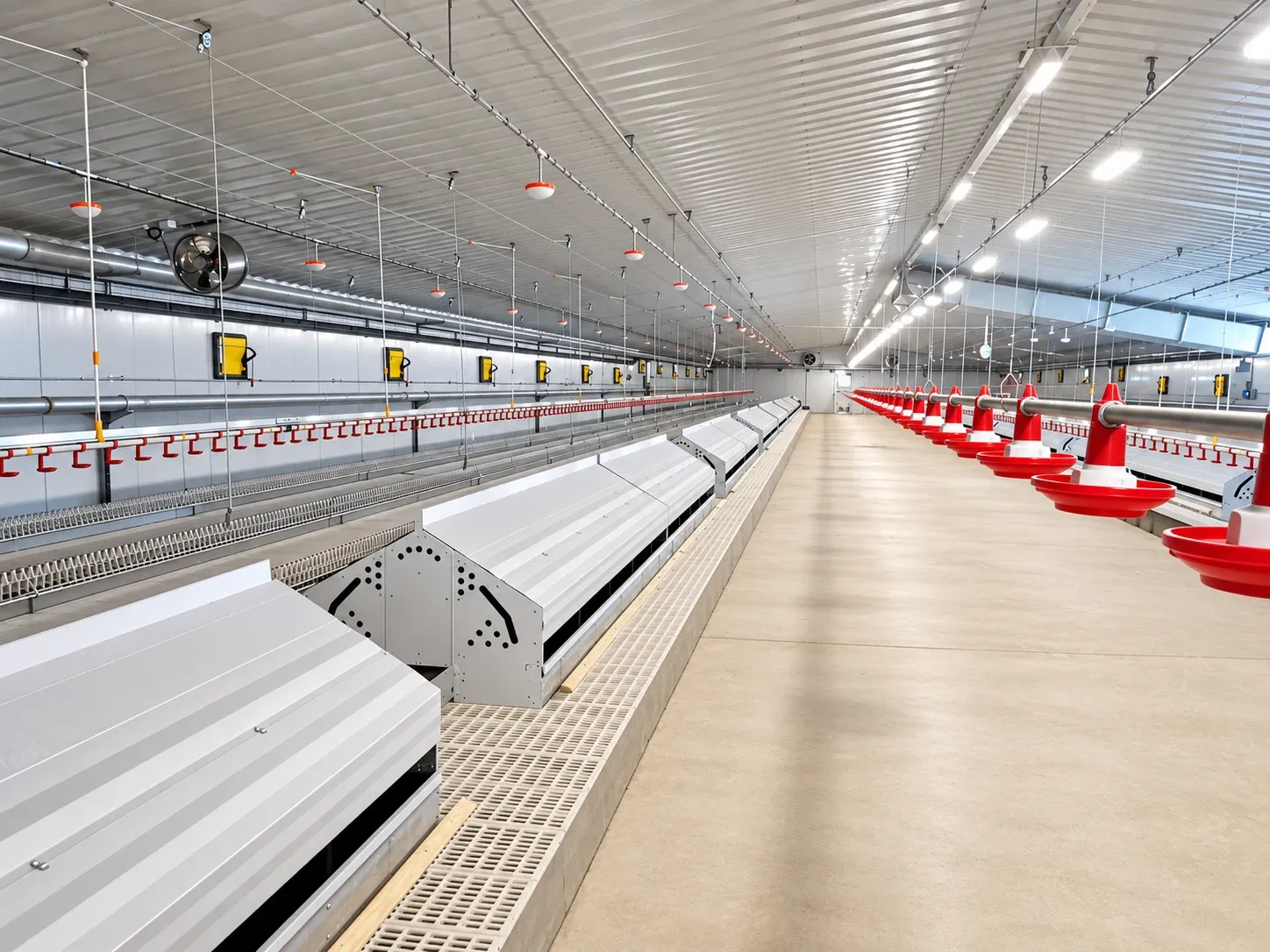
Most breeder houses use a slat-and-litter layout: a raised food-grade PP slat zone runs along the sides or centre carrying the nests, feeders and drinkers, with a litter scratch area in between for mating and dust-bathing. Droppings fall through the slats and out of the living space, keeping ammonia down and the litter drier, while the litter zone preserves natural behaviour. The slat-to-litter ratio is tuned so hens lay in the nests rather than the litter — get it wrong and floor eggs, which are dirty and often infertile-looking, climb.
Males, females and separate-sex feeding
A breeder flock is two flocks in one house, and the system usually feeds them separately. Separate-sex feeding uses grills or feeder heights that let females eat from lines the larger males cannot reach, and males feed from their own line — because males and females need different rations to hold correct body weight and mating condition. This is a defining feature of a proper breeder feeding line and a key thing to confirm when specifying the system, since combined feeding lets males overeat and lose fertility.
Egg-belt integration and collection
The roll-away nests feed onto a central egg-collection belt that carries hatching eggs gently out to a collection or grading point, keeping breakage low and eggs clean for the hatchery. Because hatching eggs are handled again at setting, gentle transfer here protects both shell integrity and hatchability. The belt integrates with the nest fronts so eggs move the moment they roll out — the same low-breakage principle as a layer egg belt, applied to a far more valuable egg.
Speccing a breeder house package
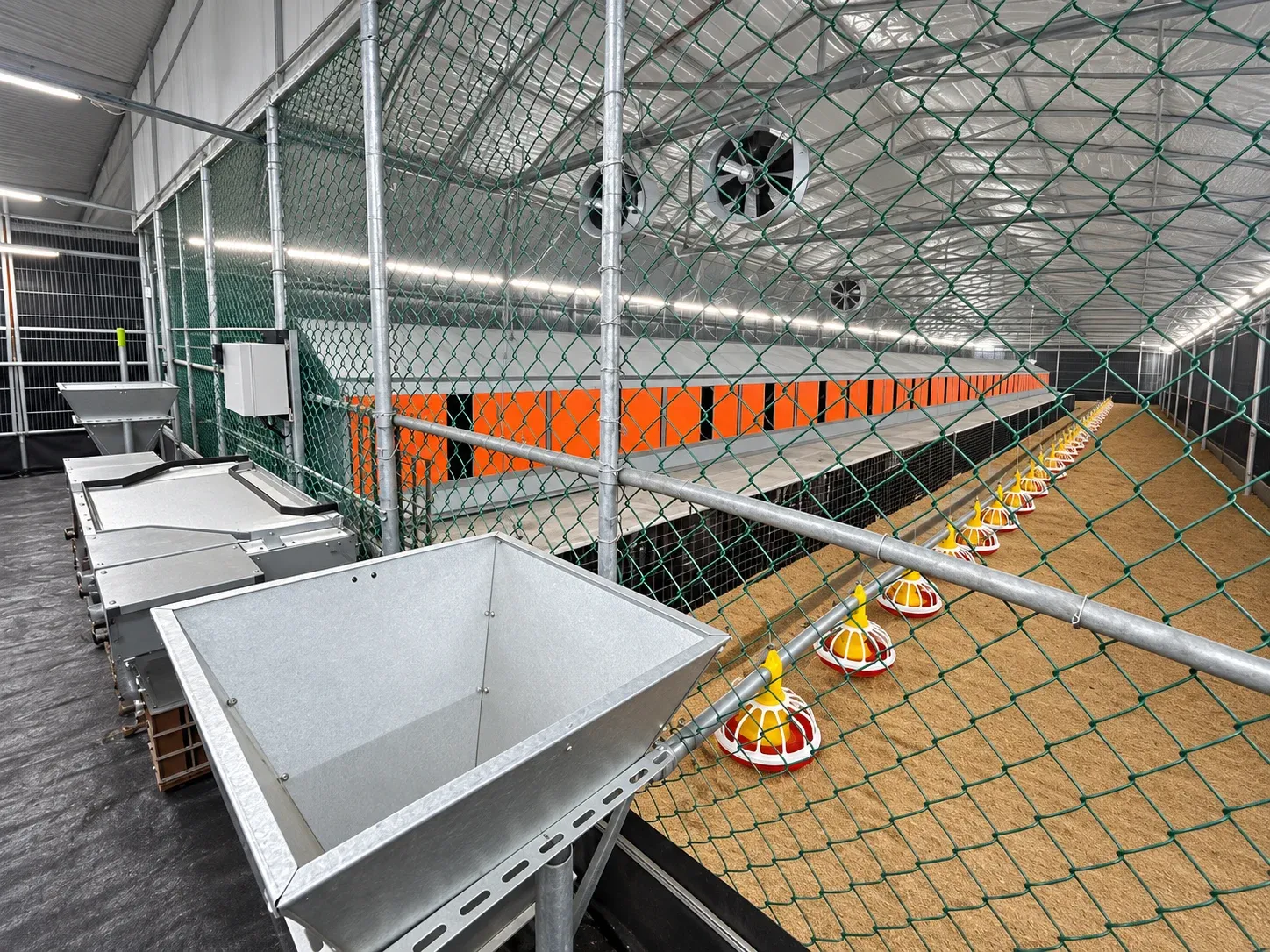
A complete floor breeder system pulls together roll-away nests, a slat-and-litter floor, separate-sex chain or pan feeding, a height-adjustable nipple line, and a roll-away egg belt. Match nest count and feeder length to flock size, set the slat-litter ratio to minimise floor eggs, and hold the build to food-grade nest mats, genuine PP slats, and ISO 9001, SONCAP and PVOC certification.
Tell us your breeder type (broiler or layer parent stock), flock size and male-to-female ratio, and we will lay out a breeder house package — nests, slats, separate-sex feeding and egg belt — to keep hatching eggs clean and fertility high.
Equipment views & details
ORDER & DELIVERY
Shipping process
- 01
Requirements
Share your bird type, planned capacity, destination and project needs.
- 02
Configuration and order
Confirm the equipment list, drawings, quotation and agreed order terms.
- 03
Production and inspection
Prepare and inspect the equipment against the confirmed configuration.
- 04
Packing and loading
Check the packing list and coordinate protective packing and loading arrangements.
- 05
Transport and dispatch
Arrange shipment and the required documents according to the agreed delivery terms.
- 06
Arrival and handover
Check the delivered packages and equipment, and coordinate the next installation steps.