Cage-Free Aviary System
Specifications
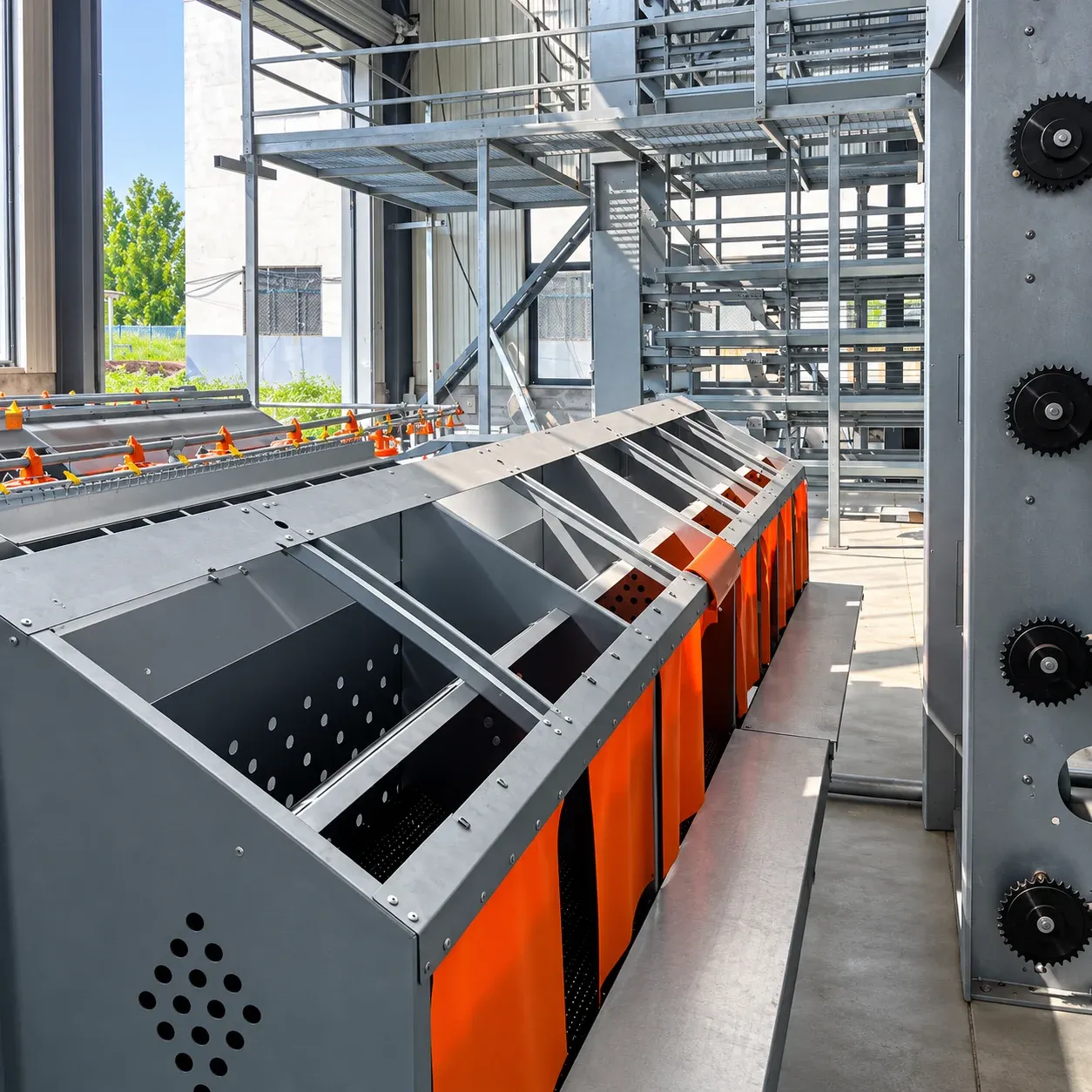
- NestGroup nest with roll-away belt to central collection
- TypeMulti-tier cage-free (aviary) housing for layers
- FeedingAutomatic chain or hopper line on each tier
- PerchesProvided at all levels for roosting
- DrinkingCone-valve nipple line at each level
- MaterialHot-dip galvanized Q235 steel with plastic/perforated tiers
- StockingAbout 9 hens/m² usable area (EU cage-free rule)
- Service life15 to 20 years
- Bird movementFree access between feeding, watering, perching and litter
- CertificationISO 9001, SONCAP, PVOC
- Egg collectionCentral belt, gentle roll-away from nests
- Litter/scratch areaFloor litter for dust-bathing and foraging
Market access, not just animal welfare, is what drives farms toward aviaries: major EU and premium retailers now require cage-free eggs, and an aviary is the system that produces them at commercial scale. It gives hens the freedom to walk, fly up between levels, perch, nest and dust-bathe, while still automating feed, water and egg handling so one house can hold tens of thousands of birds.
What makes an aviary "cage-free" and not a cage
The defining difference is that hens are never confined to a cell — they move freely across a multi-level structure and down to a litter floor. An aviary provides tiers of perforated platforms for feeding, drinking and roosting, connected by ramps, above an open litter area where birds scratch and dust-bathe. Because there are no cage doors, eggs sold from the system qualify for a cage-free label, which an enriched colony cage — however well fitted — cannot claim. That label is the whole commercial point.
Multi-tier levels, litter floor and the daily bird cycle
An aviary works with the hen's natural daily rhythm across vertical space. Birds feed and drink on the tiered platforms, roost on perches at night, lay in group nests, and come down to the litter floor to forage and dust-bathe. Manure from the platforms drops to belts below and is carried out, keeping the litter area drier and ammonia lower than a single-level barn. Good aviary design keeps ramps and levels arranged so hens learn to return to the system to roost and lay rather than sleeping and laying on the floor.
Cage-Free Aviary Planning
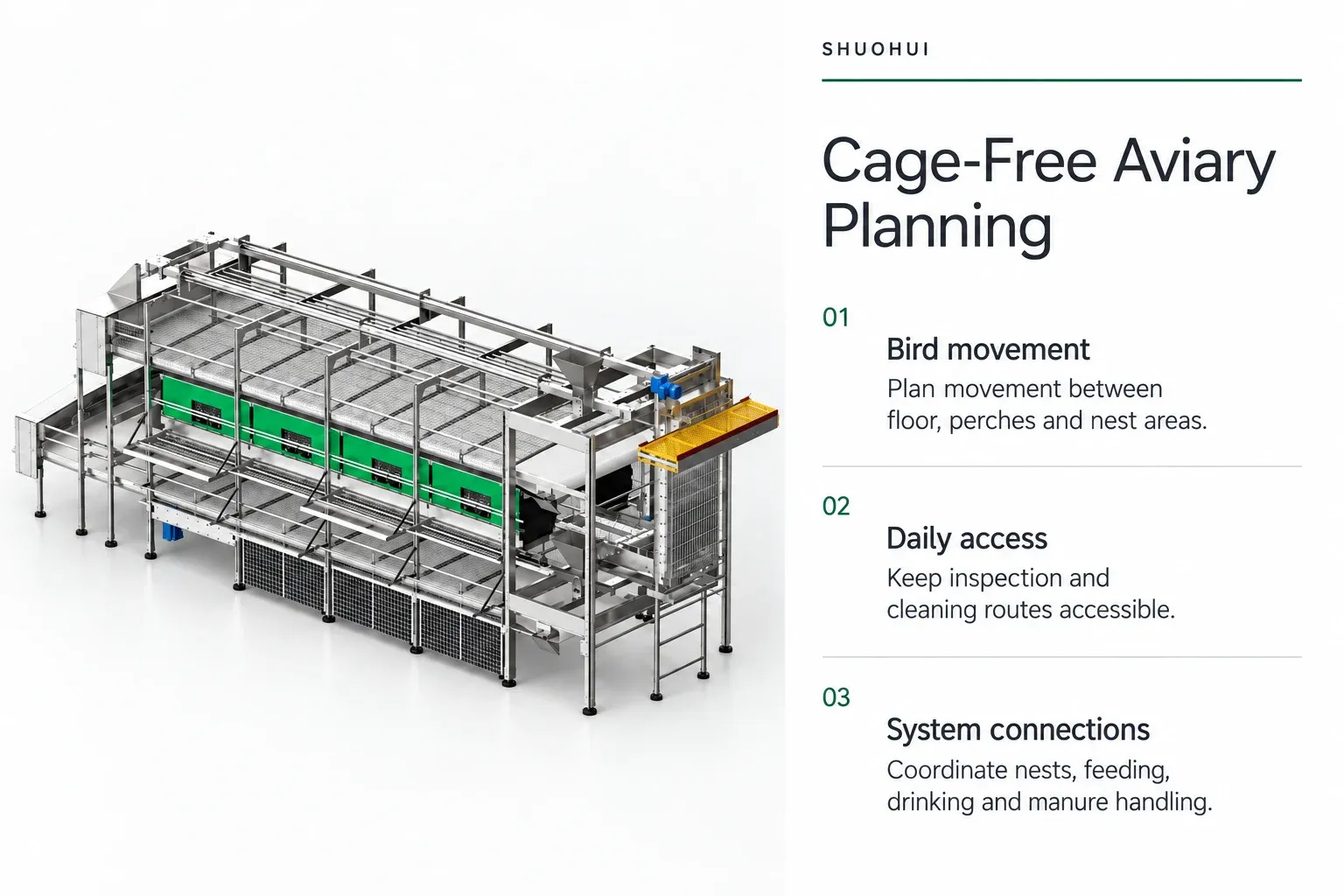
Read the selection checklist
Stocking density under cage-free rules
Density is regulated, and getting it right is compliance, not preference. EU cage-free/barn rules cap stocking at about 9 hens per square metre of usable area, counting the multiple tiers as usable space — which is exactly how an aviary fits so many birds in a house without breaking the rule. When you compare systems, confirm the quoted bird count is measured against usable area across all tiers, and that nest and litter provision scale with it. An aviary crowded past the limit fails audit the same way an over-stuffed cage does.
Nest boxes, perches and roll-away egg handling
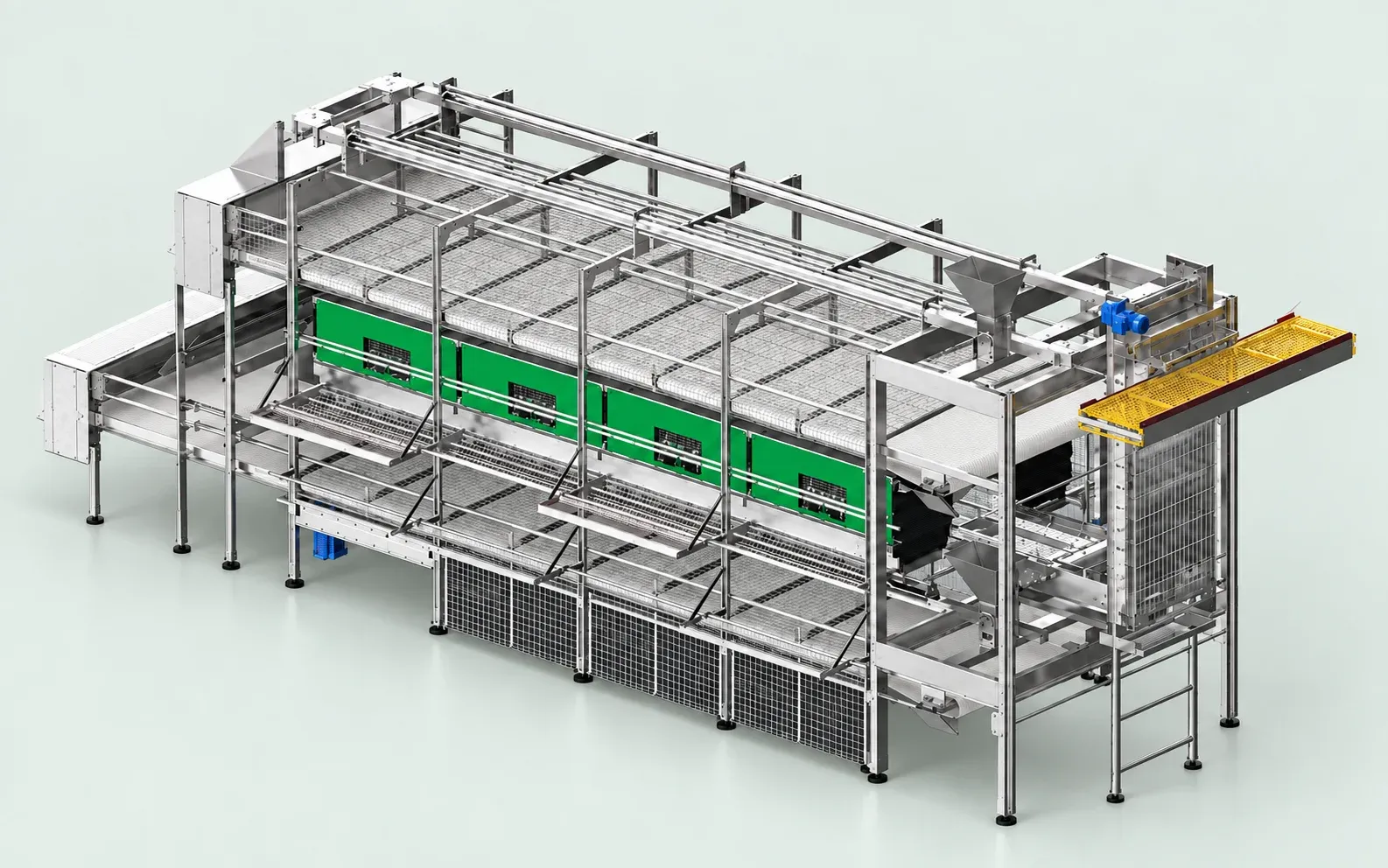
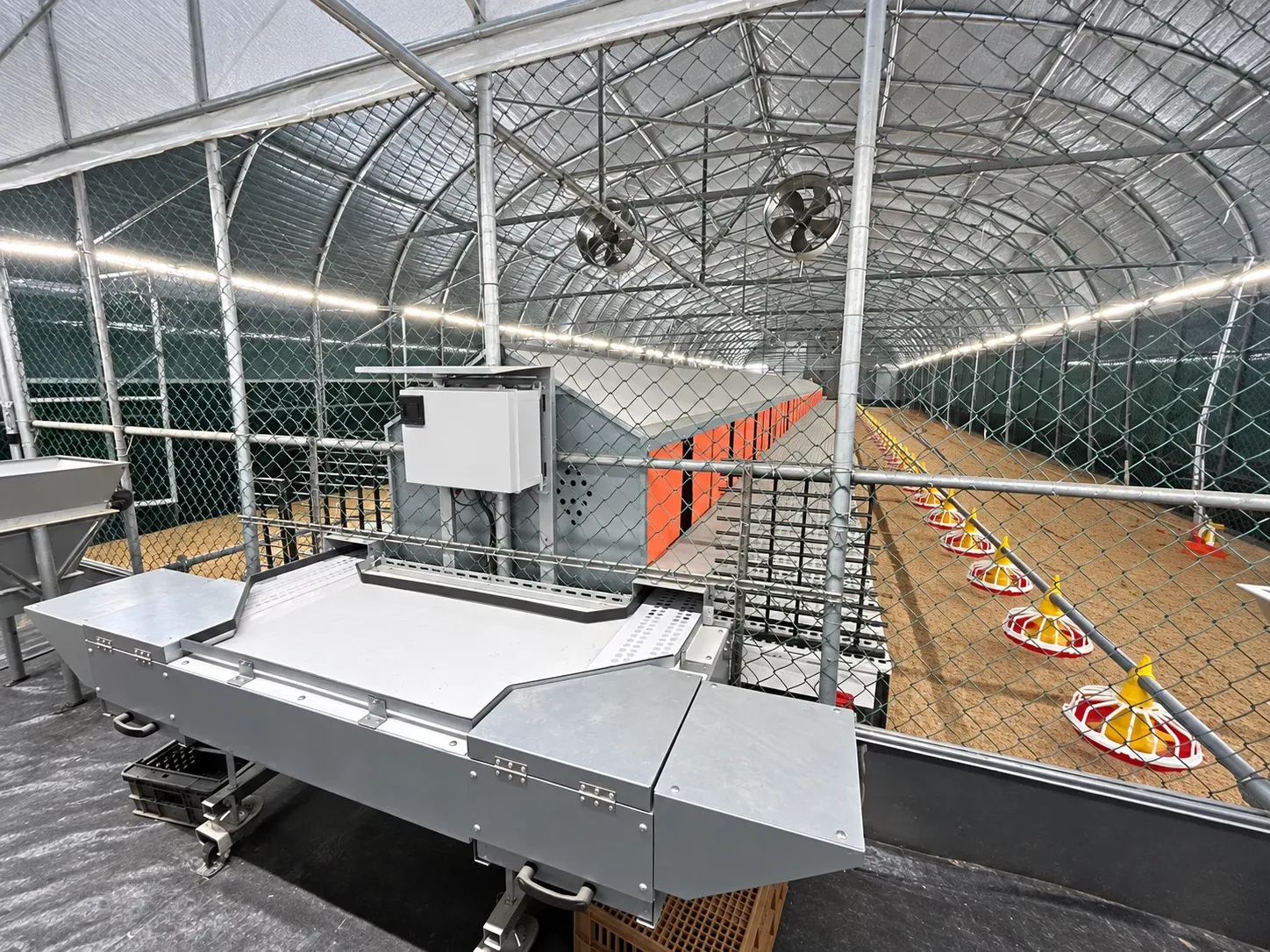
Two fittings protect egg quality and cleanliness in a cage-free house. Group nests with a soft, dim interior draw hens to lay in the right place, and a roll-away floor carries each egg gently onto a belt the moment it is laid, so it never sits where it can be trodden or soiled. Perches at every level give hens somewhere to roost off the litter, which reduces floor eggs and improves leg strength. The nest-to-belt transfer is the critical integration point — set it well and floor-egg rates and breakage both stay low.
Aviary vs enriched cage vs conventional battery
The three systems trade welfare for control. A conventional battery cage gives the tightest control and highest density but is banned in the EU and carries no welfare credentials. An enriched colony cage adds nest, perch and scratch fittings while keeping hens contained — cleaner eggs, easier disease control, but still "caged". An aviary gives full freedom of movement and the cage-free label, at the cost of more floor eggs to manage, higher labour, and more careful ventilation. Choose the aviary when your buyers specifically demand cage-free; choose enriched when they only demand welfare compliance.
Which markets pay a premium for cage-free eggs
Cage-free commands a price premium and, increasingly, mandatory access in the EU, the UK, and among large food-service and retail buyers in North America and parts of Asia. If your business plan targets those buyers — or supplies exporters who do — an aviary is the system that unlocks the premium. If you sell into price-driven local markets with no welfare requirement, the extra cost of an aviary may not yet pay back; match the system to where the eggs are actually sold.
Planning an aviary retrofit or new build
An aviary can be a new house or a retrofit into an existing shed, but both need enough clear height for the tiers, a manure-belt system under the platforms, tunnel ventilation sized to the flock (about one 38,000 m³/h fan per 2,000 birds), and a lighting plan that reaches the litter floor to discourage floor laying. Build quality stays premium — Q235 galvanized steel, food-grade nipple lines, roll-away nest belts — with ISO 9001, SONCAP and PVOC paperwork.
Send us your target flock, the welfare standard your buyer requires and your building size, and we will lay out an aviary — tiers, nests, perches and egg-belt routing — sized to the cage-free density rule.
Equipment views & details
ORDER & DELIVERY
Shipping process
- 01
Requirements
Share your bird type, planned capacity, destination and project needs.
- 02
Configuration and order
Confirm the equipment list, drawings, quotation and agreed order terms.
- 03
Production and inspection
Prepare and inspect the equipment against the confirmed configuration.
- 04
Packing and loading
Check the packing list and coordinate protective packing and loading arrangements.
- 05
Transport and dispatch
Arrange shipment and the required documents according to the agreed delivery terms.
- 06
Arrival and handover
Check the delivered packages and equipment, and coordinate the next installation steps.