Automatic Egg Collection System
Specifications
- DriveMotorized, timer or controller linked
- Cage fitA-type and H-type layer systems, 3 to 8 tiers
- FunctionBelt collection from cage rows to a central packing point
- Belt speedApprox 1.8 to 4.5 m/min, adjustable
- Belt materialPP or PU food-grade egg belt
- Breakage rate0.2 to 1% (best installations under 0.2%)
- CertificationISO 9001, SONCAP, PVOC
- Elevator typesRod-lift, C-claw and gathering-head
- High-speed linesUp to about 65,000 eggs/hour
- Labour reductionAround 70 to 80%
- In-house throughput15,000 to 17,000 eggs/hour
The place an automatic collection system earns or loses its keep is the handful of transfer points where an egg leaves one moving surface and lands on the next. Get those handoffs right and a house that used to lose 3 to 8% of its eggs to hand-collection cracks drops to 0.2 to 1%. This page is about the machinery that makes that possible, and how to specify it for your rows rather than why automation pays off in the abstract.
From Cage Row to Egg Room: the Mechanical Path
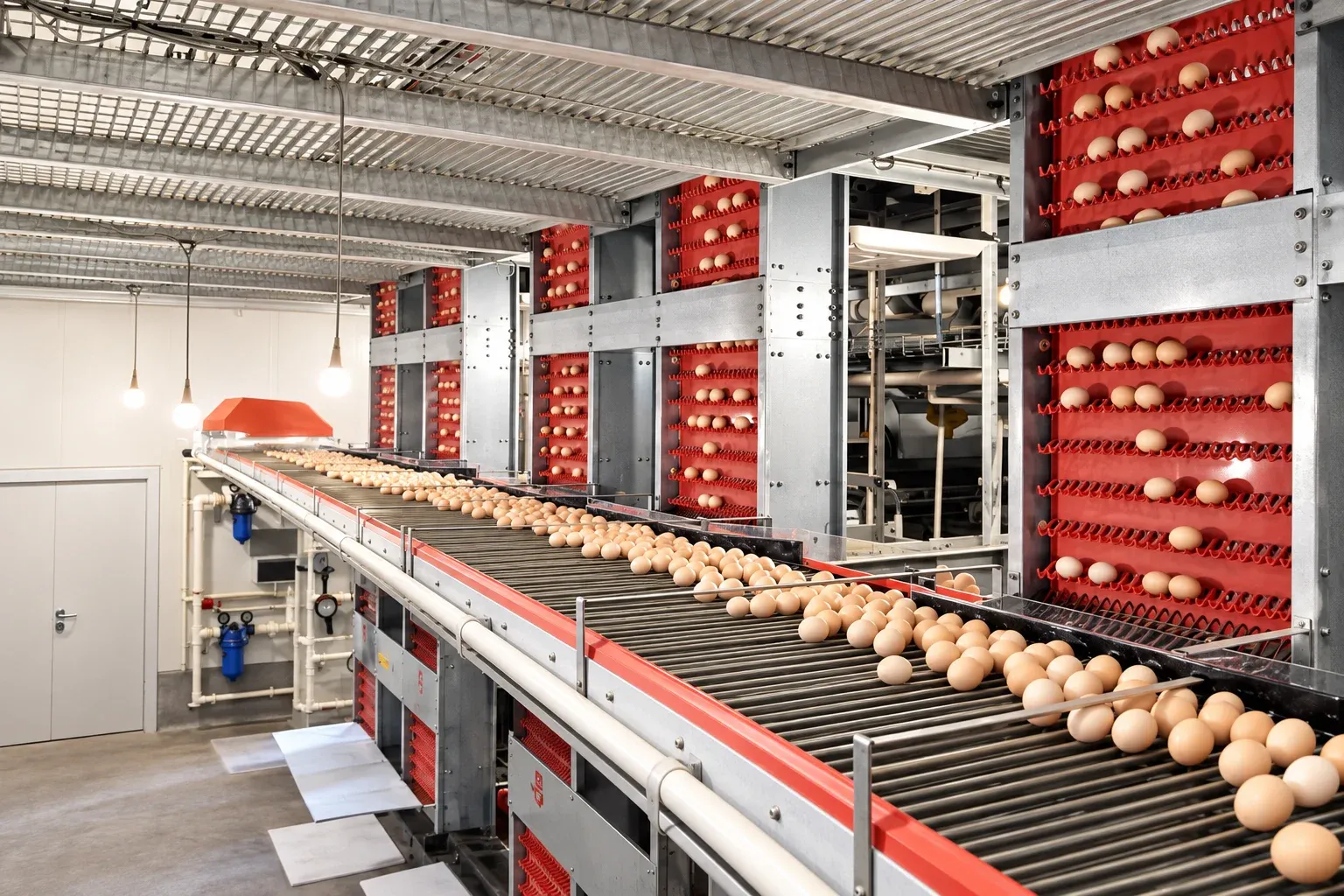
Every egg travels the same chain, and knowing it tells you what you are actually buying. A longitudinal egg belt runs under each cage tier and carries eggs to the end of the row. There they meet a transverse cross conveyor that pools the output of every tier into one stream. A central elevator then lifts or lowers that stream to a single working height, and a delivery belt runs it through to the egg room. Each named unit is a line item on a quote, so a proposal that lists only "egg collection" without the elevator and cross conveyor is hiding half the system.
Elevator Styles: Lift, C-Claw and Gathering-Head
The elevator is where tiers are merged, and its design is the single biggest driver of breakage. Rod-lift elevators cradle each egg on parallel rods as it changes height, which is the gentlest option and the one to choose for high-value or export eggs. C-claw heads scoop eggs around a curved path and suit mid-tier houses. Simpler gathering-head collectors cost less and work well on lower cage stacks. Ask which style a quoted price assumes, because swapping up to a rod-lift head is a meaningful cost difference that a cheap quote may quietly leave out.
Egg Collection Details
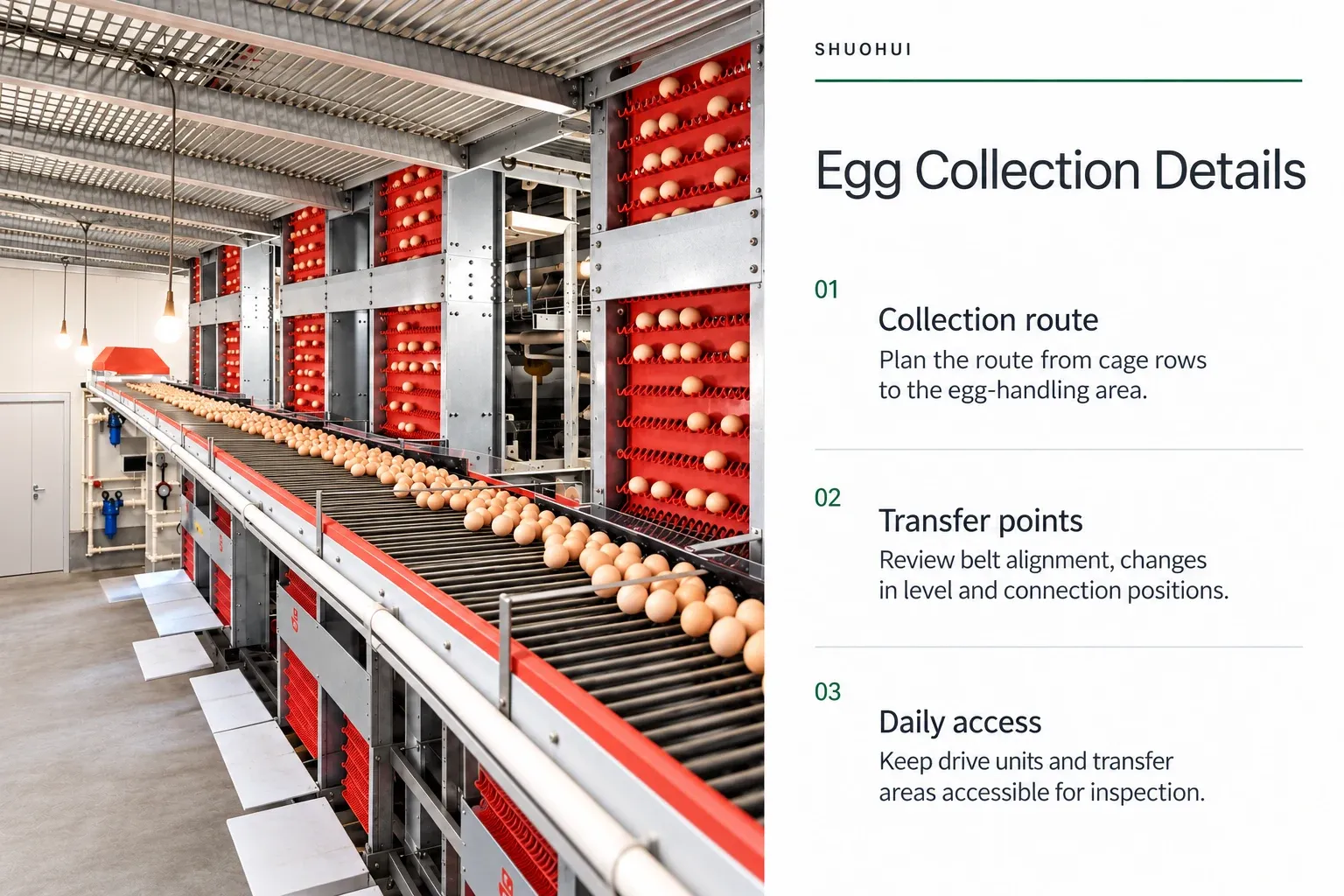
Read the selection checklist
Belt Speed and Why Slow Wins
It is tempting to run belts fast to clear a house quickly, but speed is exactly what turns whole eggs into cracked ones. In-house belts commonly run at 1.8 to 4.5 metres per minute, a pace chosen so eggs meet each other and each junction softly. A good controller lets you tune belt speed, and the elevator, cross conveyor and delivery belt must all be speed-matched so eggs neither pile up nor gap at transfers. A mismatch here quietly lifts your breakage number no matter how gentle the individual parts are.
Matching the Layout to Your Tier Count
The system has to fit the house, and that starts with tiers. A 3-tier A-type and an 8-tier H-type need different elevator heights and cross-conveyor capacities, so the collection layout must be specified to the exact tier count and row length. Under-sizing the cross conveyor is the classic mistake: eggs back up on the top tiers and the whole line runs above its rated breakage. Give the supplier your rows, tiers and bird count and let them size the elevator and conveyor to match.
Reading the Breakage Number Before You Buy
Treat the breakage figure as the headline spec. A serious system is quoted at 0.2 to 1%, and the best hold under 0.2%. If a supplier will not put a breakage figure in writing, that is a signal. The number is set by elevator style, belt condition, speed matching and daily cleaning, so it is a fair proxy for how carefully the whole line is built.
Fitting It to an Existing House (Retrofit)
Adding collection to cages that were hand-gathered is common, and the egg belt and cross conveyor can usually be fitted to existing A-type or H-type frames. The constraints are the space at the row end for the elevator and a clear path to the egg room. A short site check of end clearances and floor levels before ordering avoids the awkward discovery that the elevator does not fit where the walkway is.
What to Check on the Spec Sheet
Beyond breakage, look for food-grade PP or PU belt material, a motorized drive with timer or controller integration, and throughput that clears your house inside your collection window: 15,000 to 17,000 eggs/hour covers most single houses, while central lines feeding a packer reach 65,000 eggs/hour. Confirm the elevator type, the cross-conveyor capacity against your tier count, and that labour saving of 70 to 80% is realistic for your layout.
Send us your house dimensions, tier count and bird numbers and we will size an elevator style, belt speed and cross conveyor to hold your breakage where it belongs.
Equipment views & details
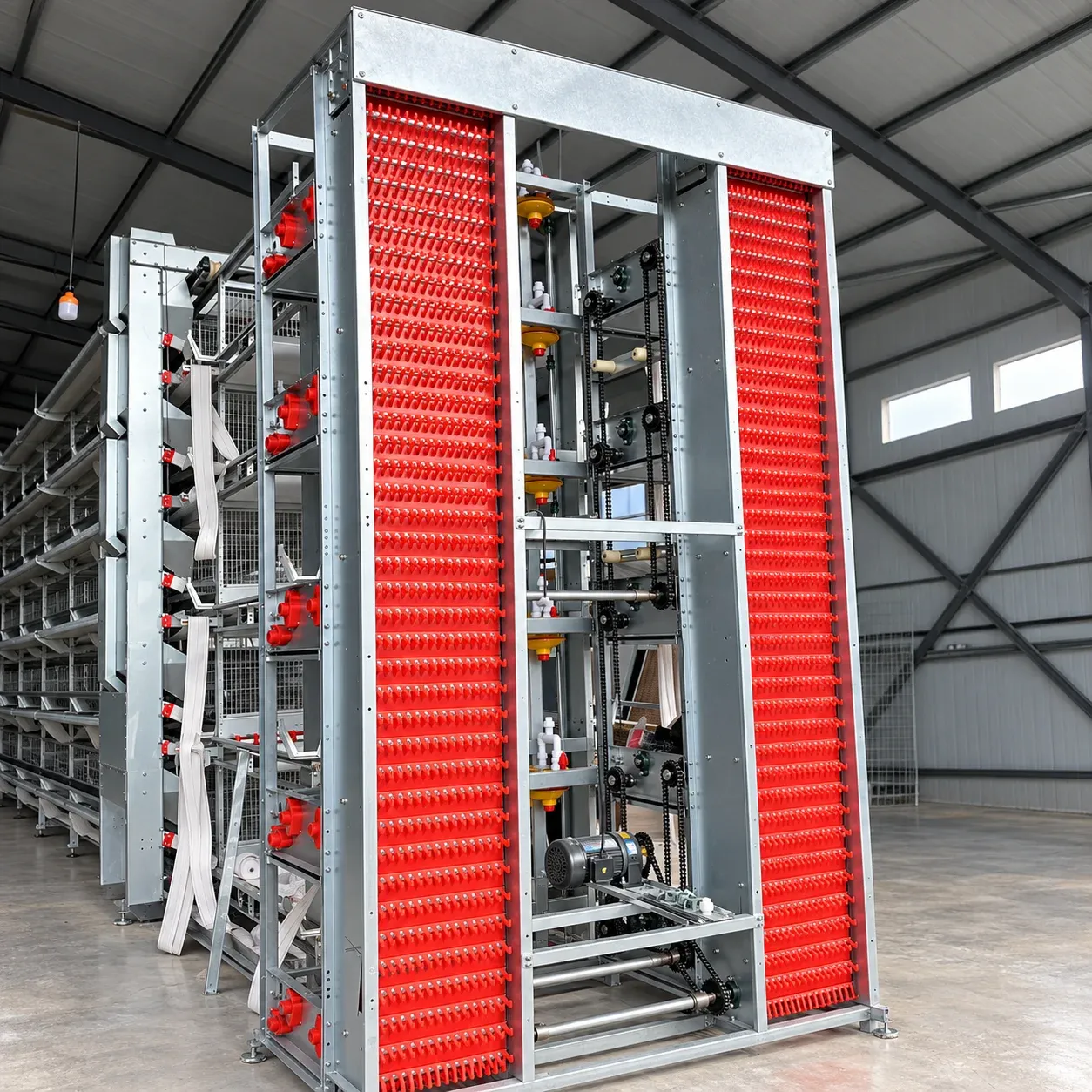
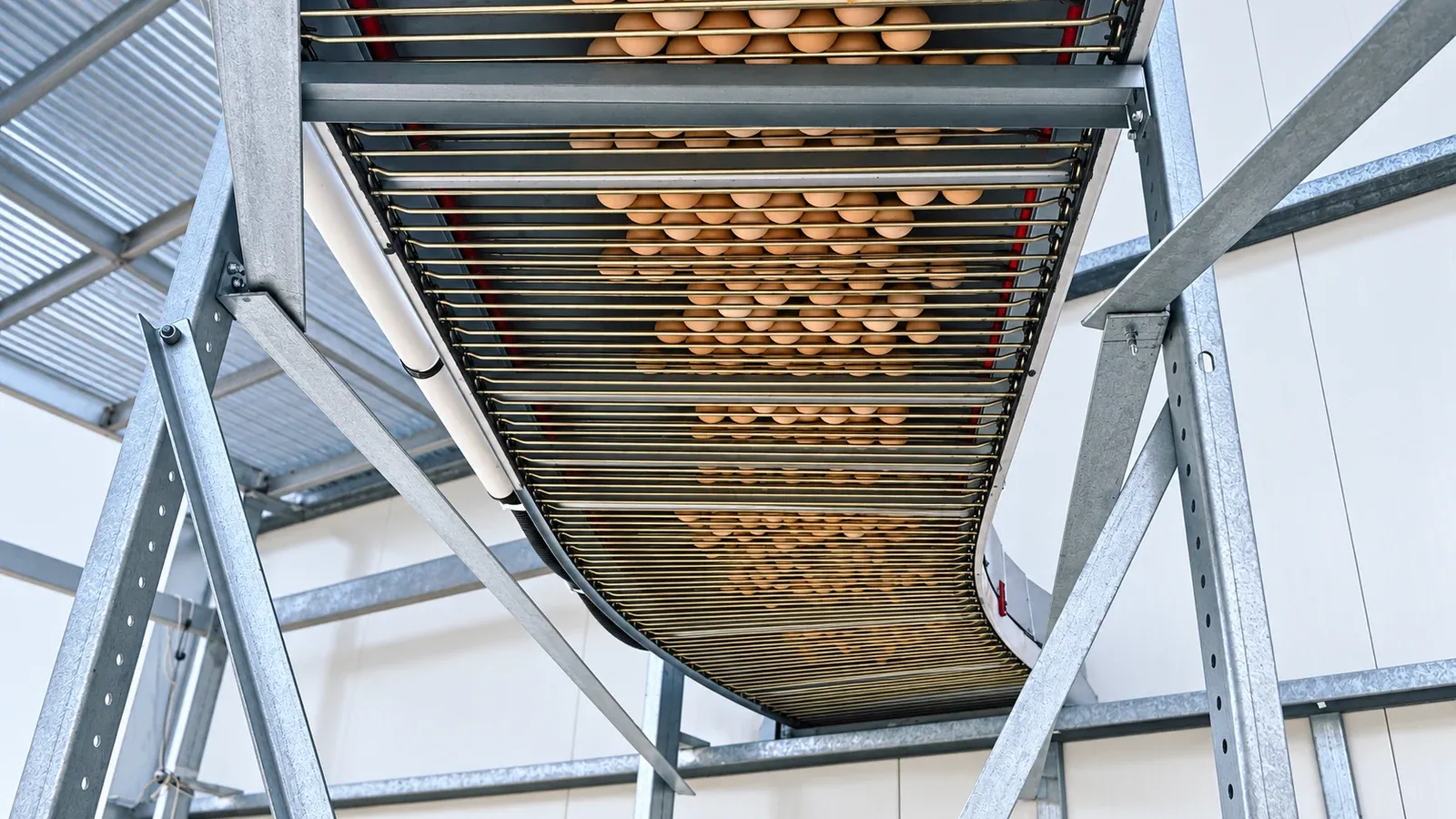
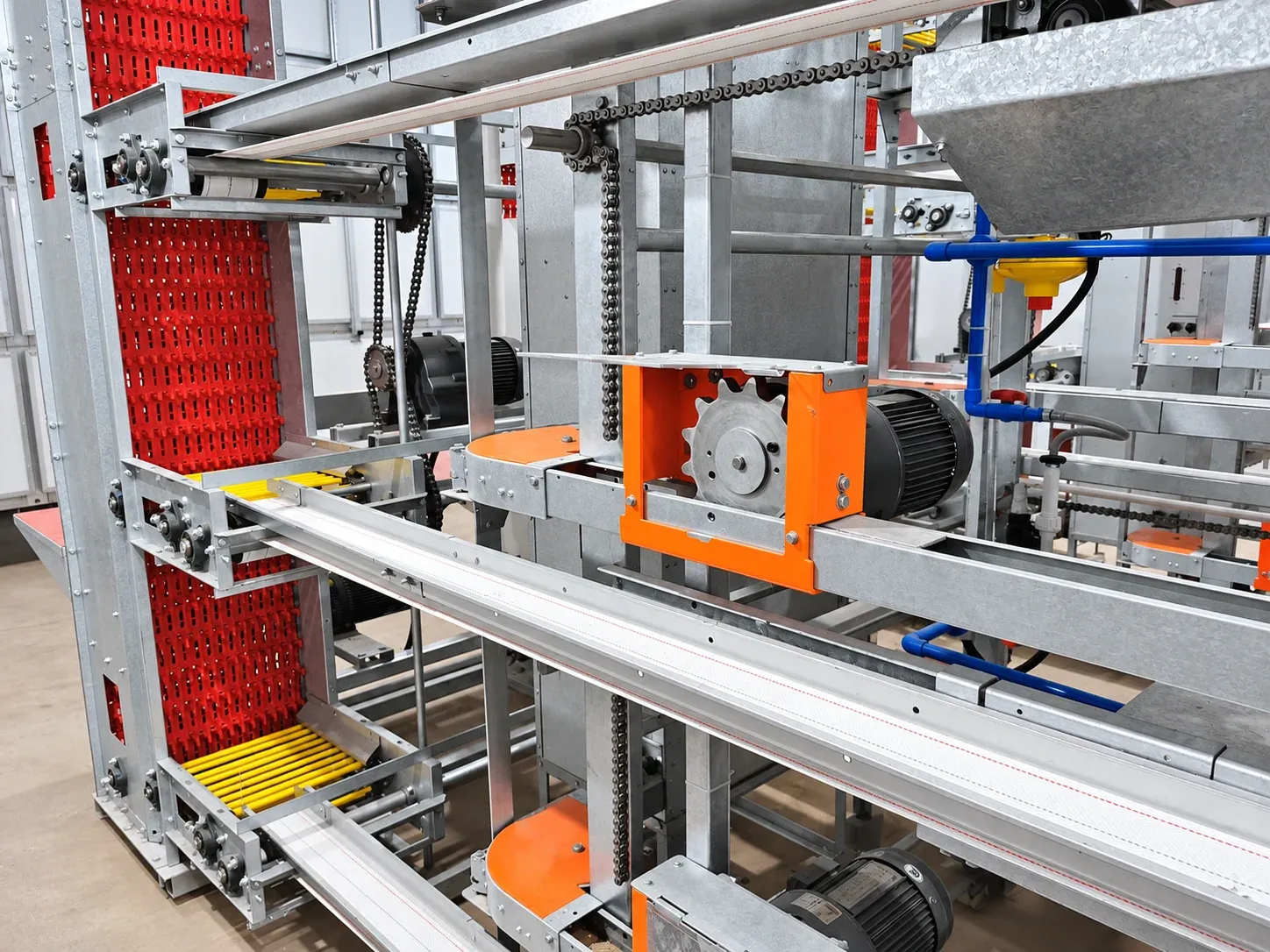
The close-up shows the collection drive, chain transmission and belt supports together. These connections help explain how the collection equipment is arranged at the end of the cage rows.
ORDER & DELIVERY
Shipping process
- 01
Requirements
Share your bird type, planned capacity, destination and project needs.
- 02
Configuration and order
Confirm the equipment list, drawings, quotation and agreed order terms.
- 03
Production and inspection
Prepare and inspect the equipment against the confirmed configuration.
- 04
Packing and loading
Check the packing list and coordinate protective packing and loading arrangements.
- 05
Transport and dispatch
Arrange shipment and the required documents according to the agreed delivery terms.
- 06
Arrival and handover
Check the delivered packages and equipment, and coordinate the next installation steps.